

In 2024, the US Space Force had a higher budget than the US National Aeronautics and Space Administration (NASA) for the first time ($32 billion compared to $26 billion). China also allocated between $17 billion and $22 billion to space, while Russia had a more modest budget of just under $6 billion.
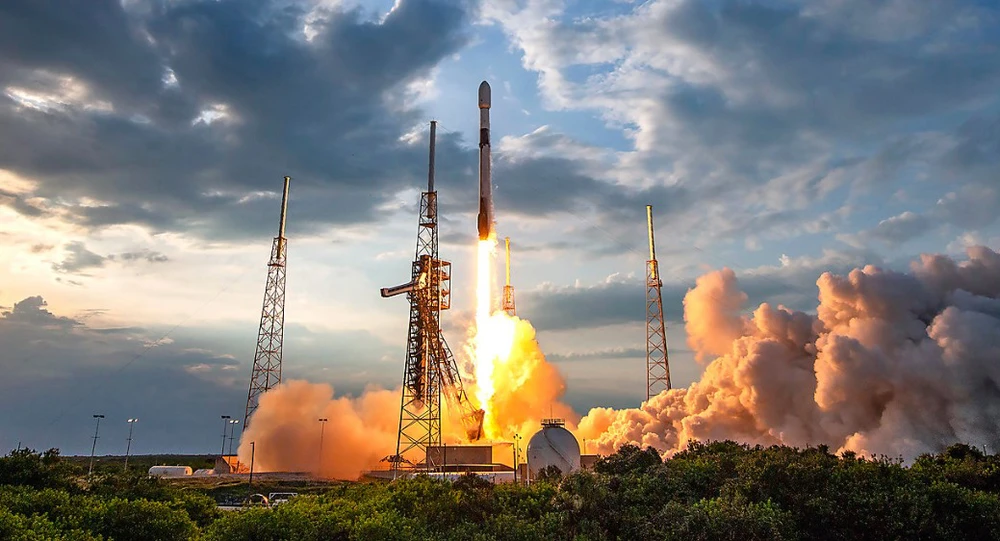
These figures are not merely statistics. In late May, the US Department of Defense accused Russia of launching a space weapon and deploying it in the same orbit as a US government satellite. Russia declined to comment on the information, while also accusing the US of seeking to deploy weapons in space after Washington rejected a resolution on the matter proposed by Moscow at the UN Security Council (also in May).
Meanwhile, Alain de Neve, an expert at the Center for Security and Defence Studies under the Belgian Ministry of Defence, in a press interview, recalled that China launched a satellite in early 2023, and from that same satellite, an unidentified object was subsequently launched, approaching a US military satellite.
In light of these developments, observers believe that the space arms race has begun. General Michel Friedling, the first commander of the French Space Force, stated that the militarization of space has actually been underway since the 2010s. US authorities have asserted that victory on the battlefield depends on success in space. This view was partly demonstrated by the 1990 Gulf War. Xavier Pasco, Director of the French Foundation for Strategic Studies, said: “During the First Gulf War, it was realized that possessing satellites capable of counting missiles in silos or accurately seeing things was of no use. Therefore, the US has invested heavily in space strategy at this time, in a more operational direction, more relevant to the battlefield.” Paul Wohrer, a researcher at the French Institute of International Relations, believes that space has subtly shifted closer to the battlefield. "If satellites are used to guide bombs, then viewing satellites as targets for attack is not unreasonable," Wohrer said.
The current conflict in Ukraine has also clearly demonstrated the hybrid nature of contemporary warfare, with the role of drones and cyberattacks. This conflict has also highlighted the role of commercial satellites in conflicts, exemplified by Elon Musk's Starlink internet network in supporting Ukraine's military operations. In this space race, the dominant doctrine is demonstrating the ability to retaliate against an attack. This has led to a space arms race. Many Cold War-era ideas could become reality thanks to technological advancements, such as lasers reminiscent of those in Star Wars.
Space is becoming increasingly strategic for the economy , not just on the battlefield. Many sectors, such as finance, agriculture, air transport, and maritime transport, depend on satellite telecommunications systems. Therefore, Franck Lefèvre, Technical Director at the Center for Aerospace Research, warns that attacking a country's space infrastructure could destabilize its economy.
MINH CHAU
Source: https://www.sggp.org.vn/cuoc-dua-vu-trang-khong-gian-bat-dau-post761108.html



































































































Comment (0)