

From July 1, 2025 to the present, the Party Committee of the Van Don Special Economic Zone has issued 2,578 documents providing comprehensive leadership and guidance on all aspects of work; including 103 documents that concretize the conclusions of the Central Committee and the directives of the Provincial Party Committee on implementing the two-tiered local government model. This is a large volume of work, demonstrating the high political determination of the locality in organizing the apparatus and maintaining smooth operation right from the initial stage of the model transformation.

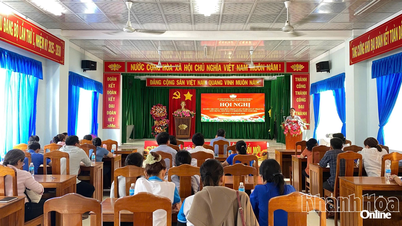
In addition to focusing on organizational restructuring, the special economic zone also strictly maintains the system of conferences, briefings, citizen reception, and dialogues with the heads of Party committees; thereby promptly grasping the thoughts and aspirations of the people and resolving difficulties arising from the grassroots. Mr. Dao Van Vu, Vice Chairman of the People's Committee of the Van Don Special Economic Zone, said: The special economic zone has determined that operating under a two-tiered local government model is not only a requirement for organizational structure, but also aims to better serve the people, improve the effectiveness and efficiency of local governance, especially in remote island areas.
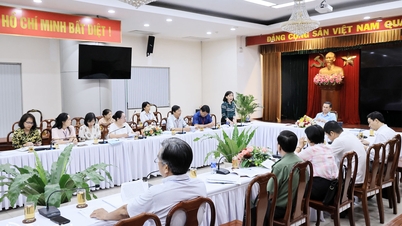
Given the unique geographical characteristics of the vast area, numerous isolated islands, and transportation heavily dependent on weather conditions, the Party Committee of the Special Administrative Region directed the establishment of 7 permanent working groups in the Quan Lan, Minh Chau, Thang Loi, Ngoc Vung, Ban Sen, Binh Dan, and Dai Xuyen - Van Yen areas. These working groups also serve as 7 points for receiving and delivering results to citizens, with the participation of various forces within the political system, including: Party building committees, the Fatherland Front, specialized departments and divisions of the Special Administrative Region People's Committee, the police, and the Public Administrative Service Center...

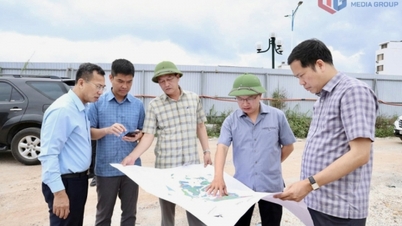
Deploying task forces directly to the grassroots level, especially on remote islands, has contributed to the timely resolution of many emerging issues related to land, handling administrative violations, disaster prevention, and providing administrative support to citizens and businesses.
On Quan Lan Island, instead of residents having to travel to the special economic zone's center (the mainland), depending on boats and sea weather, wasting time and effort, many procedures are now handled and resolved right on the island by the task force. Mr. Vu Duc Tuan (a resident of Quan Lan Island) shared: "The establishment and maintenance of a permanent task force in the islands and remote areas of the Van Don special economic zone is entirely appropriate and meaningful. Without this task force, people would have to spend time and money traveling to the mainland to complete administrative procedures. Thanks to the permanent task force right on the island, people find it much more convenient."
Besides supporting the people, the task forces also act as an "extension" of the government in monitoring the local situation and quickly handling emerging issues at the grassroots level. One of the highlights after one year of implementing the new government model in Van Don is the efficiency in resolving administrative procedures for citizens and businesses. According to the report of the Van Don Special Economic Zone, from July 1, 2025 to the present, the Public Administrative Service Center of the Special Economic Zone has received and processed 11,438 administrative procedure dossiers, of which 99.59% were resolved ahead of schedule; the number of dossiers resolved overdue accounted for only 0.41%.

Notably, the acceleration of digital transformation and the provision of online public services have yielded positive results. 11,557 applications for public services were processed online, representing 98.28% of the total applications received. The rate of cashless payment of fees and charges reached 100%. These figures demonstrate that the new government model not only streamlines the administrative apparatus but also improves the quality of service to the people, especially in coastal and island areas with difficult access.
After a period of implementing a two-tiered local government model, the potential and advantages of marine economy, tourism , and services in the Van Don Special Economic Zone have been better exploited, gradually attracting strategic investors. In 2025, the growth rate of Van Don's production value is projected to reach 26.8%, exceeding the initial resolution by 2.5% and the adjusted resolution by 0.5%. By the end of the first quarter of 2026, the growth rate is expected to reach 23.8%, an increase of 1.1% compared to the projected scenario; tourism revenue is estimated at 799 billion VND, reaching 135.4% of the first quarter's projected scenario; and state budget revenue in the area is projected at 306 billion VND, reaching 143.8% of the provincial target.
Despite achieving many positive results, the implementation of the new administrative model in Van Don still faces numerous challenges. The vast area, numerous remote islands, and scattered population result in significantly higher administrative and operational costs compared to mainland localities. Meanwhile, information technology infrastructure in some island areas is not yet fully developed; and weather conditions at sea consistently pose obstacles to travel and work processes.

To ensure the new administrative model in Van Don operates more effectively in the future, according to Cao Tuong Huy, Secretary of the Party Committee and Chairman of the People's Council of the Van Don Special Economic Zone, the locality needs to continue strengthening digital transformation, improving telecommunications infrastructure, and enhancing the quality of online public services to reduce travel pressure for island residents. Along with that, the province needs to study and develop specific mechanisms for the island area; strengthen decentralization and delegation of power while enhancing the accountability of leaders; and continue investing in transportation infrastructure connecting the islands with the special economic zone center.
The new administrative model in Van Don is not just about streamlining the bureaucracy, but is gradually changing the governance mindset towards a more modern, people-oriented, and service-oriented approach. Particularly in this unique island area, bringing the government "to the islands, closer to the people" through permanent task forces demonstrates a flexible, creative, and practical approach.
Building upon this foundation, Van Don is creating more favorable conditions to improve the quality of state management, enhance the investment environment, promote the development of marine economy, tourism, and high-quality services; gradually building a modern, transparent, and efficient administrative system that meets the requirements of rapid and sustainable development in the new era.
Source: https://baoquangninh.vn/dac-khu-van-don-sau-sat-co-so-de-phuc-vu-tot-nguoi-dan-3408959.html



![[Photo] Standing Committee member of the Party Central Committee Tran Cam Tu working with the Central Inspection Committee](https://vphoto.vietnam.vn/thumb/1200x675/vietnam/resource/IMAGE/2026/05/28/1779969579668_ndo_br_bnd-2495-jpg.webp)











































































Comment (0)