


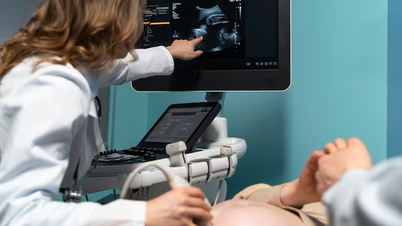
Cerebral venous thrombosis silently poses a serious threat to health - Illustration: Provided by the hospital.
According to Dr. Dinh Trung Hieu, from the Stroke Center at Bach Mai Hospital, cerebral venous thrombosis often develops silently but is no less dangerous.
Silent blood clots in the brain
According to Dr. Hieu, cerebral venous thrombosis is a condition where blood clots form in the brain's venous system – the vessels responsible for returning used blood to the heart. When a vein is blocked, blood cannot drain out, causing blood to pool in the brain, increasing intracranial pressure and damaging brain tissue.
Dr. Hieu explained that this situation is similar to a hydroelectric dam where the spillway is blocked; water continues to flow in steadily from upstream, but cannot escape. The water level rises, putting immense pressure on the dam. If not addressed promptly, the dam could break. Similarly, if a blood clot is not detected and treated, the consequences can be very serious.
Cerebral venous thrombosis accounts for only about 0.5-1% of all stroke cases, but it is easily confused with more common types of stroke.
Instead of occurring suddenly, cerebral venous thrombosis usually has a slow onset, with symptoms developing gradually over several days.
"Among these, headache is the earliest and most prominent symptom, characterized by a dull, persistent ache that worsens over time, especially at night, and often does not respond to common pain relievers."
These symptoms may include nausea, vomiting, blurred vision, seizures, and even altered consciousness. Many people overlook these signs until the condition becomes serious," Dr. Hieu explained.
Who is at risk of cerebral venous thrombosis?
According to Dr. Hieu, unlike stroke, which is common in the elderly, cerebral venous thrombosis tends to occur in younger people, especially pregnant or postpartum women.
People who use birth control pills for extended periods, have autoimmune diseases such as lupus erythematosus, have head and neck infections (such as sinusitis or ear infections), cancer, congenital blood clotting disorders, or have previously had COVID-19 are also at high risk.
What's particularly concerning is that in many cases, the cause remains unclear. Therefore, paying attention to unusual symptoms and proactively seeking medical attention is extremely important.
"Because symptoms are often nonspecific, diagnosing cerebral venous thrombosis is not straightforward. Doctors need to rely on advanced imaging techniques such as computed tomography (CT scan) or magnetic resonance imaging (MRI) with contrast agent injection to detect blood clots in the cerebral veins."
"If diagnosed early, the disease is completely treatable with anticoagulants – drugs that dissolve blood clots and prevent the formation of new thrombi. In severe cases, patients may require surgery or thrombectomy to relieve pressure on the brain," Dr. Hieu explained.
According to this expert, most patients, if detected and treated correctly, can fully recover or only experience mild sequelae. However, in cases of late diagnosis, widespread damage, or brain hemorrhage, the prognosis is very guarded, with a high risk of death and disability.
Dr. Hieu advises young women, pregnant women, or women who have recently given birth, to not ignore unusual, prolonged, and progressively worsening headaches that are different from previous ones. Especially if accompanied by blurred vision, nausea, seizures, or drowsiness, they should immediately go to a hospital with a neurology or stroke specialist for examination.
Providing complete information about risk factors will help doctors make a more accurate diagnosis.
LINH HAN
Source: https://tuoitre.vn/dau-dau-keo-dai-coi-chung-cuc-mau-dong-trong-nao-20250609171413569.htm


![[Photo] Prime Minister Pham Minh Chinh presides over a meeting on private sector economic development.](/_next/image?url=https%3A%2F%2Fvphoto.vietnam.vn%2Fthumb%2F1200x675%2Fvietnam%2Fresource%2FIMAGE%2F2025%2F12%2F20%2F1766237501876_thiet-ke-chua-co-ten-40-png.webp&w=3840&q=75)



























































































Comment (0)