

The ancient village of Thanh Ha is located to the west of Hoi An. It was formed quite early, around the 16th century. Through its development, by the 19th century, Thanh Ha village had a large area encompassing 13 hamlets: An Bang, Boc Thuy, Nam Dieu, Thanh Chiem, Bau Sung, Bau Oc, Hau Xa, Trang Keo, Cua Suoi, Ben Tre, Dong Na, Nha/Tra Que, and Con Dong, stretching from the northern bank of the Thu Bon River to along the De Vong River and bordering the sea. Among these, An Bang hamlet holds a special place in the historical and cultural flow of the village.
An Bang hamlet is bordered to the south by the Dam River, across which lie Nam Dieu and Boc Thuy hamlets. To the west, it borders Hoa Yen village; to the north, Bau Sung hamlet; and to the east, Thanh Chiem hamlet. The northern part of An Bang is a large sand dune strip extending from Lai Nghi down to Thanh Chiem and Hau Xa, while the southern part consists of ancient alluvial land, rice fields, and traces of the ancient Roc Gom river that flowed eastward along the sand dunes.
Place names such as Trang Dai, Trang Cay Quan, Con Ong Do, Roc Gom, Dong Cat, Song Dam, Ruong Trung Dam, Muong Gieng Ba Cong… partly reflect the diversity of topography, geomorphology, and hydrology of the An Bang area. Geological research results show that the geological formations of the Thanh Ha area in general, and An Bang in particular, are 4,500 - 10,000 years old (according to Cat Nguyen Hung, Hoang Anh Son (1995), A Brief Overview of the Geology of the Hoi An Area, In the Hoi An Conservation Management Center, Sa Huynh Culture in Hoi An (proceedings of the workshop on Sa Huynh Culture in Hoi An in 1995), printed at Quang Nam Printing Company, 2004, pages 50-56) . Today, the An Bang area still retains many relics and traces that bear witness to the long-standing historical and cultural process of various generations of inhabitants, from the Sa Huynh Culture period through the Champa and Dai Viet periods to the present day.
To prepare for the 1990 International Conference on the Ancient City of Hoi An, an archaeological field study was conducted in Hoi An in 1989 by the Vietnam Cultural Center - Hanoi University (now the University of Social Sciences and Humanities - Vietnam National University, Hanoi) and the Hoi An Relics and Tourism Services Management Board (now the Hoi An Cultural Heritage Conservation Management Center). The results revealed the first three Sa Huynh Culture sites in Hoi An, including one in An Bang located on high ground next to Ong Do sand dune. Additionally, traces of a Cham structure were discovered on the sand dunes in An Bang.
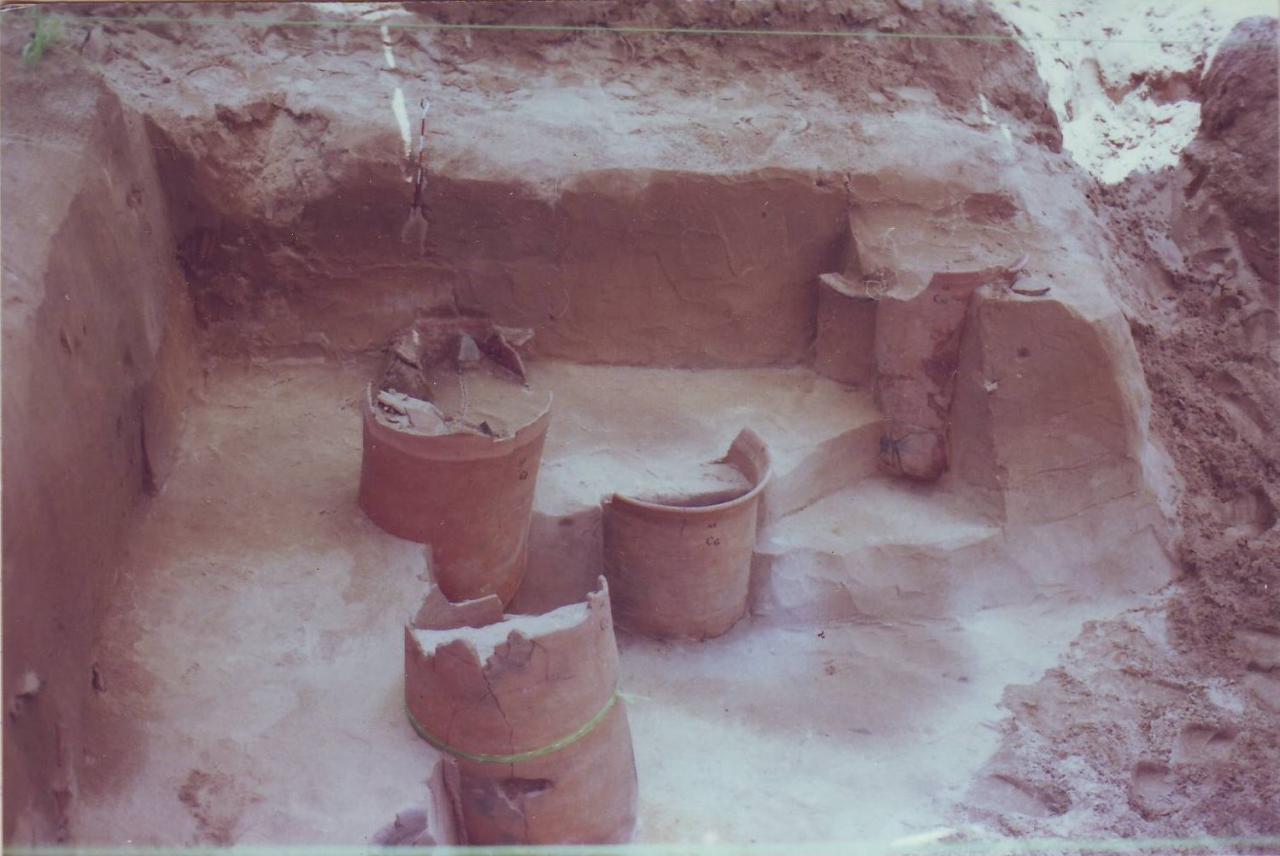
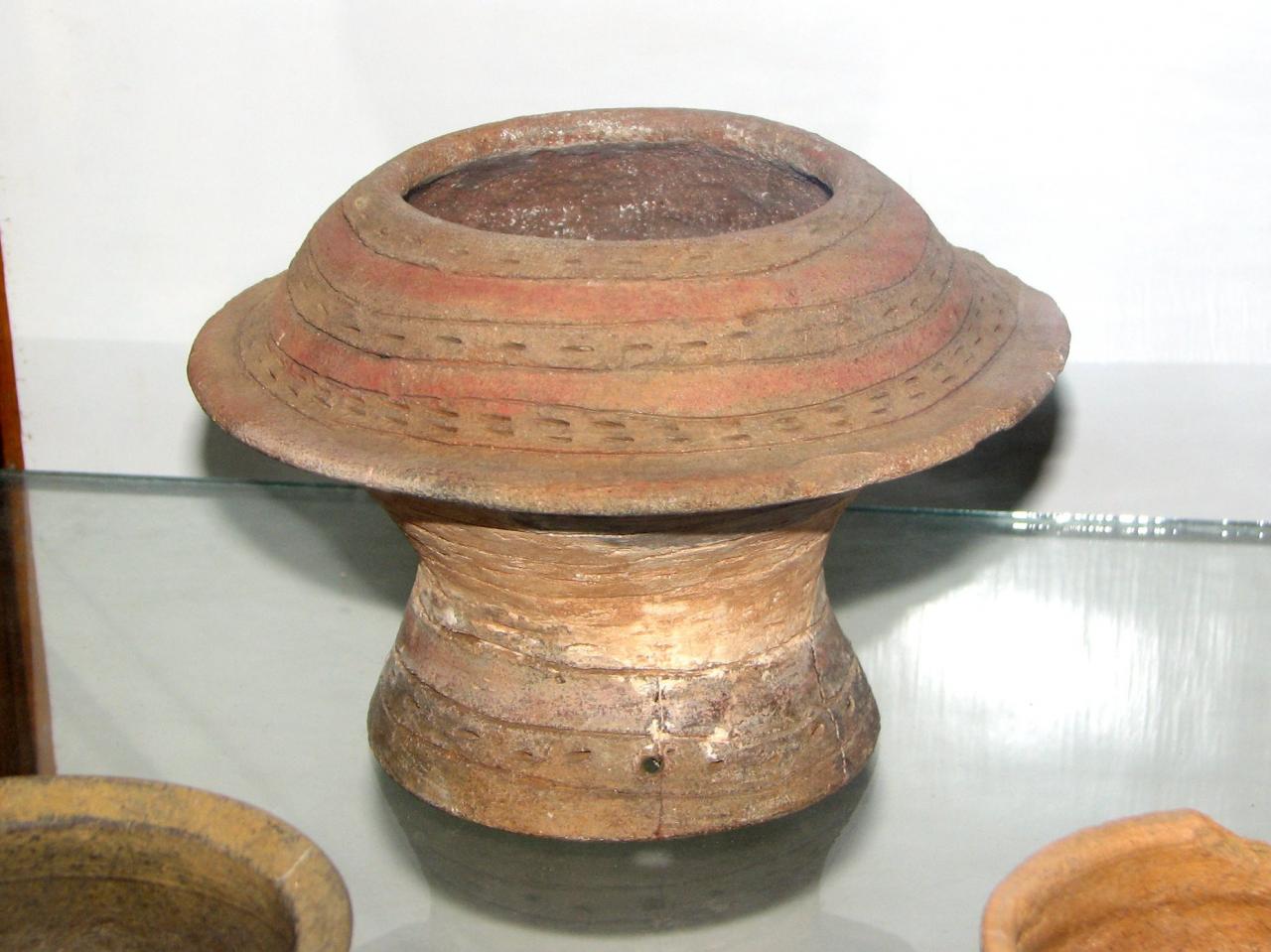
The results of the project "Archaeological excavation of the Sa Huynh jar burial site in Hoi An town" from 1993 to 1995 have clarified the values of the An Bang archaeological site and its role, position, and connection within the Sa Huynh culture system in Hoi An in particular, and in Quang Nam and Central Vietnam in general. On an excavated area of 26 m² , 16 burial jars of cylindrical and pot-shaped (spherical) types were discovered, along with many burial artifacts made of pottery such as pots, vases, cups, Sa Huynh lamps, iron weapons and tools, and jewelry made of stone and glass.
A prominent feature of the An Bang site is the clustered burial jars, which are quite densely packed, with most jars having their own burial border. However, there are also cases where two jars are buried within one border. Beneath the jars lies a layer of dark yellow-brown stone. A significant amount of charcoal and ash surrounds the jars. The An Bang burial site has a C14 dating of 2260 ± 90 BP, the earliest date among the Sa Huynh sites in Hoi An. The distribution of artifacts suggests that the burial practices of the Sa Huynh people at the An Bang site are similar to those of the Thanh Chiem, Hau Xa II, and Hau Xa I burial sites.
The remnants of Cham architecture discovered in An Bang are the foundations of a small shrine, typical of Cham architecture, oriented east-west. These foundations are no longer intact, consisting of one to three layers of bricks measuring 33cm x 17cm x 7cm. Beneath the bricks is a layer of pebbles. Unfortunately, over time and due to urbanization, these architectural traces have been completely destroyed.
From the late 15th century, people from Dai Viet (Vietnam) came to cultivate and settle in the An Bang and Thanh Ha areas (according to documents and oral tradition, Thanh Ha village was founded by eight revered ancestors: Nguyen Van, Nguyen Viet, Nguyen Duc, Nguyen Kim, Nguy Nhu, Bui Phuoc, Vo Dinh, and Vo Van). The process of establishing villages and developing the An Bang area in particular, and Thanh Ha in general, from the 16th century onwards, has left behind many valuable relics and traces in the An Bang area, evidence of the creative labor, resilience, and contributions of the local people, as well as the role and position of this land in history. These include a system of religious architectural relics such as communal houses, the Confucian Temple, the Tam Vi Temple, the Thanh Hoang Temple, ancient tombs, and many ancient wells.
According to the Quang Nam Village Chronicle and many other sources, the original Thanh Ha communal house was built in An Bang hamlet, now the area of the An Bang hamlet communal house and Minh Giac pagoda (the original An Bang hamlet communal house was in a different location, severely damaged in 1958, and in 1959, the communal house was rebuilt in its current location, on the old site of the Thanh Ha village communal house).
Minh Giác Pagoda, formerly known as Phật Cẩm Hà Pagoda, was built in 1957. The communal house was completely destroyed in 1947 and rebuilt in 1953 on the land of Hậu Xá (the current Thanh Hà communal house). The original communal house in An Bang was large in scale, surrounded by a wall; the front hall had a three-bay, two-wing structure with a wooden frame, brick walls, and tiled roof; the rear chamber had an ancient tower. The interior of the communal house arranged four altars; the front hall had a gilded incense altar in the middle, with altars for the Ancestors on either side against the back wall; the rear chamber had the Đại Càn altar (according to records in the Quảng Nam village chronicle, there were four separate and one general decrees regarding Đại Càn) , with a pedestal above for the decrees. The communal house held two annual ceremonies on the 15th of March and the 16th of August.
Next to the communal house were the Five Elements Shrine, the Three Deities Shrine, and the City God Shrine (according to records in the Quang Nam Provincial Chronicle, there were 4 separate and 3 joint royal decrees for the City God; 1 separate and 1 joint royal decree for the Five Elements) . The rituals here followed those of the communal house. Unfortunately, these religious institutions were completely destroyed before 1975.
Another religious institution related to the Confucian tradition in Thanh Ha, located in An Bang, is the Van Thanh Temple. This site is not far northwest of the old village communal house, and is quite large in scale, with annual ceremonies held on the spring and autumn days. Like the aforementioned sites, the Van Thanh Temple was also destroyed by bombs and artillery fire during the war; only its foundations and well remain.
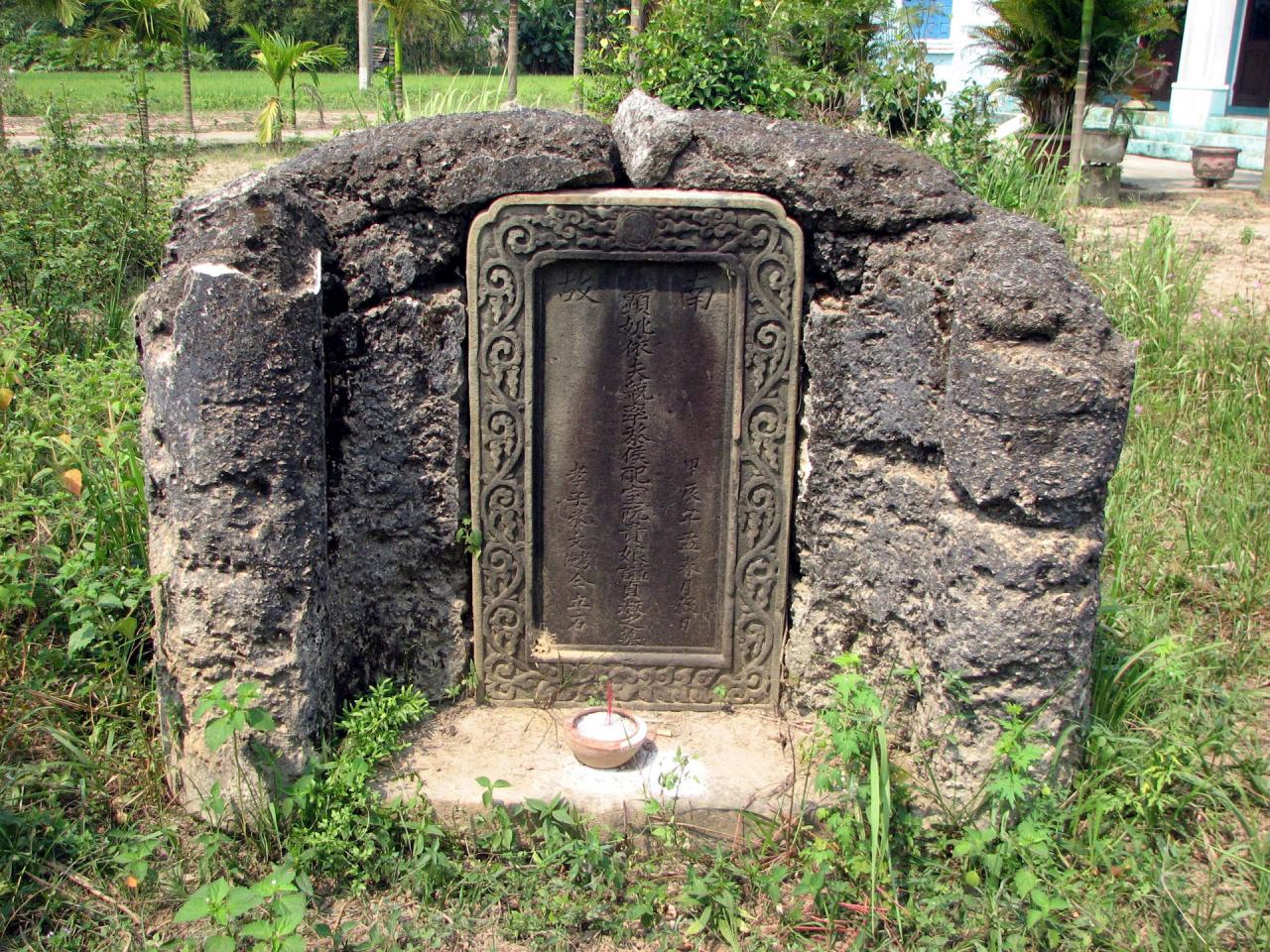
According to statistics, there are at least four historically and culturally significant burial sites remaining in the An Bang area. These tombs are all large in scale, constructed from lime mortar and stone, and their style, as well as the decorative patterns on the tombstones and architectural components, are typical of ancient tombs in Hoi An from the period before the 19th century and the early Nguyen dynasty; they are related to figures with significant roles, status, or contributions. One such site is the tomb of Mr. Nguyen Duc Le, from An Bang hamlet, Thanh Ha village, who made significant contributions during the Tay Son dynasty. He held the position of Grand Admiral of the Imperial Guard, died in 1798, and was posthumously granted the title of Deputy Commander-in-Chief. The tomb of Grand Admiral Nguyen Duc Le is one of the very few ancient tombs related to the Tay Son movement and dynasty still remaining in Hoi An, and is of great significance in studying and identifying the role and position of the land and people of Hoi An in this movement and dynasty.
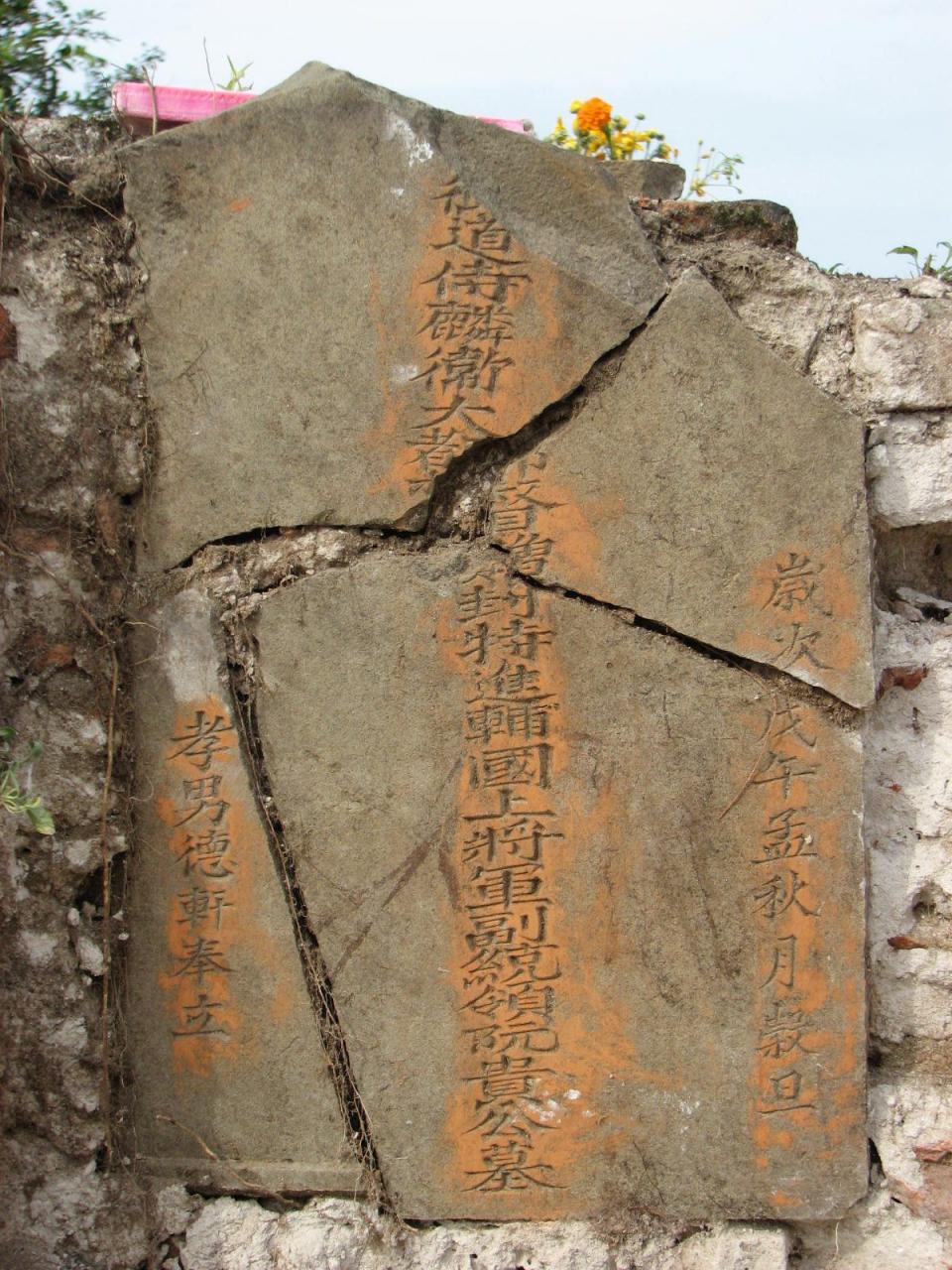
About 200 meters north of An Bang village communal house is the tomb of Mrs. Nguyen Quy Nuong, established around 1784. The decorative patterns on the tombstone are very elaborate, reflecting the style of the Le Dynasty. The inscription states that Mrs. Nguyen Quy Nuong, whose posthumous name was Trinh Thuc, was the wife of a Le Dynasty general. To the east of An Bang village communal house is the tomb of Mr. and Mrs. Pham Luan, members of the Nguyen clan from Thanh Ha village. It is quite large, built of stone around 1856-1857. This is one of the most unique stone tombs in Hoi An. To the west of the tomb of Grand Admiral Nguyen Duc Le is the Nguyen clan tomb complex of Minh Huong village in Hoi An, established in 1864. The tomb complex is grand and features impressive decorative patterns. To the west is the tomb of Mr. Nguyen Chieu Dien, a physician with the pen name Khanh Thien; to the east is the tomb of Mr. Nguyen Duy Duc, also known as Tich Thien, and his wife, Mrs. Le Thi Thu, whose pen name was Pham Thanh.
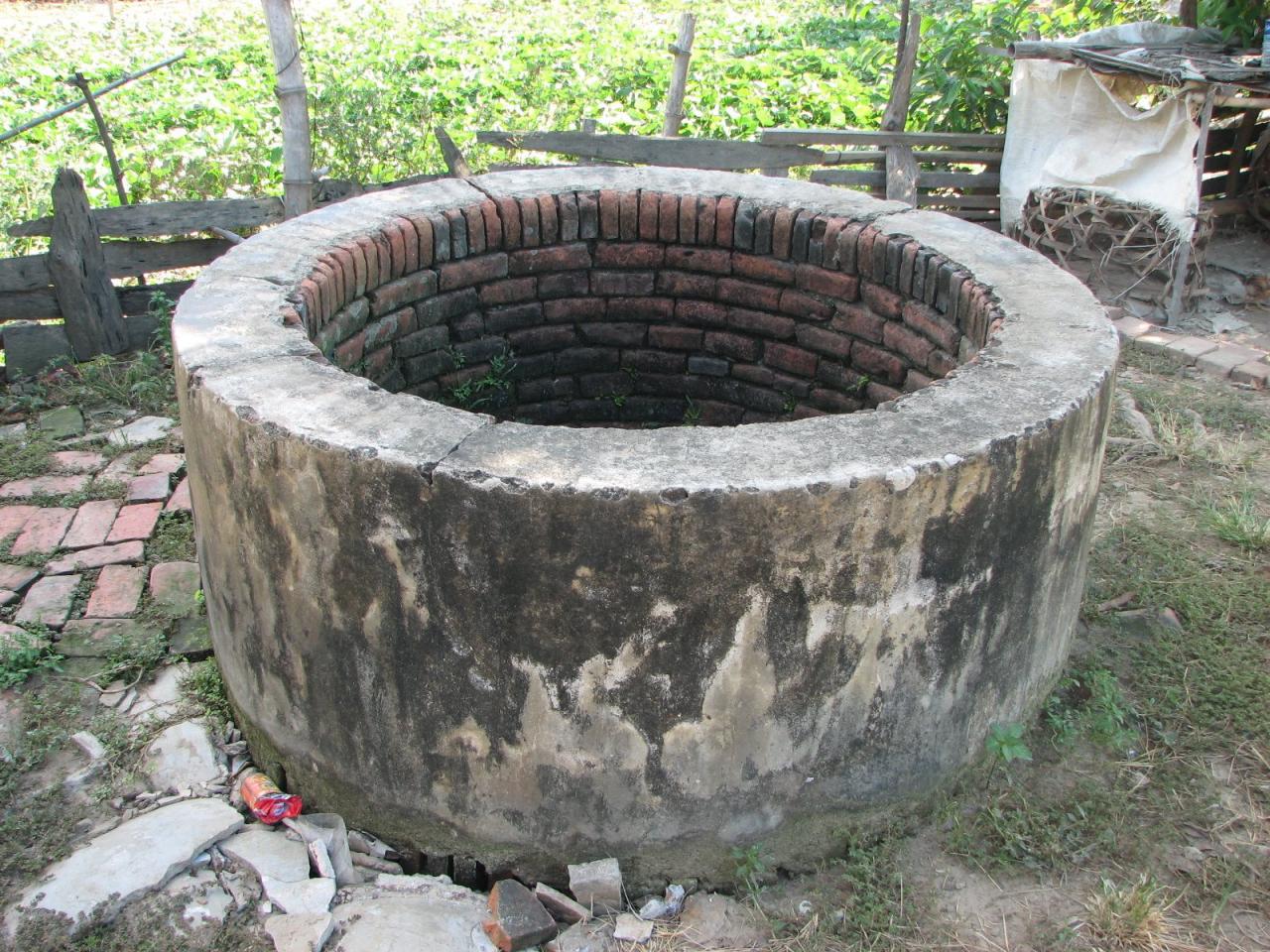
Furthermore, the An Bang area still has many ancient wells such as the well of Mr. Vo Vinh, the well of Mrs. Nguyen Thi Tuat, the Thanh well (Mrs. Nguyen Thi Ro's house), the well of Mr. Hiep, the well of Mrs. Cong, etc. The wells are round or round on top and square at the bottom, with brick walls and a wooden frame underneath. They always have an abundant supply of fresh water, and some are still in use today. The relatively high density of ancient wells in the An Bang area demonstrates the unique economic , social, and historical-cultural conditions of the region. It also confirms the technical skill and rich knowledge of the inhabitants in exploiting and utilizing fresh water resources.
The aforementioned relics and historical sites demonstrate An Bang's special position in the historical development of the Thanh Ha region. The presence of cultural and religious institutions such as the village communal house, the Confucian Temple, the City God Temple, the Three Deities Temple, and the Five Elements Temple proves that An Bang once played a central role in the ancient Thanh Ha village.
Source: https://baoquangnam.vn/dau-xua-tren-vung-dat-an-bang-3136837.html

![[Image] Hanoi's urban life under the challenge of a "scorching hot" environment](https://vphoto.vietnam.vn/thumb/1200x675/vietnam/resource/IMAGE/2026/05/25/1779706979265_nang-nong-t5-2026-minh-duy-7-4636-jpg.webp)


![[Image] Close-up view of the interchange connecting the two expressways and Long Thanh Airport.](https://vphoto.vietnam.vn/thumb/1200x675/vietnam/resource/IMAGE/2026/05/25/1779703378210_ndo_br_z7863716673926-224453a31600126cce10622af6290afd-4549-jpg.webp)

![[Photo] Da Nang: The vibrant dance of the wind on the waves of Hoi An](https://vphoto.vietnam.vn/thumb/402x226/vietnam/resource/IMAGE/2026/04/11/1775919585266_untitled-1-jpg.webp)














































































Comment (0)