

 |
From left to right: Samsung Galaxy S26, S26+, and S26 Ultra. Photo: Xuan Sang . |
As expected, Samsung just launched the Galaxy S26 series at its Unpacked 2026 event held in the early hours of February 26th (Vietnam time).
This year, Samsung maintained a safe approach by launching three models: the standard Galaxy S26, S26+, and S26 Ultra. As one of the leading companies in AI-generated content on smartphones, the South Korean company continued to upgrade Galaxy AI with many small but interesting features.
While processor and camera improvements have become commonplace, Samsung strives to differentiate itself with features that combine hardware and software, such as a privacy-blocking display to enhance security.
Galaxy AI Upgrade
Galaxy AI has been a highlight of Samsung smartphones in recent years. With the Galaxy S26, the company continues to bring a series of upgrades to its AI toolset. First, the Bixby assistant is improved with a better Large Language Model (LLM), allowing for more natural interaction with users.
On previous generations of Galaxy phones, users could press and hold the power button to activate Bixby or Google Gemini. This year, Perplexity becomes the third option. This offers more variety because, according to Samsung's research, users tend to choose multiple AI assistants depending on the task.
Like other assistants, Perplexity allows voice or text commands. This AI can retrieve information from the internet, use agents to make purchases, and check emails when requested. Users can still access Perplexity independently through the pre-installed app.
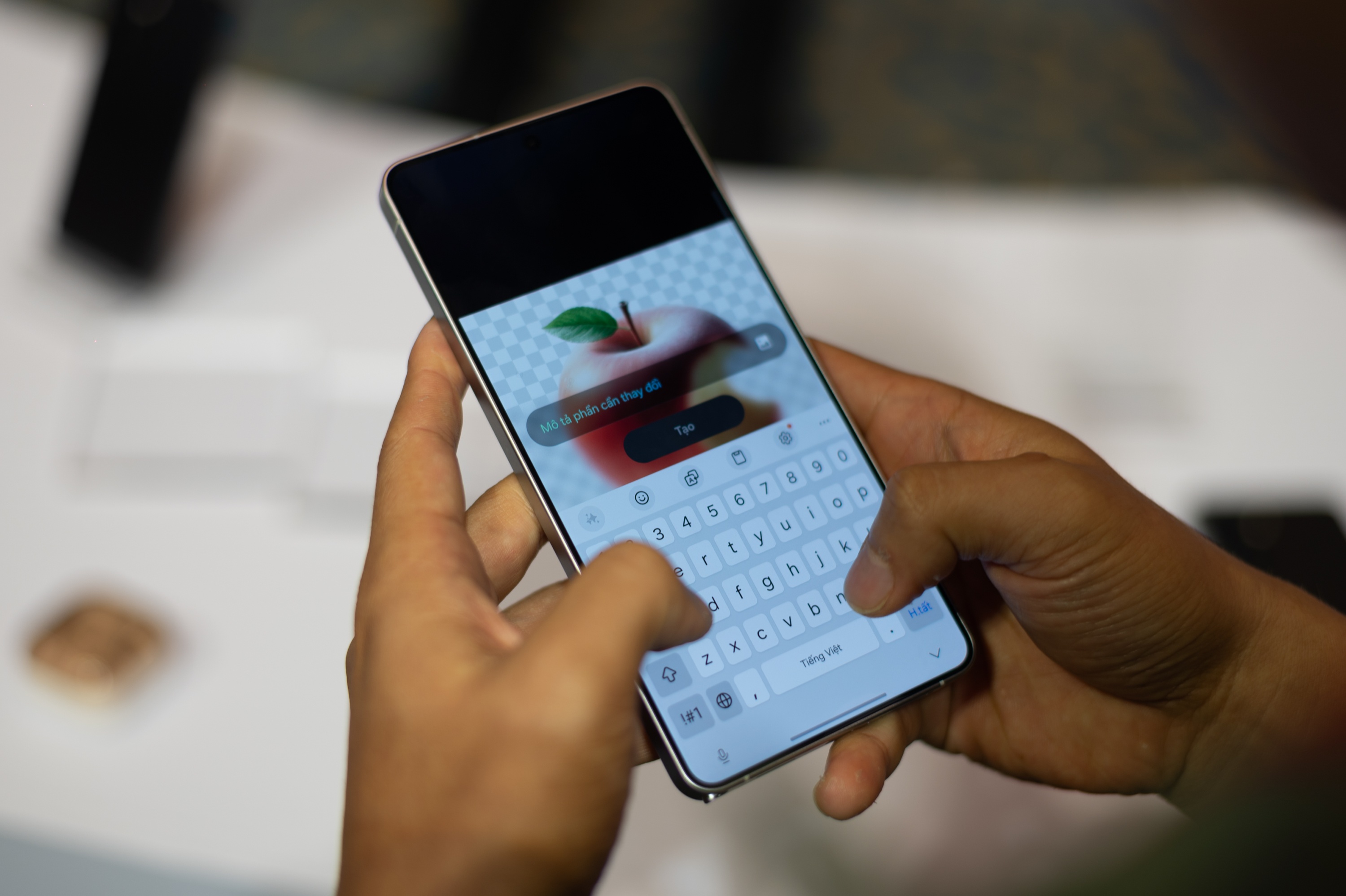 |
The Galaxy S26's image editing feature using voice commands. Photo: Xuan Sang . |
After gaining attention with its background removal and object removal tools, Samsung continues to improve AI-powered photo editing features on the Galaxy S26. The new feature allows users to input commands to edit photos as desired, instead of relying on automatic algorithms as before.
"Adjust the background to match the birthday theme," "Fill the cake" are some examples of commands this feature supports. Users can request the AI to make successive edits before achieving the desired image. A highlight is that the AI can draw detailed shadows and recreate lighting to suit the new object and background. Image processing and editing speed depends on the internet connection.
Samsung has also added a smart suggestion feature. AI can scan the screen to retrieve message or email content, then suggest relevant actions. For example, when texting about travel plans, the device will suggest photos of attractions, eliminating the need for manual searching.
The AI on the Galaxy S26 can proactively answer calls from unknown numbers, using keyword recognition to detect scam calls. Noise filtering is also supported for third-party apps such as YouTube, Instagram, and Netflix.
Design and display
The design of the Galaxy S26 hasn't changed much from its predecessor. Users need to look at the rear camera to distinguish between the two generations. On the new version, the camera module has an additional pill-shaped protrusion, while the LED flash and additional sensor are located to the right.
Compared to the S25 Ultra, the Galaxy S26 Ultra switches to an aluminum frame instead of titanium, which improves heat dissipation while maintaining a lightweight feel. The device is also slightly thinner than its predecessor (7.9 mm instead of 8.2 mm). The S Pen stylus is still included.
The Galaxy S26 increases its screen size from 6.2 inches to 6.3 inches, with a 4,300 mAh battery. Meanwhile, the S26+ and S26 Ultra retain their original sizes, at 6.7 inches and 6.9 inches respectively. Battery capacities on both models also remain unchanged, at 4,900 mAh and 5,000 mAh respectively.
On the Galaxy S26 Ultra, Samsung includes a Privacy Display feature, which combines hardware and software to dim the screen when viewed from an angle, eliminating the need for a dedicated screen protector.
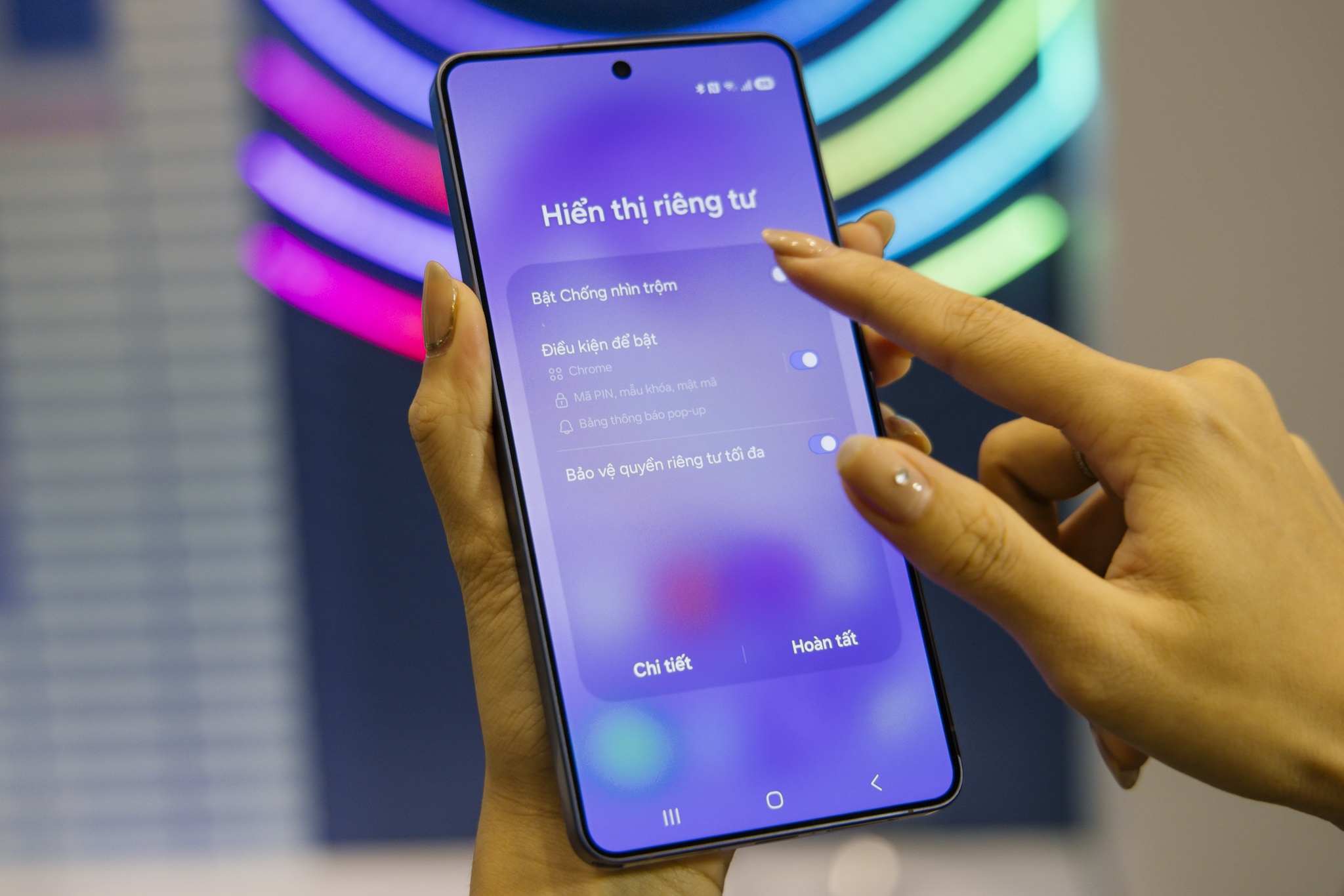 |
The anti-spy feature on the Galaxy S26 Ultra. Photo: Phuong Lam . |
Samsung describes the Privacy Display mechanism as working by limiting wide-angle light-emitting pixels and focusing on vertically emitting pixels. This technology supports privacy protection in all four directions, instead of just two directions like some screen protectors.
In terms of hardware, the Galaxy S26 and S26+ are equipped with the Exynos 2600 processor, while the S26 Ultra uses the Snapdragon 8 Elite Gen 5. Further testing is needed to accurately assess the performance difference between the two chips.
The S26's vapor chamber cooling system has been upgraded with a larger surface area and four heat sinks running along the processor to increase cooling efficiency. On the S26 Ultra, the claimed cooling performance is 20% better than the S25 Ultra.
Hardware and cameras
The camera on the Galaxy S26 Ultra has also been improved. The main sensor has a larger aperture (f/1.4 instead of f/1.7), which improves light-gathering by 47%, according to Samsung.
The device supports the APV codec and can shoot 8K video at 30 fps, maintaining quality even during multiple rendering or editing sessions. It also includes a super-stabilized video recording mode, keeping the frame vertical even when the phone is rotated 360 degrees, similar to the horizon lock feature of some action cameras.
On the Galaxy S26, Samsung also improved the AI subject recognition system, helping to reproduce skin tones and hair details more naturally in photos, regardless of ambient lighting conditions.
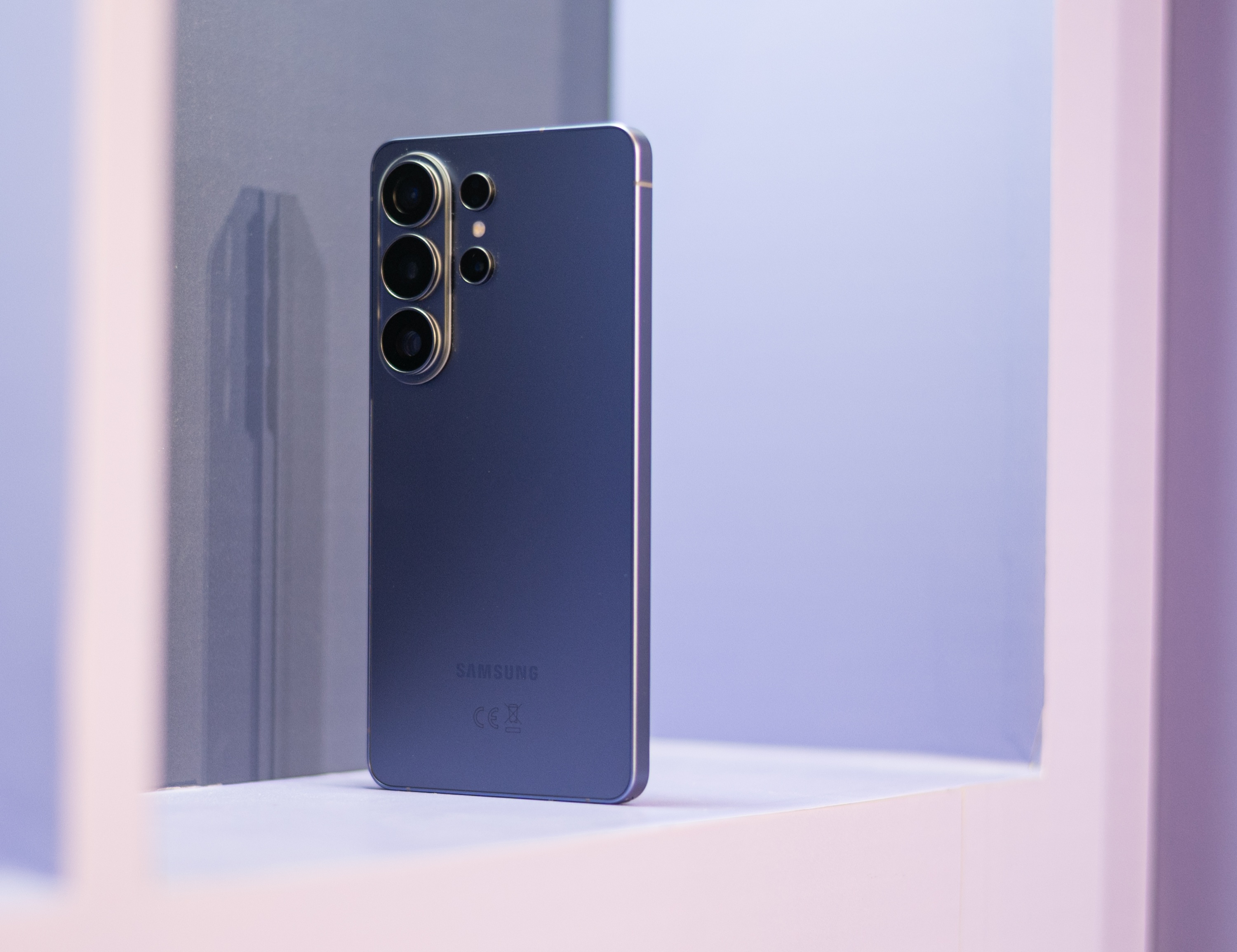 |
Galaxy S26 Ultra. Photo: Xuan Sang . |
Aside from these improvements, the Galaxy S26 camera doesn't have many hardware changes. Samsung mainly upgraded the software algorithms and AI to optimize image quality.
Specifically, the Galaxy S26 and S26+ feature a triple rear camera setup consisting of a 50 MP (main), 10 MP (telephoto), and 12 MP (ultrawide-angle), while the S26 Ultra includes a 200 MP (main), 50 MP (5x periscope), 50 MP (ultrawide-angle), and 10 MP (3x telephoto). The selfie camera on all three devices has a resolution of 12 MP.
The Galaxy S26 and S26+ offer the same storage options: 256 and 512 GB, along with 12 GB of RAM. In addition to these two options, the S26 Ultra also comes in a 1 TB storage and 16 GB RAM version. This model also supports wired fast charging up to 60 W.
The Galaxy S26 comes pre-installed with Android 16 and the One UI 8.5 custom platform. The product line includes four standard colors for widespread sale, with purple being the dominant color. Two additional special colors are available but are only sold on Samsung's website.
In addition to the Galaxy S26, Samsung introduced the Galaxy Buds4 and Buds4 Pro earbuds. The product body has been improved with an aluminum metal coating and an ergonomic design for a more comfortable fit. The Galaxy Buds4, in particular, features an open design, reducing the feeling of stuffiness as it no longer has rubber ear tips.
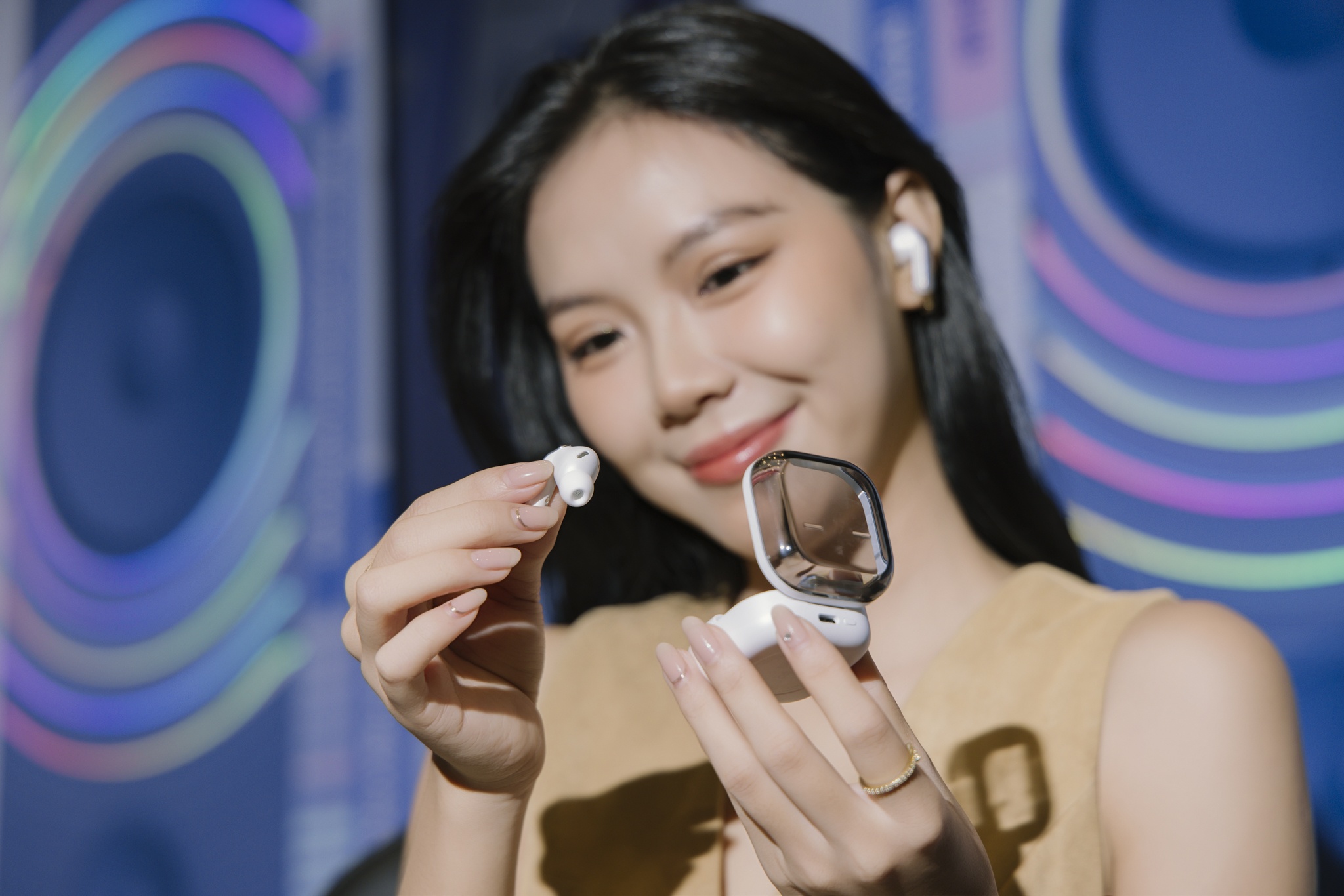 |
Galaxy Buds4 Pro headphones. Photo: Phuong Lam . |
Both the Galaxy Buds4 and Buds4 Pro support 24-bit audio playback, active noise cancellation, a next-generation equalizer (EQ), and IP54 (Buds4) and IP57 (Buds4 Pro) water/dust resistance ratings. The touch controls on the earbuds are larger, increasing accuracy.
The charging case for the Galaxy Buds4 and Buds4 Pro has been redesigned with a clamshell-style transparent lid, allowing you to see the earbuds inside. The product supports a range of AI features such as live translation and head gesture control. The device comes in three colors: black, white, and pink (exclusive to the Buds4 Pro on the Samsung website).
Source: https://znews.vn/galaxy-s26-chinh-thuc-ra-mat-post1630296.html
![[Photo] General Secretary and President To Lam presides over a meeting with the Central Organizing Committee.](https://vphoto.vietnam.vn/thumb/1200x675/vietnam/resource/IMAGE/2026/06/03/1780482764658_a1-bnd-4741-3342-jpg.webp)
![[Photo] First session of the 14th Congress of the Vietnam Trade Union](https://vphoto.vietnam.vn/thumb/1200x675/vietnam/resource/IMAGE/2026/06/03/1780465947883_ndo_br_img-3852-jpg.webp)

![[Photo] Secretary of the National Assembly Party Committee, Chairman of the National Assembly presides over the meeting of the Standing Committee and Executive Committee of the National Assembly Party Committee.](https://vphoto.vietnam.vn/thumb/1200x675/vietnam/resource/IMAGE/2026/06/03/1780480353201_ndo_br_bnd-2585-jpg.webp)


































![[Video] Sunset at Lap An Lagoon – Where the sun sets over the fishing nets](https://vphoto.vietnam.vn/thumb/1200x675/vietnam/resource/IMAGE/2026/05/31/1780192137701_beach-landscape-sea-water-nature-grass-745871-pxhere-com.jpeg)




























Comment (0)