

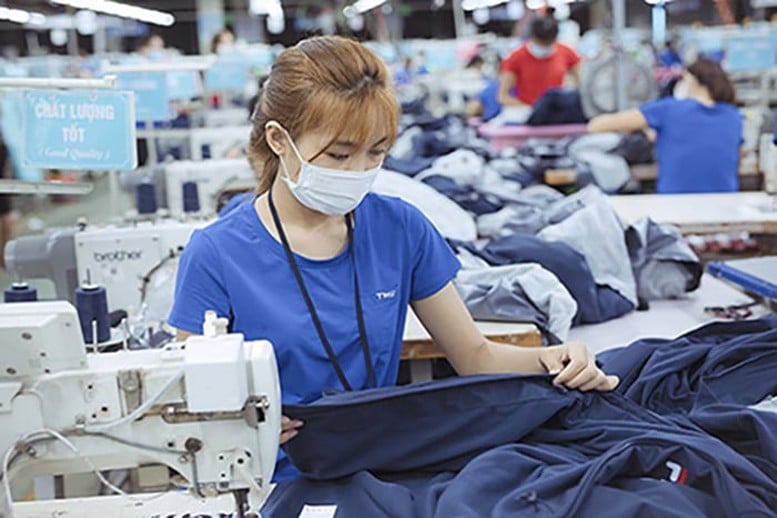
Despite consistently being among Vietnam's key export sectors, the textile and footwear industries have yet to establish a strong position in the domestic market. - Illustration
Despite consistently being among Vietnam's key export sectors, the textile and footwear industries have yet to establish a strong position in the domestic market.
According to Mr. Tran Huu Linh, Director of the Department of Domestic Market Management and Development, the Ministry of Industry and Trade has implemented many practical solutions to bring Vietnamese textile, garment, and footwear products closer to domestic consumers. This is a necessary direction in the context of exports continuously facing barriers in major markets such as the United States, the EU, South Korea, and China. Focusing on the domestic market not only creates stable outlets but also serves as a foundation for sustainable development.
Mr. Linh emphasized that exploiting the domestic market will help businesses reduce their dependence on exports, while simultaneously giving consumers the opportunity to access internationally standardized products manufactured by reputable companies. This is a parallel approach, both consolidating their domestic position and preparing for global competition.
According to Ms. Nguyen Thi Tuyet Mai, Deputy Secretary General of the Vietnam Textile and Garment Association (VITAS), one of the major challenges facing the industry today is its dependence on imported raw materials. To improve this, the two industry associations have collaborated to establish a Raw Materials Development Center, aiming to promote self-sufficiency in supply, a key factor in enhancing competitiveness.
Sharing the same view, Ms. Nguyen Thi Thanh Xuan, Vice President and General Secretary of the Vietnam Leather and Footwear Association (LEFASO), noted that the Vietnamese textile and footwear industry, despite being considered an "export star," has yet to assert its position in the domestic market. According to her, a comprehensive strategy for developing the domestic market needs to be developed soon, based on thorough research into demand, consumer trends, and challenges.
Besides, According to Ms. Nguyen Thi Dien, General Director of An Phuoc Garment, Embroidery and Footwear Company Limited, the widespread problem of counterfeit and imitation goods is causing serious damage to Vietnamese brands. She stated that whenever a domestic product builds a reputation, it is immediately counterfeited, a prime example being An Phuoc or Pierre Cardin fashion products.
Mr. Le Van Thanh, Chairman and CEO of Dong Luc Joint Stock Company, also stated that many of the company's sports goods are being counterfeited and smuggled across the border. This not only causes the company to lose revenue and reputation but also erodes consumer trust. He suggested that stricter measures are needed, both at border checkpoints and on e-commerce platforms.
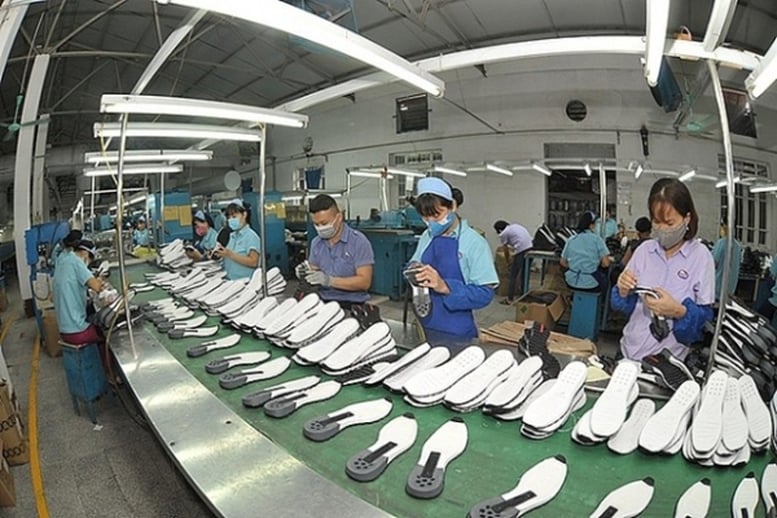
A comprehensive strategy for developing the domestic market for textiles and footwear, based on thorough research into demand, consumer trends, and challenges, needs to be urgently developed. - Illustration
Building a new brand and business model.
Mr. Tran Huu Linh emphasized that Vietnamese goods, especially textiles and footwear, have reached a quality level comparable to imported products. However, the major limitation lies in brand positioning and promotion. He cited examples of domestic businesses such as Bitis', May 10, An Phuoc, Giovani… which have succeeded thanks to persistent brand building, demonstrating the enormous potential if Vietnamese businesses invest more systematically.
To enhance competitiveness, the Director of the Department of Domestic Market Management and Development suggested that businesses need to optimize production costs, manage supply chains effectively, and apply technology to management. In addition, they should boldly shift to an omnichannel business model, combining traditional and online methods to expand customer reach and improve consumer experience.
Furthermore, Mr. Linh emphasized that investing in R&D, developing sustainable products, and applying artificial intelligence (AI) in demand forecasting and inventory management are also crucial factors for enhancing competitiveness.
Anh Tho
Source: https://baochinhphu.vn/det-may-da-giay-cung-co-thi-truong-trong-nuoc-de-nang-tam-canh-tranh-toan-cau-102250826163600834.htm

![[Photo] Prime Minister Pham Minh Chinh holds a phone call with the CEO of Russia's Rosatom Corporation.](/_next/image?url=https%3A%2F%2Fvphoto.vietnam.vn%2Fthumb%2F1200x675%2Fvietnam%2Fresource%2FIMAGE%2F2025%2F12%2F11%2F1765464552365_dsc-5295-jpg.webp&w=3840&q=75)



![[Photo] Closing Ceremony of the 10th Session of the 15th National Assembly](/_next/image?url=https%3A%2F%2Fvphoto.vietnam.vn%2Fthumb%2F1200x675%2Fvietnam%2Fresource%2FIMAGE%2F2025%2F12%2F11%2F1765448959967_image-1437-jpg.webp&w=3840&q=75)








































![[OFFICIAL] MISA GROUP ANNOUNCES ITS PIONEERING BRAND POSITIONING IN BUILDING AGENTIC AI FOR BUSINESSES, HOUSEHOLDS, AND THE GOVERNMENT](https://vphoto.vietnam.vn/thumb/402x226/vietnam/resource/IMAGE/2025/12/11/1765444754256_agentic-ai_postfb-scaled.png)













































Comment (0)