

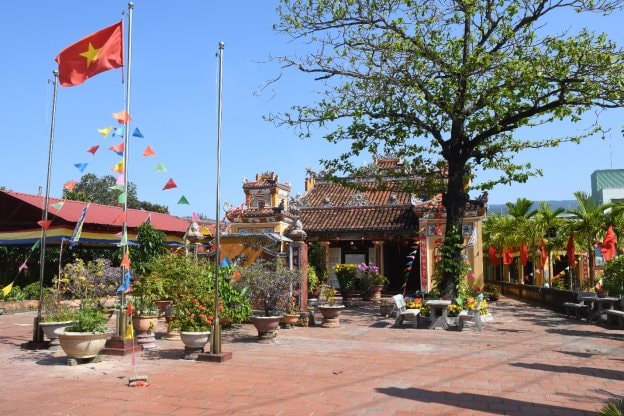
Remnants of the old village
Located on Pham Van Xao Street, Nai Hien Dong village communal house (Son Tra ward) is one of the historical and cultural relics closely associated with the history of the formation of villages in the coastal area of Da Nang .
Many existing historical sources indicate that this area was settled in the mid-15th century, when the first inhabitants of Dai Viet migrated from the Northern Delta to cultivate the land and establish villages. They built a communal house to worship the tutelary deity and the ancestors who contributed to the development of the land.
Originally, Nai Hien Dong was known colloquially as Con Nhan. Some believe it wasn't Con Nhan but Con Nhan, with the word "Nhan" being a mispronunciation of "Nhan".
Originally, this was a swampy area near the sea. When the tide rose and fell, shrimp, fish, crabs, and other marine life would be carried in by the current. Many swallows gathered here to feed, densely covering the sandbank, hence the name "Swallow Sandbank." They often nested on the eaves of the communal house, so Nai Hien Dong village was also known as "the land of swallows."
According to Thiều Chửu's Sino-Vietnamese dictionary, Nại (耐) means to endure; Hiên (軒) means eaves; and Đông (東) means east. Thus, Nại Hiên Đông means an east-facing front porch, patiently enduring rain, wind, and storms.
Based on ancient documents and inscriptions at An Long Pagoda (behind the Da Nang Cham Sculpture Museum), some researchers believe that Nai Hien Dong communal house may have been built before 1657, earlier than An Long Pagoda. Over time, the communal house was damaged by war. After being damaged and restored many times, in 2021, the communal house was newly renovated on its old foundation, preserving the traditional layout of a Vietnamese village communal house.
The temple roof stands in solemn silence.
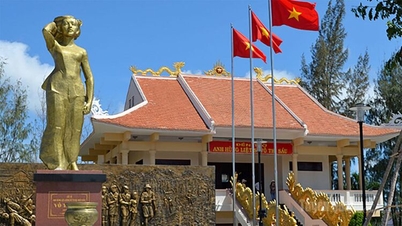
Located on a 1,640m² plot of land, with its southwest-facing facade, Nai Hien Dong communal house has an ancient appearance with a T-shaped layout (also known as the "hammer handle" style). The main hall is over 70m², connected to the rear sanctuary.
The temple roof is covered with yin-yang tiles, the apex is decorated with a "two dragons vying for a pearl" motif, and the intricate ceramic mosaic carvings add a touch of softness amidst the sturdy architecture. On either side of the front roof are the drum house and the bell house, creating an elegant "layered roof" arrangement that makes the temple roof stand out against the sky of the coastal area.
In front of the courtyard is a screen shaped like a scroll; the front is adorned with a ceramic relief of a tiger guarding the entrance, while the back is decorated with a phoenix. These decorative motifs symbolize the power and protection of the gods.
Inside the communal house, there is a main hall dedicated to the tutelary deity of the village; and two side halls dedicated to the village's founding ancestors who contributed to the reclamation and establishment of the village.
Two couplets in Chinese characters hanging in the central hall praise the place's status and sacred atmosphere: "The sun rises in the east, all things are imbued with ancient beauty; Dragons fly, geese dance, civilization shines brightly for generations."
Religious significance
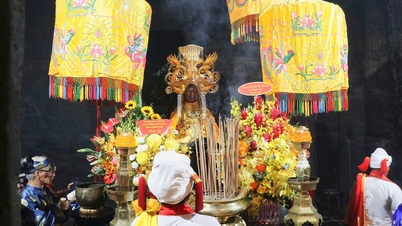
Within the temple grounds, the Shrine of the Departed Spirits is considered a special highlight in terms of religious beliefs. This is where the spirits of fallen soldiers, people who died at sea, and homeless souls are worshipped.
For the people of Nai Hien Dong, establishing the Shrine of the Spirits is not only for praying for peace but also to express compassion and the spirit of "respect without fear," offering sacrifices to guide wandering souls to the afterlife, hoping they will bless the villagers with peace.
Besides the ancestral shrine, the tomb of the village's founding ancestor Phan Quy Cong within the temple grounds is also a valuable testament to the village's history. The sandstone tombstone clearly inscribed with the words: "Tomb of the esteemed father, Phan Quy Cong, posthumous name Minh Tri," dating back to around 1625.
Beyond its spiritual significance, Nai Hien Dong communal house is also a revolutionary site. During the resistance against the French, it served as the headquarters of the Eastern Zone armed forces – a location for a "secret mailbox" transmitting information between the mainland and ships in Da Nang Bay.
The communal house is not only a place that preserves the history of the region's formation and the memories of the resistance war, but also a symbol of the indomitable spirit and patriotism of the people of Da Nang's coastal region.
Therefore, in 2002, the Da Nang City People's Committee recognized Nai Hien Dong communal house as an architectural, artistic, and revolutionary historical relic. In 2017, this relic was further classified at the city level.
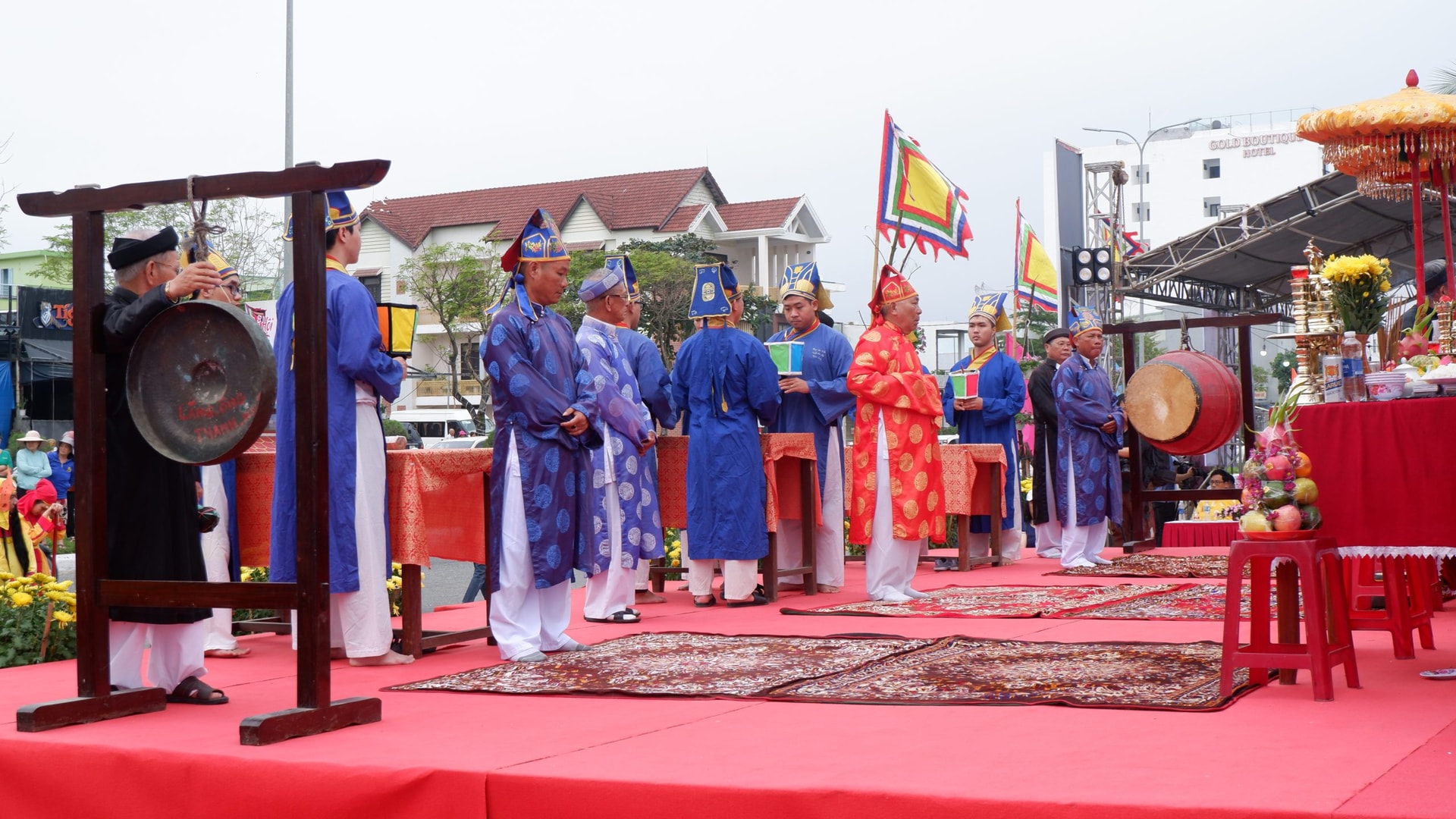
Nearly four centuries have passed, yet the people of Nai Hien Dong still preserve their traditional rituals. Every year, during the spring and autumn festivals, they gather to offer sacrifices and incense in remembrance of their ancestors and pray for favorable weather. This is not only a traditional religious activity but also an opportunity to strengthen community bonds, foster compassion, and promote solidarity among the coastal villagers.
Source: https://baodanang.vn/dinh-cua-nguoi-lang-bien-3330767.html



























































































Comment (0)