

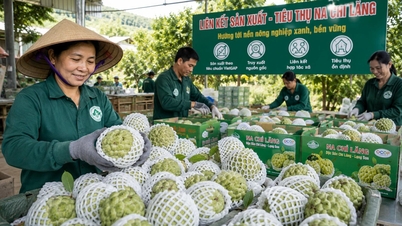
In recent times, agricultural extension activities have not only focused on technology transfer but have also played a bridging role in supporting cooperatives and farmers to improve their management capacity and link production and consumption.
To meet the demands of modern agricultural development, agricultural extension activities are gradually innovating their methods and improving the quality of their operations. This contributes to promoting the effective operation of cooperatives, increasing income, and improving the lives of farmers.
 |
| Agricultural extension services have served as the central point for organizing training activities, building demonstration models, and disseminating sustainable farming practices. |
From support to connectivity
According to the National Agricultural Extension Center, in implementing Resolution No. 19-NQ/TW on agriculture, farmers, and rural areas until 2030, with a vision to 2045, and Decision No. 150/QD-TTg approving the Strategy for Sustainable Agricultural and Rural Development for the period 2021-2030, with a vision to 2050, agricultural extension work has proactively shifted from a supportive approach to a connected, integrated, multi-valued approach, linked with knowledge and skills in agricultural economics .
In this context, the community-based agricultural extension model is a new approach to connecting the agricultural extension system with the business community, socio- political organizations, and professional associations to better support farmers in applying technological advancements and useful solutions to production, helping to improve livelihoods, increase income, and contribute to building an efficient and sustainable agricultural sector towards ecological agriculture, modern rural areas, and civilized farmers.
Specifically, in recent years, the strong involvement of the community-based extension system has contributed significantly to the success of the Sustainable Development Project for 1 million hectares of high-quality, low-emission rice cultivation linked to green growth in the Mekong Delta by 2030. This force is a key link, acting as a bridge and guiding farmers to help realize the project's objectives.
Mr. Le Quoc Thanh, Director of the National Agricultural Extension Center, stated: Community agricultural extension groups have effectively demonstrated their role as a direct link between farmers, cooperatives, businesses, scientific and technological organizations, financial institutions, and markets in implementing the project. This ensures the reorganization of production linked to the value chain and promotes the linkage of the "four stakeholders" (farmers, businesses, scientists, and the government). Community agricultural extension forces also serve as an "extended arm" of the local agricultural sector, playing a leading, guiding, and supportive role alongside farmers.
Dr. Tran Minh Hai, Vice Rector of the School of Public Policy and Rural Development, stated: The extension service has clearly affirmed its important role and position in agriculture and the environment, serving as a core force contributing to the effective implementation of major policies and promoting the restructuring of the agricultural sector towards modernization and sustainability. The community extension service model is proving to be a correct approach, helping to bring policies and technological advancements into practice quickly and effectively.
In the province, according to the Department of Agriculture and Environment, in recent years, the agricultural extension system, especially the community-based agricultural extension model, has made a significant contribution to promoting the development of cooperatives and improving the lives of farmers. Many cooperatives have been established and operate effectively thanks to the advice and support of agricultural extension services.
Many value chain production linkage models have been formed, bringing practical benefits to farmers and businesses. Farmers' awareness of safe and sustainable production and the need for cooperation has been significantly raised.
Continue to innovate and enhance capabilities.
Practical experience has proven that agricultural extension is a tool for technology transfer and a driving force for programs and projects to develop raw material areas, adapt to climate change, and protect the environment. However, agricultural extension work still has some limitations, such as: the capacity of some extension officers, especially in business management, market research, and trade promotion, is still not up to par; the number of effective community agricultural extension groups is still low, mostly operating in a superficial and 형식적인 (campaign-style) manner; and there are no policies or incentives for community agricultural extension groups…
According to statistics, the country has established 5,187 community-based agricultural extension groups with nearly 47,500 members in 34 provinces and cities, of which 26 are under the central government's pilot program, while the rest are implemented proactively by local authorities. Since their establishment, these community-based agricultural extension groups have made significant efforts and actively played a crucial role in the development of agriculture and rural areas in their respective localities. In the Mekong Delta region in particular, community-based agricultural extension groups have been identified as a core force participating in the project to develop 1 million hectares of high-quality, low-emission rice cultivation, linked to green growth in the Mekong Delta by 2030.
Dr. Tran Minh Hai emphasized: Extension has been, is, and will continue to be an important macroeconomic policy tool, a direct driving force for the restructuring of agriculture. Investing in extension, especially extension in the development of cooperatives and communities, is an investment in the sustainable development of agriculture, improving the quality of life for farmers and building civilized and modern new rural areas.
In the coming period, the extension sector needs comprehensive innovation towards sustainability, market orientation, community organization, and technology integration, continuing to affirm its core role in restructuring the agricultural sector. To further enhance the role of the extension sector, it is necessary to increase investment in resources for the extension system, especially the community-based extension model.
There should be appropriate incentive mechanisms to attract and retain talented extension workers. The public-private partnership (PPP) mechanism in extension activities should be promoted, attracting the participation of businesses and industry associations. The extension system needs comprehensive reform of its content and methods of operation.
The focus should shift from "hands-on guidance" to providing advice, information, connections, and support to farmers and cooperatives in decision-making. Simultaneously, the application of digital technology in agricultural extension activities should be promoted to disseminate knowledge more quickly and effectively.
Text and photos: NGUYEN KHANG
Source: https://baovinhlong.com.vn/kinh-te/nong-nghiep/202601/doi-moi-nang-cao-hieu-qua-hoat-dong-khuyen-nong-1e13f02/





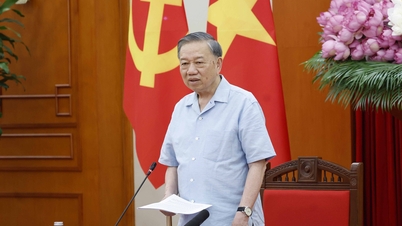
![[Photo] General Secretary and President To Lam presides over a meeting on preparations for the review of one year of operation of the three-tiered government system.](https://vphoto.vietnam.vn/thumb/1200x675/vietnam/resource/IMAGE/2026/06/02/1780391821195_a1-bnd-4595-9717-jpg.webp)

































































Comment (0)