

The supplementary plan for socio -economic development in 2025, aiming for a growth rate of 8% or higher, was the first item considered and commented on by the 9th Extraordinary Session of the 15th National Assembly during its opening session on February 12, 2025.
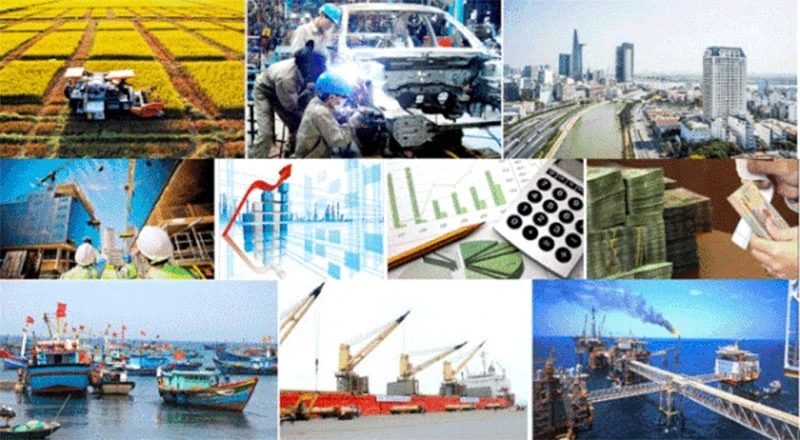
In the proposal, the Government suggests that the National Assembly adjust the target for gross domestic product (GDP) growth to 8% or higher, instead of the current level. GDP growth A growth rate of approximately 6.5-7%, with a target of around 7-7.5%, was approved by the National Assembly at its 8th session in November 2024. Achieving this growth rate in 2025 will create a solid foundation for achieving double-digit growth over a sufficiently long period, starting in 2026.
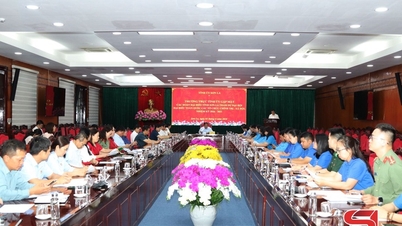
In an effort to boost economic growth, right from the first quarter of 2025, the Standing Committee of the Government met with businesses to discuss solutions to support private enterprises in accelerating their growth and breakthroughs, contributing to the rapid and sustainable development of the country in the new era. This event not only serves to encourage and motivate the entrepreneurial spirit but also demonstrates the trust of the Party, State, and Government in entrusting the Vietnamese business community with a great responsibility at the threshold of the country's history.
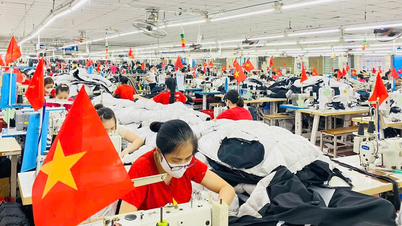
After nearly 40 years of reform, the Vietnamese business community has grown significantly in both quantity and quality, with over 940,000 active enterprises, more than 30,000 cooperatives, and over 5 million individual business households. The business sector is increasingly asserting its important position and role in socio-economic development, industrialization, and modernization of the country, contributing approximately 60% to GDP growth, 98% of total export turnover, and creating jobs for 85% of the national workforce. Some enterprises have developed and risen to regional and global levels, actively participating in and asserting their position and role in global supply chains, contributing to enhancing Vietnam's standing and prestige internationally.
However, Vietnamese businesses still face many limitations, and their potential and room for development remain largely untapped. While some large private enterprises, worth billions of USD and with global competitiveness, have emerged, the majority remain small and micro-sized, lacking competitiveness, and their business operations are still largely seasonal and lacking strategic vision. Notably, the growth momentum of Vietnamese businesses is slowing down following the Covid-19 pandemic.
While the ratio of new businesses entering the market to those leaving was typically 3 times before 2019, this ratio decreased to 1.18 times by 2024. Simultaneously, the total number of newly established businesses and businesses re-entering the market was lower than the total number of businesses temporarily ceasing operations or going bankrupt during the same period. This indicates that, although the investment and business environment has improved, it has not yet met the development requirements of businesses in particular and the economy in general.
In reality, the enactment of policies and laws is still primarily aimed at management and supervision rather than truly fostering development, leading to overlapping legal documents and difficulties in implementation. The biggest legal bottlenecks are concentrated in two areas: the mobilization, allocation, and use of resources, and in specialized laws, most notably in conditional business sectors. These are also the issues that businesses and entrepreneurs persistently propose to be resolved whenever they have the opportunity to work with the Government and the Prime Minister.
In the context of a continuously complex and unpredictable global situation, proactively increasing endogenous capacity to promote growth is an urgent requirement. Without promoting the development of the business community, growth targets will become difficult to achieve and unsustainable. Institutional reform efforts, along with the streamlining of the administrative apparatus, are expected to remove institutional bottlenecks, unleash investment resources for development, and unlock growth drivers from the business sector.
Institutional reform is inseparable from the development of the business sector, especially domestic private enterprises. Businesses need the impetus to overcome challenges, and only institutional reforms can provide that. When their entrepreneurial spirit is revitalized, businesses will shoulder the major and difficult tasks facing the country's development and become a force in finding solutions to the double-digit growth of the economy. In the current context, it is entrepreneurs and businesses that are the key to revitalizing the nation and ensuring the people's well-being and happiness.
Source





























![[Photo] Reception to welcome General Secretary and President To Lam and his wife on their State visit to the Philippines](https://vphoto.vietnam.vn/thumb/1200x675/vietnam/resource/IMAGE/2026/06/01/1780295488620_vna-potal-chieu-dai-chao-mung-tong-bi-thu-chu-tich-nuoc-to-lam-va-phu-nhan-tham-cap-nha-nuoc-toi-philippines-8798060-7855-jpg.webp)































































Comment (0)