

The story of the extraordinary connection that began 800 years ago between Mr. Ly Xuong Can, the 31st-generation descendant of King Ly Thai To, became a highlight at an international conference in Ho Chi Minh City last weekend.
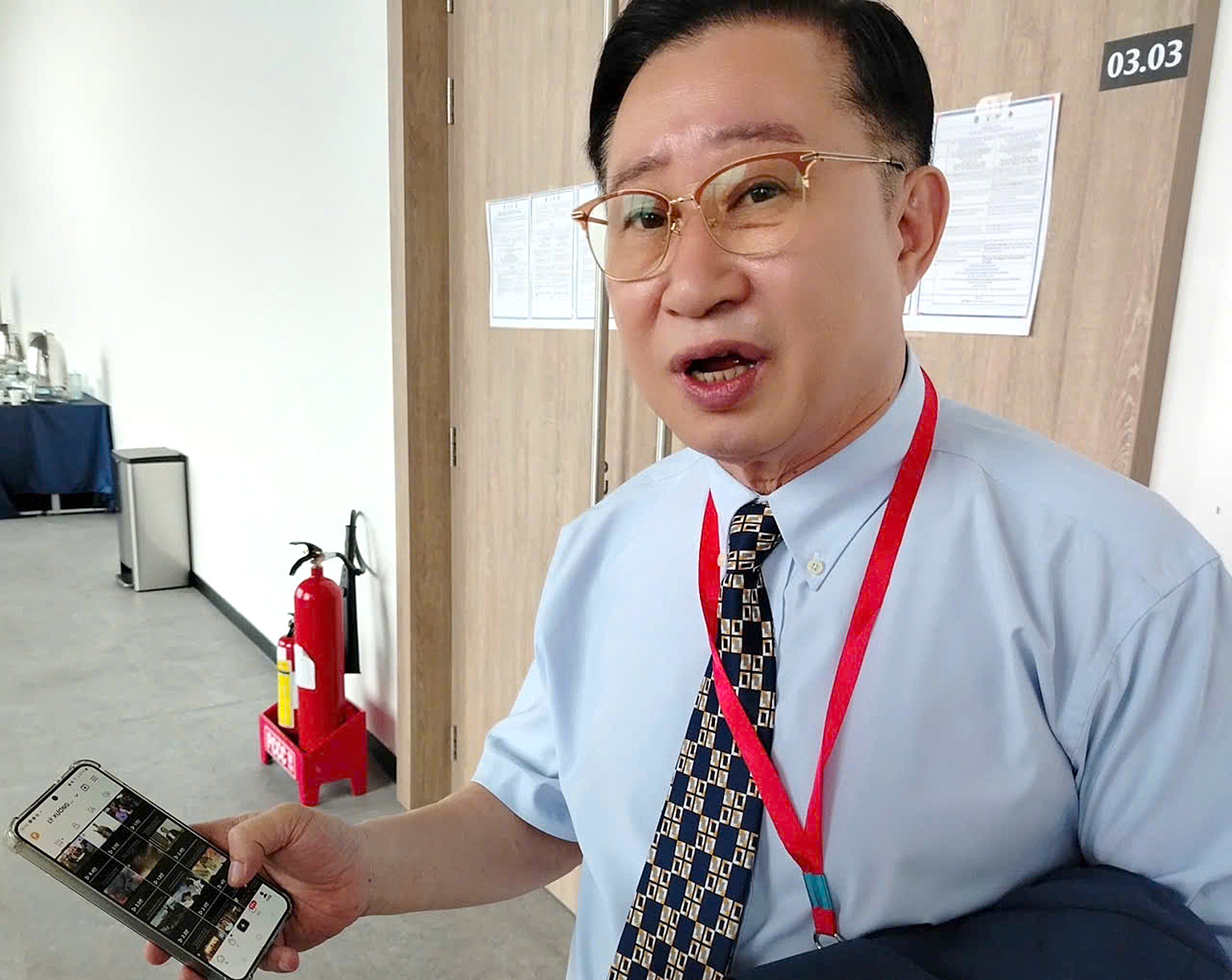
Mr. Ly Xuong Can opened his phone and shared about his TikTok and YouTube channels with videos about Vietnam. He said that the comments he receives from Vietnamese people are always warm and full of respect, which touches him deeply. - Photo: D. KIM THOA
That story became a vivid example of the comprehensive strategic partnership between Vietnam and South Korea: a relationship built on a long-standing historical foundation, nurtured by the tireless efforts of both nations, and continuing to develop in an increasingly comprehensive and sustainable direction.
The mission of a person living far from home.
At the international conference "Vietnam-Korea Relations Towards Long-Term Cooperation in the International Context from a Historical and Cultural Perspective," organized by Van Lang University on November 8-11, Mr. Lee Chang-keun delivered an emotional presentation. "I have dual citizenship: Korean and Vietnamese. Although only a little Vietnamese blood remains in me, my love for Vietnam remains strong," Mr. Lee Chang-keun said emotionally in Vietnamese at the conference.As a descendant of the 31st generation of King Ly Thai To (974 - 1028) - the first king of the Ly dynasty, Mr. Ly Xuong Can recounted the story of his ancestor, Prince Ly Long Tuong - who left Vietnam for Korea 800 years ago (1226) in his paper "Looking back at the long-standing historical relationship of Vietnam - Korea through the aspirations of a forgotten prince".
In a side conversation with Tuoi Tre newspaper at the seminar, Mr. Ly said that since his first return to Vietnam in 1994, he has always remembered the warm welcome from the people and leaders of Vietnam at that time. These warm feelings made him feel like a son who had been away from home returning to his ancestors and roots.
Currently, in his role as a member of the Central Committee of the Vietnam Fatherland Front for the 2024-2029 term and as Vietnam's tourism ambassador to South Korea, even though he is approaching 70 years old, he still expresses his enthusiasm to continue contributing to the economic and cultural tourism development of Vietnam.
"Perhaps I should call this a destiny or a mission. I believe I was born with a mission to find my roots, and in that role, I feel I must be a bridge between two homelands, two cultures. It seems like a predestined connection and fate," Mr. Lee shared when asked why he has dedicated so much effort to connecting the two countries.
"I also sincerely hope that future generations of Vietnamese youth will remember and cherish the traditional values of our nation, always preserving, promoting, and being proud of their roots. That is the foundation for us to develop strongly and reach even further."
"Perhaps this is also my personal sentiment, the reason why I always yearn to fully complete my mission," he added.
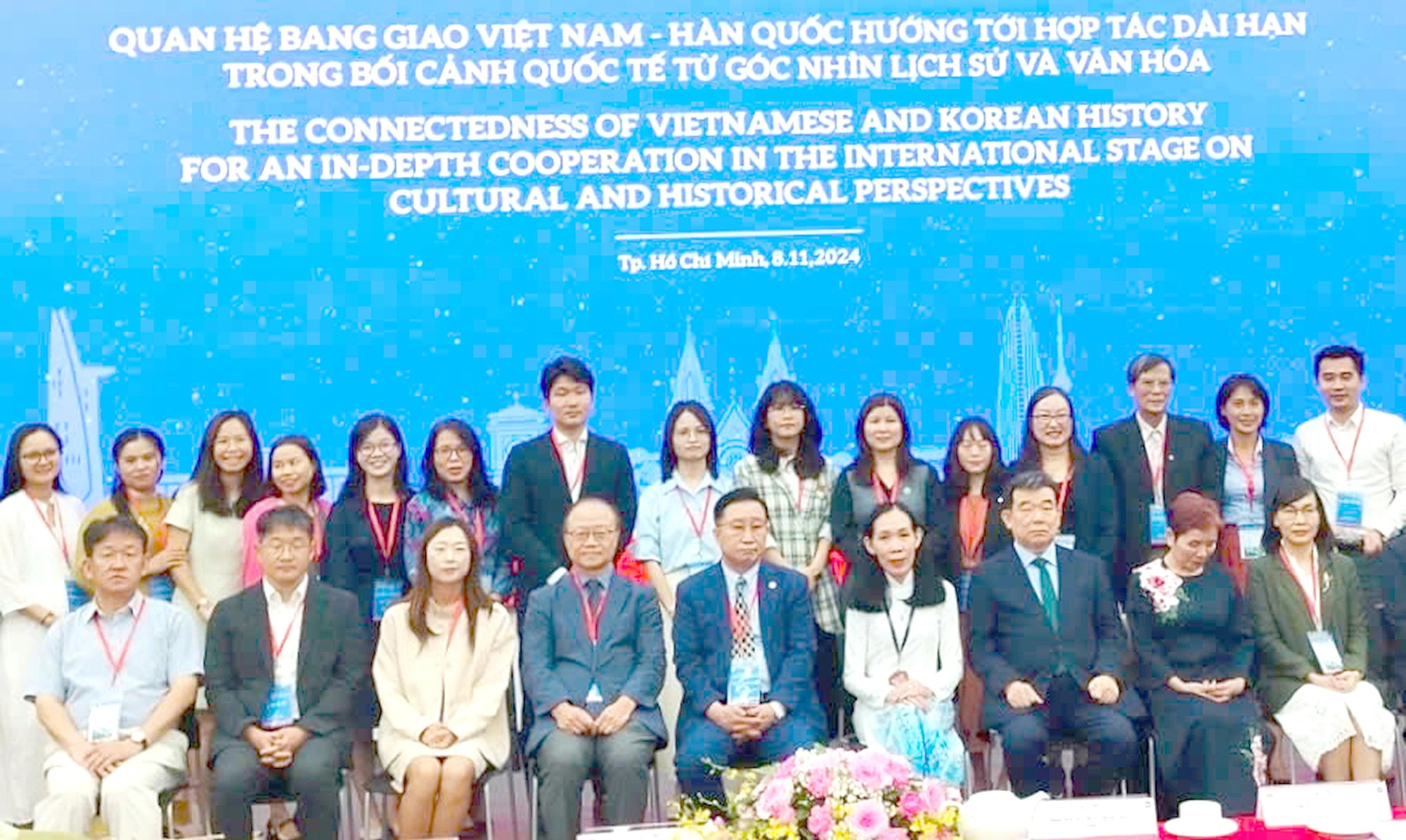
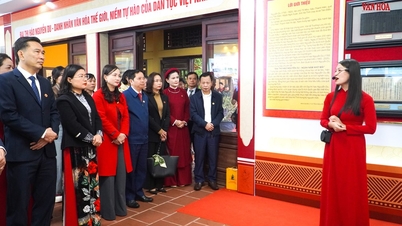
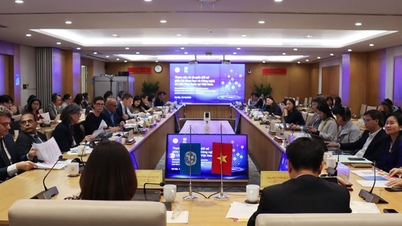
Delegates attending the international conference at Van Lang University on November 8-11 - Photo: D.KIM THOA
Lessons from South Korea
At the seminar, experts provided an in-depth analysis of South Korea's miraculous development journey and the valuable lessons that can be learned for Vietnam. From a poor country after the war, South Korea has risen to become a global technological powerhouse.
According to researchers Ngo Cao Nghia and Ngo Ngoc Bich Tuyen, 2023 marks a significant milestone as South Korea officially joins the "space powers" club with the ability to launch satellites using domestically developed rockets.
In the technology sector, Samsung has surpassed giants like Toshiba and Intel to become the world's leading chip manufacturer. Hyundai and Kia have also established themselves in the global automotive industry. This success is not accidental but the result of a well-planned development strategy focused on high technology and innovation.
One notable lesson is how South Korea has built its digital economic ecosystem. According to experts, South Korea has successfully created a strong link between traditional industries and the creative economy. In particular, South Korea's skillful integration of technology and culture is a model worth emulating.
According to researchers Ngo Cao Nghia and Ngo Ngoc Bich Tuyen, South Korea not only produces cultural content but also applies advanced technologies such as virtual reality, blockchain, and artificial intelligence to enhance the experience.
For example, the HiKR model uses "extended reality" (XR) technology to create interactive spaces for visitors, or SM Entertainment's development of the SMCU virtual universe allows fans to interact with their idols in unprecedented ways.
Notably, the esports industry is experiencing significant growth, with South Korea leading the way thanks to its advanced technological infrastructure. Esports has become the fifth most popular future career for Korean students, with industry revenue reaching $1.42 billion in 2022.
In the field of green development, South Korea's experience is even more relevant to Vietnam in the context of current climate change.
In their paper, Dr. Dinh Thi Ly Van and researcher Pham Tuyet Nhuoc, studying South Korea's second five-year green growth plan (2014-2018), proposed an application model for Vietnam's green economic development practices.
Accordingly, the research team pointed out that South Korea's plan has achieved significant success through five key policy directions. First, they have succeeded in reducing greenhouse gas emissions by establishing an emissions trading platform, allowing businesses to buy and sell emission quotas.
Next, South Korea built a clean energy system by boosting renewable energy production and allocating electricity rationally to each locality. Simultaneously, they focused on developing green technologies and restructuring the economy, helping the green industry reach a scale of over 100 trillion won in 2014.
In particular, South Korea has been very successful in encouraging its citizens to participate in building a green society, with 95% of local governments actively participating in carbon emission reduction programs. They have also promoted the development of green transportation and strengthened international cooperation on climate change.
Based on these valuable experiences, the study proposed a specific application model for the green transportation industry in Vietnam, using VinFast as an example.
This model proposes five main directions: developing advanced technologies such as next-generation batteries, promoting recycling technologies to protect the environment, strengthening cooperation with international partners, investing heavily in research and development, and building a flexible global supply chain.
Shifts in training and research
According to data from Dr. Phan Thi Thu Hien (University of Social Sciences and Humanities - Vietnam National University Ho Chi Minh City), as of 2024, Vietnam had 46 universities and colleges teaching Korean language and Korean studies. Notably, with 22 King Sejong Institute campuses, Vietnam leads the world in the number of these Korean language and culture centers. This not only contributes to improving the quality of teaching but also creates a generation of Korean studies experts in Vietnam. This development has created a high-quality workforce, meeting the growing needs of over 8,000 Korean businesses operating in Vietnam. At the same time, it also contributes to promoting cultural understanding between the two nations, especially in the context of approximately 90,000 Korean-Vietnamese multicultural families that have been formed.Tuoitre.vn
Source: https://tuoitre.vn/dong-mau-viet-trong-tim-mot-nguoi-han-20241110211840124.htm


![[Image] Central Party Office summarizes work in 2025](/_next/image?url=https%3A%2F%2Fvphoto.vietnam.vn%2Fthumb%2F1200x675%2Fvietnam%2Fresource%2FIMAGE%2F2025%2F12%2F18%2F1766065572073_vptw-hoi-nghi-tong-ket-89-1204-jpg.webp&w=3840&q=75)















































Comment (0)