

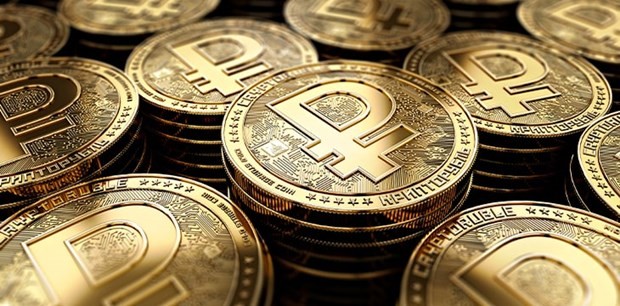
 |
| Digital Ruble - Russia Unleashes 'New Weapon', Seeking an Escape Amidst Sanctions. (Source: coingeek.com) |
From August 1st, the digital ruble officially came into effect in Russia, after Russian President Vladimir Putin signed the law authorizing its issuance.
Thus, just four months after its trial introduction (from April 1st), Russia has accelerated the deployment of the digital ruble, amidst counter-sanctions from the West, including sanctions in the financial and monetary sectors. The use of this new currency is seen as an effective solution for Moscow to make important payments domestically and internationally, significantly reducing its dependence on the Western financial system.
What is the digital ruble?
The Central Bank of Russia (CBR) stated that the digital ruble is not a cryptocurrency but a national means of payment, and its circulation will be decided solely by the CBR.
The digital ruble, issued alongside the traditional ruble, is created on a special platform by the central bank and can be transferred and used for payments online or offline, without the need for intermediary credit institutions.
Researcher Sauradeep Bag believes that the digital ruble, once more accessible, promises to revolutionize financial transactions and reshape Russia's financial landscape.
President Putin's signing of the law on the digital ruble has reinforced Russia's commitment to the widespread deployment of the currency. The proposed law legalizing the digital ruble received approval from both houses of parliament , the State Duma and the Federation Council, as Russia accelerated the process after facing financial sanctions from the West.
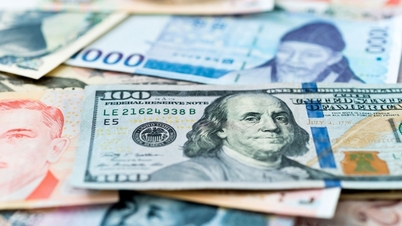
It is recognized that interoperable digital currencies can enhance international trade and create a sphere of influence beyond the dominant USD system.
Of course, the success of these initiatives requires careful consideration of various factors, including the strength of China's digital yuan and the potential for a "revival" of the US dollar, demanding pragmatic approaches and cautious oversight.
Russia's approach to developing a digital currency also differs from that of its counterparts. While countries like India focus on asserting monetary sovereignty and maintaining competitiveness in the digital currency world, Russia's motivation is driven by national survival and development.
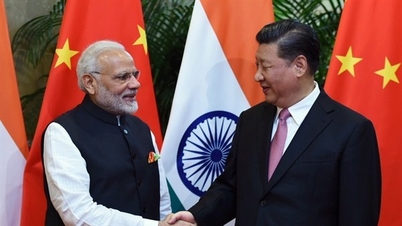
Even at a business conference in New Delhi, Russian State Duma Deputy Chairman Alexander Babakov proposed a unified digital currency for Russia, China, and India. The main goal would be to promote trade compliant with each country's regulations, while simultaneously reducing dependence on the US dollar or the euro, and minimizing Russia's vulnerability to international sanctions.
Boosting trade is a key objective for Russia while circumventing current sanctions and reducing its long-term dependence on two of the world's major reserve currencies. Furthermore, such a common digital currency could foster stronger economic ties between Russia, India, and China and pave the way for an alternative financial system beyond traditional dominant currencies.
Russia, India, and China, members of the BRICS group of leading emerging economies, have considered a multinational digital currency, but with limited progress. While not entirely new, the concept holds significant importance for Russia, particularly in the face of escalating sanctions.
Russia has previously explored the use of digital currencies for international transactions, but European restrictions have hampered that approach. There is also speculation about potential digital currency cooperation between Russia and Iran.
Russia opens a way out
The European Union (EU), the United States, Canada, and the United Kingdom have imposed sanctions on Russia, including banning several Russian banks from participating in the international financial exchange system SWIFT. The aim is to economically isolate Russia, block revenue streams, and pressure Russia to end its military campaign in Ukraine.
These sanctions strain global supply chains because Russia is a major exporter of crude oil, wheat, and cobalt, leading to a surge in prices worldwide. Russia is leveraging its trade partnerships in Asia and Africa and deploying a digital ruble to enhance trade efficiency.
Boosting trade is a key objective for Russia while circumventing current sanctions and reducing its long-term dependence on two of the world's major reserve currencies, the US dollar and the euro.
US sanctions have had a significant impact as global trade in US dollars has allowed for the freezing of transactions, causing the value of the ruble to plummet and raising concerns about Russia's debt obligations.
Countries around the world are experimenting with digital currencies, and Russia is no exception. The CBR first showed interest in digital currencies in 2017 but had no significant development plans. However, in 2022, the CBR unexpectedly announced plans to launch a digital ruble by 2024.
Plans to develop a digital currency existed before the Russia-Ukraine conflict, but only truly received accelerated impetus due to Western sanctions and restrictions. The urgency to develop a digital currency grew due to the need for a reliable tool for foreign trade, following the conflict with Ukraine and the subsequent sanctions.
CBR Governor Elvira Nabiullina proposed studying the use of a digital ruble for pension payments, and discussions on a digital currency pilot program quickly resumed in March 2023. Therefore, while Russia initially intended to use the digital ruble only for domestic payments and transfers, the Russia-Ukraine conflict and harsh sanctions spurred cross-border applications, aiming to reduce reliance on the Western-controlled SWIFT.
The Russian government aims to encourage the adoption of the digital ruble, while the CBR views it as an alternative to cryptocurrencies, promoting safer domestic investments and payments. Meanwhile, the CBR has yet to take any clear stance on private cryptocurrencies.
With the wider deployment of the digital ruble, Russian citizens will have the convenience of processing payments and transferring money instantly through digital wallets. The use of digital currency will remain optional, and the government hopes its popularity will gradually increase by 2027.
Meanwhile, the BRICS members' aim in developing digital currencies reflects the convergence of advantages and the potential impact of digital currencies on the international financial and trade landscape. As Russia, India, China, Brazil, and South Africa develop their respective digital currencies, interoperability at the BRICS level becomes feasible.
Digital currencies could boost international trade and create an alternative sphere of influence outside the Western-dominated financial system centered on the US dollar.
The increasing economic influence of the BRICS countries makes the concept of a common currency quite attractive. Despite the uncertain role of digital currencies in this scenario, the potential for strong trade relations between BRICS members and their dependence on Russia for goods makes the development of such a currency worth considering.
This expanding trend points toward a future where nations challenge the status quo dominated by the US dollar and significantly alter the global financial landscape. However, the growing influence of the digital yuan or the resurgence of the US dollar could both derail Russia's plans.
Source































![[Photo] General Secretary and President To Lam presides over the meeting to approve the draft report on the results of the second inspection by the Politburo of the Standing Committee of the Hanoi City Party Committee.](https://vphoto.vietnam.vn/thumb/1200x675/vietnam/resource/IMAGE/2026/05/26/1779789811432_a2-bnd-4430-9620-jpg.webp)








































































Comment (0)