

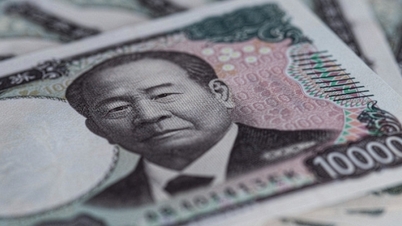
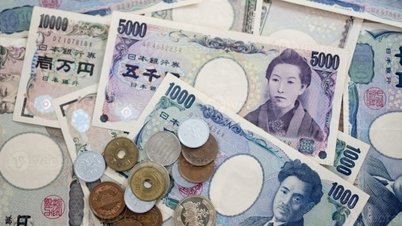
Japanese Yen exchange rate on January 3, 2025 in the domestic market.
Based on data recorded this morning, the Japanese Yen exchange rates at banks are updated as follows:
Vietcombank : The buying price reached 156.09 VND/JPY, and the selling price was 165.17 VND/JPY, decreasing by 0.77 VND and 0.95 VND respectively.
VietinBank : The exchange rate is 158.08 VND/JPY (buy) and 167.78 VND/JPY (sell), down 0.61 VND in the buying rate but up 1.34 VND in the selling rate.
BIDV Bank: The exchange rates are 157.95 VND/JPY (buying) and 166.15 VND/JPY (selling), down 1.04 VND and 0.41 VND respectively compared to before.
Agribank: The buying and selling rates are 157.90 VND/JPY and 165.31 VND/JPY respectively, a slight decrease of 0.8 VND and 0.87 VND in both directions.
Eximbank: The buying rate for JPY is 159.61 VND/JPY and the selling rate is 165.47 VND/JPY, a slight decrease of 0.16 VND in the buying rate and 0.38 VND in the selling rate.
Sacombank Bank: Recorded exchange rates of 159.32 VND/JPY (buy) and 166.36 VND/JPY (sell), a decrease of 0.16 VND and 0.13 VND respectively.
Techcombank: The buying price is 155.42 VND/JPY and the selling price is 167.88 VND/JPY, a decrease of 0.49 VND and 0.53 VND respectively.
NCB Bank: The exchange rate is listed at 157.01 VND/JPY (buy) and 165.29 VND/JPY (sell), with a decrease of 0.91 VND in the buying rate and an increase of 0.99 VND in the selling rate.
HSBC Bank: The buying price reached 157.61 VND/JPY and the selling price was 164.38 VND/JPY, recording a decrease of 1.11 VND and 1.17 VND respectively.
According to the survey, Eximbank and Sacombank are leading in offering the highest buying rates for the Japanese Yen, while HSBC lists the lowest selling rates among the banks monitored.
| *Note: Cash buying and selling rates | ||||
| Day | January 3 , 2025 | Change from the previous session | ||
| Bank | Buy | Sell | Buy | Sell |
| Vietcombank | 156.09 | 165.17 | -0.77 | -0.95 |
| VietinBank | 158.08 | 167.78 | -0.61 | +1.34 |
| MB | 157.95 | 166.15 | -1.04 | -0.41 |
| Agribank | 157.90 | 165.31 | -0.8 | -0.87 |
| Eximbank | 159.61 | 165.47 | -0.16 | -0.38 |
| Sacombank | 159.32 | 166.36 | -0.16 | -0.13 |
| Techcombank | 155.42 | 167.88 | -0.49 | -0.53 |
| NCB | 157.01 | 165.29 | -0.91 | -0.91 |
| HSBC | 157.61 | 164.38 | -1.11 | -1.17 |
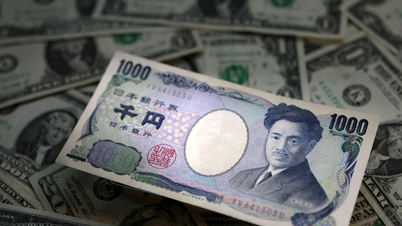
Japanese Yen exchange rate on January 3, 2025 in the international market.
On January 2nd, 2025, the USD/JPY exchange rate recorded its third consecutive day of decline, currently maintaining a level of approximately 156.20 USD/JPY. The main reason lies in the strengthening of the Japanese Yen, driven by expectations that the Bank of Japan (BoJ) may raise interest rates in January. This is fueled by economic factors and fiscal policies that support the appreciation of the domestic currency.
One of the main reasons supporting the yen is the positive inflation data from Tokyo. The consumer price index (CPI) for December 2024 rose 3.0% year-on-year, higher than the 2.6% in November. Other CPI indicators also showed significant increases, reinforcing the view that inflation in Japan is exceeding the Bank of Japan's 2% target.
This data fuels expectations that the Bank of Japan (BoJ) will end its prolonged period of loose monetary policy and shift toward tightening. A rate hike, if implemented, would not only strengthen the yen but also attract more foreign investment due to the prospect of higher yields.
Meanwhile, the US dollar continued to be under pressure due to falling US Treasury yields. Yields on 2-year and 10-year Treasury bonds fell to 4.24% and 4.53%, respectively, reducing the greenback's attractiveness against the Japanese yen. This prompted investors to shift towards holding Japanese yen.
The USD Index (DXY), which measures the strength of the USD against major currencies, edged lower around 108.00. This reflects the weakening of the USD and adds further downward pressure on the USD/JPY pair.
The preference for the yen as a safe-haven asset has been strengthened amid global monetary policy uncertainty. The yen, already considered a "haven" during times of instability, is even more attractive as the Bank of Japan (BoJ) may raise interest rates.
Furthermore, the yield spread between Japanese and US bonds is narrowing, driven by expectations of a Bank of Japan (BoJ) tightening policy. Previously, higher yields from US bonds put downward pressure on the yen, but this is gradually changing, creating conditions for a stronger yen appreciation.
Experts believe that if the Bank of Japan (BoJ) raises interest rates as expected, the yen could maintain its upward trend in the near future, pushing the USD/JPY exchange rate lower in the medium and long term. This also depends on the BoJ's policy decisions in January and the level of response from other central banks such as the US Federal Reserve (FED).
Overall, the Japanese yen is showing an impressive recovery, while the US dollar continues to weaken, creating significant changes in the international exchange rate landscape.
Source: https://baodaknong.vn/ty-gia-yen-nhat-ngay-3-1-2025-dong-yen-dong-loat-suy-yeu-238765.html


![[Photo] Prime Minister Pham Minh Chinh receives the Chinese Ambassador to Vietnam](https://vphoto.vietnam.vn/thumb/1200x675/vietnam/resource/IMAGE/2026/04/05/1775397481797_ndo_br_dsc-5512-jpg.webp)


































































































Comment (0)