

- Strengthening the first line of defense protecting and caring for the people's health - Part 2: Upgrading the three main pillars
- The highest goal is to protect and care for the health of the people.
Complete digitization of the medical examination and treatment process.
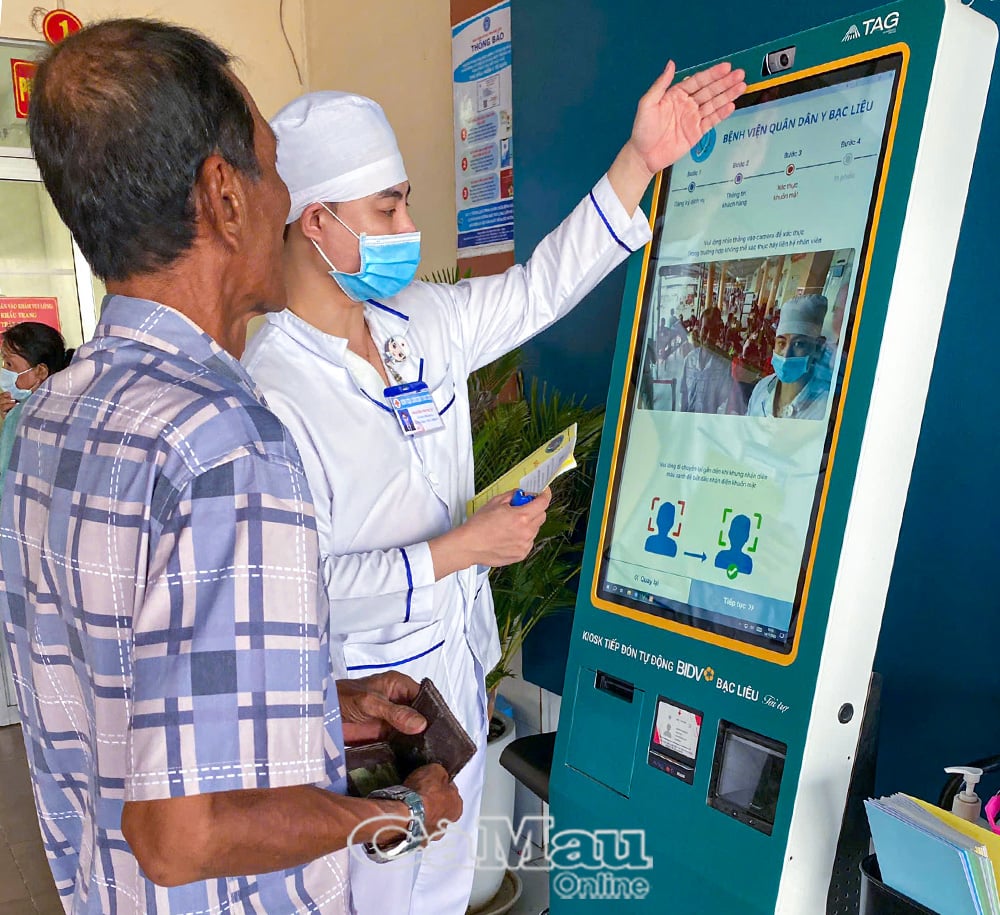
Aiming to build a smart and modern hospital model, Bac Lieu Military and Civilian Hospital has implemented automated registration kiosks, an online registration system, electronic medical record management software, and cashless payment systems. The digitization of all administrative and professional processes reduces bureaucracy and significantly shortens patient waiting times. Simultaneously, the hospital regularly organizes digital skills training for its medical staff, ensuring that each employee is proficient in using technology in their daily work.
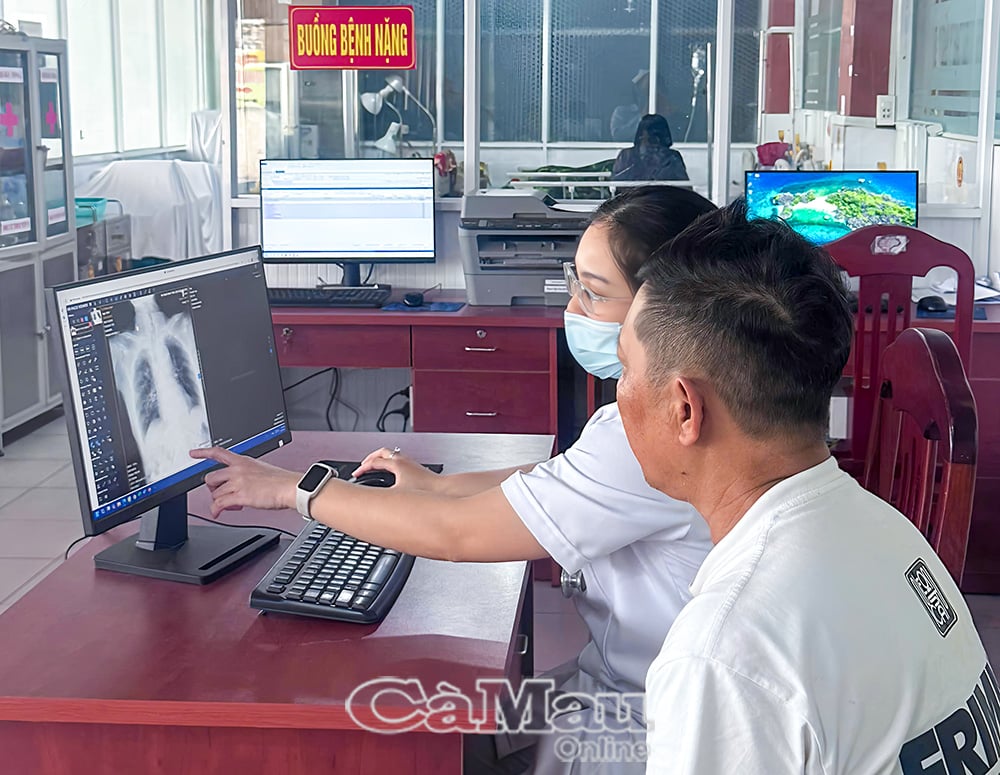
The comprehensive digitalization of the medical examination and treatment process helps the medical staff at Bac Lieu Military and Civilian Hospital to monitor patients' conditions more easily. (Photo: THANH HAI)
The implementation of the Electronic Medical Record System (EMS) at Bac Lieu Military-Civilian Hospital is a significant milestone. Lieutenant Colonel Ma Hong Anh, Director of the hospital, stated: “Before the assessment council officially evaluated the hospital as eligible to implement the EMS in mid-August 2025, the unit strictly followed the directives of the Provincial Military Command, developed a specific plan, invested in equipping the system with software, and added hardware equipment such as servers, specialized computers, an internal network system, and storage devices to protect medical data. At the same time, we organized numerous in-depth training courses for all staff on the operation and use of the system, ensuring uniformity in operation and patient information management.”
To date, 100% of the hospital's departments and wards have implemented e-medical records (EPRs) across all stages: patient reception, examination, treatment, and monitoring. This application enhances information security, increases transparency in the treatment process, and allows doctors to quickly access patient medical history, shortening the time spent on examinations and treatments. The benefits are particularly evident for chronic patients or those with frequent follow-up visits, as they no longer need to carry numerous documents. Medical staff can access patient records anytime, anywhere, improving the quality of diagnosis and treatment.
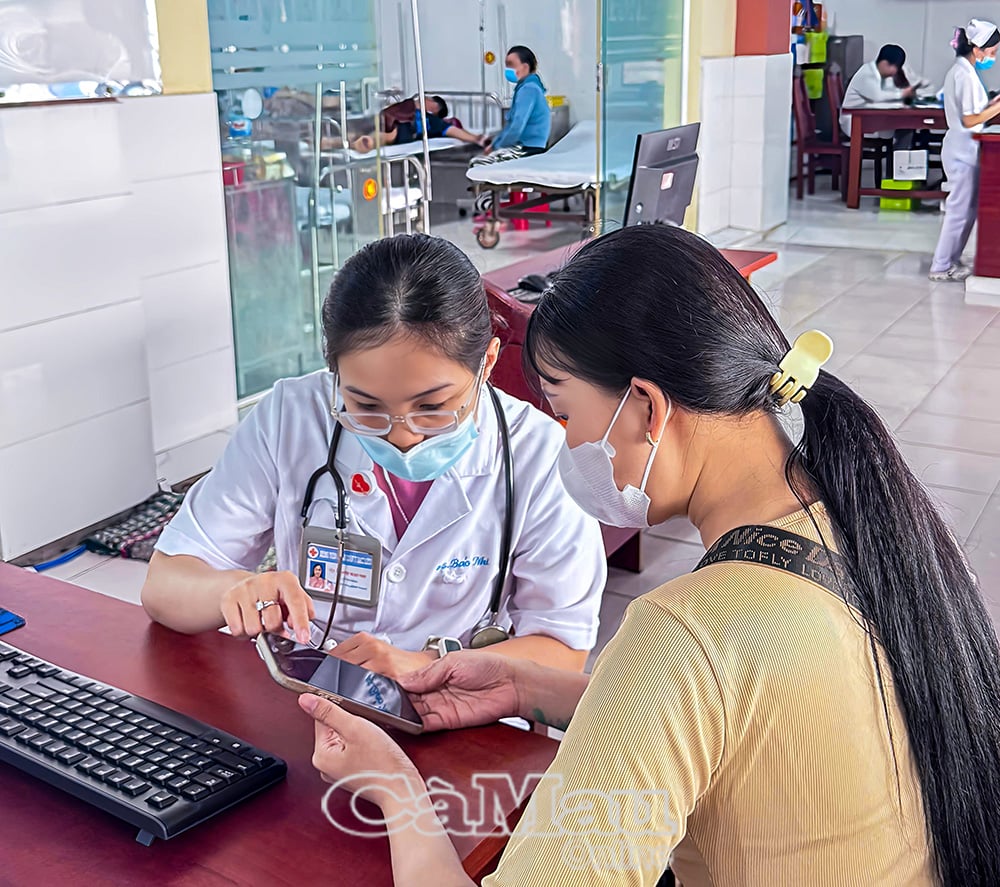 Instructions for patients on how to register for medical examinations automatically at Bac Lieu Military and Civilian Hospital. (Photo: THANH HAI)
Improving the quality of service for both the military and the people.
Digital transformation in healthcare management brings practical benefits and is highly appreciated by the public. Thanks to e-healthcare, patients can access medical services faster, more conveniently, and can proactively choose the right doctor. This is a significant step forward for the healthcare sector in general and the military hospital system in particular.
Ms. Nguyen Thi Hong (Vinh Loc commune) shared: “I am over 60 years old and suffer from osteoarthritis, diabetes, and high blood pressure. Previously, I had to bring a lot of paperwork every time I went for a check-up. Now that the hospital has implemented e-medical records, the waiting time is shorter, and the doctor only needs to open a computer to view my entire medical history. Going for a check-up is much easier and more reassuring.”
 The implementation of the Electronic Medical Record System (EMR) facilitates the Bac Lieu Military-Civilian Hospital's connection and integration with the higher-level healthcare system, effectively supporting patient referrals, remote consultations, and patient record management. (Photo: THANH HAI).
Mr. Tran Van Ngoan (Vinh Trach ward) also said: “We strongly agree with the hospitals' implementation of e-medical examinations. Not only does it shorten examination time, but e-medical examinations also help reduce errors in prescribing, diagnosing, and treating, ensuring patient safety.”
Bac Lieu Military-Civilian Hospital is a Grade III hospital, under the Logistics and Technical Department of the Ca Mau Provincial Military Command, with a capacity of 200 beds. With its departments including Internal Medicine, Pediatrics, Infectious Diseases, Surgery, Obstetrics, Clinical Laboratory, Intensive Care, Pharmacy, Infection Control, and Outpatient Clinic, the hospital plays a core role in providing healthcare for soldiers and civilians. Thanks to the efforts of its staff, doctors, and nurses, the number of patients seeking treatment is steadily increasing.
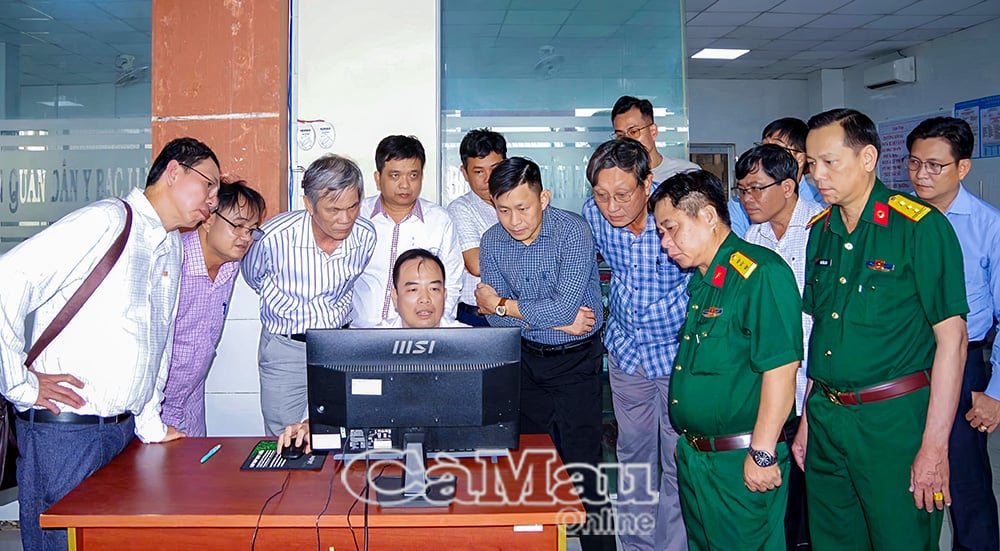
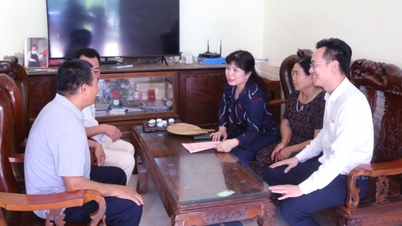
The Ca Mau Provincial Department of Health and the Logistics and Technical Department (Military Region 9) assessed the medical record at Bac Lieu Military-Civilian Hospital. (Photo: VINH NGHI)
“From July 1st until now, the hospital has examined and treated more than 120,000 patients, including many soldiers and people from remote areas. On average, the hospital receives 1,600–1,800 outpatient visits and treats more than 8,000 inpatients each day,” Lieutenant Colonel Ma Hong Anh said.
These results demonstrate the great efforts of the entire staff, doctors, and medical personnel in combining military and civilian medicine, applying digital technology , and serving the people with the spirit of "Uncle Ho's soldiers - Doctors of the people." Bac Lieu Military-Civilian Hospital is becoming a reliable and pioneering pillar in the digital transformation of the healthcare sector, moving towards a smart hospital model, contributing to improving professional efficiency and better serving the military and civilians in the province.
Thanh Hai
Source: https://baocamau.vn/dot-pha-so-vi-suc-khoe-bo-doi-va-nhan-dan-a124002.html


![[Photo] Standing Committee member of the Party Central Committee Tran Cam Tu working with the Central Inspection Committee](https://vphoto.vietnam.vn/thumb/1200x675/vietnam/resource/IMAGE/2026/05/28/1779969579668_ndo_br_bnd-2495-jpg.webp)










































































































Comment (0)