

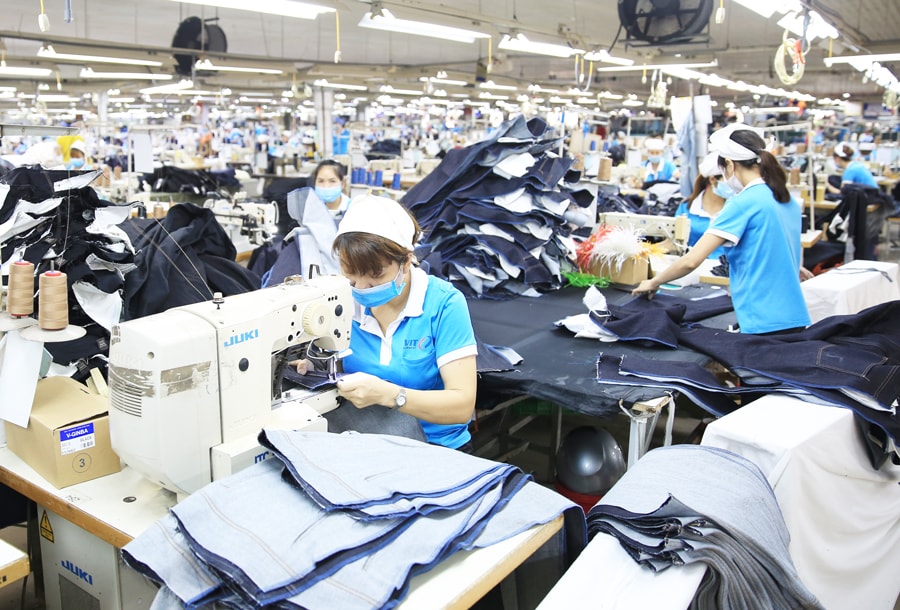
The "three-horse chariot" accelerates synchronously and efficiently.
From July 1st, 2025, the merger of provinces and the official implementation of a two-tiered local government system marked a significant institutional milestone. This not only streamlined the administrative apparatus and saved budget resources but also opened up new growth opportunities, reshaping the national economic map. In this new model, interconnected regions, provinces, and major cities will become global centers of industry, tourism, and finance if properly planned and invested in. Simultaneously, it facilitates the formation of interconnected economic zones along industry value chains, rather than fragmented areas based on old administrative boundaries. The two-tiered local government model promotes strong decentralization, increases operational efficiency, and thus accelerates investment, streamlines procedures, and improves market access.
Furthermore, Vietnam's bilateral trade agreement with the United States on reciprocal tariffs and its participation in cooperation with BRICS countries have opened up unprecedented export opportunities in our country's modern history. All of this creates a "favorable time, place, and human resources" opportunity for Vietnam to surpass itself and achieve its GDP growth target of over 8% in 2025.
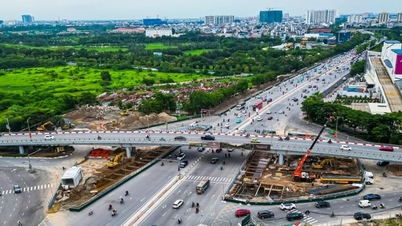
The three traditional growth drivers—public investment, exports, and domestic consumption—continue to play a central role. Specifically, public investment disbursement in the first six months of 2025 reached a high rate, focusing on large-scale infrastructure projects connecting regions, renewable energy, smart cities, and digital transformation. Newly merged areas have the potential to become logistics and industrial hubs, creating value-added spillover effects for the entire region.
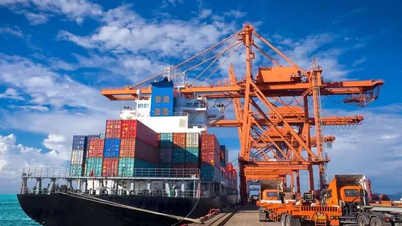
Exports accelerated thanks to the recovery of global supply chains, boosted by new trade agreements with the United States and BRICS. Vietnam is increasingly asserting its position as a strategic manufacturing, technology, and service hub in the Asia-Pacific region.
Domestic consumption has recovered strongly, thanks to rising incomes, positive consumer sentiment, and the expansion of the middle class, especially in newly formed urban areas after mergers.
Breakthrough development solutions

To achieve a growth target of over 8%, the first solution is to implement effective and strategic public investment, focusing on "pivotal" projects such as regional ring roads, inter-provincial expressways, seaports, clean energy, and digital transformation in rural areas. In addition, priority should be given to newly merged provinces to create new growth poles that will spread throughout the region.
Exports also need to be boosted based on new advantages. This includes leveraging new-generation FTAs, especially the tariff agreement with the US, to promote the electronics, textile, agricultural and aquatic products, and logistics industries; expanding export markets to BRICS countries and emerging economies through national branding strategies, green products, and sustainable practices.
Smart domestic consumption should be promoted by providing targeted interest rate support for domestic service, retail, and tourism sectors, along with encouraging the consumption of domestic products and developing e-commerce in remote areas.
Another equally important set of solutions is the development of the private sector – the engine of internal growth. To achieve this, it is necessary to vigorously implement Resolution No. 68-NQ/TƯ of the Party on the development of the private sector as a pillar of the socialist-oriented market economy. Support should be provided for the conversion of individual business households into enterprises with appropriate tax policies, preferential capital, accounting and legal support, and strategic development consulting; gradually consider removing the "credit limit," and instead apply risk management according to international standards, so that credit "flows to the right places - with high efficiency - at reasonable costs."
Furthermore, it is necessary to promote digital transformation and the application of artificial intelligence (AI) to enhance productivity. AI needs to be integrated into learning and work. Students and workers need to be equipped with AI skills to increase personal productivity, promote social innovation, and carry out digital transformation in businesses and government.
The final set of solutions is transparent institutions, sustainable fiscal policy, and a modern capital market. Achieving this requires strong administrative reforms, comprehensive digitalization, increased transparency, and reduced compliance costs; fiscal and monetary stability that is both flexible and adaptable; maintaining reasonable exchange rates and interest rates, keeping inflation under control, and selectively expanding public investment; developing a healthy capital market; developing derivative securities products; attracting long-term investors; and facilitating capital flows to newly merged economic centers.
2025 could be considered a pivotal year in a new development cycle. The country will optimize its administrative apparatus while opening up strategic economic spaces linked to innovation in the growth model. A GDP growth target of over 8% will no longer be an "high target" if we effectively utilize the opportunities presented by: administrative restructuring, strategic trade relations, efficient public investment, the digital economy, a dynamic private sector, and institutional reform.
Director of the Academy of Finance, Nguyen Dao Tung:

Businesses already have many support systems.
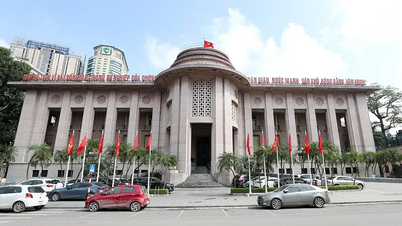
According to data from the General Statistics Office ( Ministry of Finance ), the Vietnamese economy continued its strong recovery in the first six months of 2025. Gross Domestic Product (GDP) growth in the second quarter of 2025 reached 7.96% year-on-year in 2024; and in the first six months of 2025, it reached 7.52%, the highest growth rate for the same period since 2011.
High GDP growth in the first half of 2025 was primarily driven by consumption (up 7.95%) and investment (up 7.98%). Thus, fiscal policies such as tax exemptions and reductions, increased public investment, and loose monetary measures like lower interest rates, increased credit limits, and flexible exchange rate adjustments have truly served as a support for businesses amidst the uncertainties of the global economy.
Another positive point is that the number of newly registered and reactivated businesses reached over 152,000 units, an increase of 26.5% compared to the same period in 2024. This shows that policies for developing the private economy have been implemented, strengthening and increasing the confidence of the people and the business community in the business environment.
Former Director of the Vietnam Institute of Economics, Tran Dinh Thien:
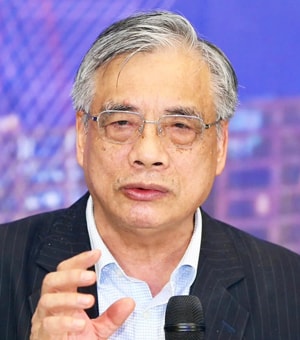
Developing high-quality human resources.
Vietnam's economic growth has been very positive, clearly trending upwards, despite numerous challenges in the recent period. If these barriers are removed, businesses will have more favorable conditions to access resources, thereby fostering pioneering enterprises that play a leading role in the economy.
What the private sector needs most is not preferential injections of money, but a level playing field and a true market economy. Businesses operating on old foundations and with old management styles must also change.
Furthermore, the driving force of economic growth also needs to be restructured with a focus on developing high-quality human resources. In the new era, the strength of the workforce will depend on the ability to combine human intelligence and artificial intelligence. If Vietnam can leverage this advantage, it can increase its national competitiveness many times over in the future.
Le Anh Tuan, Director of Investment, Dragon Capital Investment Fund:

Infrastructure relocation will exceed expectations.
Vietnam is witnessing a major reform with a streamlined administrative apparatus, reducing the number of ministries from 18 to 14 and the number of localities from 63 to 34. The speed of policy issuance has skyrocketed. Special mechanisms allowing the government to remove legal obstacles will boost 2,200 projects worth $235 billion (equivalent to 50% of GDP), creating a significant growth impetus.
A clear example of this transformation is the speed of infrastructure development. The Can Gio - Ho Chi Minh City metro line is twice as long as the current metro line but is expected to be completed in 3 years (compared to 12 years for the first line). At this pace, the infrastructure shift in the next 5 years will far exceed expectations.
To realize infrastructure, technology, and private sector development goals, the capital market plays a crucial role and has become a strategic priority for the Government, aiming towards a regional financial center. This will help ensure efficient capital flow, directly support infrastructure projects and technological innovation, and encourage private businesses to accelerate investment and expansion.
Khanh An wrote
Source: https://hanoimoi.vn/dot-pha-tu-duy-hanh-dong-quyet-liet-de-phat-trien-toan-dien-709777.html




![[Photo] General Secretary and President To Lam presides over the meeting to approve the draft report on the results of the second inspection by the Politburo of the Standing Committee of the Hanoi City Party Committee.](https://vphoto.vietnam.vn/thumb/1200x675/vietnam/resource/IMAGE/2026/05/26/1779789811432_a2-bnd-4430-9620-jpg.webp)





























































































Comment (0)