Agricultural and rural tourism awaits its opportunity to 'take off'.
Báo Tin Tức•27/11/2024
Agricultural and rural tourism has not yet received systematic investment to develop to its full potential and is still waiting for the right opportunity and policies to "take off".
Tourists experience clam harvesting in the alluvial plains of Ca Mau Cape. Photo: Kim Ha/TTXVN.
Agritourism, encompassing activities centered around agriculture, farmers, and rural landscapes, offers comprehensive, engaging, entertaining, and educational experiences and is becoming a popular trend. This type of tourism has emerged in Vietnam. However, agritourism models have yet to receive systematic investment to develop to their full potential and are still awaiting the right opportunity and policies to truly take off. On weekends, Ms. Tran Tu Huong's family (Hai Ba Trung district, Hanoi) often takes their children on experiential trips to the outskirts of Hanoi. With adults busy with work and children preoccupied with school and extracurricular activities, weekends are the only time the family can spend together. Therefore, day trips or one-night trips are the family's favorite activities for bonding, relaxation, and rejuvenation for the new week. “At the Ba Vi Countryside Farm tourist area (Ba Vi district, Hanoi), my family chose to sleep in a stilt house and eat traditional local food such as: straw-grilled fish, rice rolls, home-grown vegetables and fruits, Son Tay rice cakes, and drink Ba Trai tea… The children went hiking, mountain climbing, tea picking, wading in ponds and using nets to catch fish… The purpose was to get the children away from the city, away from phone and TV screens, and for the whole family to get closer to nature and learn about life in the rural areas of Northern Vietnam. Notably, rural tourism around Hanoi offers quite good services at a reasonable cost. Families can flexibly choose destinations and activities suitable for each member in a space close to nature and rich in local culture,” Ms. Tu Huong shared. This form of travel combining relaxation and experiences in rural areas is becoming increasingly popular. The trend of agricultural and rural tourism is not only developing in many countries around the world, but is particularly suitable in Vietnam – a country with vast agricultural land and a population that lives primarily in rural areas, accounting for over 62.7%. More than 10 years ago, Ms. Ngo Kieu Oanh – a passionate science doctor dedicated to preserving Vietnamese traditional culture – decided to build an agricultural and rural tourism model in the vicinity of the foothills of Ba Vi Mountain – an area with many long-standing traditional agricultural villages. The tourism area, based on organic agricultural production, linked to traditional villages and natural landscapes, is called Ba Vi Homestead and has become a destination for many domestic and international tourists. The model is built on the foundation of ensuring a harmonious blend of nature, culture, and people, with facilities that ensure accommodation and relaxation to meet the needs of individuals, families, and even groups of hundreds of students; meals are made with local agricultural products; The activities include experiences related to rural life, traditional agricultural production, and modern livestock farming. In particular, visitors can learn about the unique cultural characteristics of the Hmong and Dao people associated with their villages and cultural heritage sites. “The farm is closely linked with the surrounding farming community to provide attractive information for tourists, while also promoting agricultural products from the Ba Vi and Son Tay regions in particular, and Hanoi in general. This is a way to develop a harmonious relationship between nature, culture, and people in urban and rural areas, through staying, relaxing, enjoying scenic spots, and savoring fresh, natural specialties in a warm, family-like, and rural setting,” Dr. Oanh shared. According to tourism expert Nguyen Quang Dang (Institute for Tourism Development Research), this is a unique form of tourism, combining cultural experiences and the natural environment in rural areas. It includes various activities, services, and amenities provided by farmers and rural communities to attract and serve tourists. These include farm tourism, agricultural tourism, craft village tourism, festival tourism, and ecotourism. “Experiences from rural tourism activities such as catching fish in ponds, picking tea leaves to make tea, pounding and grinding rice to make rice rolls… all offer many unexpected and interesting experiences, evoking childhood memories and making the travel time more meaningful,” Mr. Nguyen Quang Dang stated. It has significant development potential.
Decision No. 922/QD-TTg dated August 2, 2022, of the Prime Minister approving the Program for Rural Tourism Development in the Construction of New Rural Areas for the period 2021-2025, clearly states that rural tourism development is one of the key solutions and tasks of the National Target Program for the Construction of New Rural Areas for the period 2021-2025; promoting the leading role of the people and communities; and encouraging the active and proactive participation of businesses, cooperatives, and other economic organizations in the development of rural tourism economy through effective tourism value chain linkages. Tourism development in Vietnam is closely related to the construction of modern rural areas. The infrastructure of modern rural areas, linked with accommodation and service infrastructure, environmental sanitation, food safety, preservation and promotion of cultural values, traditional crafts, etc., has created a foundation for the development of rural tourism. Conversely, rural tourism also contributes to increasing family incomes, improving people's livelihoods, promoting the consumption of regional specialties, thereby contributing to boosting the local economy and enhancing the quality of new rural development. In the North, there are currently many agricultural tourism tours that exploit traditional rice planting and cultivation activities, handicrafts, and livestock farms. Notably, around the outskirts of Hanoi, there are 11 ecological agricultural farms operating under an educational and experiential tourism model; 5 specialized cooperatives combining education and experiential tourism; and many areas with potential and advantages for developing agricultural and rural tourism. In the Central and Central Highlands regions, there are also many tourism products showcasing agricultural diversity, such as tours to ethnic minority villages in many localities. The Southern region and the Mekong Delta, with its unique waterways and gardens, have enormous potential for exploiting and developing agricultural tourism. According to Dr. Ngo Kieu Oanh, for sustainable rural tourism development, the synchronized participation of all stakeholders is needed, from local authorities to the people. Most importantly, those involved in tourism must truly understand and appreciate the beauty and value of the rural tourism products that they and their localities are preserving and developing. Dr. Pham Huong Trang, lecturer in Tourism and Hotel Management at RMIT University, said that to ensure effective development, agricultural tourism activities need well-organized service spaces such as farms, fields, orchards, traditional craft villages, or rural areas with unique cultural values, festivals, and local cuisine. In particular, the participation of the local community is extremely important. As individuals closely connected to the cultural environment and production methods, local people play an indispensable role in synthesizing and sharing cultural values with tourists. They become preservers and disseminators of agricultural cultural values, contributing to the creation of unique tourism experiences. Furthermore, to develop this form of tourism, localities should link the One Commune One Product (OCOP) program with community-based tourism services and tourist destinations. Each tourist destination needs a comprehensive development plan based on natural and cultural tourism resources and indigenous values in the villages and hamlets. Simultaneously, building common tour routes and linking communication and promotion activities among the participating localities will increase the attractiveness of rural tourism destinations. Promoting, connecting, and marketing rural tourism products with travel agencies or major tourism centers, diversifying promotional methods, and especially applying digital technology to stimulate all the senses of tourists when interacting with tourism products promoted through information technology are also crucial.

 Báo Tin Tức•27/11/2024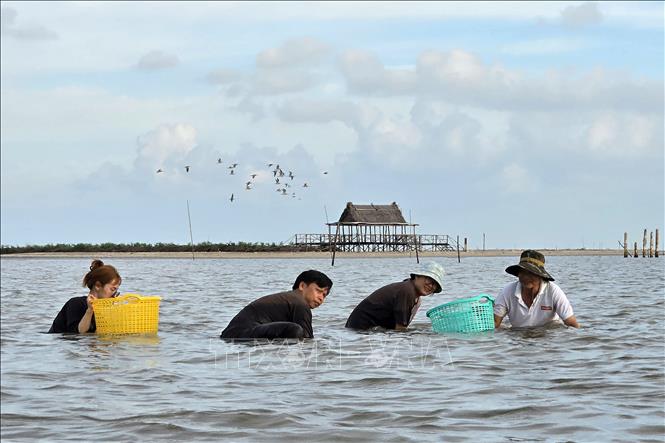



![[Photo] Admire the coral "masterpiece" amidst the million-year-old heritage of Dak Lak province.](https://vphoto.vietnam.vn/thumb/1200x675/vietnam/resource/IMAGE/2026/05/30/1780107638639_y25-jpg.webp)












































































Comment (0)