

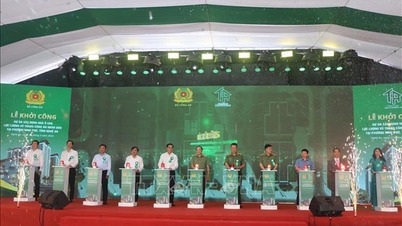
Speaking to a reporter from Tien Phong newspaper , a representative of VEC said that according to the plan, the project to expand the Yen Bai - Lao Cai expressway section will commence on September 27th.
According to VEC representatives, the project aims to expand the section from Km123+080 to Km244+155, with a total length of 121.33 km; the Intelligent Transportation System (ITS) component will be implemented along the entire route.
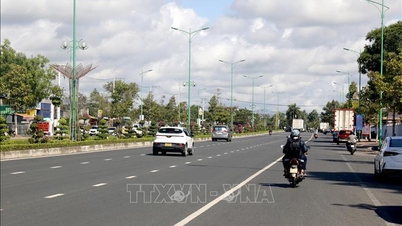
The project will expand the road from 2 lanes to 4 lanes, with a road surface width of 24 m; add a median strip to match the sections expanded in phase 1; and extend the pedestrian underpass to accommodate the 4-lane highway.
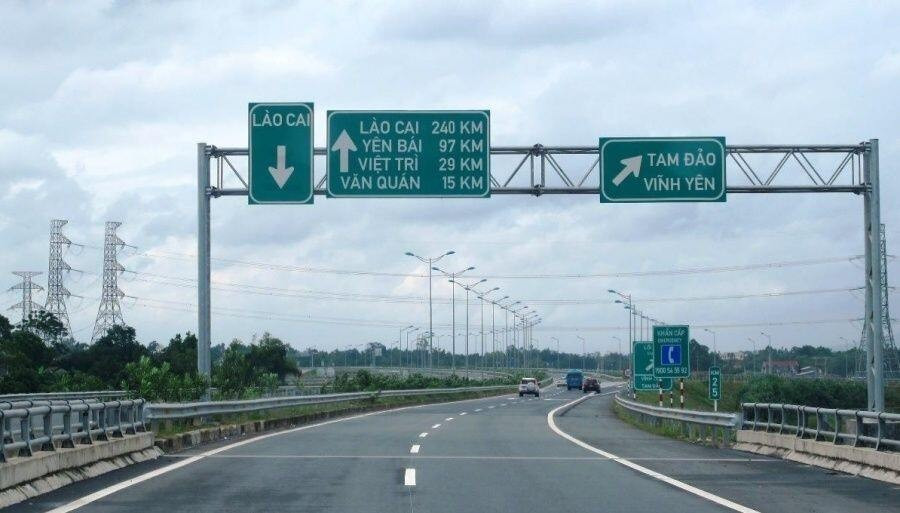
The section of the Yen Bai - Lao Cai expressway will have an additional bridge unit constructed on the left side of the route, in sync with the existing bridge. Simultaneously, a study will be conducted on constructing a new tunnel approximately 530m long with 3 lanes, to accommodate the revised plan for 6 lanes along the entire route.
The total investment for the project is nearly 7,700 billion VND, of which 3,000 billion VND comes from the State budget; nearly 940 billion VND is VEC's own capital (including interest on loans during the construction period); and the remainder is additional capital mobilized by VEC.
Following the Prime Minister 's directive in document No. 624/TTg-CN dated May 30, 2025, the project to expand the Yen Bai - Lao Cai section of the Noi Bai - Lao Cai expressway will commence this year and be substantially completed in 2026.
The Noi Bai - Lao Cai Expressway is 264 km long, starting at the intersection of National Highway 2 and the Bac Thang Long - Noi Bai Expressway, and ending in Bat Xat commune (Lao Cai). The route passes through Hanoi, Phu Tho, Yen Bai, and Lao Cai; connecting with the Kunming - Hekou Expressway (China) and is an important component of the Kunming - Hanoi - Hai Phong Economic Corridor.
Phase 1 of the Noi Bai - Lao Cai Expressway project, spanning nearly 245 km, was invested in by VEC and completed and put into operation in 2014. Specifically, the Noi Bai - Yen Bai section was built with 4 lanes and a design speed of 100 km/h; the Yen Bai - Lao Cai section has 2 lanes and a design speed of 80 km/h.
The commissioning of this route has shortened the travel time between Hanoi and Lao Cai from 7 hours to 3.5 hours, opening up great opportunities for economic, social, and tourism development in the Northwest region, while also reducing pressure and accidents on national highways.
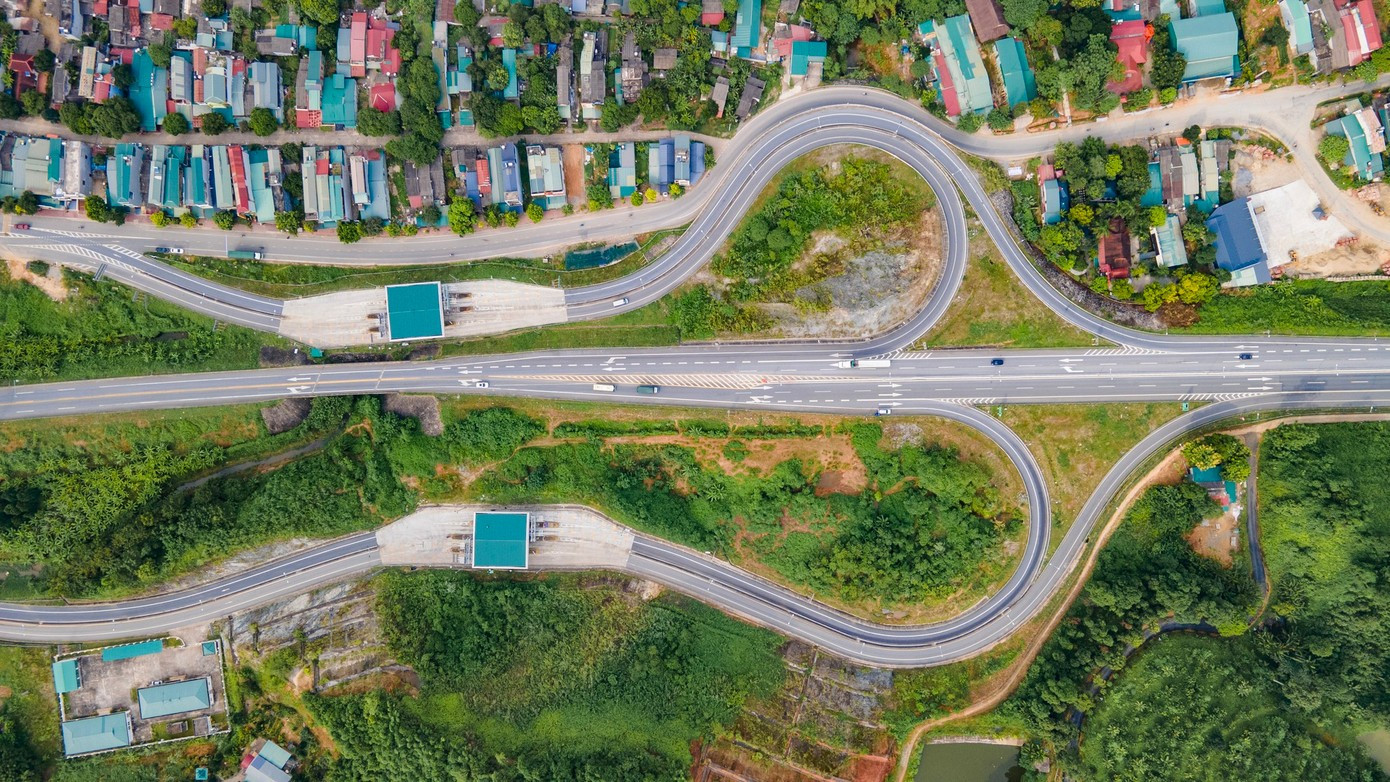
In Phase 1, the Yen Bai - Lao Cai expressway was built with a 4-lane roadbed but only 2 lanes were in operation. Bridges, tunnels, and underpasses for local residents also only met the 2-lane standard. Some sections were later expanded to 4 lanes, and an electronic toll collection (ETC) system was installed. However, due to the lack of a median divider in many sections, there is a potential safety risk when traffic volume increases and operating speeds fall below the design capacity.
Statistics show that traffic volume on the Noi Bai - Lao Cai expressway is increasing by an average of 10% per year. At its current scale, the Yen Bai - Lao Cai section will be overloaded by 2027. Therefore, early implementation of expansion is necessary to ensure safety, meet traffic demand, and align with the approved plan.
Source: https://tienphong.vn/gan-7700-ty-dong-len-doi-doan-cao-toc-yen-bai-lao-cai-post1779729.tpo

![[Image] Nearly 125,000 Hanoi students completed the Literature exam for the 10th grade entrance exam.](https://vphoto.vietnam.vn/thumb/1200x675/vietnam/resource/IMAGE/2026/05/30/1780117233041_ndo_br_thiet-ke-chua-co-ten-2-png.webp)


























![[Photo] Admire the coral "masterpiece" amidst the million-year-old heritage of Dak Lak province.](https://vphoto.vietnam.vn/thumb/1200x675/vietnam/resource/IMAGE/2026/05/30/1780107638639_y25-jpg.webp)







































































Comment (0)