

(NLĐO) - Despite numerous ups and downs, incense makers in Le Minh Xuan commune still cling to their craft. The traditional Lunar New Year is the busiest time for the village's artisans.
The incense-making craft in Le Minh Xuan commune (Binh Chanh district), located about 30 km southwest of Ho Chi Minh City, has a long history. In 2012, the people of Le Minh Xuan commune were delighted when their incense-making village was recognized as a traditional craft village.
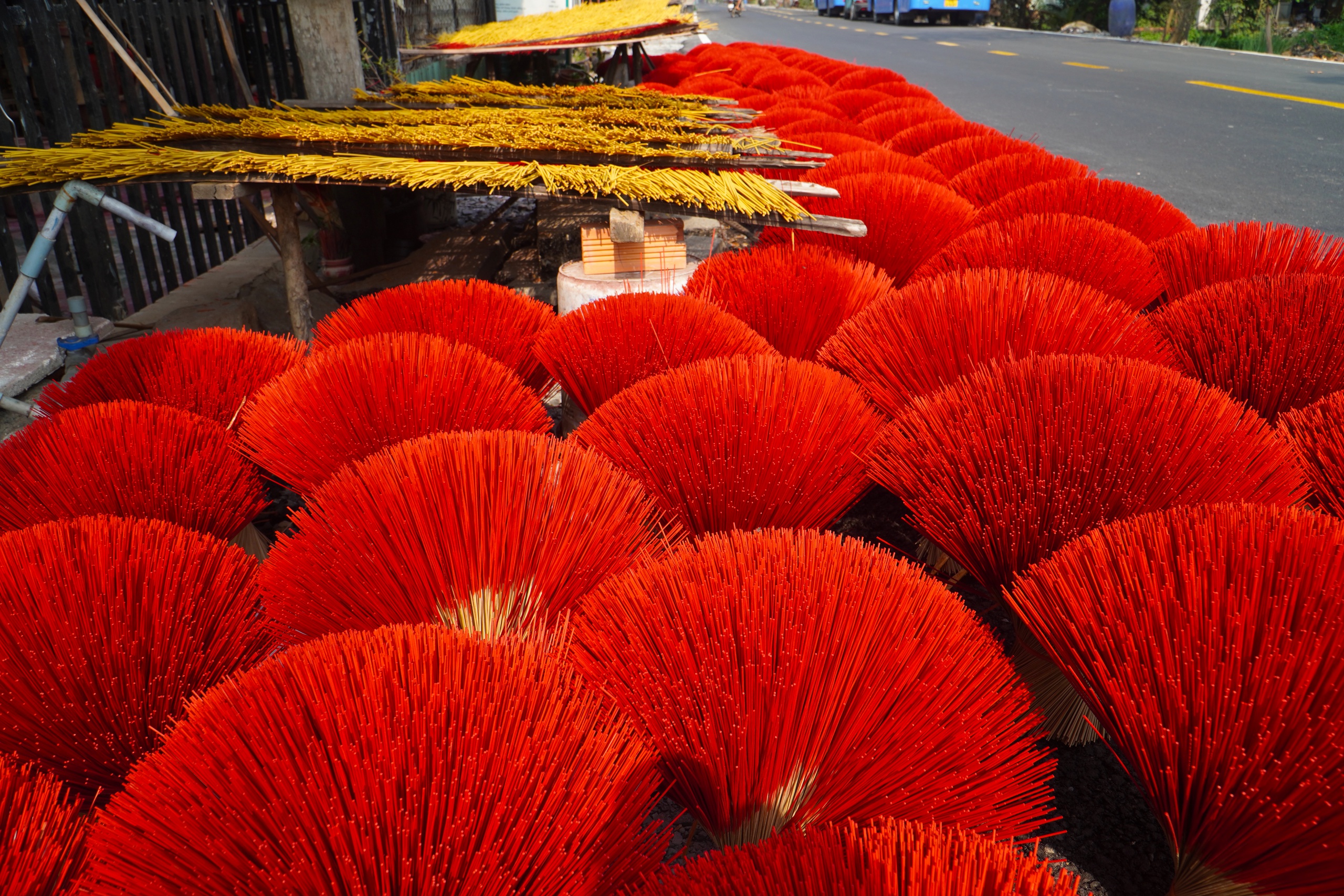
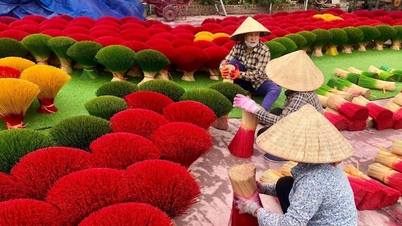
People are drying incense sticks along Mai Bá Hương road, Lê Minh Xuân commune, Bình Chánh district.
Along Mai Bá Hương and Thích Thiện Hòa streets, the vibrant "incense flower" decorations on both sides signal the approaching Lunar New Year.
At one point, the craft village supported over a hundred families, many of whom escaped poverty and contributed to preserving Vietnamese culture for generations.
Le Minh Xuan incense village
In the final days of the year, from Binh Loi apricot blossom village (Binh Loi commune, Binh Chanh district), across the ferry, you reach the "capital" of incense making in Le Minh Xuan. Following the road along the canal, we reached Mai Ba Huong street and could already hear the rhythmic sound of incense-making machines.
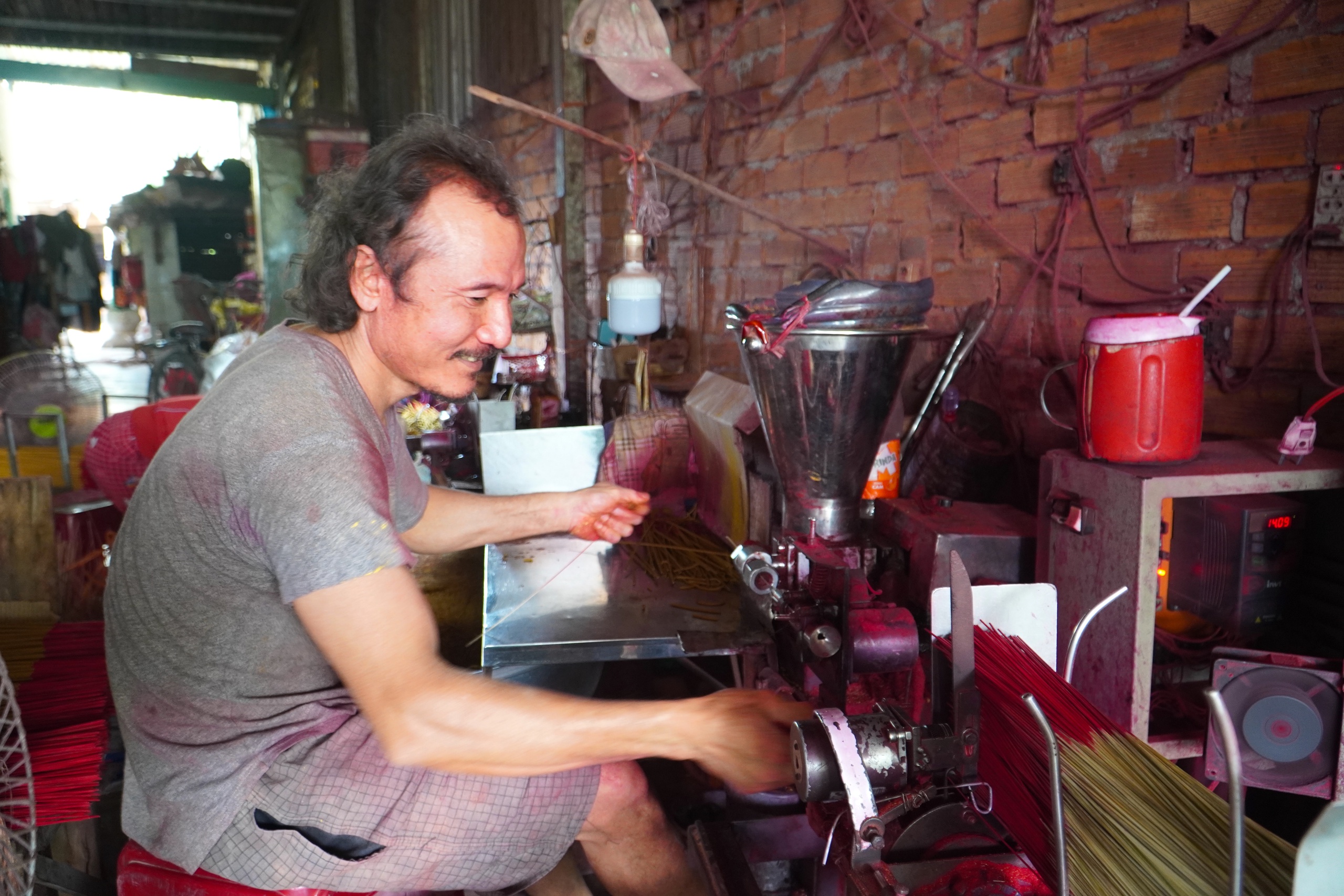
Phong and Thanh's family invested tens of millions of dong to buy two incense-making machines for their business.
The family of Mr. Phong and Ms. Thanh (Hamlet 2) is diligently making incense sticks to meet delivery deadlines. Ms. Thanh has been making incense for over ten years. Mr. Phong has been helping his wife make incense for the past 6-7 years.
The couple bought two incense-making machines and started doing subcontracting work for a nearby facility, earning 4,500 dong per bundle of incense sticks (1,000 sticks).
According to Ms. Thanh, compared to before, the amount of work has decreased significantly, and the couple earns about 300,000 VND per day. However, they don't have orders to do processing every month of the year. While they used to work for 10 months a year, now it's only 6-7 months.
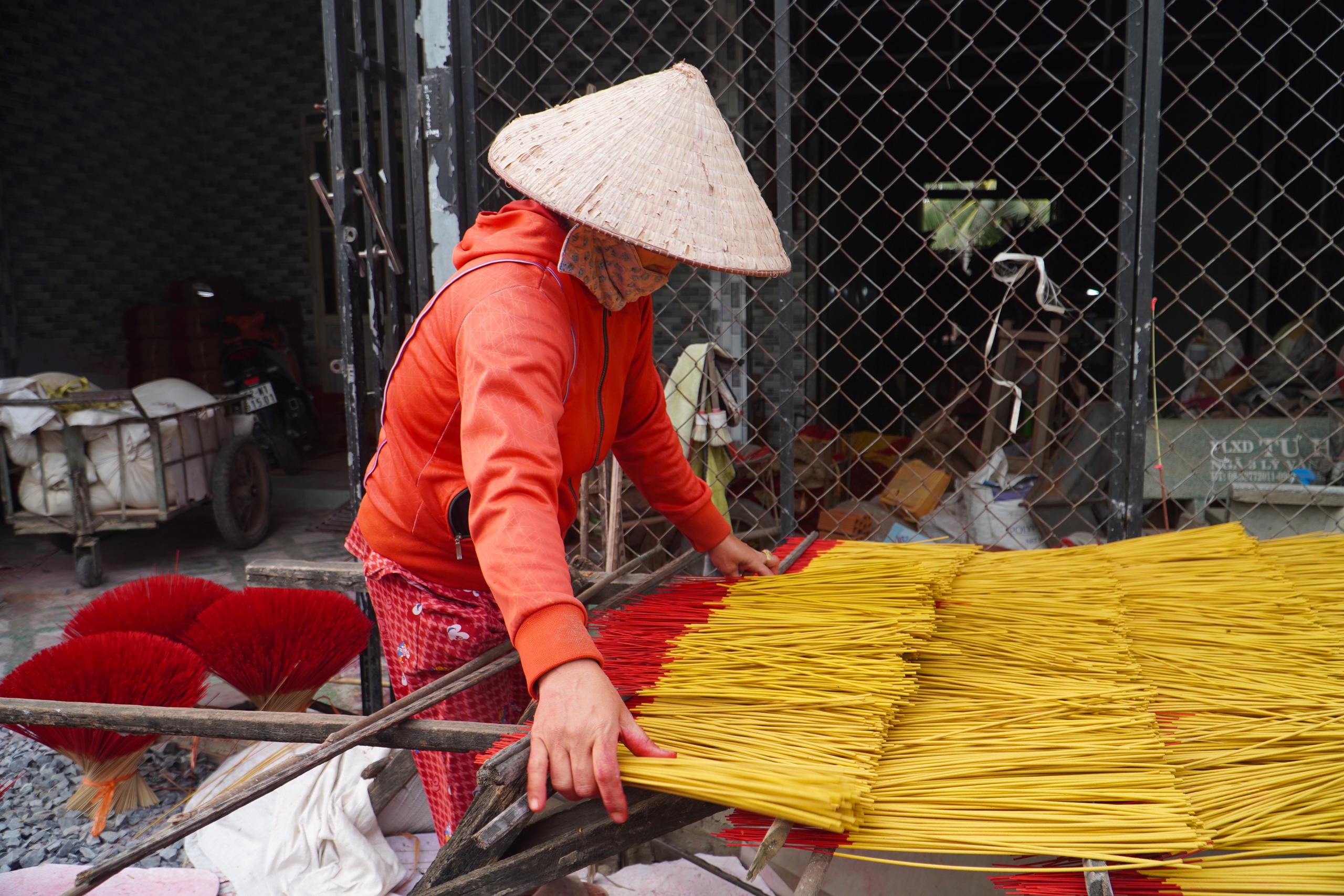
Making incense sticks at home requires doing all the steps yourself, so the work is quite strenuous.
"Nowadays, many people are taking time off. Before, you'd see incense sticks drying all along both sides of the road. Back then, there were hundreds of households doing this kind of work, but now there are only about 20 left," said Ms. Thanh.
Indeed, along Mai Bá Hương street now there are only 5-6 households drying incense sticks on both sides of the road.
Visiting the nearby Minh Phuoc incense factory, Ms. Nguyen Thi Ut (from Ben Tre province) said her daily job is bundling incense sticks, each bundle costing 500 dong. Her income is over 200,000 dong per day. "I've been doing this for 4-5 years now, and the income is stable. I usually take my grandchildren to school, and the rest of the time I make incense. The work is easy," Ms. Ut shared.
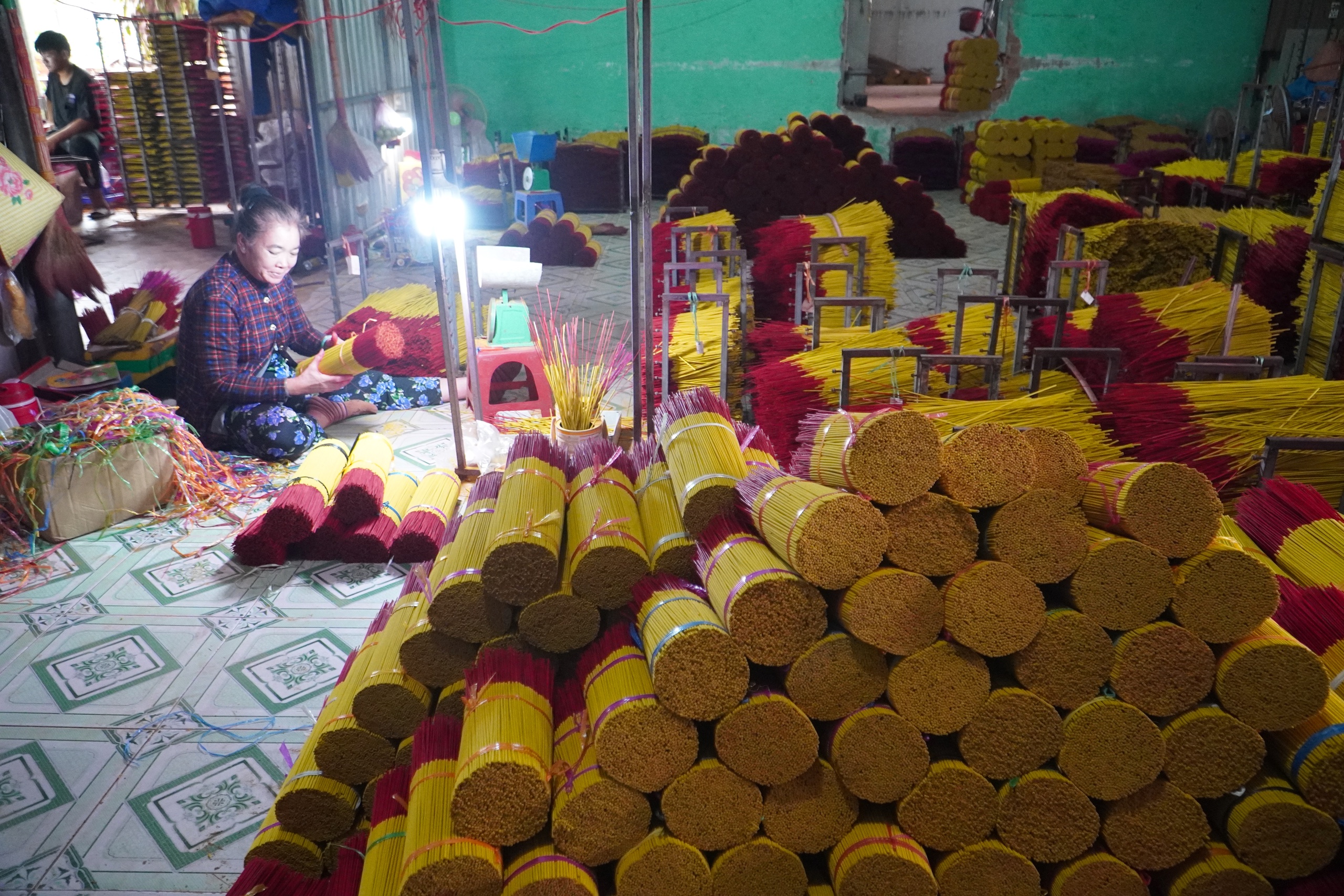
The work helps elderly people like Mrs. Nguyen Thi Ut to have a stable income.
Meanwhile, Ms. Nguyen Thi Hoi (from Ca Mau province) came to Ho Chi Minh City in 2003, has been making incense sticks for over 10 years, and has only been working at the Minh Phuoc factory for 2 years. Making incense sticks has helped maintain her income for the past fifteen years.
Ms. Nguyen Thi Hanh (61 years old, from Vinh Long province) has also been making incense in Le Minh Xuan commune for 6 years. This job suits her age and helps maintain her income and stabilize her life with a daily wage of 200-300 thousand VND. Like many others, Ms. Hanh lives in the factory owner's rented accommodation.
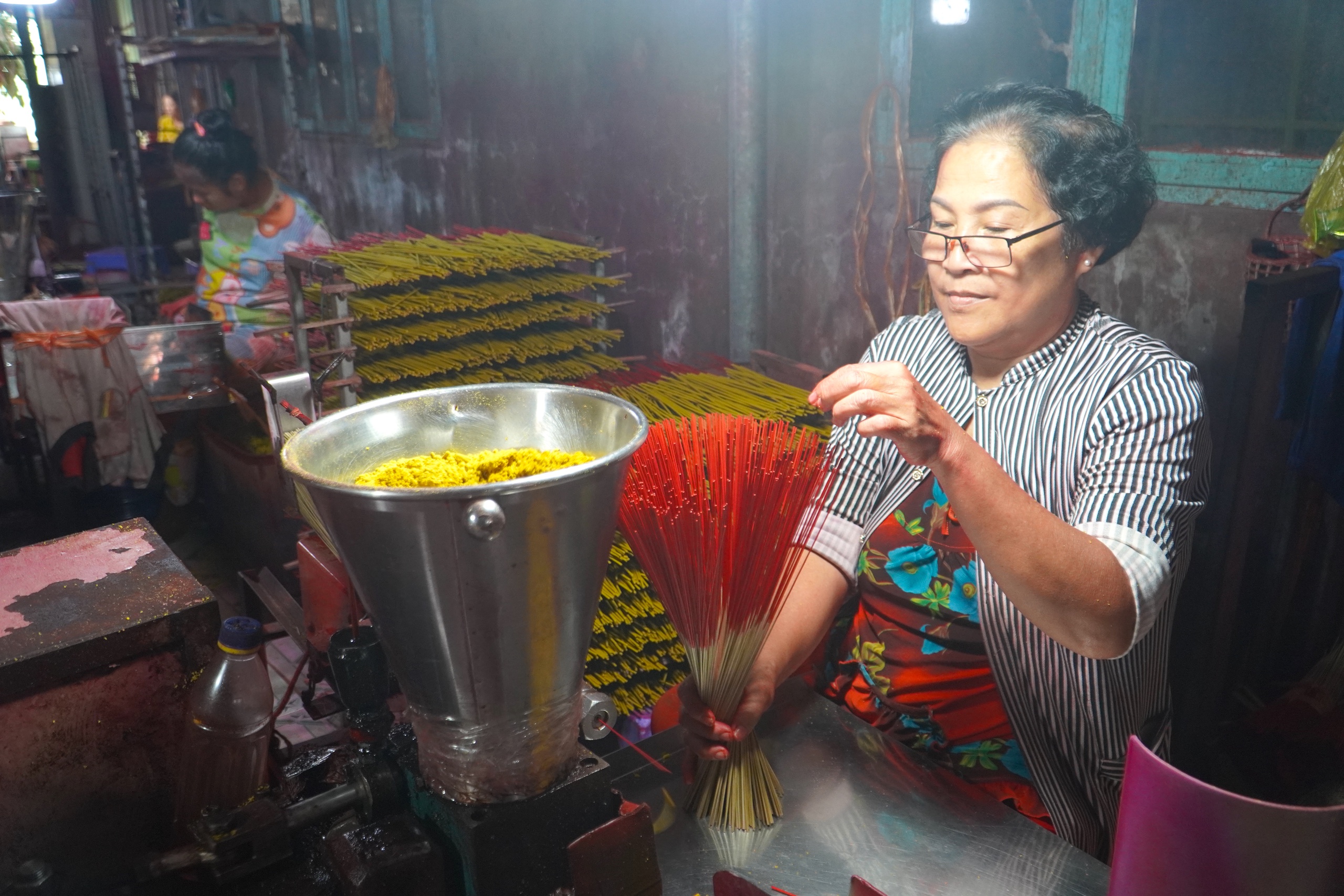
Due to unstable orders this year, Minh Phuoc incense factory will close for the Lunar New Year earlier than in previous years.
Ms. Nguyen Cat Bui Thuy (48 years old), owner of Minh Phuoc incense production facility (Hamlet 3, Le Minh Xuan Commune), said that this incense making facility has been established and developed for over 30 years.
"The incense workshop used to have hundreds of workers. Some have improved their skills and opened smaller, independent businesses. Previously, incense sticks were made by hand, but now with machinery, the work is less strenuous and more productive. This job doesn't pay much, but it's stable. There's work year-round, and many families in the commune have escaped poverty thanks to this traditional craft," shared Ms. Thuy.
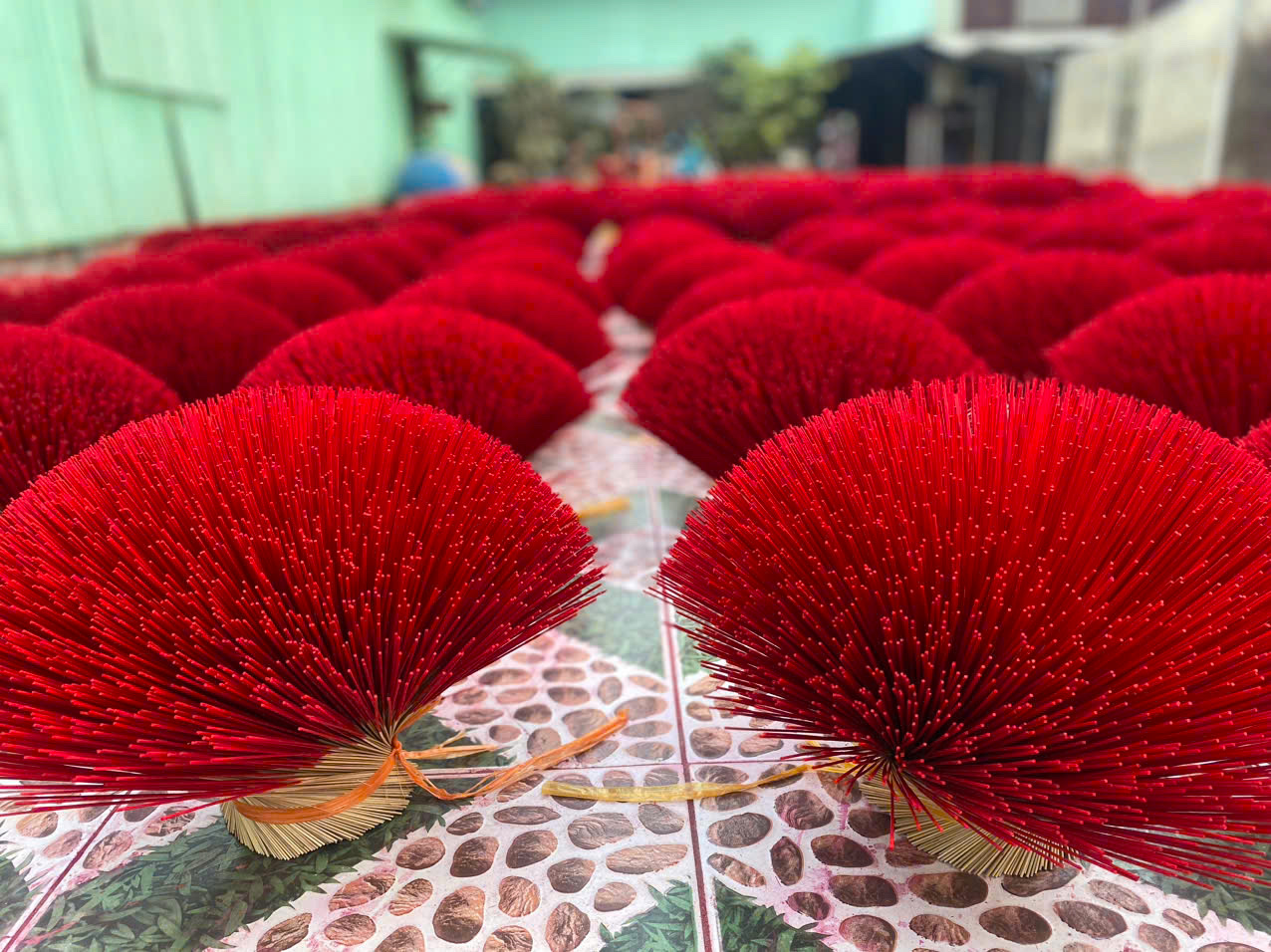
Incense sticks are imported from Hanoi; the coating powder is imported from a province in the Southeast region, and the incense glue is imported from the Central Highlands.
According to Ms. Thuy, the supply of goods used to be stable, but after the pandemic, it became irregular and unstable, and many workers quit. Input materials increased in price, but the selling price of incense did not increase. The factory now only has 40 workers and family members.
"Business has been difficult since the pandemic. Every year, we prepare for the incense season in January and July, and from October to December, it's peak season. Now, orders are very slow. Last year, I stocked up for Tet (Lunar New Year) but couldn't sell the goods, so I had to hold onto them. This year, orders came in at the end of December, so I'm short on stock and can't deliver. It's very unpredictable and unstable now," said Ms. Thuy.
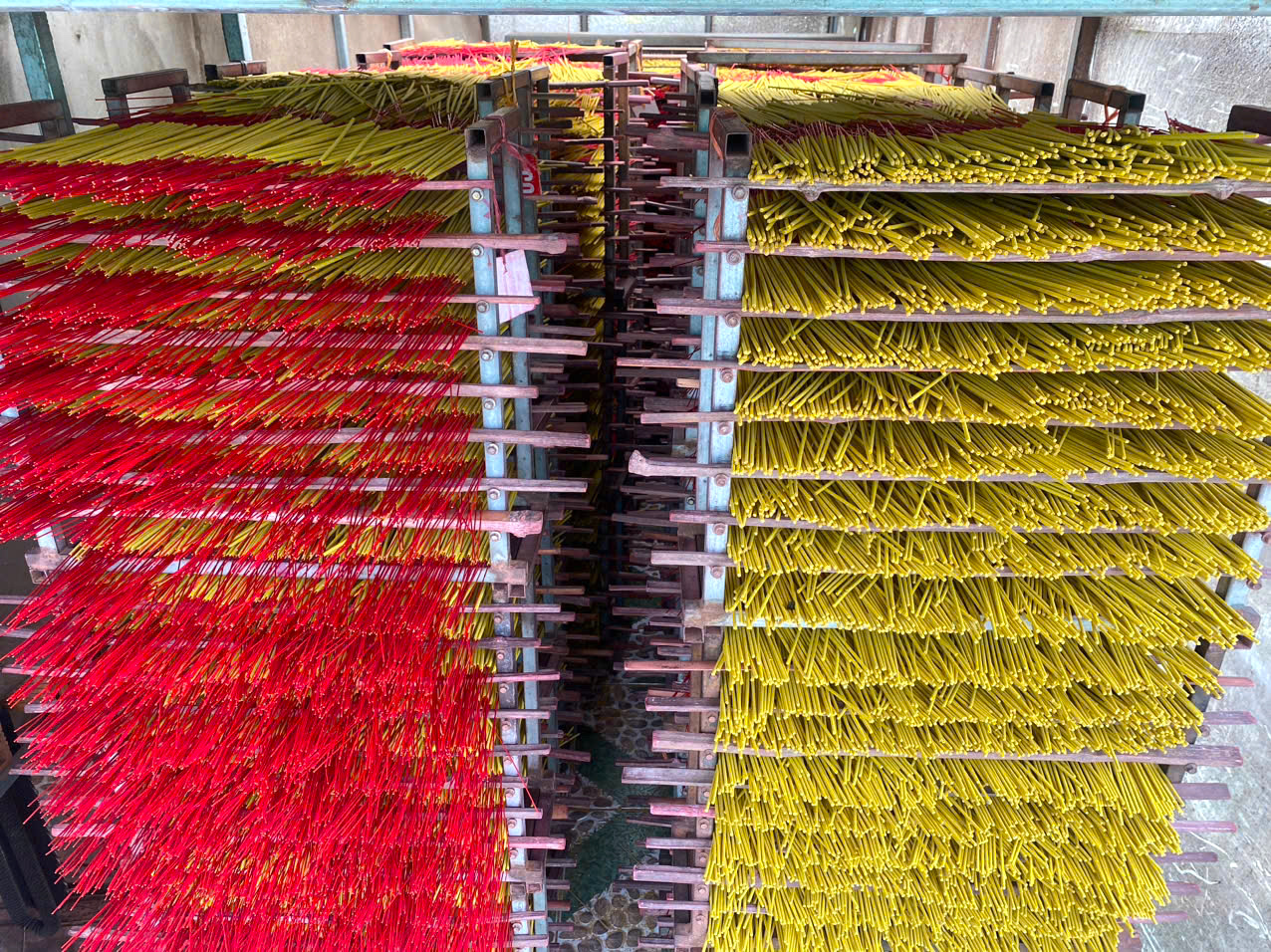
The owner of Minh Phuoc incense factory invested in more than 10 incense drying machines. Through many stages, it takes 2-3 days to produce one batch of incense sticks.
The traditional incense-making village of Le Minh Xuan has been announced by the Ho Chi Minh City Department of Tourism as one of the 10 most interesting check-in spots in the city for the 2024 New Year holiday. According to Ms. Thuy, the incense workshop attracts many domestic and international tourist groups, with 5-6 groups visiting each day during the holiday.
Because this is a large-scale incense factory in the South, its products are distributed throughout the provinces of the Southeast and Southwest regions of Vietnam. Currently, the factory has more than 30 incense rolling machines and more than 10 drying machines.
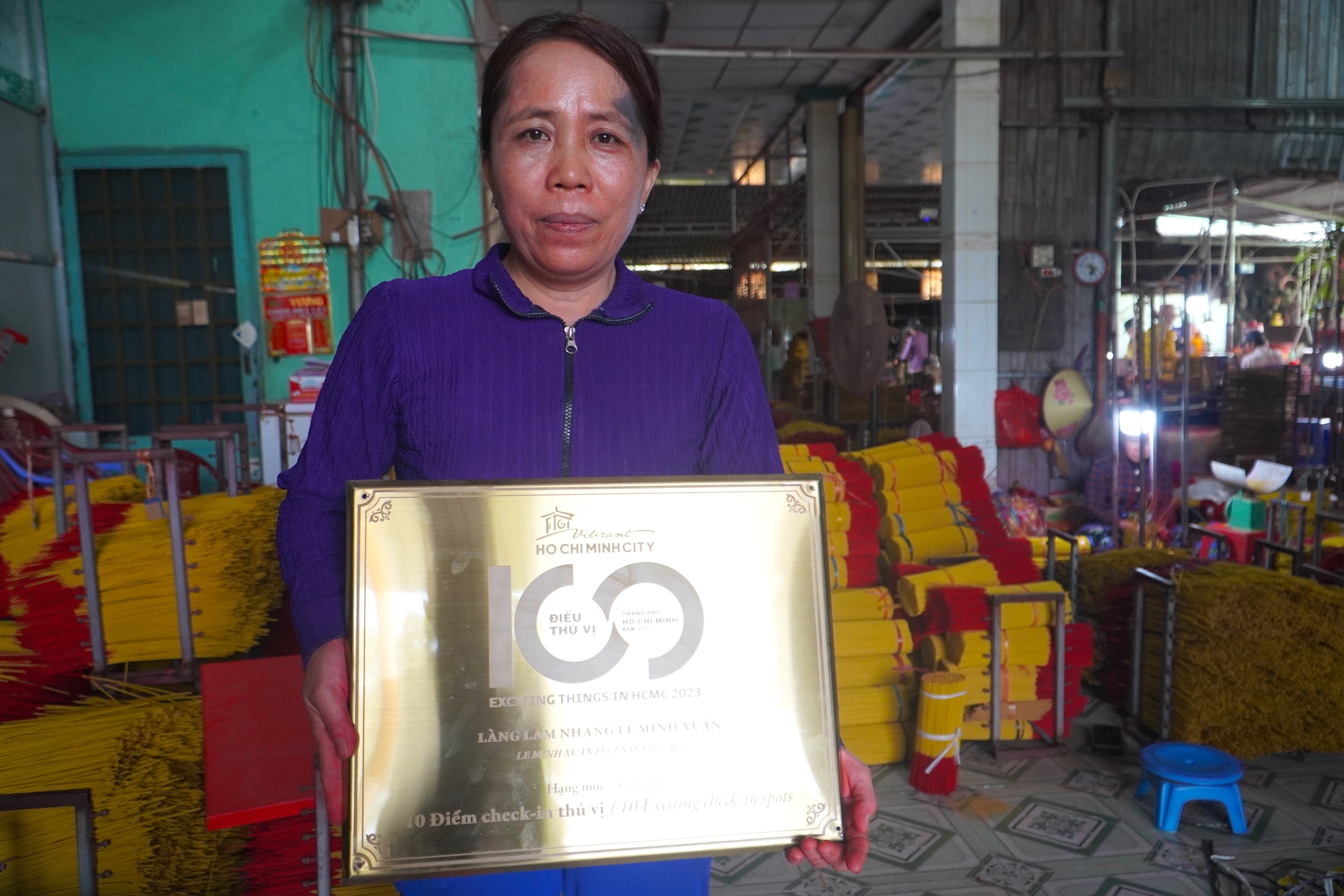
In 2023, the Department of Tourism announced that Le Minh Xuan incense village was among the best suggested destinations for tourists visiting Ho Chi Minh City during the 2024 New Year holiday.
To maintain the incense factory and support the workers, Ms. Thuy provides free accommodation for the workers and only charges for electricity and water at government rates.
"Currently, prices are unstable, so we are trying to maintain production. We hope that the local government and relevant agencies will provide support to sustain this traditional craft village for the long term, for our generation and our children's generation," Thuy shared.
Source: https://nld.com.vn/ghe-lang-nghe-toa-huong-dip-tet-196250125180030855.htm


![[Image] The tenacious fighting spirit of Vietnamese women's football](/_next/image?url=https%3A%2F%2Fvphoto.vietnam.vn%2Fthumb%2F1200x675%2Fvietnam%2Fresource%2FIMAGE%2F2025%2F12%2F17%2F1765990260956_ndo_br_4224760955870434771-copy-jpg.webp&w=3840&q=75)


![[Photo] Prime Minister Pham Minh Chinh receives the Governor of Tochigi Province (Japan)](/_next/image?url=https%3A%2F%2Fvphoto.vietnam.vn%2Fthumb%2F1200x675%2Fvietnam%2Fresource%2FIMAGE%2F2025%2F12%2F16%2F1765892133176_dsc-8082-6425-jpg.webp&w=3840&q=75)
















































































Comment (0)