

Research data from the Vietnam Institute for Real Estate Market Assessment (VARS IRE) shows that, since the end of the third quarter of 2025, rising interest rates have made investors more cautious. However, selling prices in the primary market remain high due to increasing input costs.
The new land price list, effective from the beginning of 2026 and aligned with market prices, enhances transparency but also significantly increases project development costs, as land prices account for approximately 30% of house prices.
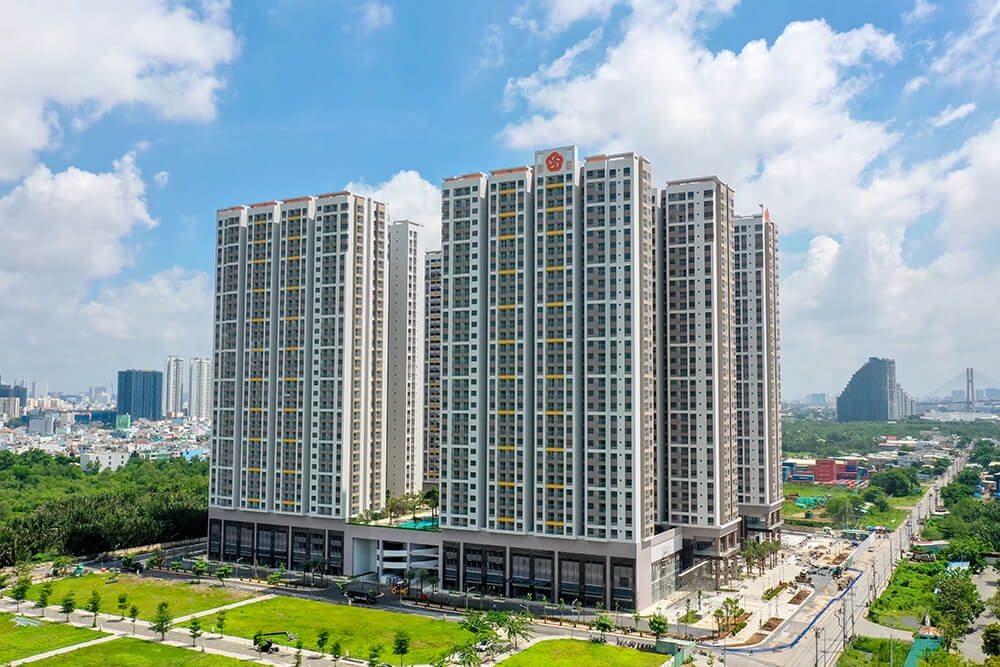
In addition, there is pressure from the price of construction materials, financing costs, labor costs, and other implementation expenses. From around March 2026, many projects have recorded a 2-5% increase in selling prices compared to before as these costs are gradually incorporated into the final price.
In Hanoi, the average selling price of newly launched projects reached approximately 128 million VND/m2, a 28% increase compared to 2025. If Hung Yen is included, the average price is around 87 million VND/m2.
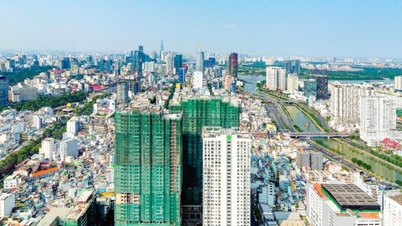
In Ho Chi Minh City, the average selling price reached approximately 110 million VND/m2, a slight increase compared to the previous year. Meanwhile, Da Nang recorded an average price of around 91 million VND/m2, an increase of about 10%, mainly due to the emergence of luxury projects and price adjustments based on sales progress.
Regarding liquidity, the market in Q1/2026 showed no signs of "reversal". Although the absorption rate of new supply across the entire market decreased, it remained positive at approximately 58%, with transaction volume 2.6 times higher than the same period in 2025.
Notably, the flow of money in the market is not declining but is clearly shifting towards areas with real housing demand, development potential, and prospects for price appreciation linked to infrastructure.
In major cities and areas benefiting from infrastructure systems such as ring roads, metros, and high-speed rail, liquidity remains at a good level.
Specifically, in Hanoi, new supply in the first quarter reached over 2,500 units, mainly from previously launched projects, with an absorption rate of approximately 69%. Including Hung Yen, the total supply reached approximately 8,500 units, with about 5,200 units transacted, equivalent to an absorption rate of approximately 61%.
In Ho Chi Minh City, the new supply reached approximately 4,500 products, of which about 3,000 were sold; in the former Ho Chi Minh City area alone, about 2,000 new products were launched with an absorption rate of about 75%.
Supply has also improved thanks to projects in Binh Duong and Ba Ria - Vung Tau (formerly), with prices below VND 60 million/m², thereby expanding the customer base and supporting liquidity.
Meanwhile, in Da Nang, the new supply reached approximately 3,400 units, with about 1,900 successful transactions, equivalent to an absorption rate of about 58%, an increase of 11 percentage points compared to the same period last year.
"Overall, the real estate market is no longer experiencing the rapid growth it once did, but it remains stable based on real demand, while the trend towards more selective buying is becoming increasingly evident," VARS IRE stated.
Source: https://congluan.vn/gia-chung-cu-mo-ban-tai-ha-noi-cao-hon-tp-hcm-10339521.html
![[Photo] Ba Lang An Lighthouse - the "eye of the sea" amidst the "rock museum" of Quang Ngai province.](https://vphoto.vietnam.vn/thumb/1200x675/vietnam/resource/IMAGE/2026/05/29/1780038698840_anh-man-hinh-2026-05-29-luc-14-10-42.png)

![[Image] Pleasant weather helps students enter the 10th grade entrance exam with confidence.](https://vphoto.vietnam.vn/thumb/1200x675/vietnam/resource/IMAGE/2026/05/29/1780034401612_ngay-1-thi-lop-10-minh-duy-8-5009-jpg.webp)





















































































Comment (0)