

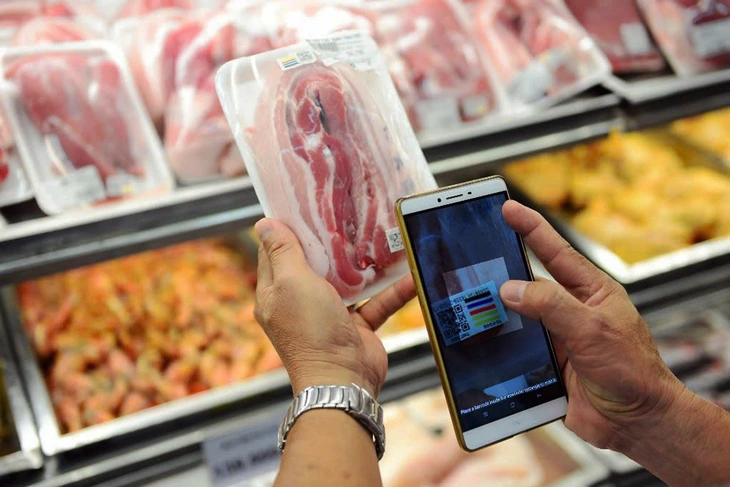
Consumers scan the code to check the origin and information of the product before buying it - Photo: QUANG DINH
Traceability has been implemented in many industries and sectors in Vietnam, and can help curb counterfeit goods. However, according to experts, current solutions are still inconsistent, lack uniformity, and have many loopholes.
All-in-one solution
The situation is set to change because the National Data Association (chaired by the Minister of Public Security ) has announced it is developing a solution for identifying, authenticating, and tracing the origin of goods – NDA Trace – with the goal of preventing counterfeit and fraudulent goods in Vietnam.
The NDA Trace solution will be spearheaded by the Ministry of Public Security to issue unique, internationally standardized Unit Identification (UID) codes for all types of goods in Vietnam through the National Public Service Portal.
All NDA Trace data is integrated from various ministries and agencies: customs, tax, health , market management, industry and trade, etc., into the national data infrastructure, and is accessed through the National Public Service Portal and the platform for identifying, authenticating, and tracing the origin of goods.
NDA Trace is a system for identifying, verifying, and tracing the origin of specific products and goods, utilizing a national blockchain platform (NDA Chain) and decentralized identification technology (NDA DID).
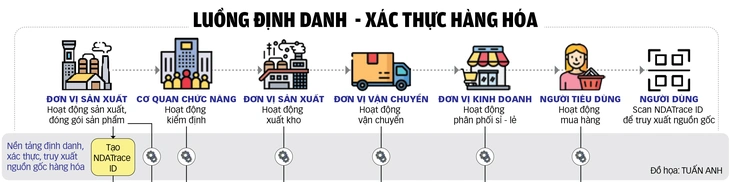
Each product is assigned a unique identifier, enabling transparent tracking of its entire journey from production to the consumer. Every action of the entities in the supply chain is recorded and verified, making it impossible to falsify or alter.
Specifically, NDA Trace connects directly with e-commerce platforms to verify product codes before allowing them to be listed for sale. Accordingly, the system will access and retrieve data on product inspection, licenses, and warnings about substandard products; publicly notifying consumers and the distribution system.
All parties involved in the supply chain (from manufacturers, inspection agencies, transporters/distributors to consumers) can easily check information, origin, and authentication throughout the product lifecycle via NDATrace ID (in the form of QR codes or identification chips) without needing to register an account.
According to experts, users can easily scan UID codes to trace the origin of each product in a transparent, safe, and efficient manner. In addition, consumers can confirm purchases, participate in membership point programs, and access customer service.
According to the development team, the application has currently identified and authenticated over 400 types of goods, with more than 25,000 labels/identifiers issued.
According to the plan, the application will be officially launched in the third quarter of this year, integrating the platform into national public services such as customs, taxation, e-commerce, and market management. A pilot program will be implemented in three localities/sector groups in the fourth quarter, along with the completion of mandatory legal procedures for identification. It will be rolled out nationwide in the first quarter of 2026.
Mr. Tran Huu Linh, Director of the Market Management and Development Department, Ministry of Industry and Trade , assessed that product traceability technology will allow for the management of the product lifecycle from its creation to its demise.
This goes beyond the usual story of origin verification and anti-counterfeiting; it will help businesses better manage their supply chains, operate more openly and transparently, and protect consumers.
The application of technology for traceability is mandatory and must be a comprehensive top-down policy, with synchronized management from the central to local levels and applicable to all businesses.
Both consumers and businesses are hoping for good news.
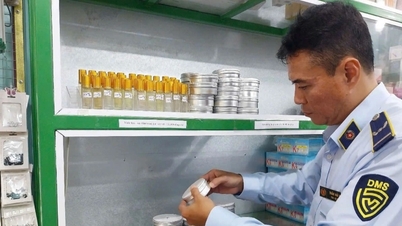
Following recent revelations of counterfeit and fake pharmaceutical and dietary supplement products, Ms. Hong Uyen (Ho Chi Minh City) said that instead of ordering online, she now seeks out reputable sources.
Ms. Uyen believes that the NDA Trace technology solution should be implemented soon to minimize the problem of counterfeit goods. According to the introduction, by simply scanning the code, consumers will have access to information throughout the entire chain, from production to transportation and consumption, with verification from relevant authorities. This will help reduce risks for consumers.
Mr. Hoang Tuan Anh, Director of Information Technology at ECO Pharmaceutical Joint Stock Company (ECO Pharma), said that they have invested in applying the most advanced anti-counterfeiting technology currently available, including scratch codes, QR codes, and hologram labels.
Accordingly, each box of medicine has a unique identification code, allowing for traceability back to each point of sale nationwide.
However, Mr. Tuan Anh acknowledged the limitations: while product identification exists, there is a lack of interoperability and verification across the entire supply chain. Furthermore, the traceability capability only serves internal purposes and does not yet support end users. Mr. Tuan Anh suggested that NDA Trace be put into operation soon.
According to Tuoi Tre newspaper's research, many other solutions are also used by businesses and organizations to verify and trace the origin of products.
For example, physical anti-counterfeiting labels using 3D printing technology and tamper-evident labels are commonly used but are easily copied and do not provide any traceability data. QR codes, serial numbers, and barcodes, on the other hand, cannot be independently authenticated.
Mr. Nguyen Hong Nghi, director of the Enterprise Digital Solutions Center at VNPT IT, commented: In the initial phase of implementation, manufacturing businesses may find the procedures cumbersome and involve many steps in declaring and obtaining codes...
However, for legitimate businesses, all of these things will bring them great value, because the products they bring to the market will be trusted. By participating in this process chain, businesses can also participate in the supply chain, and even provide feedback to government agencies about product quality or any problems.
Mr. Nguyen Huy, head of the technology department at the National Data Association (NDA), believes that the implementation of traceability using the old method is still very fragmented and disjointed.
There is no unified, top-down mechanism in place to guide this process, nor is it based on consistent national standards or international interoperability. Importantly, it is not validated by a government agency.
Regarding NDATrace ID, Mr. Huy believes that in the context of the whole country's digital transformation, the application of technology for traceability is mandatory and must be a comprehensive policy from top to bottom, with synchronized management from the central to local levels and applied to all businesses. Only then can goods be identified, verified, and traced.
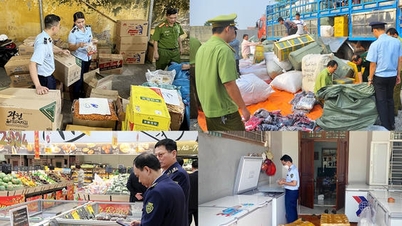
Counterfeit goods have infiltrated everything from supermarkets to hospitals.
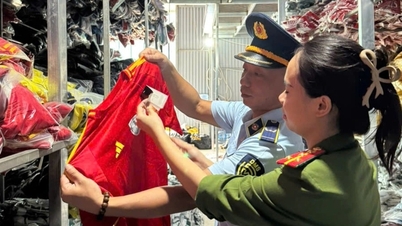
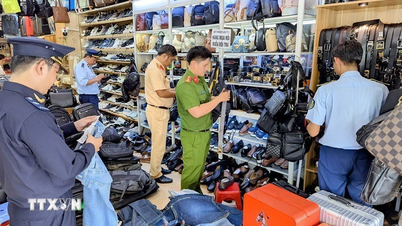
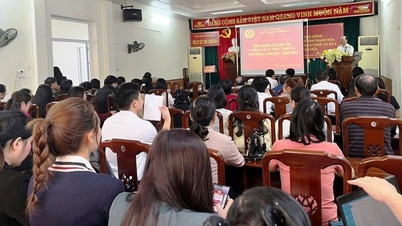
At the seminar "Authenticity Verification - A Driving Force for Sustainable Development of Vietnam's Digital Economy" organized by the National Data Association, Ministry of Public Security, Colonel Pham Minh Tien, from the National Data Center, Ministry of Public Security, stated that counterfeit goods are entering everything from supermarkets to hospitals…
"Therefore, the requirement for authenticity, transparency, and traceability of goods not only serves state management but is also a prerequisite for enhancing domestic market confidence and international integration," Mr. Tien said.
47,000
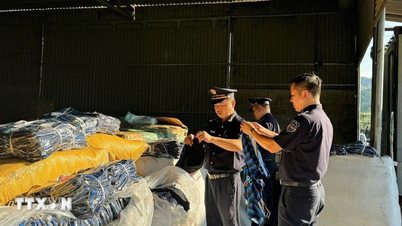
That's the number of counterfeit/fraud cases handled in 2024, showing an upward trend on e-commerce platforms and social media. According to the National Barcode Center, the situation of counterfeit goods in the country is becoming increasingly complex. Counterfeit goods are increasingly infiltrating people's lives through food, pharmaceuticals, and consumer goods.
Back to the topic
VIRTUE
Source: https://tuoitre.vn/giai-phap-quoc-gia-chan-hang-gia-hang-nhai-20250721074421718.htm


















































































Comment (0)