

The values of peace , compassion, and harmony in Truc Lam Buddhism.
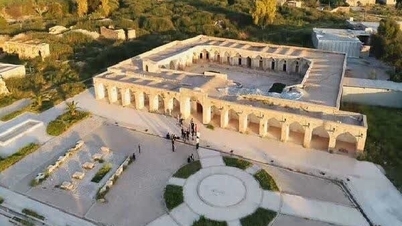
The complex of historical sites and scenic spots of Yen Tu - Vinh Nghiem - Con Son, Kiet Bac has just been officially recognized by UNESCO as a World Cultural Heritage site, affirming the unique value of Truc Lam Buddhism.
The Yên Tử - Vĩnh Nghiêm - Côn Sơn - Kiếp Bạc complex of historical sites and scenic spots, with Trúc Lâm Buddhism as its core, was established in the 13th century by the Trần dynasty kings, particularly through the role of Emperor Trần Nhân Tông. According to the Ministry of Culture, Sports and Tourism, originating from the sacred Yên Tử mountain landscape, Trúc Lâm Buddhism represents a system of Buddhist philosophy and spirit of tolerance and altruism. Trúc Lâm Buddhism is also a testament to the harmonious combination of Mahayana Buddhism with Confucian ethics, Taoist cosmology, and indigenous Vietnamese beliefs.
The ideological and cultural values of Truc Lam Buddhism are entirely consistent with UNESCO's fundamental goal of maintaining and enriching the shared values of humanity: education, building a culture of peace; a spirit of self-reliance, harmonious integration between humanity and the natural world, and respect for the laws of nature.
Through temples, hermitages, pilgrimage routes, stone steles, woodblock prints, and meticulously preserved relics spread across a vast area from Yen Tu to Vinh Nghiem and Con Son, Kiet Bac, this complex fully reflects the stages of development of Truc Lam Buddhism, from its establishment and institutionalization to its revival and continued dissemination of creative and humanistic values. These historical sites, formed centuries ago, consistently demonstrate continuous development, serving as centers of religion, culture, and spirituality; pilgrimage destinations for millions of visitors annually; and evidence of the unique collaboration between the State, religion, and people in shaping the Vietnamese national identity.
Permanent Deputy Minister of Foreign Affairs Nguyen Minh Vu, Chairman of the Vietnam National UNESCO Committee, emphasized that the recognition of Yen Tu - Vinh Nghiem - Con Son - Kiet Bac as a World Cultural Heritage site demonstrates the international appreciation for the value of this complex of historical sites and scenic spots, the humanistic and harmonious ideals of Truc Lam Buddhism, as well as Vietnam's efforts in protecting this complex of historical sites and scenic spots.
The majestic natural beauty and exceptional scientific value of Phong Nha - Ke Bang
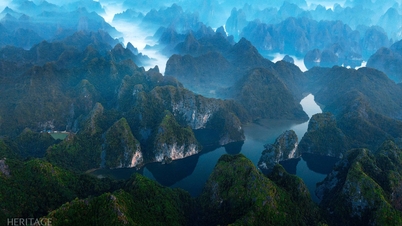
By being inscribed on the World Heritage List for the second time, UNESCO once again affirms that Phong Nha - Ke Bang is one of the rare areas that combines both the majestic beauty of nature and exceptional scientific value - a "green gem" that needs to be preserved for future generations.
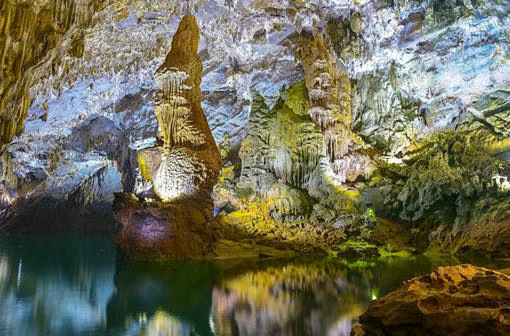
Previously, in 2003, Phong Nha - Ke Bang National Park was recognized by UNESCO as a World Natural Heritage Site for the first time, based on criterion (viii) on geology and geomorphology. The magnificent cave system, with hundreds of large and small caves, most notably Son Doong Cave - the world's largest natural cave discovered in 2009 - has opened up a mysterious world, arousing curiosity and admiration from both the scientific community and international tourists.
However, beyond its exceptional geological values, research and conservation efforts have led scientists to discover many more unique and rare biological values of the ecosystem. Based on this, the Vietnamese Government issued Decision No. 1062/QD-TTg on July 5, 2013, expanding the National Park's area from 85,754 hectares to 123,326 hectares, laying the groundwork for the second nomination to UNESCO.
The expanded dossier was meticulously prepared with the participation of numerous scientists and conservation experts from both within and outside the country. As a result, at the session in Bonn, UNESCO recognized Phong Nha - Ke Bang as a World Natural Heritage Site for the second time, this time based on three criteria: Geological and geomorphological value: The ancient limestone region, formed during the Devonian period more than 400 million years ago, and the complex cave system reflect a long geological evolution, with distinctive traces of natural tectonic processes and transformations; Ecological and biological processes: The pristine tropical rainforest ecosystem and the biological systems within the caves create a unique habitat, with the presence of many endemic and rare plant and animal species; Biodiversity: The National Park is home to more than 2,700 plant species and about 800 animal species, including hundreds of endangered species listed in the IUCN Red List.
The second inscription is the result of coordinated efforts among many agencies. The Ministry of Culture, Sports and Tourism, the Ministry of Agriculture and Rural Development, the Vietnam National UNESCO Committee, the National Council for Cultural Heritage, the People's Committee of Quang Binh province, and numerous domestic and international scientific organizations have continuously researched, preserved, and managed the heritage.
Alongside this are the efforts within the local community – where people are gradually becoming more aware of their role in protecting the "natural treasures" of their homeland. Ecotourism activities are strictly controlled; measures to prevent forest fires, protect wildlife, and restore primary forests have contributed to maintaining the integrity and originality of the heritage.
More than just a scenic spot, Phong Nha - Ke Bang has become a vibrant symbol of the close relationship between humans and nature, between sustainable development and long-term conservation. Today's achievements are not merely a matter of honorary titles, but also open up opportunities for the development of green tourism, environmental education, and deeper international cooperation.
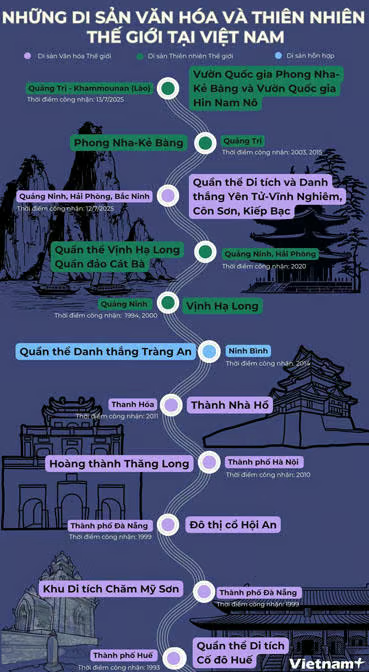
According to Associate Professor Dr. Le Thi Thu Hien, Director of the Department of Cultural Heritage, Standing Member of the National Council of Cultural Heritage, and Head of the Vietnamese expert group participating in the World Heritage Committee, “In the coming time, to effectively manage the cross-border World Heritage site between Vietnam and Laos, both sides need to continue promoting the implementation of scientific research projects and establishing operational methods to cope with the risks impacting the heritage; assessing tourism carrying capacity in accordance with the ecological and resource carrying capacity of Phong Nha-Ke Bang National Park and Hin Nam No National Park. Vietnam can support Laos in improving its capacity to develop legal regulations for the management, protection, and promotion of the value of World Heritage sites in general, and Hin Nam No National Park in particular.”
Bao Chau
Source: https://baophapluat.vn/doc-dao-hai-di-san-van-hoa-thien-nhien-vua-duoc-the-gioi-cong-nhan.html









































































Comment (0)