

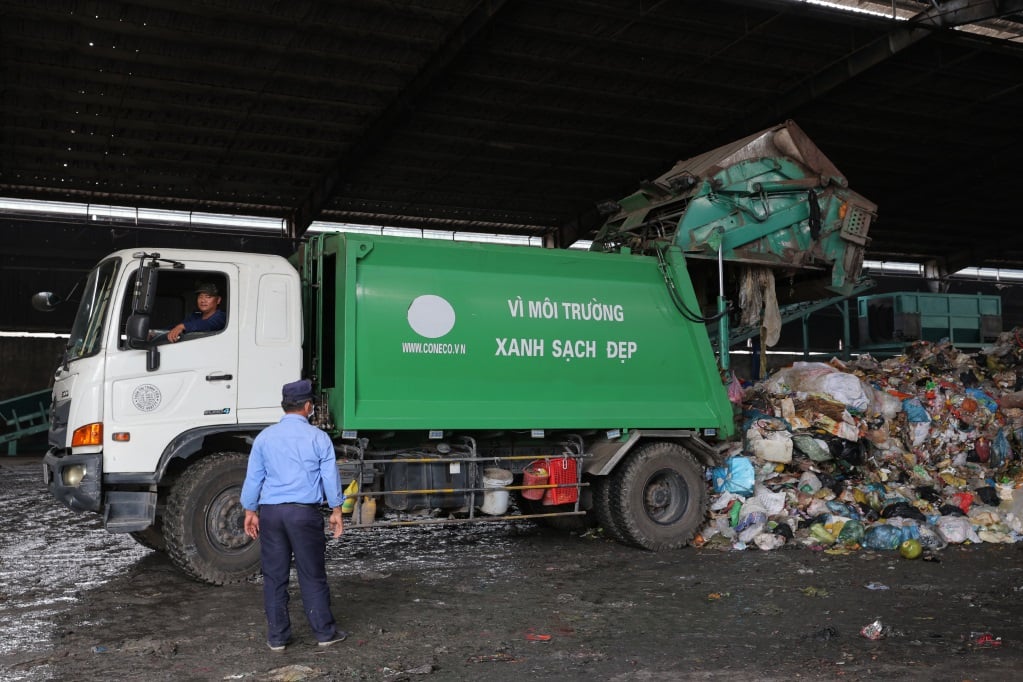
There are still shortcomings.
According to the Department of Environment and Climate Change under the Department of Agriculture and Environment, the beginning of the year is a time when many festivals take place, and commercial, service, and tourism activities increase, resulting in a higher-than-normal amount of solid household waste.
The pressure on the waste collection, transportation, and treatment system has therefore increased significantly. A review revealed that some localities have not fully implemented the statistical reporting and registration of generated household solid waste. The omission of households and businesses still occurs, leading to service fee collection that does not adhere to the principle of collecting the correct and full amount as stipulated.
Coordination between local authorities and waste collection and transportation units is not yet truly effective; the frequency of collection in some areas does not meet requirements, leading to localized waste accumulation, causing frustration among residents and generating complaints.
At the same time, the implementation of household solid waste sorting at source has not been carried out synchronously or widely across residential areas. Specifically in Phuoc Chi commune, previously, household solid waste was collected and transported to a waste collection point in Binh Quoi hamlet.
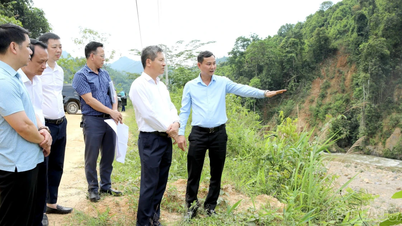
However, this area is located within the planned industrial zone (approximately 410 hectares) of the Moc Bai Border Gate Economic Zone, as approved by the competent authority. Currently, the aforementioned waste collection site still has accumulated waste that has not been thoroughly collected and processed, posing a potential risk of environmental pollution.
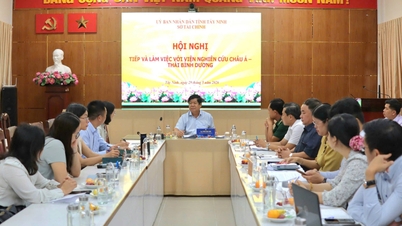
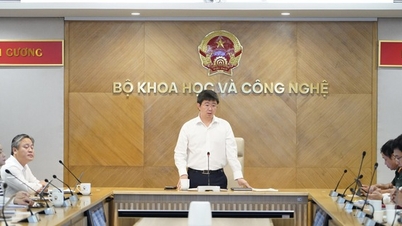
Recently, the Department of Agriculture and Environment held a meeting to evaluate and draw lessons from the collection, transportation, and treatment of solid household waste in 36 communes and wards of the former Tay Ninh province. Representatives from the People's Committees of the communes and wards of Long Thuan, Thanh Dien, Cau Khoi, Long Chu, Trang Bang, Tan Phu, Tan Hoa, Duong Minh Chau, and Long Hoa reported on the difficulties and obstacles encountered in the collection, transportation, and verification of the volume of household waste in their respective areas.
One of the prominent issues raised is the fact that some vehicles collecting and transporting solid household waste are overloaded, posing a risk to traffic safety and making it difficult to verify the volume of waste. The main reason is that collection is carried out by simply filling the containers along the roads, without controlling the actual volume until it is weighed at the processing facility. Guidance on solutions to address this issue is requested.
Furthermore, local authorities also reported that some waste collection and transportation units have not maintained the prescribed frequency, leading to localized accumulation and congestion of waste in some areas. Meanwhile, the commune-level People's Committees currently lack personnel to monitor the entire transportation process from the locality to the processing facility, making supervision difficult and affecting the accuracy and objectivity of the confirmed waste volume data.
Local authorities also requested a review and adjustment of the unit price for collecting and transporting household waste, currently applied according to Decision No. 16/2020/QD-UBND dated May 14, 2020, of the Provincial People's Committee, due to a sharp increase in input costs, especially fuel prices, compared to the time of issuance.
In addition, many opinions suggest extending the bidding cycle for selecting waste collection and transportation units to every three years to reduce administrative pressure and ensure stability in the organization and implementation of the service. Regarding waste reception at treatment plants, localities report that congestion often occurs during peak times, affecting vehicle turnaround time and collection efficiency.
Therefore, many communes and wards have requested a review and adjustment of the transportation schedule to better suit actual conditions. Regarding the collection of service fees from small-scale businesses generating less than 300kg of waste per day, many localities have also requested specific guidance to ensure consistency in implementation.
Strengthen supervision and ensure efficient waste collection.

In response to the above recommendations, Phan Cong Hoi, Head of the Department of Environment and Climate Change, requested that localities urgently review and compile a complete list of generated household solid waste; and regularly update the generated volume to ensure that waste collection is accurate, complete, transparent, and publicly disclosed as directed by the Provincial People's Committee.
At the same time, localities need to ensure that 100% of households and individuals in urban areas register for and use solid waste collection, transportation, and treatment services, in accordance with the objectives of the Provincial Party Congress Resolution for the 2025-2030 term.
Regarding the collection of fees from small-scale businesses generating less than 300kg of waste per day, the Sub-Department cites the regulations in Article 58 of Decree No. 08/2022/ND-CP, as amended and supplemented by Decree No. 05/2025/ND-CP and Decree No. 48/2026/ND-CP. Accordingly, establishments can choose to participate in the general collection system like households or sign a separate contract with a collection and transportation unit depending on their actual needs.
The Sub-Department also requested the People's Committees of communes and wards to select contractors in accordance with current bidding regulations; the determination of the contract implementation time must be based on the scale and nature of the bidding package, the ability to balance funding sources and the actual conditions of the locality, ensuring efficiency and continuity in service provision, and avoiding interruptions in the collection and transportation of solid household waste.
Regarding the proposal to conduct contractor selection every three years, the People's Committees of communes and wards need to review and specifically assess the needs, the ability to allocate funds, and the effectiveness of implementation. They should also compile reports and seek guidance from the Department of Finance and other relevant agencies to ensure compliance with legal regulations before implementation.
The Department of Agriculture and Environment also requested the People's Committees of communes and wards to urgently review and fully compile a 100% list of waste-generating entities to ensure that fee collection is in accordance with regulations; and at the same time, strengthen supervision of service fee collection activities, requiring that all payments be accompanied by complete receipts and invoices.
Local authorities are urged to continue promoting public awareness campaigns, strictly penalizing illegal waste disposal, and encouraging people to participate in waste collection services to ensure that 100% of household solid waste is collected and processed.
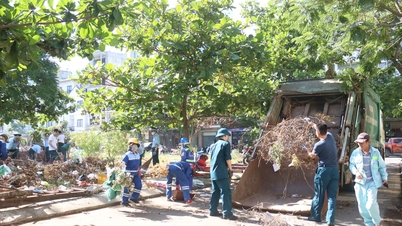
In addition, the contracted waste collection and transportation units have proactively arranged sufficient personnel and vehicles, and increased the frequency of collection to avoid waste accumulation that could cause environmental pollution and affect people's lives.
| According to the 2026 waste treatment zoning plan of Tay Ninh province, 36 communes and wards of the former Tay Ninh province are currently handled by two units: the Tay Ninh Waste Treatment Plant and Hue Phuong VN Green Environment Co., Ltd. Specifically, the Tay Ninh Waste Treatment Plant in Tan Phu receives waste from 18 communes and wards, while Hue Phuong VN Green Environment Co., Ltd. handles waste from the remaining 18 communes and wards according to the zoning plan stipulated by the Provincial People's Committee. |
Source: https://baotayninh.vn/giam-sat-hoat-dong-thu-gom-van-chuyen-rac-sinh-hoat-146460.html



![[Image] Pleasant weather helps students enter the 10th grade entrance exam with confidence.](https://vphoto.vietnam.vn/thumb/1200x675/vietnam/resource/IMAGE/2026/05/29/1780034401612_ngay-1-thi-lop-10-minh-duy-8-5009-jpg.webp)

![[Photo] Ba Lang An Lighthouse - the "eye of the sea" amidst the "rock museum" of Quang Ngai province.](https://vphoto.vietnam.vn/thumb/1200x675/vietnam/resource/IMAGE/2026/05/29/1780038698840_anh-man-hinh-2026-05-29-luc-14-10-42.png)


















































































Comment (0)