

- Ca Mau province is upgrading the traditional folk music memorial area, with completion expected in 2025.
- Training on the model of traditional Southern Vietnamese folk music and singing associated with tourism in the Forest Village in the context of building new rural areas.
- Traditional Southern Vietnamese folk music and stories about Uncle Ba Phi bring the unique charm of Ca Mau to Hanoi.
Extending the vitality of heritage through the community.
Unlike the glitz and glamour of large stages or professional performances, Cai Luong (Vietnamese traditional opera) quietly spreads throughout the cultural lives of the people through community clubs. From peaceful rural areas to bustling cities, this traditional art form is maintained and developed thanks to ordinary people – who are both artists, audiences, and above all, keepers of the passion alive.
In many localities throughout the province, the model of traditional folk music clubs has developed strongly. Elderly artisans have become mentors, contributing to the preservation of performance techniques and the distinctive style of ancient melodies.
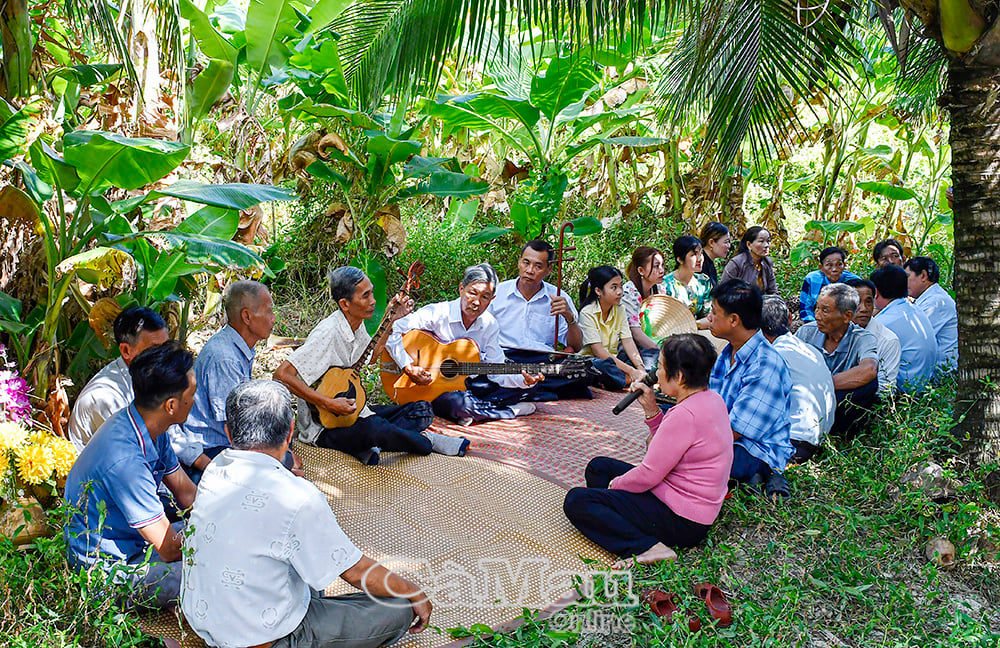 Traditional Southern Vietnamese folk music performances help keep this unique art form alive and spread its influence. (Photo: Mong Thuong)
The club's meeting space could be the village cultural center or the courtyard of a member's home... There, traditional Southern Vietnamese folk music is not only a performing art but also a bond connecting the community, an opportunity for people to share their feelings and preserve the affectionate way of life of the Southern region. Each melody and song resonates with a spirit of generosity, freedom, simplicity, and humility - characteristics that have shaped the character of the people of Southern Vietnam for generations.
It is thanks to the natural and intimate transmission of knowledge from elders to younger generations through community activities that Cai Luong (Vietnamese traditional opera) has preserved its original beauty and continues to spread in modern life. Without the need for large-scale preservation campaigns, the love and pride in national culture within the community has helped this art form endure through the years.
Mr. Nguyen Dinh Trieu, Director of the Culture, Sports and Communication Center of Song Doc commune, said: “In recent times, many clubs have been established in the commune to participate in various cultural and artistic activities, including traditional Southern Vietnamese folk music (Don Ca Tai Tu). This is a type of art that attracts a large number of people who love and participate in it. Through this, it promotes the development of mass culture and arts, contributing to improving the spiritual life of the people.”
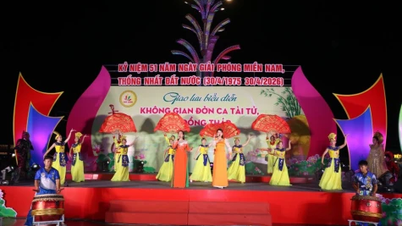
Currently, the province has over 300 traditional music clubs. In addition to regular activities, many clubs actively participate in festivals and competitions at the provincial, regional, and national levels. This provides opportunities for members to interact, learn, improve their skills, and continue to spread their love of traditional music to the community.
Connecting tradition with modernity
Traditional music clubs are not only repositories of ancient melodies but also spiritual anchors, nurturing a love for traditional culture and art for present and future generations. To ensure these songs and melodies are not forgotten amidst the modern pace of life, each club, each artist, and each art lover needs to work together to preserve and keep this precious heritage alive.
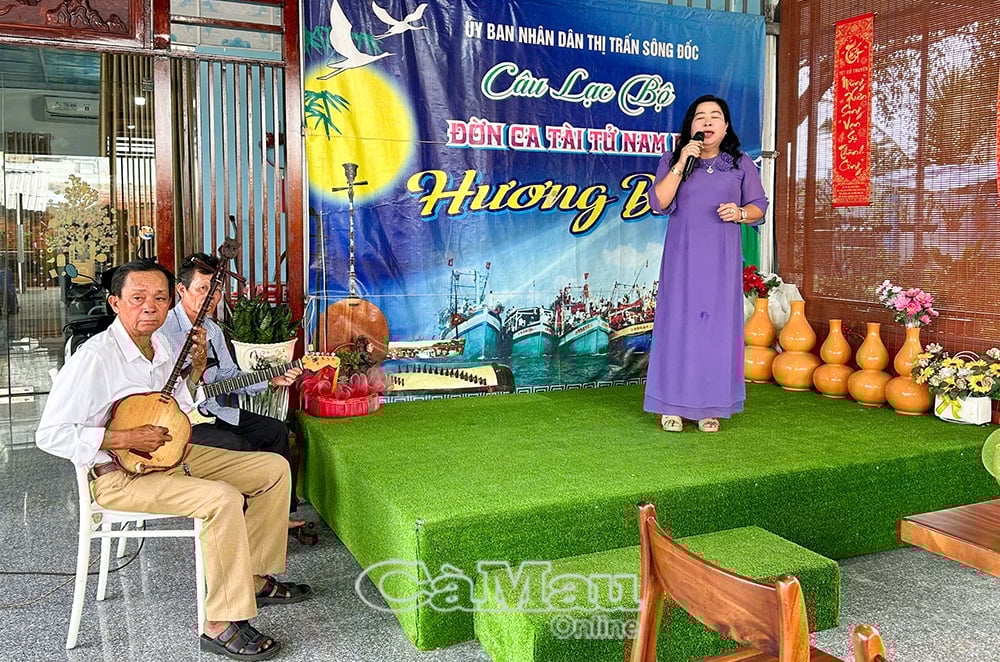 The Traditional Music Club is a place that nurtures the spiritual life of the people.
Mr. To Minh Canh, Deputy Chairman of the Huong Bien Traditional Music Club, shared: “The club was established in 2022 and has since become a 'common home' where members can gather to play music and sing to satisfy their passion, while also spreading this traditional art form to the younger generation.”
“I love traditional Vietnamese folk music, so I joined the club. Here, I've received a lot of guidance from the senior members on how to sing. I really enjoy the regular meetings, listening to music, singing, and chatting with people after stressful work days,” shared Ms. Nguyen Thuy Trang, a member of the Huong Bien Traditional Folk Music Club.
Today, in a constantly changing society, the persistent teaching of traditional Southern Vietnamese folk music (ĐCTT) by elderly artisans to younger generations is not only significant for preservation but also serves to rekindle the passion for ĐCTT. This helps the current generation appreciate the cultural identity and provides them with further motivation to create and innovate ĐCTT art based on tradition.
The sounds of musical instruments emanating from small courtyards or cultural centers are not just music; they are memories, spirit, and an indispensable part of the soul of the people of Southern Vietnam.
Ha Giang – Phong Nguyen
Source: https://baocamau.vn/giu-hon-nam-bo-qua-cau-lac-bo-don-ca-tai-tu-a122986.html

![[Image] Pleasant weather helps students enter the 10th grade entrance exam with confidence.](https://vphoto.vietnam.vn/thumb/1200x675/vietnam/resource/IMAGE/2026/05/29/1780034401612_ngay-1-thi-lop-10-minh-duy-8-5009-jpg.webp)
![[Photo] Ba Lang An Lighthouse - the "eye of the sea" amidst the "rock museum" of Quang Ngai province.](https://vphoto.vietnam.vn/thumb/1200x675/vietnam/resource/IMAGE/2026/05/29/1780038698840_anh-man-hinh-2026-05-29-luc-14-10-42.png)






































































Comment (0)