There, infant patients, some as young as a few months old, face the daunting challenge of reclaiming their right to see the world from congenital glaucoma.

|
Doctors advise against confusing unusually large eyes with natural beauty. |
A haunting journey began with a premature baby born at 28 weeks of gestation. At just 5 months old, the child faced a series of severe medical complications, from respiratory failure to Stickler syndrome causing mandibular hypoplasia. The greatest pain for the family was not only the child's fragile life but also the glaucoma silently robbing them of their future sight.
The mother still hasn't forgotten those agonizing days when her child couldn't lie on their back to breathe, requiring life support through a feeding tube, while their eyes began to bulge abnormally. After a long journey searching for hope, the family chose Dong Do Hospital as their last resort, where they placed their complete trust in the resuscitation team and ophthalmology specialists.
With a fragile body and weak constitution, the surgery was not simply a medical intervention but a comprehensive battle to regain the child's life and vision. The pressure weighed heavily on the family as the complex history of respiratory failure increased the risks during anesthesia and surgery.
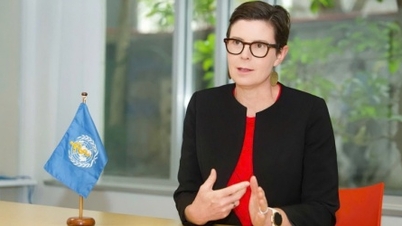
According to Ms. Dinh Thi Phuong Thuy, Executive Director of Dong Do Hospital, the infant was admitted in a very weak condition due to premature birth and had previously experienced acute respiratory distress syndrome. The prolonged episodes of physiological apnea posed a major challenge for the entire treatment team. Prior to this, the family had sought help from many medical facilities but were all turned away due to the severity of the condition.
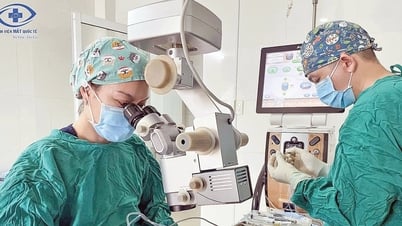
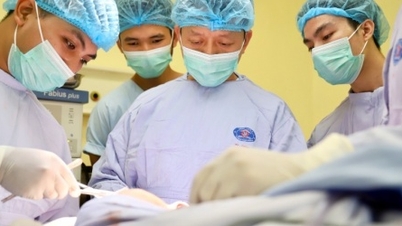
With the advantage of being a general hospital, the doctors conducted in-depth interdisciplinary consultations. The anesthesia and resuscitation team, along with the surgical team, developed the optimal plan to ensure maximum safety. The decision to intervene was based not only on professional expertise but also on responsibility and dedication to a tiny life.
The joy wasn't limited to just one case. Another child recently underwent decompression surgery with a corneal diameter of 14.5 mm. The moment the child woke up with their eyes feeling better and no longer in pain brought immense hope to the family that their sight could be preserved.
Based on real-life stories, doctors emphasize the importance of raising public awareness about congenital glaucoma. This is an abnormality in eye development that prevents the drainage of aqueous humor, causing increased intraocular pressure and dilation of the eyeball, commonly known as "buffalo eye" in folk terminology.
In cases detected early, children can receive intervention using microsurgical techniques such as trabeculectomy, which helps to free up the drainage pathway of aqueous humor, reduce intraocular pressure, and preserve visual function. The timing of intervention is crucial in preserving the child's sight.
Doctors advise against confusing unusually large eyes with natural beauty. If a child's eyes are larger than normal and appear lethargic, this could be a sign of serious eye damage.
Parents should pay particular attention to symptoms such as frequent tearing even when the child is not crying, sensitivity to light, squinting, or turning their head away from light. Children may also exhibit unusual blinking or tightly closed eyes.
Some dangerous warning signs that require immediate medical attention for children include abnormally large eyes, where the corneal diameter in newborns is usually around 10 to 10.5 mm; if it exceeds 12 mm in the first year of life, special attention is needed. In addition, corneal opacity with a cloudy white or bluish color, and the appearance of cracks are also signs that should not be ignored.
For premature babies or those with congenital conditions, regular check-ups are crucial for early detection and to avoid missing the opportunity for effective treatment.
"Complacency can lead to missed opportunities, so early detection and timely intervention are key to protecting children's eyesight from the very first years of life," the Director of Dong Do Eye Hospital further advised.
Source: https://baodautu.vn/giu-lai-anh-sang-cho-nhung-doi-mat-tre-tho-d569122.html



![[Photo] General Secretary and President To Lam presides over the meeting to approve the draft report on the results of the second inspection by the Politburo of the Standing Committee of the Hanoi City Party Committee.](https://vphoto.vietnam.vn/thumb/1200x675/vietnam/resource/IMAGE/2026/05/26/1779789811432_a2-bnd-4430-9620-jpg.webp)








































































Comment (0)