

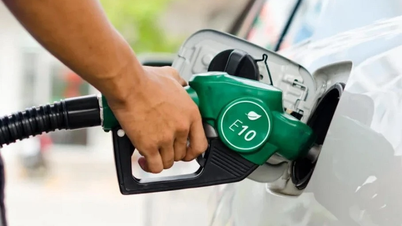
Biofuels are divided into main groups: biodiesel, biogas (blended with ethanol as an additive instead of lead), biogas, etc., which can completely replace traditional fuels. Using biofuels does not increase CO2 emissions, is environmentally friendly, contributes to national energy security, and supports the carbon neutrality goals of countries around the world .
Currently, biofuels are widely used in more than 50 countries worldwide, with an estimated market size of 1.89 million barrels of oil equivalent per day in 2024 and projected to reach 2.44 million barrels of oil equivalent per day in 2029. Many countries have prioritized biofuel development policies and plans for large-scale production to meet the growing demand in a stable manner.
As one of the countries particularly concerned about environmental issues and combating climate change, Vietnam has early issued a roadmap for reducing greenhouse gas emissions in many sectors. On November 20, 2007, the Prime Minister issued Decision No. 177/2007/QD-TTg on "Approving the Project for the Development of Biofuels until 2015, with a vision to 2025"; on November 22, 2012, Decision No. 53/2012/QD-TTg on "Roadmap for applying the blending ratio of biofuels with traditional fuels"; and on July 26, 2023, Decision No. 893/QD-TTg on "Approving the National Energy Master Plan for the period 2021-2030, with a vision to 2050". These policies highlight the essential role of developing biofuels for sustainable economic development.
Notably, following the strong commitment at COP26 to achieve net zero emissions by 2050, the Government has urgently reviewed the relevant legal documents and regulations, and established policy mechanisms for biofuels to partially replace fossil fuels, contributing to energy security and environmental protection.
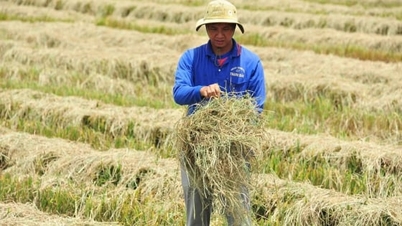
With 28 million hectares of agricultural land, including more than 14 million hectares of forest land, Vietnam has great potential for developing biofuels from organic waste from the agricultural and food industries, thanks to its favorable climate and abundant solar energy.
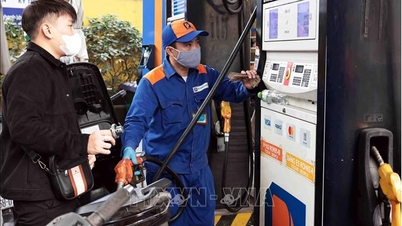
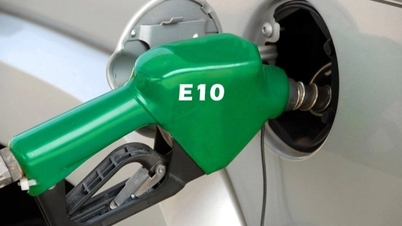
Since 2015, seven bio-ethanol plants have been built nationwide with a total projected production capacity of approximately 502,000 tons per year, enough to blend 8.46 million tons of bioethanol (E5) when these plants operate at 100% of their designed capacity. However, due to unfavorable developments in world oil prices, small-scale production, outdated technology, limited use of cheaper raw materials, failure to utilize by-products to reduce production costs, and inadequate financial mechanisms in many projects, the price of E5 gasoline has not been attractive enough, leading to a lack of consumer interest. As a result, bio-ethanol plants have successively fallen into disuse, unable to sell their products, operating precariously, or even being forced to close down.
Thus, Vietnam still has much work to do to develop biofuels sustainably. Some experts believe that the Vietnamese government has a clear and coherent vision and strategy, setting similar goals to developed countries; however, strategic planning and implementation are not truly interconnected. Vietnam's commitment to reducing greenhouse gas emissions to "zero" by 2050 is a very ambitious goal, requiring significant resources and the concerted efforts of all relevant agencies, ministries, and departments.
Several failed ethanol production projects highlight the need for systematic investment planning, from stable raw material sourcing area planning and technology selection to effective and stable financing mechanisms for biofuel production, ensuring consistent quality and reduced costs to gain consumer preference. These are issues that all levels of government, relevant sectors, investors, and raw material suppliers involved in the biofuel production chain need to address and resolve in order to achieve the goal of reducing greenhouse gas emissions to zero by 2050.
Source: https://nhandan.vn/go-vuong-cho-nhien-lieu-sinh-hoc-post816511.html


![[Image] Central Party Office summarizes work in 2025](/_next/image?url=https%3A%2F%2Fvphoto.vietnam.vn%2Fthumb%2F1200x675%2Fvietnam%2Fresource%2FIMAGE%2F2025%2F12%2F18%2F1766065572073_vptw-hoi-nghi-tong-ket-89-1204-jpg.webp&w=3840&q=75)





















![[Video] Launch of two books on history and heritage preservation](https://vphoto.vietnam.vn/thumb/402x226/vietnam/resource/IMAGE/2025/12/18/1766072185865_2663241292917005256-4230-jpg.webp)






















































Comment (0)