

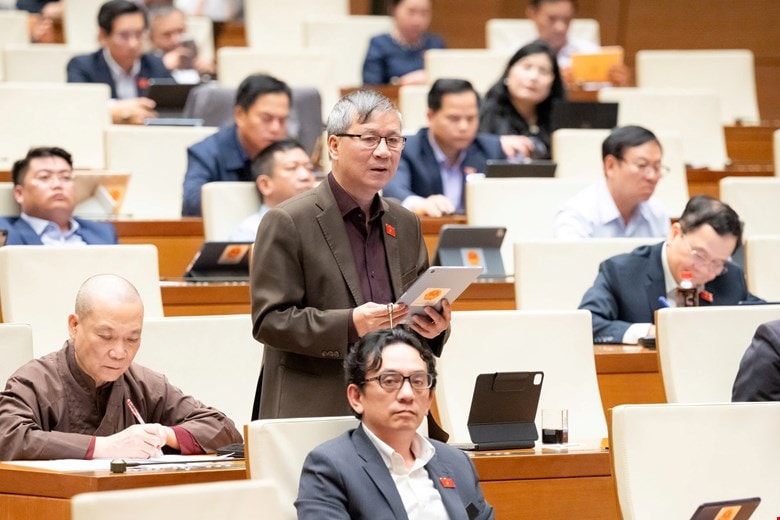
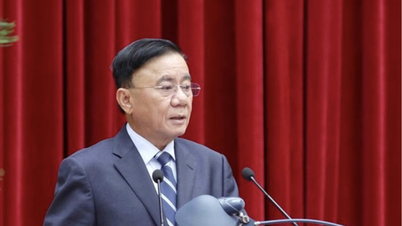
Concerned about the development of small and medium hydropower, delegate Nguyen Anh Tri (Hanoi Delegation) affirmed that energy development is extremely important, but electricity development must be safe, not harmful to the environment, national security and defense, people's lives and human lives.
However, this Resolution of the National Assembly still does not mention hydropower. Recently (December 28, 2024), according to the decision to approve the supplement and update of the national power development planning for the period 2021-2030 and vision to 2050, about 200 small and medium hydropower plants have been approved.
From that analysis, the delegate suggested that, given the recent situation in the Central region, it is necessary to review all small and medium-sized hydropower plants in our country. If any hydropower plant cannot be repaired, it should be shut down. If the flood discharge causes damage to the people, it must be compensated appropriately; if it causes harm to people's lives, it must be criminally prosecuted.
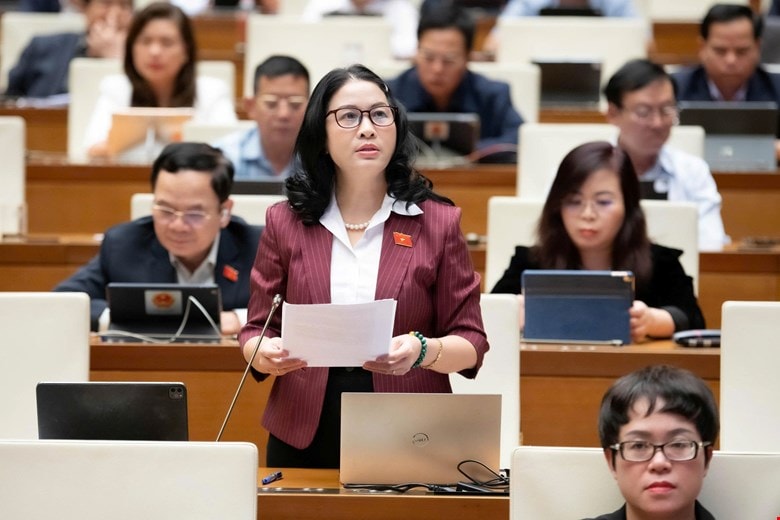
Meanwhile, delegate Nguyen Thi Lan (Hanoi delegation) proposed to add a direction to increase the proportion of biofuels, such as E5, E10, SAF in the reserve structure, linked to environmental standards, and at the same time encourage universities and research institutes to participate in research and testing. This is the trend of Japan and the United States to reduce emissions and promote innovation.
Regarding the development of small modular nuclear power, the Hanoi delegation representative said that the choice of small modules at the current stage is appropriate. This model mainly serves research, human resource training and gradual mastery of technology, but cannot expect high economic efficiency.
Therefore, in the initial stage, the State needs to play a leading role, because it is difficult to attract the private sector when the investment is large, the recovery period is long and the risk is high. However, when Vietnam has accumulated enough experience, controlled safety well, completed the legal framework and mastered the core technology, it is completely possible to gradually expand the scale to attract private enterprises to participate in investment. The roadmap from small modules to large modules is a cautious approach, in line with international practices and suitable for the actual conditions of Vietnam.
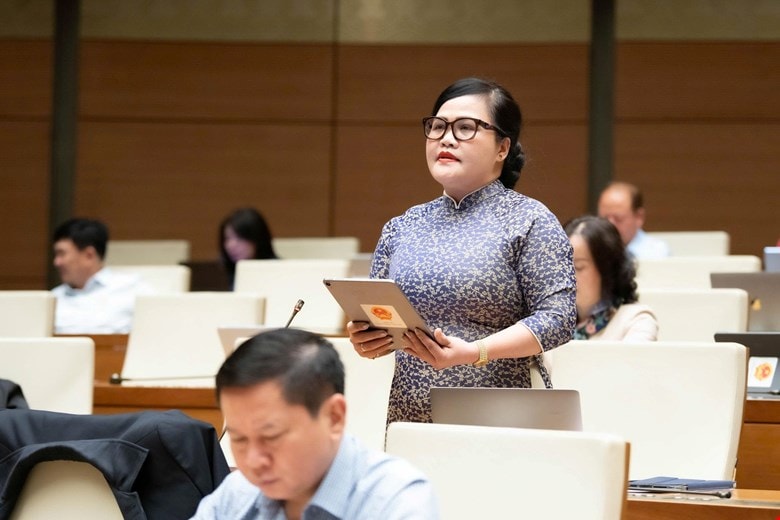
Delegate Nguyen Thi Suu (Hue City Delegation) agreed with the proposed contents of the draft Resolution, expressing the will and orientation for the development of the energy sector in the context of economic growth, climate change and energy transition. However, according to the delegate, the draft still has some incomplete points, potential legal risks, lack of transparency, does not fully protect the interests of related parties and also does not balance between flexibility and control.
According to the delegate, regarding feasibility and response to climate change, the Resolution encourages the development of small modular nuclear power and offshore wind power, but does not specifically regulate the assessment of climate change impacts, technical safety and environment for key energy projects. This is mandatory to meet the requirements of the Constitution and the Law on Environmental Protection, while also being consistent with the trend of developing green, environmentally friendly energy of the international community. Feasibility is not only technical but also must ensure the safety of sustainable development and response to climate change.
From there, delegate Nguyen Thi Suu proposed adding separate provisions on assessing the impact of climate change and the safety of operating new types of energy; assigning the Ministry of Industry and Trade and the Ministry of Agriculture and Environment to coordinate in issuing detailed instructions on assessing and handling risks during the implementation of energy projects.
Source: https://hanoimoi.vn/de-nghi-tang-ty-le-nhien-lieu-bi-hoc-trong-co-cau-su-dung-nang-luong-726080.html

![[Photo] General Secretary To Lam receives the Director of the Academy of Public Administration and National Economy under the President of the Russian Federation](/_next/image?url=https%3A%2F%2Fvphoto.vietnam.vn%2Fthumb%2F1200x675%2Fvietnam%2Fresource%2FIMAGE%2F2025%2F12%2F08%2F1765200203892_a1-bnd-0933-4198-jpg.webp&w=3840&q=75)












































































Comment (0)