

According to the General Statistics Office's announcement of the 2025 Spatial Cost of Living Index (SCOLI), Hanoi continues to have the highest SCOLI index in the country, and also the highest cost of living in the country.
Quang Ninh ranks second with a SCOLI index of 98.56%, the same as Hanoi. Quang Ninh has the advantage of developing a comprehensive economy with industries, services, and tourism, notably as a major tourist center with Ha Long Bay. Trade and services are thriving, attracting a large number of domestic and international tourists, contributing to increased consumer demand and higher prices for goods and services.
However, thanks to a stable supply of goods and services, along with reasonable living and transportation costs, the price level in Quang Ninh remains lower than in Hanoi.
Among the 11 main consumer goods and services groups, Quang Ninh has several groups with lower average prices than Hanoi: Clothing, hats and footwear at 89.62%; culture, entertainment and tourism at 93.93%; and transportation at 95.11%.
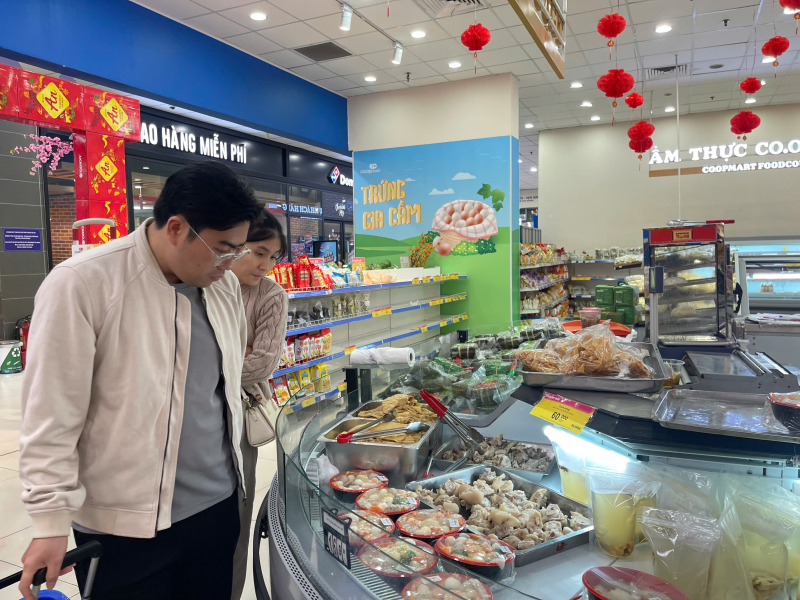
Conversely, there are three groups of goods with higher average price indices than Hanoi: the group of medicines and medical services at 106.96%; the group of housing, electricity, water, fuel and construction materials at 104.61%; and the group of beverages and tobacco at 103.83%.
Hai Phong ranked third with a SCOLI index of 98.43%, the same as Hanoi. Several product groups in Hai Phong had lower average prices than Hanoi: clothing, hats, and footwear at 97.61%; culture, entertainment, and tourism at 88.32%; and postal and telecommunications services at 88.56%.
Conversely, some commodity groups have higher average prices than in Hanoi: Food and food services at 105.5%; medicine and medical services at 101.57%.
Ho Chi Minh City ranks fourth with a SCOLI index of 97.96% in 2025. Thanks to its modern distribution system, abundant supply of goods, and high level of competition, the average price level in Ho Chi Minh City is lower than in Hanoi.
Some product categories have lower average prices than Hanoi: Household appliances and goods at 93.66%; clothing, hats and footwear at 94.33%; housing, electricity, water, fuel and building materials at 97.23%. After Ho Chi Minh City, Da Nang ranks fifth nationwide in terms of the cost of living.
Vinh Long has the lowest SCOLI index in the country in 2025, at 91.47% of Hanoi's. The average price of commodity groups in Vinh Long compared to Hanoi ranges from 75.79% to 114.99%.
Next is Gia Lai with a SCOLI index of 92.62% in 2025. Compared to Hanoi, the average price of commodity groups in Gia Lai is between 83.01% and 113.78%. This group is followed by Ca Mau and Quang Tri (92.99%); Tay Ninh (93.51%); Ha Tinh (93.75%); An Giang (93.93%); Cao Bang (94.54%); and Dong Thap (94.95%).
In general, localities with low SCOLI scores are mainly due to the relatively low prices of essential goods and services such as food, catering; clothing, hats and footwear; rental housing; household equipment and appliances; transportation; postal and telecommunications services; education services; and entertainment services.
The 2025 spatial cost of living index shows that price differences between regions and localities are not significant.
High prices are concentrated mainly in major economic centers with rapid urbanization and high consumer demand, while localities with advantages in food supply and low living costs maintain lower prices.
The development of distribution systems, logistics, and especially e-commerce has contributed to enhancing market transparency, increasing competition, and narrowing the price gap between regions.
This reflects the effectiveness of price management, ensuring a balance between supply and demand for essential goods and contributing to price stability nationwide.
Source: https://cand.com.vn/Xa-hoi/ha-noi-co-gia-ca-sinh-hoat-dat-do-nhat-ca-nuoc--i801559/
![[Photo] Admire the coral "masterpiece" amidst the million-year-old heritage of Dak Lak province.](https://vphoto.vietnam.vn/thumb/1200x675/vietnam/resource/IMAGE/2026/05/30/1780107638639_y25-jpg.webp)































































































Comment (0)