

TPO - On the morning of December 12th, the Hanoi City People's Council approved a resolution on the establishment of "Low Emission Zones" (LEZs). Mr. Dam Van Huan, Head of the Urban Affairs Committee of the Hanoi City People's Council, stated that, according to the set roadmap, starting in 2025, the city will implement a pilot program in several areas within Hoan Kiem and Ba Dinh districts.
TPO - On the morning of December 12th, the Hanoi City People's Council approved a resolution on the establishment of "Low Emission Zones" (LEZs). Mr. Dam Van Huan, Head of the Urban Affairs Committee of the Hanoi City People's Council, stated that, according to the set roadmap, starting in 2025, the city will implement a pilot program in several areas within Hoan Kiem and Ba Dinh districts.
After reviewing the draft resolution on the "LEZ Zone," could you explain the basis for the City People's Committee's implementation of this initiative ?
Mr. Dam Van Huan: The basis for the Hanoi People's Committee to draft the Resolution on "LEZ Zones" and submit it to the City Council is that Hanoi is facing challenges in managing and protecting air quality. Specifically, according to the national environmental status report 2016-2020, the average annual PM2.5 concentration in Hanoi during the 2018-2020 period exceeded the National Technical Standard by nearly twice.
According to the summary table from the "Hanoi City Air Environment Management Plan to 2030, with a vision to 2035," the main sources of local air pollution in Hanoi are emissions from road transport vehicles (motorcycles being the primary emitters, followed by trucks and taxis) and road dust.
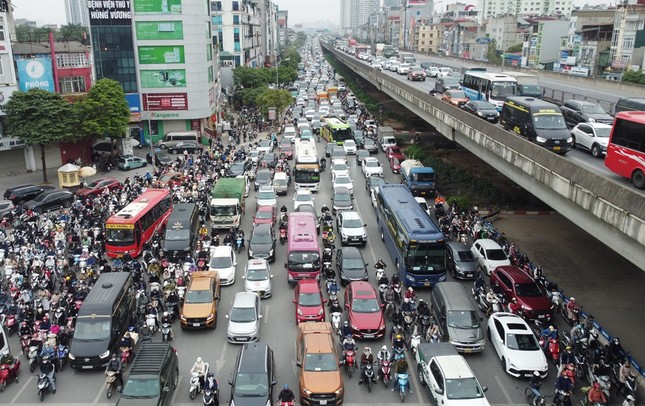 |
From 2025, Hanoi will restrict or ban private vehicles in certain areas to reduce environmental pollution. |
Data from the Hanoi Department of Transport shows that the total number of vehicles managed in the city as of April 2024 was over 8 million (including 1.1 million cars and 6.9 million motorcycles). Notably, the City People's Committee assessed that 72.58% of motorcycles have been in use for over 10 years, which will increase the level of harmful emissions into the air if these older vehicles are not maintained according to the manufacturer's recommendations.
Based on this reality and also to ensure the synchronized implementation of the Capital City Law, which takes effect from January 1, 2025, the Hanoi People's Committee has assigned relevant departments and specialized agencies to draft a Resolution on "LEZ Zones".
The draft resolution aims to create a green, clean, and beautiful living environment, improve air quality in the capital, thereby attracting tourists and investors, and enhancing the quality of life for residents.
The draft Resolution also aims to: support and facilitate the development of green economic sectors, promote sustainable growth and minimize negative impacts on the environment; strengthen international commitments on climate change response, net zero emissions reduction and the United Nations Sustainable Development Goals, especially those related to the environment and health.
Following the approval of the draft Resolution by the City People's Council on the morning of December 12th , what will the City People's Committee and relevant agencies do next, sir?
Mr. Dam Van Huan: Based on one of the criteria and conditions for establishing a "LEZ" (Low Emission Zone) as outlined in the Resolution recently passed by the City People's Council, the City People's Committee will assign each district to develop a "Low Emission Zone" project suitable to its specific characteristics and capabilities, to be submitted to the city for approval and implementation.
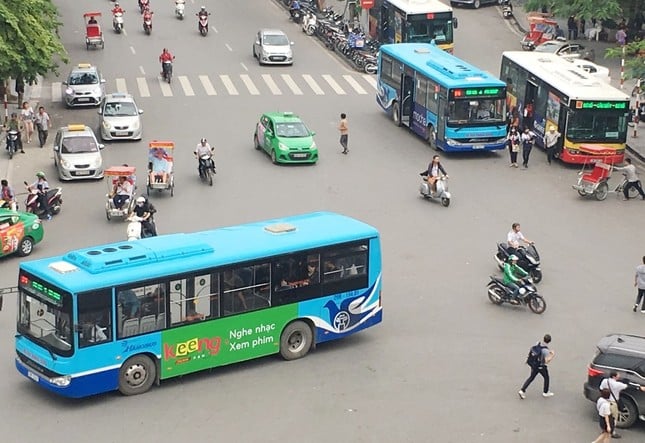 |
Hoan Kiem District was selected as the first pilot area for a "Low Emission Zone" in Hanoi. |
When developing the "LEZ" project, the resolution notes that the implementing agency must include the following information: the necessity of establishing a low-emission zone, the current state of air quality, traffic density, and emission sources in the area; measures, solutions, and a roadmap for implementation in the low-emission zone; and the results of consultations with organizations based in the low-emission zone, individuals residing or working in the low-emission zone, and other relevant stakeholders.
Subsequently, the agency responsible for drafting the project shall publicly post the project proposal and related drawings, explanations, and technical documents through mass media; organize consultations with organizations based in low-emission zones and individuals residing in low-emission zones for a minimum of 30 days; and seek opinions from state management agencies in the fields of environment and transportation of the city and other relevant agencies and organizations.
He stated which areas and locations are included in the proposal for the construction of "LEZ Zones" and the timeline for implementation.
Mr. Dam Van Huan: The roadmap for implementing low-emission zones, as reported by the City People's Committee and agreed upon by the verification agency, is in two phases. Specifically, from 2025 to 2030, the city will pilot the establishment of low-emission zones in some areas within Hoan Kiem and Ba Dinh districts; at the same time, it will encourage districts in the historical inner city area to establish low-emission zones.
From 2031 onwards, areas within the city that meet the criteria stipulated in Article 4 of the Resolution will implement low-emission zones.
Thank you, sir!
To reduce environmental pollution and establish air-safe zones in the capital city, since the beginning of this year, the Hanoi People's Committee has assigned the Department of Natural Resources and Environment, in coordination with the Ministry of Natural Resources and Environment and relevant units, to draft a Resolution stipulating the criteria, conditions, procedures, and processes for determining low-emission zones in the city.
Based on the resolution passed by the City People's Council, the City People's Committee will use a number of criteria regarding demographic and economic characteristics; air pollution levels; feasibility of transportation infrastructure, etc., to determine low-emission zones.
Once low-emission zones are established, the city will impose stricter emission standards on vehicles, including prohibiting older cars and motorcycles (which emit excessive amounts of pollutants) from entering these zones; monitoring and penalizing emission violations; implementing vehicle conversion solutions; and organizing traffic appropriately to ensure that low-emission zones are environmentally safe and free from traffic congestion.
On the morning of December 12th, with a majority of delegates voting in favor, the Hanoi City People's Council approved the Resolution stipulating the implementation of low-emission zones in the city.





Source: https://tienphong.vn/ha-noi-thuc-hien-vung-phat-thai-thap-tu-nam-2025-post1700015.tpo
![[Image] Pleasant weather helps students enter the 10th grade entrance exam with confidence.](https://vphoto.vietnam.vn/thumb/1200x675/vietnam/resource/IMAGE/2026/05/29/1780034401612_ngay-1-thi-lop-10-minh-duy-8-5009-jpg.webp)

![[Photo] Ba Lang An Lighthouse - the "eye of the sea" amidst the "rock museum" of Quang Ngai province.](https://vphoto.vietnam.vn/thumb/1200x675/vietnam/resource/IMAGE/2026/05/29/1780038698840_anh-man-hinh-2026-05-29-luc-14-10-42.png)






















































































Comment (0)