

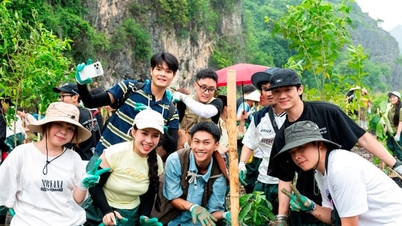
The reality at alley 153 Nguyen Thi Minh Khai, Ben Thanh ward, shows that the "green alley" movement was formed from specific, simple, yet persistent actions. Residents maintain the habit of general cleaning and caring for trees every weekend; at the same time, they proactively bring trees from their homes to plant, gradually greening their living space.
Choosing plants suitable for narrow alleyways, easy to care for, and with practical uses such as ginger, lemongrass, and mugwort... not only contributes to the landscape but also directly serves the daily lives of residents. Over time, the living environment is significantly improved, the air is cleaner, and the negative impacts of urban dust and heat are minimized.
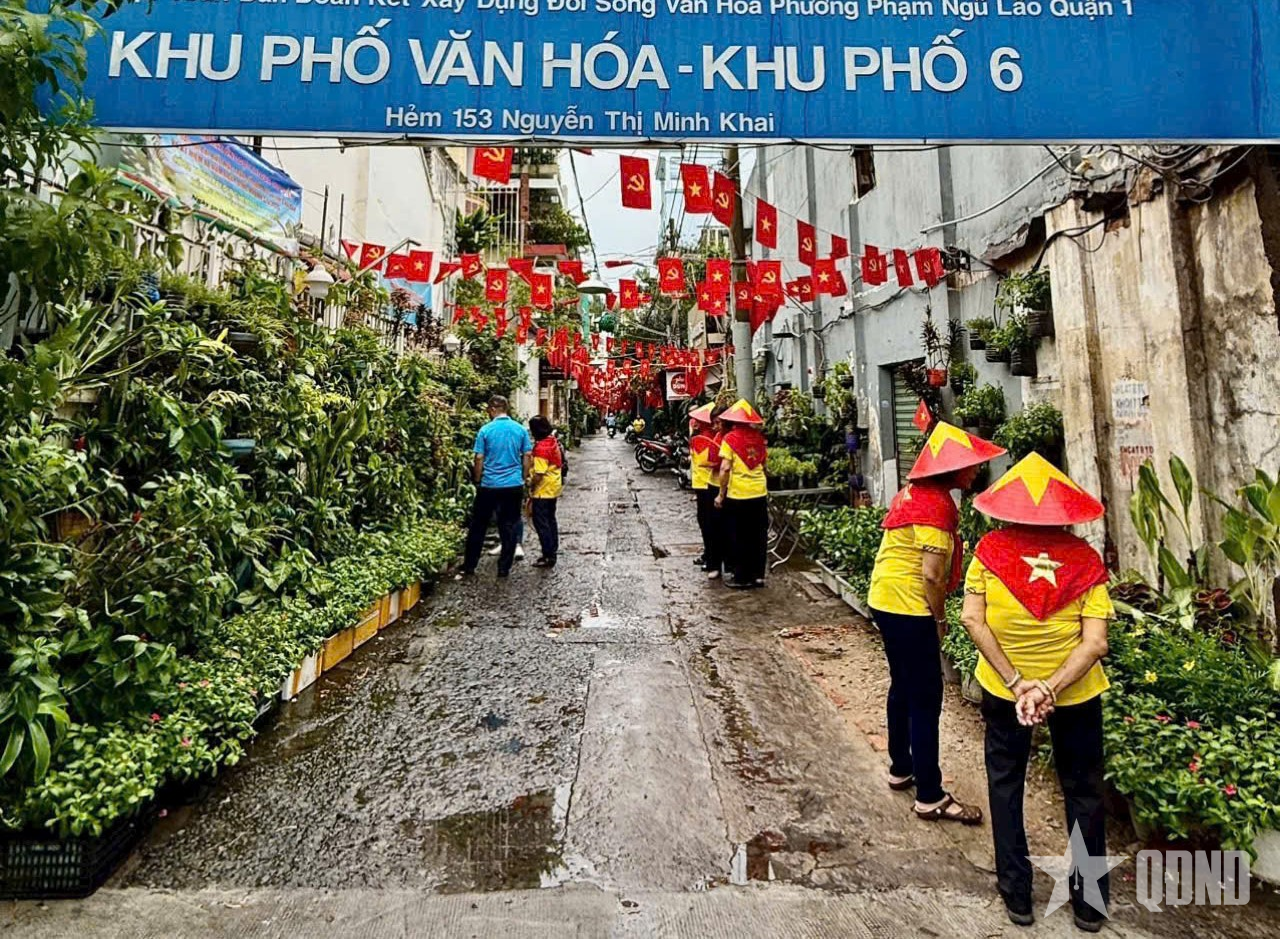 |
| Residents participate in planting trees and decorating alley 153 Nguyen Thi Minh Khai, Ben Thanh ward. |
Ms. Nguyen Thi Ngoc Cam, 63 years old, Head of Neighborhood 6, Ben Thanh Ward, shared that every Saturday, many people in the neighborhood participate in general cleaning of the alleys and taking care of the greenery in their gardens. This helps the residents in the neighborhood bond more closely. People who have plants also bring them out to plant more, gradually making the alley not only green, clean, and beautiful, but also having plants like ginger, lemongrass, and mugwort... ensuring the health of the community.
Beyond its environmental significance, the "green alley" model plays a crucial role in strengthening community solidarity and maintaining social stability at the grassroots level. In Alley 68 Tran Quang Khai (Tan Dinh Ward), a former area plagued by complex security and order issues, the implementation of the "green alley" model has brought about positive changes. Activities such as tree planting and environmental sanitation have become a bridge, fostering interaction and sharing among residents, and building a civilized and healthy lifestyle.
The "green alley" movement is currently being implemented in many areas of Ho Chi Minh City, notably alleys 80 Cao Thang, 134 Bui Thi Xuan, 25 Ton That Tung, and 42 Tran Dinh Xu... The common point is that residents participate voluntarily and self-manage, without coercion; with support and guidance from local authorities. Many places have implemented comprehensive solutions such as waste sorting at source, landscape beautification, and building a civilized urban lifestyle. The proactive participation of residents has created sustainable vitality for the model, while simultaneously spreading environmental protection awareness within the community. In addition, many alley renovation and expansion programs have been implemented with high public consensus through voluntary land donations, labor contributions, and participation in cleaning up the residential area.
In the context of the increasingly urgent need for green and sustainable urban development, the "green alley" model proves highly suitable to the practical conditions of the city. Although small in scale, if replicated, these green spaces will contribute to the formation of an urban ecological network, effectively improving the living environment. The "green alley" model not only contributes to improving the urban landscape but also nurtures and promotes the positive values of community life, making a practical contribution to the goal of building a civilized, modern, and compassionate Ho Chi Minh City.
Source: https://www.qdnd.vn/xa-hoi/cac-van-de/hem-xanh-van-minh-ben-vung-1041962
![[Image] Pleasant weather helps students enter the 10th grade entrance exam with confidence.](https://vphoto.vietnam.vn/thumb/1200x675/vietnam/resource/IMAGE/2026/05/29/1780034401612_ngay-1-thi-lop-10-minh-duy-8-5009-jpg.webp)

![[Photo] Ba Lang An Lighthouse - the "eye of the sea" amidst the "rock museum" of Quang Ngai province.](https://vphoto.vietnam.vn/thumb/1200x675/vietnam/resource/IMAGE/2026/05/29/1780038698840_anh-man-hinh-2026-05-29-luc-14-10-42.png)












































































Comment (0)