

Thousands of artifacts and documents collected and preserved at the Soviet-Nghe Tinh Museum (Vinh City - Nghe An) and the Ha Tinh Museum are historical evidence that "tells the story" of the revolutionary struggle for national independence in the homeland of Hong Mountain and La River.
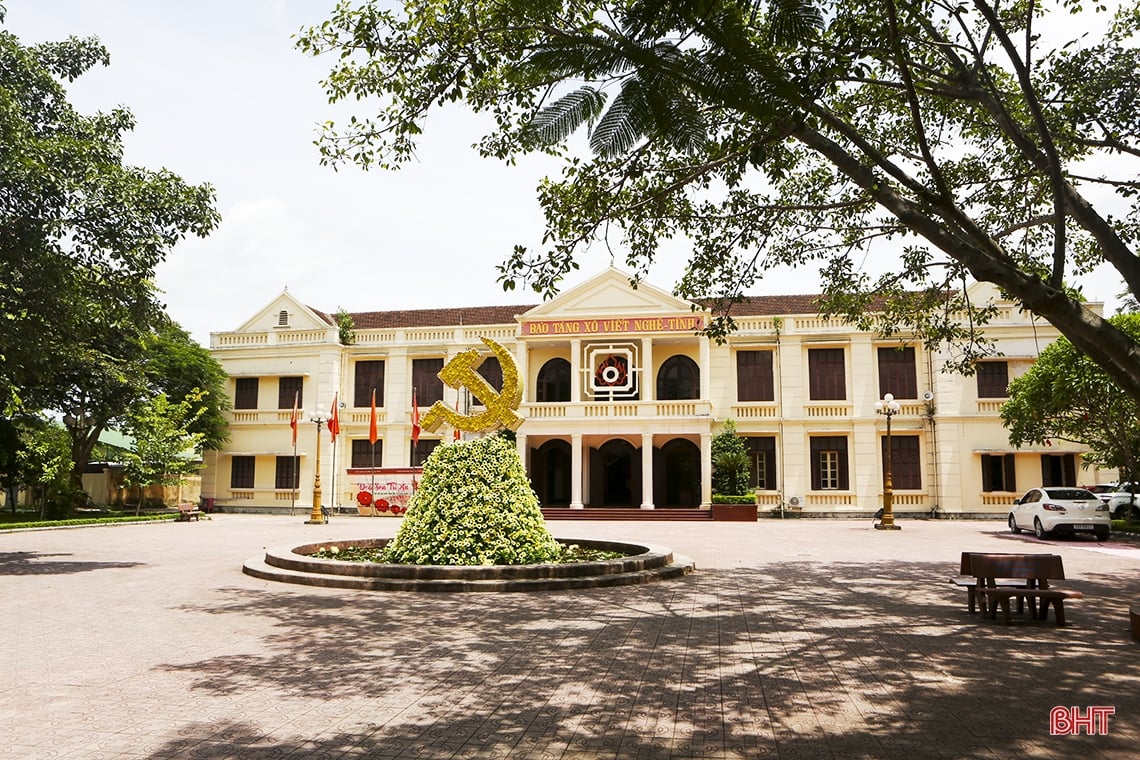
The Soviet-Nghe Tinh Museum (Vinh City, Nghe An Province ) houses many historical artifacts from the 1930-1931 revolution.
The artifacts preserved at the Soviet Nghe Tinh Museum mainly belong to the period of struggle of the people of Nghe An and Ha Tinh after the Party was founded (February 3, 1930).
Among them, many artifacts bear witness to the unwavering and persistent revolutionary spirit of the people of Ha Tinh: propaganda drums, hammer and sickle flags, memoirs of communist soldiers, etc.
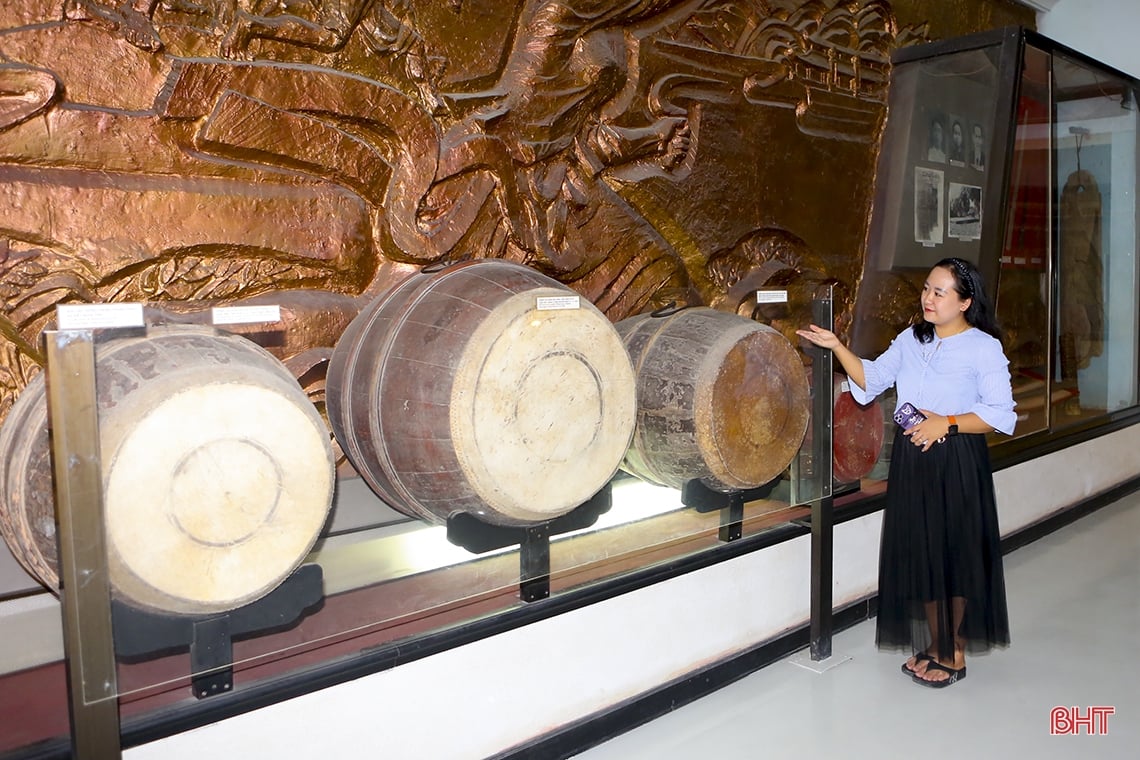
Staff from the Soviet Nghe Tinh Museum introduce the drums – weapons of revolutionary struggle during the Soviet Nghe Tinh movement of 1930-1931.
The phrase "Soviet drumbeat" is often cited as a symbol of the powerful revolutionary struggle of the people of Nghe An and Ha Tinh in the early 20th century, during the Nghe Tinh Soviet Uprising of 1930-1931.
At that time, the drum served as a rallying cry, uniting the masses to rise up and break the chains of slavery. The continuous sound of the drums in the countryside created a resonance, generating a power that struck fear into the enemy.
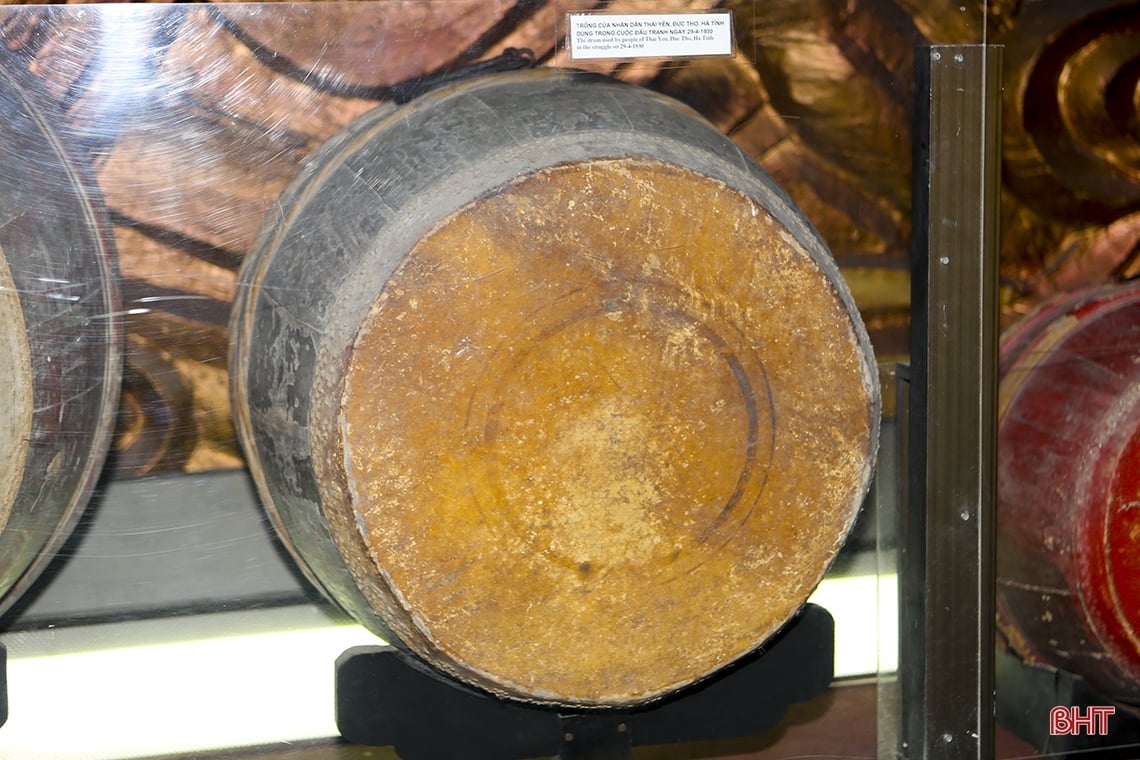
The drum used by the people of Thai Yen commune (now Thanh Binh Thinh commune - Duc Tho district) as a signal to encourage the people during the 1930-1931 demonstrations is on display at the Nghe Tinh Soviet Museum.
The Soviet-Nghe Tinh Museum is preserving many large drums from the struggle movement of 1930-1931, such as: drums from Loc Da village (Hung Dung commune - Hung Nguyen district - Nghe An); drums from the people of Mon Son commune (Con Cuong district - Nghe An); drums from the people of Thai Yen commune (Duc Tho - Ha Tinh)...
Among them, the drum, with a diameter of 51 cm and a height of 72 cm, made of cypress wood and cowhide from Thai Yen commune (now Thanh Binh Thinh commune - Duc Tho district), is one of the artifacts proudly displayed at the museum. Immediately after the Party was founded, along with the people of Can Loc, Thach Ha, Cam Xuyen, Huong Khe, etc., the people of Duc Tho strongly responded to the revolutionary movement.
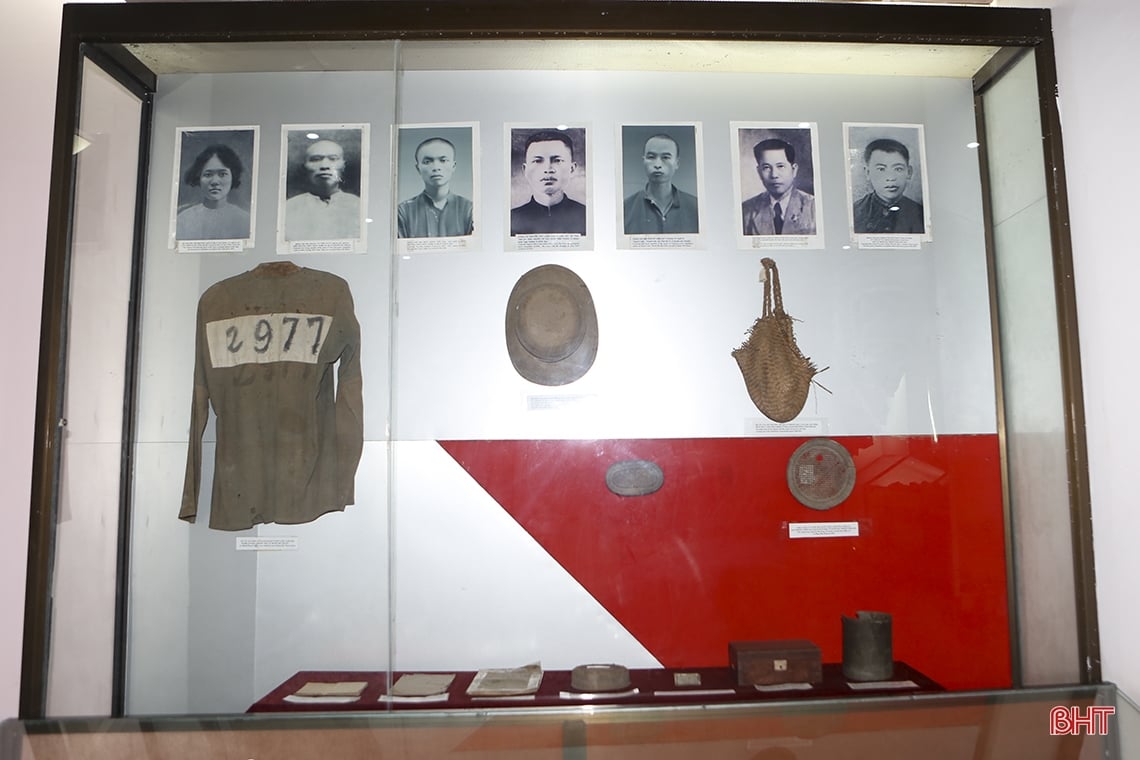
A display corner featuring photographs and artifacts of communist fighters who fought during the Nghe Tinh Soviet Uprising of 1930-1931, at the Nghe Tinh Soviet Museum.
On September 10, 1930, the people of Thai Yen and Duc Thuy communes (now Lam Trung Thuy commune) united to organize a demonstration against the oppression of colonialism and feudalism. From then on, Thai Yen was chosen as a gathering place for patriotic forces to participate in the revolution, marking the beginning of the revolutionary movement in Duc Tho. On February 1, 1931, at the Nguyen Huu family church in Thai Yen village, the Communist Party branch of Quang Chiem commune was established and named the Thai Yen branch, consisting of 6 party members.
After the Party branch was established, revolutionary mass organizations were also quickly formed here, such as: the Women's Association, the Red Peasant Association, the Red Self-Defense Team with 280 members organized into a company, divided into 4 platoots, including the "Suicide Platoon"; and the National Salvation Youth Union with 250 young people.
In March 1931, Thai Yen was one of 170 villages in Ha Tinh province recognized as a Soviet village by the Provincial Party Committee. The 1930-1931 Soviet movement in Thai Yen commune achieved many victories, thanks in part to the rallying drums that urged the people to unite and rise up in struggle.
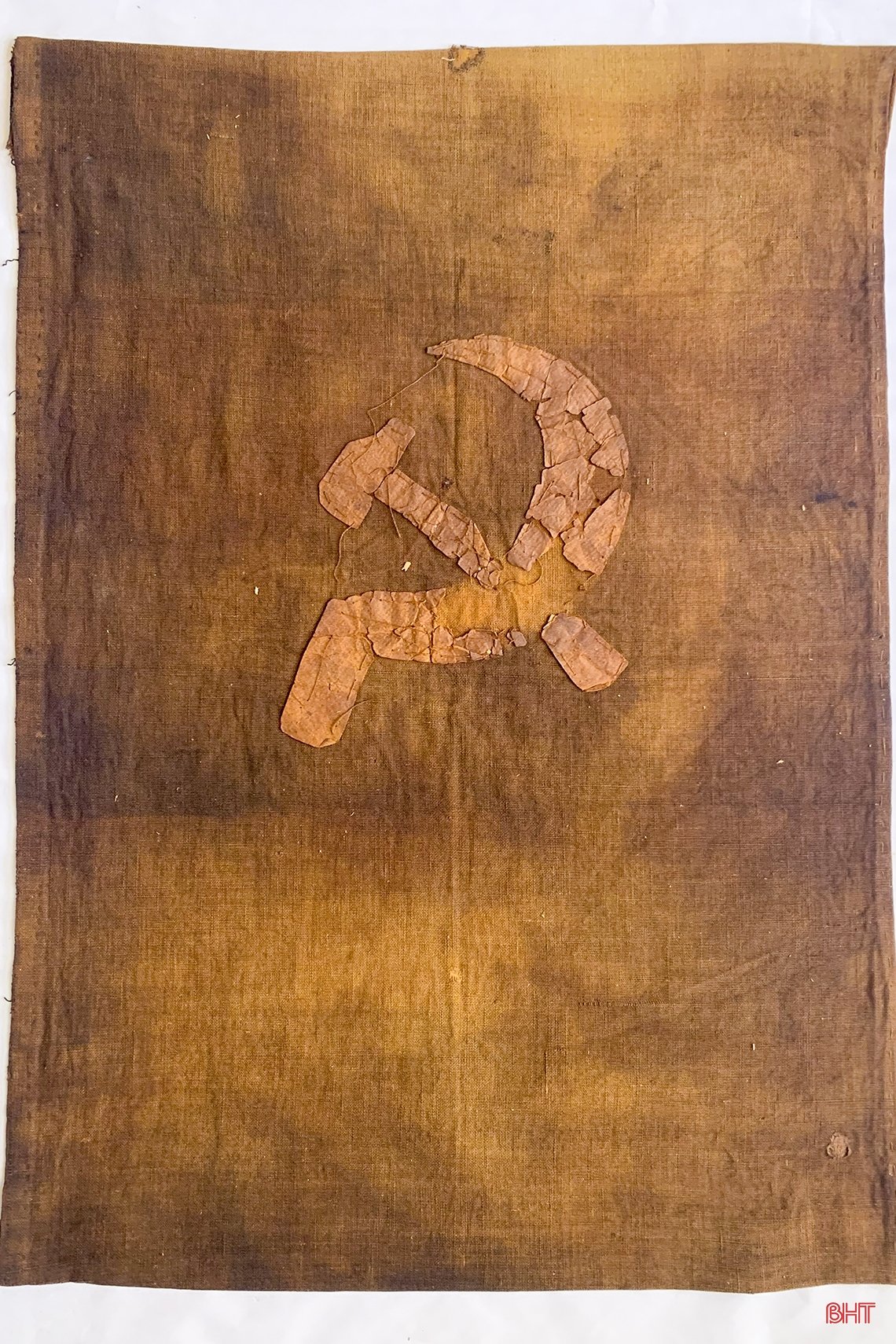
The hammer and sickle flag used by the people of Can Loc district during the 1930-1931 struggles is preserved at the Nghe Tinh Soviet Museum.
One of the artifacts representing the "soul" of the revolutionary struggle movement in the years 1930-1945 is the red flag with the hammer and sickle. The Soviet-Nghe Tinh Museum and the Ha Tinh Museum are preserving many flags from various localities at the beginning of the revolutionary movement, such as: the flag of the Red Guard Team of Duc Dung commune (now An Dung commune, Duc Tho district), the flag of the people of Can Loc district used in the struggles of 1930-1931…
Notably, among them is the flag used in Party meetings and demonstrations during the Soviet uprising of the people of Huong Khe in 1930-1931, which is currently preserved at the Ha Tinh Museum. The flag is approximately 45 cm wide and 65 cm long, with a red background, a yellow hammer and sickle symbol in the center, and the words "Indochinese Communist Party" in both Vietnamese and Chinese characters above.
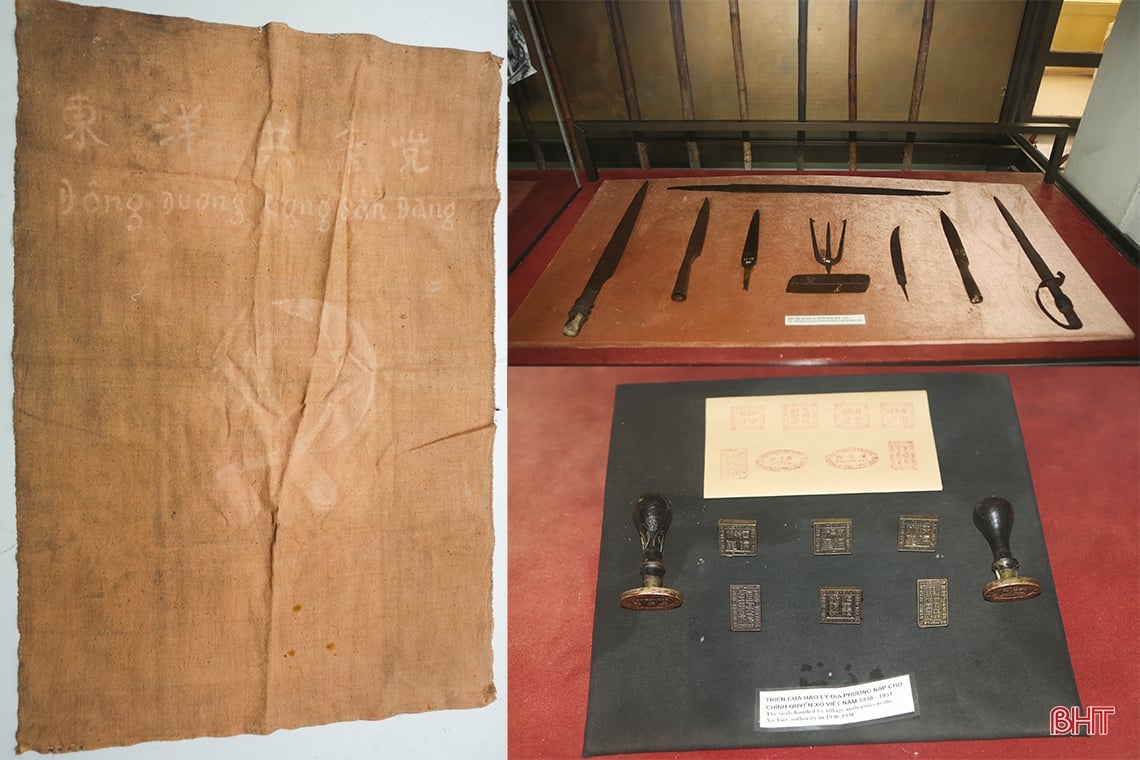
From left to right and top to bottom: The hammer and sickle flag of the people of Huong Khe used in rallies and demonstrations against the colonial puppet government in 1930-1931, preserved at the Ha Tinh Museum. A collection of weapons used by the Red Self-Defense Forces during the Nghe Tinh Soviet Uprising of 1930-1931 and the seals of local officials submitted to the Soviet government in 1930-1931 are displayed at the Nghe Tinh Soviet Museum.
This flag was used in demonstrations by the people of Huong Khe at that time, such as the rally commemorating the Russian October Revolution, which attracted thousands of people on November 7, 1930. At this event, Party branches in the district mobilized the masses to hold rallies and listen to speeches about the revolutionary movement, about the domestic and international situation; afterwards, they organized demonstrations, burned guard posts erected by the enemy along the road, and punished some wicked local tyrants...
The rally commemorating the Russian October Revolution marked the beginning of the 1930-1931 revolutionary movement of the people throughout Huong Khe district during the Soviet upheaval.
Besides artifacts, the Soviet-Nghe Tinh Museum also preserves dozens of memoirs about the revolutionary struggle of communist party members active during the period from 1930-1945. These are valuable documents reflecting the understanding of the Party's role in its early days, and recreating the entire period of persistent and heroic struggle of communist fighters in the homeland of Hong Mountain and La River.
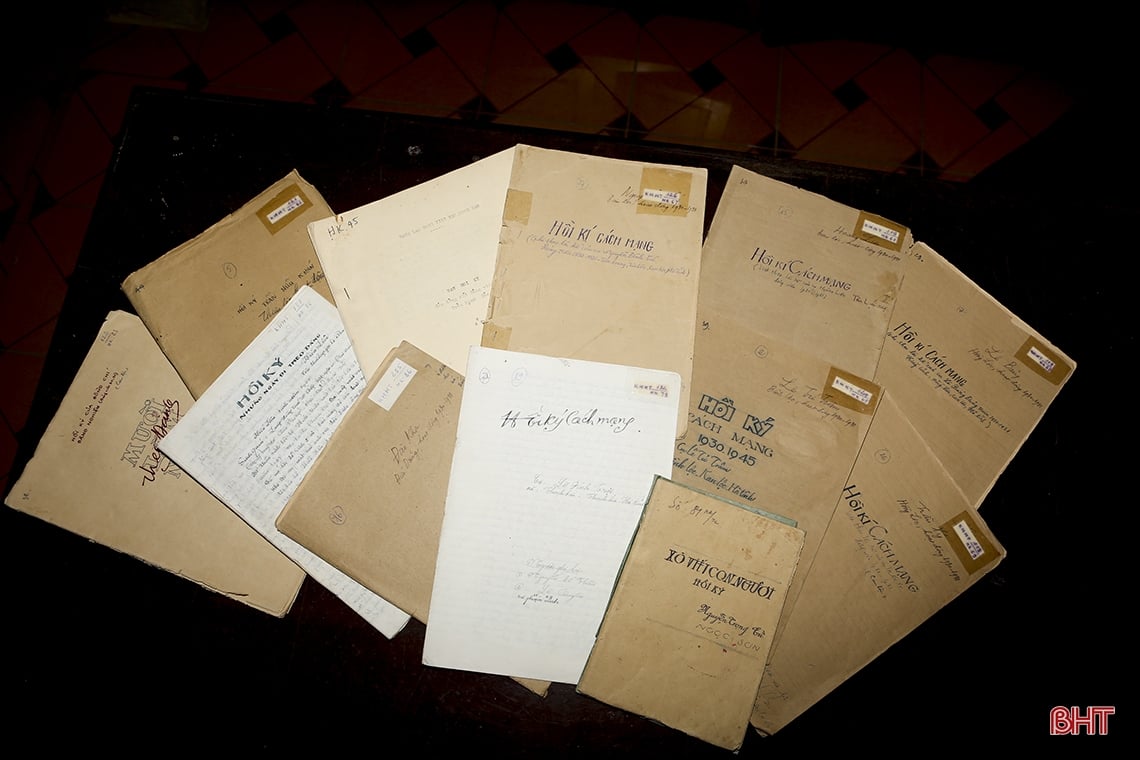
The collection of revolutionary memoirs by staunch communist cadres, recording the fighting process from 1930 to 1945, is preserved at the Soviet-Nghe Tinh Museum.
Most of the authors of these memoirs were staunch revolutionary fighters who, despite being captured, imprisoned, and brutally tortured by the enemy, remained steadfast in their ideals. Examples include Comrade Tran Chi Tin (1898-1987) from Son Chau commune (Huong Son district) – a former leader of the Soviet movement in Huong Son and the leader of the uprising to seize power in the locality in August 1945; and Comrade Le Bang (1905-1978, from Hong Loc commune, Loc Ha district, one of the first communist party members in Can Loc in the 1930s) who was assigned the task of lowering the flag of the puppet government and raising the Viet Minh uprising flag on the flagpole of the Can Loc district headquarters on the evening of August 16, 1945, proving that Can Loc was the first district in Ha Tinh to successfully seize power through an uprising…
In addition, there are memoirs by other comrades such as: Nguyen Cu (Tan Loc commune), Le Tu Tram (Binh An commune, Loc Ha district), Kieu Lieu (Dong Thai village, Tung Anh commune, Duc Tho district), Dang Nghiem (Tung Loc commune, Can Loc district)...
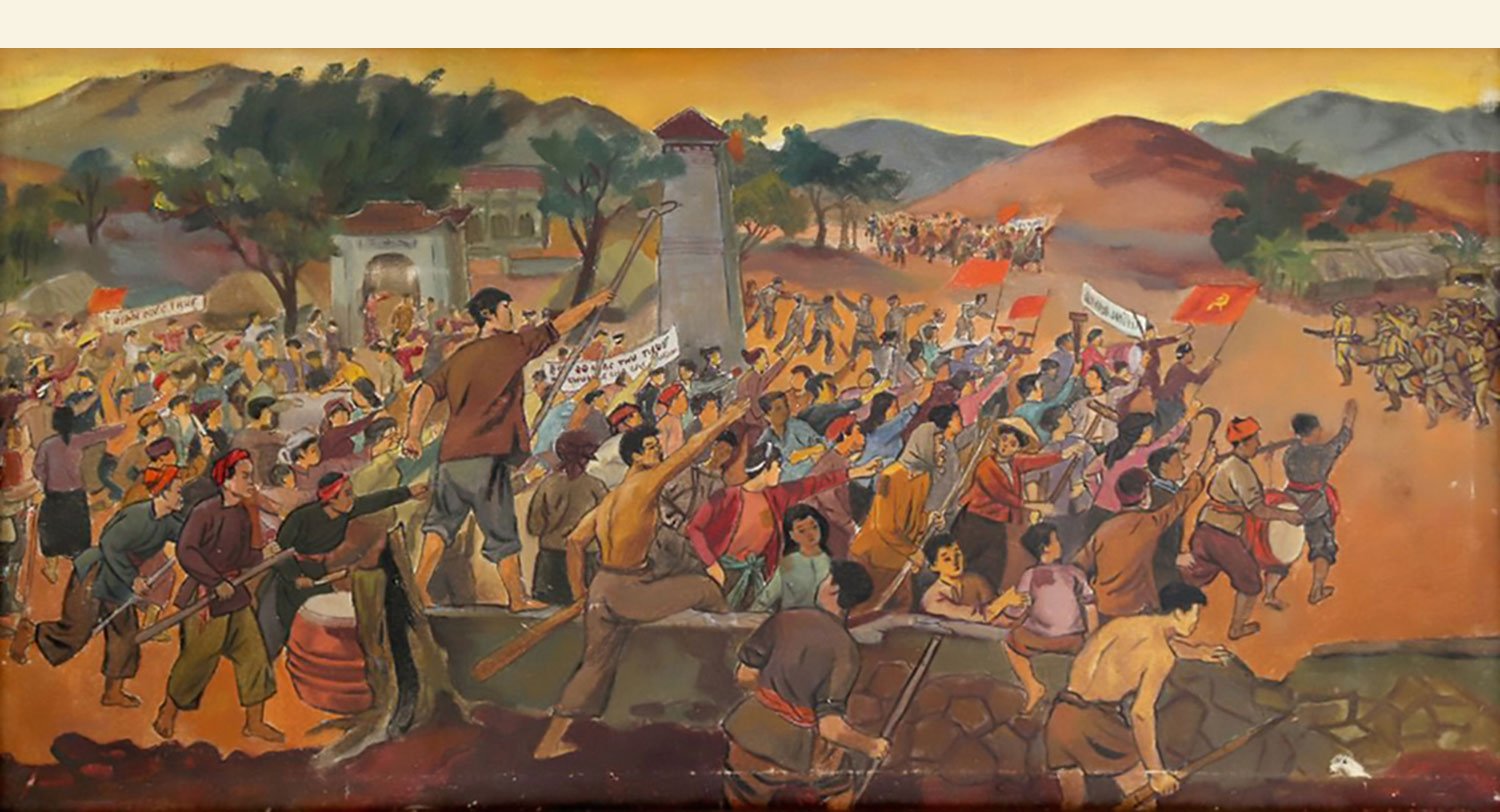
The Nghe Tinh Soviet Movement is depicted through oil paintings.
The Soviet Nghe Tinh Museum and the Ha Tinh Museum also preserve many other artifacts reflecting the vibrant revolutionary struggle in Nghe An province, such as: ink grinding tools, printing presses for Party documents and leaflets, rudimentary weapons of the Red Self-Defense Teams in Soviet villages, suitcases and leather bags containing documents of communist soldiers, portraits of revolutionary cadres, etc.
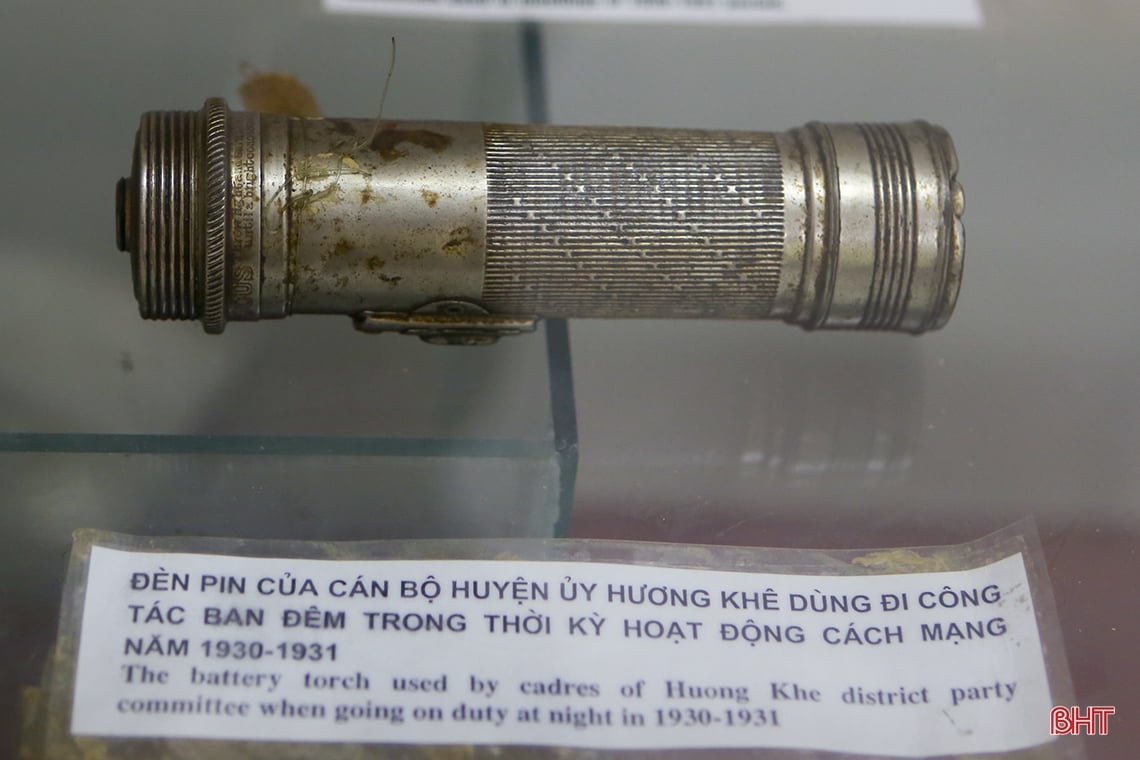
A flashlight used by officials of the Huong Khe District Party Committee for nighttime work during the Nghe Tinh Soviet movement in 1930-1931 is on display at the Nghe Tinh Soviet Museum.
Each artifact tells a vivid and authentic story, recounting the tenacious and persistent struggle of the people of Ha Tinh and Nghe An in the revolutionary movement from the time the Party was first established until the uprising to seize power for the people, leading the revolution to final victory in the autumn of August 1945.
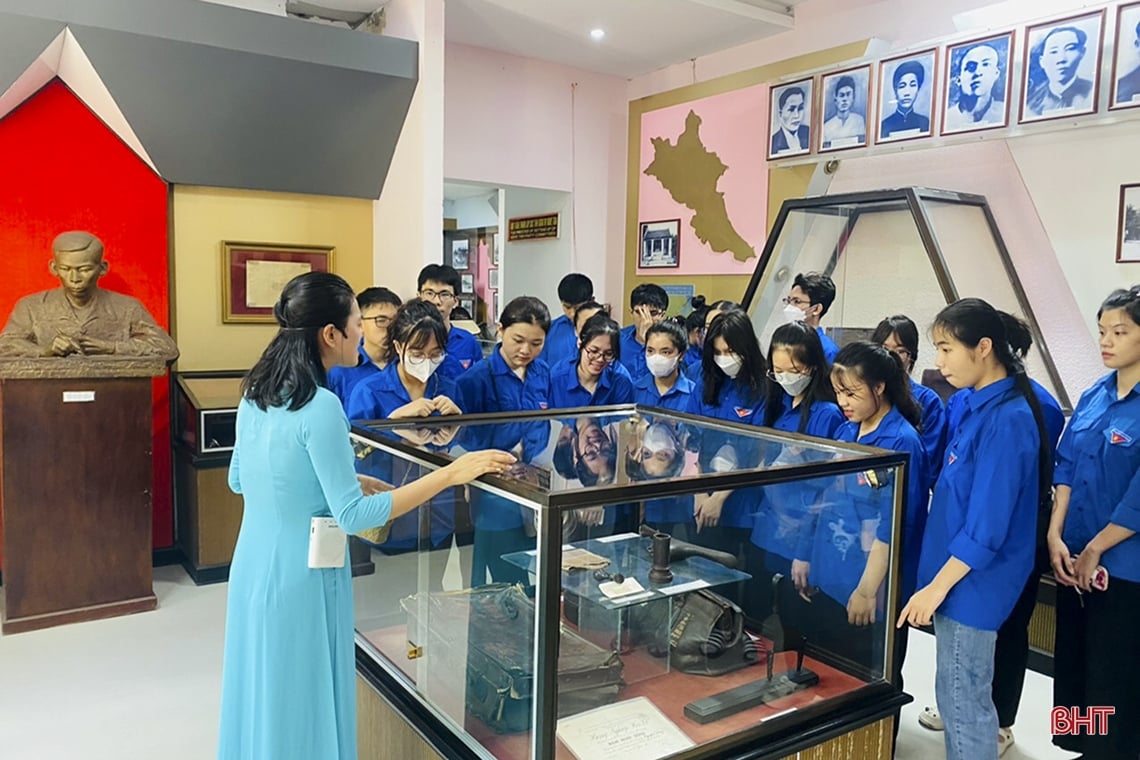
Youth Union members from Nghe An province visited and studied at the Soviet-Nghe Tinh Museum.
Over 63 years (since January 15, 1960) since the Party Committee of the Ministry of Culture issued Decision No. 106-QD/VH on the establishment of the Nghe Tinh Soviet Museum, we have collected over 16,000 artifacts related to the Nghe Tinh Soviet movement of 1930-1931 from localities in the two provinces of Nghe An and Ha Tinh, as well as some documents related to the August 1945 uprising to seize power. All artifacts are extremely valuable, recording a period of intense struggle in the revolutionary movement. These are also vivid proofs that enable the museum to promote its value in educating the younger generation about the nation's historical traditions.
Ms. Tran Thi Hong Nhung
Deputy Director of the Soviet Museum of Nghe Tinh
Thien Vy
Source


![[Photo] Admire the coral "masterpiece" amidst the million-year-old heritage of Dak Lak province.](https://vphoto.vietnam.vn/thumb/1200x675/vietnam/resource/IMAGE/2026/05/30/1780107638639_y25-jpg.webp)













































































Comment (0)