

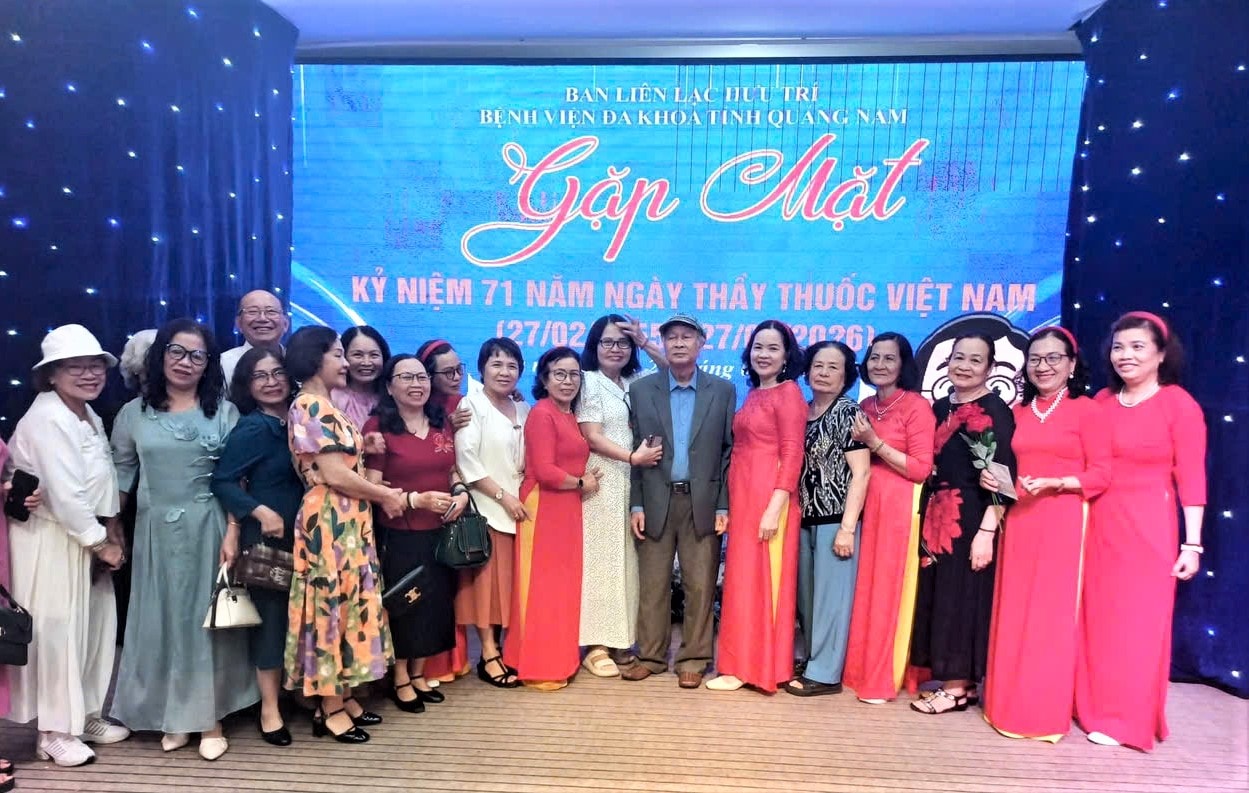
One early spring morning in 2026 (Year of the Horse), retired staff of Quang Nam General Hospital gathered to commemorate Vietnamese Doctors' Day on February 27th. While not as many as in previous years, those who were still alive and able to travel made an effort to meet, because they had gone through the most difficult times together and built the first achievements for the medical sector in Quang Nam province.
People's Physician Le Quang Hong previously worked at the Quang Nam Provincial People's Health Department. After liberation, he worked at Quang Nam General Hospital and served as its director from 1993 to 2005.
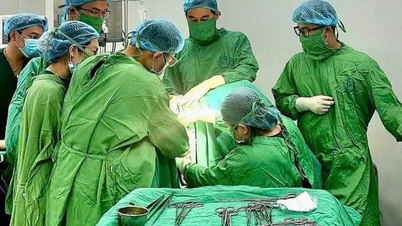
Having dedicated his entire life to the medical profession, he could never forget the years of fierce war. The Quang Nam civilian medical unit was stationed in a mountainous forest area. There were very few medical staff and doctors, but they had to work continuously to provide timely treatment for the wounded and sick soldiers.
I remember most vividly the battle at Chop Chai Hill (Tam Phuoc) in 1964, when 90 wounded soldiers were transferred to the V2 Medical Clinic in critical condition, while the clinic only had 9 staff members; resources and medicine were severely lacking. The entire clinic had to work day and night to save most of the wounded. Some soldiers did not survive due to blood loss and a lack of specialized equipment for treatment.
“Life was very difficult back then. Witnessing comrades being wounded and being unable to save them, we couldn't accept it. We felt compelled to research ways to minimize casualties. We worked without salaries or benefits; we were only provided with food and a communal mess hall at the unit. But we shared the same ideal of living and fighting wholeheartedly for the revolution,” shared People's Physician Le Quang Hong.
During the war, medical staff and doctors in Quang Nam province had to simultaneously perform medical duties, increase production, and transport food and medicine to ensure the supply of their units and wounded soldiers. Despite the hardships, they stood shoulder to shoulder to successfully complete all tasks. Most importantly, they were timely, proactive, and creative in applying the fastest methods to treat the wounded and sick.
Ms. Le Thi Hong Van is a native of Nghe An province . After graduating from a vocational school in pharmacy, she volunteered to fight in the South. In 1971, she joined the former Quang Nam Provincial Pharmaceutical Factory, and later was assigned to the Bac Tam Ky Clinic. After liberation, she worked in the Pharmacy Department of Quang Nam General Hospital.
At that time, at the North Tam Ky Clinic, she was the only pharmacist and was assigned the task of preparing medications. In conditions of scarcity of medicines and pharmaceutical ingredients, she applied all her learned knowledge and research to prepare medications promptly for emergency cases.
In particular, she successfully formulated a medicine to stop malaria attacks. At that time, there were many cases of jungle malaria, but there was a shortage of medicine to treat them. The ability to formulate a medicine to stop the fever would allow patients to walk on their own without needing to be carried, enabling them to be moved promptly when the enemy continuously raided the base.
She continued to apply those experiences after she started working at Quang Nam General Hospital.
After liberation, many medical staff and doctors from the war zone returned to work at Tam Ky Regional General Hospital (later Quang Nam General Hospital). The initial period was full of difficulties, but with a sense of responsibility, love for the profession, and the experience gained during the war, they continued to contribute to the medical field, continuing to train and nurture generations of dedicated medical professionals.
Ms. Nguyen Thi Tam, former Head Nurse of the General Internal Medicine Department at Quang Nam General Hospital, was among the first generation to receive training at the hospital. Following the example of her predecessors, she continuously strived to improve her skills. She was sent for training in Ho Chi Minh City and Hanoi to share her knowledge with the hospital's nursing and orderly staff.
From the moment she started working in 1982, she was not afraid of difficulties, clearly defining her mission as providing comprehensive care to patients, from admitting them to caring for and maintaining their hygiene…
In the early stages, the hospital lacked both personnel and medical supplies. Nurse Tâm used psychological therapy to explain and encourage patients, reassuring them about treatment and preventing them from feeling anxious.
“As a nurse, you have to put the patient at the center of your service, and not be afraid of hard work. Besides treatment, nurses must be truly close to patients, understand their psychology, and be ready to become a source of emotional support to help them overcome their pain. For me, if time could turn back, I would still choose the medical profession. Because I love the profession, I have also encouraged my two children to follow in my footsteps,” Nurse Tâm shared.
The inspiring stories left behind by previous generations of doctors and medical professionals continue to enrich the core values of the medical profession today and in the future: ethics, responsibility, and dedication to the profession and to patients.
Source: https://baodanang.vn/ho-da-song-nhu-the-3326010.html
![[Image] Expediting land clearance at Alley 310 Nghi Tam to facilitate the construction of Tu Lien Bridge](https://vphoto.vietnam.vn/thumb/1200x675/vietnam/resource/IMAGE/2026/04/14/1776160406551_ndo_br_z7724148990408-9e5d4777e3c4504998b4286178b2e66e-jpg.webp)
![[Photo] General Secretary and President To Lam visits and delivers a policy speech at Tsinghua University.](https://vphoto.vietnam.vn/thumb/1200x675/vietnam/resource/IMAGE/2026/04/14/1776164592318_vna-potal-tong-bi-thu-chu-tich-nuoc-tham-va-phat-bieu-chinh-sach-tai-dai-hoc-thanh-hoa-trung-quoc-8700658-5437-jpg.webp)
![[Photo] General Secretary and President To Lam and his wife begin their state visit to China.](https://vphoto.vietnam.vn/thumb/1200x675/vietnam/resource/IMAGE/2026/04/14/1776133794926_z7723148772587-ffefa3c4b1e54e100de1554593a862c6-jpg.webp)













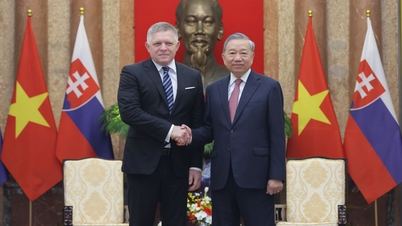
![[Photo] General Secretary and President To Lam receives Slovak Prime Minister Robert Fico](https://vphoto.vietnam.vn/thumb/1200x675/vietnam/resource/IMAGE/2026/04/13/1776080592076_a1-bnd-8227-6002-jpg.webp)































Comment (0)