



For many years, Apple has steadily progressed, its legacy of groundbreaking products like the iPhone casting a long shadow of success.
However, a sense of stagnation seems to have enveloped the Cupertino-based company. Despite consistently high revenue and a large user base, the spark of fundamental innovation appears to have faded.
Recently, the AI device development joint venture of former Apple Chief Design Officer Jony Ive and Sam Altman officially launched through an acquisition worth approximately $6.5 billion . This should be a major wake-up call for Apple, even if it doesn't foreshadow an immediate collapse.
Notable signal
News of Ive, the design mind behind many of Apple's most iconic products, collaborating with Sam Altman's OpenAI has sent shockwaves through the tech world .
Prior to that, Ive's departure from Apple in 2019 was a pivotal moment. During his 27 years at Apple, he was the "father" of the minimalist aesthetic for their devices. His elegant design influenced everything from the shape of TVs to the appearance of ordinary water bottles.
The collaboration between Ive and OpenAI, the company behind ChatGPT, has been described as a "dream" deal. According to the New York Times , the stock-based acquisition, which unites leading figures in Silicon Valley's tech industry, aims to unlock "a new generation of products" for AGI (artificial general intelligence), a term referring to a future technology that reaches human-level intelligence.
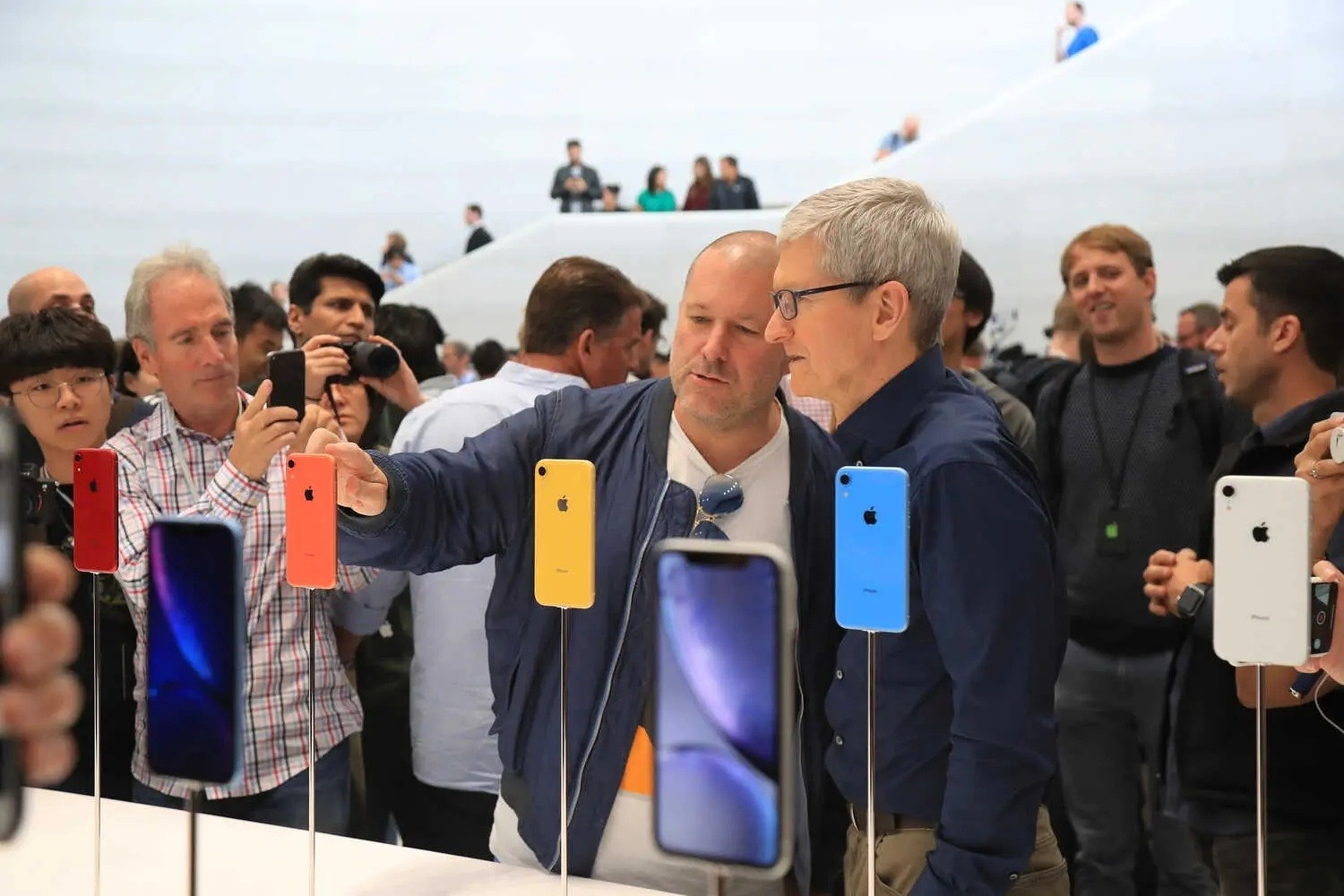 |
Jony Ive (left) and Tim Cook at the Steve Jobs Theater, Apple Park, Cupertino in 2018. Photo: New York Times. |
Apple needs to pay particular attention to this partnership, because while other tech giants are aggressively pushing AI, its own advances seem to be only minor improvements.
With only about two weeks left until Apple's Worldwide Developers Conference (WWDC) 2025, most sources suggest the event will showcase software innovations rather than any major leaps forward in AI.
Focusing on these familiar things, while perhaps comforting to current users, risks leaving Apple behind as AI increasingly becomes the technology shaping future devices and user experiences.
Why didn't Apple acquire Ive's company?
Some have questioned whether there's a scenario where Apple, instead of OpenAI, acquires Ive's company. According to Mark Gurman of Bloomberg , this is unlikely given Apple's history under Tim Cook's leadership, which has seen few major acquisitions.
The iPhone manufacturer tends to be hesitant to spend large sums of money, rarely exceeding $3 billion for an acquisition, especially for a company that hasn't released any tangible products.
Furthermore, the fact that many of the designers and engineers at io Products—Jony Ive's AI device development company—are former Apple employees could create an awkward situation. While Ive's return might be reminiscent of Steve Jobs's comeback after the NeXT acquisition, it remains a distant possibility for both sides.
Furthermore, Ive and Altman harbor the ambition to transform this device into an essential everyday item in everyone's life. It's not a bulky pair of smart glasses, but rather a smart, compact, and convenient companion device that can be placed on a desk or easily slipped into a pocket.
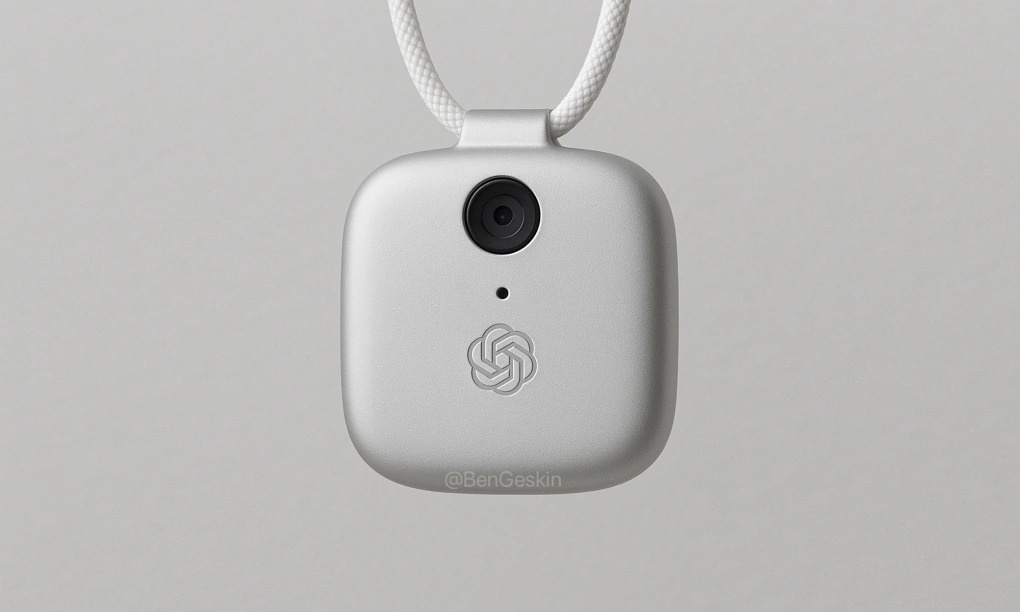 |
This rendering is based on predictions by Ming Chi Kuo and Jony Ive regarding OpenAI's AI device. Image: Ben Geskin. |
However, the reality is that since 2024, the market has experienced a wave of personal AI devices aiming to replace smartphones. But the vast majority of them have failed.
The most notable example is the Humane Ai Pin. This device allowed access to AI chatbots when connected to the internet, but it could barely perform tasks that traditional smartphones already did so well. Ultimately, Humane had to sell all its assets to HP. Another example is the Rabbit R1.
This device once promised a top-notch AI experience, but ultimately it resembled a quirky tech toy more than a truly useful tool.
The deal between Ive and Altman isn't necessarily a fatal blow to Apple. The reality is the iPhone won't disappear overnight, and the first devices from this new collaboration are unlikely to compete directly with it.
However, it's an undeniable warning. The landscape is changing rapidly, with AI poised to become as transformative as multi-touch screens were years ago. Apple needs to demonstrate a bolder vision for the future, moving beyond repetitive updates and embracing the AI revolution.
Source: https://znews.vn/hoi-chuong-bao-dong-cho-apple-post1555814.html
![[Photo] Prime Minister Pham Minh Chinh receives the Director General of TASS News Agency (Russian Federation)](https://vphoto.vietnam.vn/thumb/1200x675/vietnam/resource/IMAGE/2026/02/25/1772024599891_dsc-8041-jpg.webp)




![[Photo] Prime Minister Pham Minh Chinh presides over the meeting of the Steering Committee for the Development of Science, Technology, Innovation, Digital Transformation and Project 06.](https://vphoto.vietnam.vn/thumb/1200x675/vietnam/resource/IMAGE/2026/02/25/1772024613089_1772024091685-jpg.webp)















































![[Infographic] Eight task groups in the Action Program to implement Resolution 80-NQ/TW on the development of Vietnamese culture](https://vphoto.vietnam.vn/thumb/402x226/vietnam/resource/IMAGE/2026/02/26/1772064804794_chuong-trinh-17720096665761428525089-0-105-1400-2345-crop-17720097331061282725800.jpeg)

















Comment (0)