

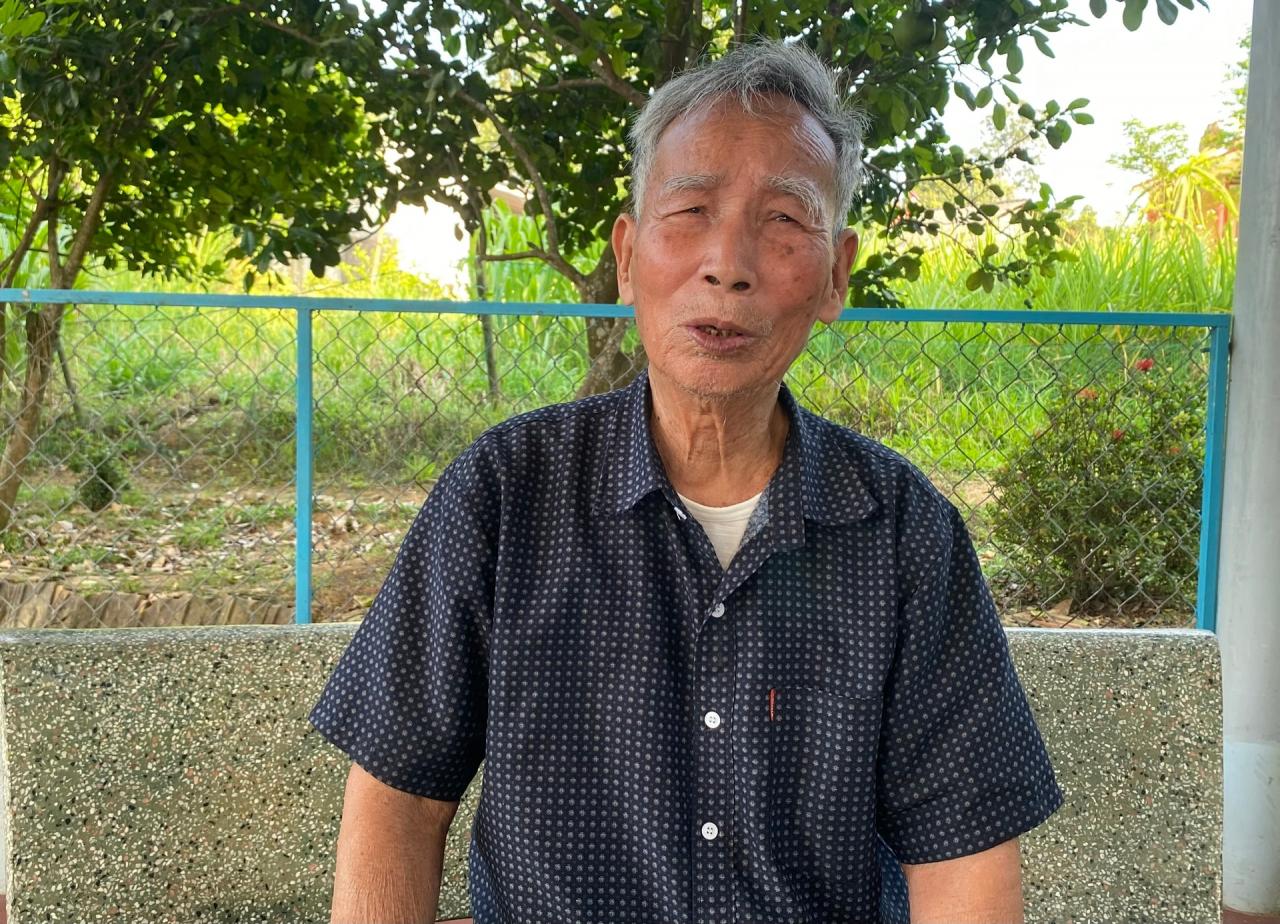
Mr. Tran Dinh Tu recounted that he became involved in revolutionary activities very early on. From 1956, he participated in the struggle for negotiations and rights for the people. In 1964, he joined the guerrilla forces fighting in the disputed Duy Tan area. In 1967, he was admitted to the Party and served as Deputy Police Chief of Xuyen Phu commune. In 1968, he became Secretary of the Song Lo Party Branch in Xuyen Phu commune. From 1969 to 1970, he led the "Bringing People Out and Bringing People Back" campaign, propagating and persuading people from the Duc Duc - An Hoa area (which the enemy had pushed there to cut off contact with the revolution) to return to their village.
Falling into enemy hands
In mid-October 1970, thinking the enemy had marched back to their outpost, Mr. Tư disguised himself as a farmer, wearing a conical hat and carrying a hoe, to check on his rice crop. As he passed the field, he suddenly heard enemy soldiers on a hill about 60 meters away calling out, “Hey, you! Come here!” – “I knew I was ambushed!” – Mr. Tư recalled. He was carrying a pistol and grenades. Looking towards the enemy, he pretended to say, “Wait a minute,” then suddenly threw down his hoe and ran quickly towards the ravine, shouting “I’m ambushed!” to alert nearby guerrillas to provide covering fire. After about 200 meters, he was shot in the leg and collapsed in the field. Blood flowed profusely, but Mr. Tư still managed to crawl to the edge of the field, clutching the grenade defensively. Due to heavy blood loss, he soon fainted, only managing to bury his gun and grenade in the mud. The enemy forced a woman checking on her field to drag his body to the edge of the hill.
They tied his two healthy hands and feet together, threaded hoe handles through them, and carried him to the resettlement area. Many people knew but pretended not to notice for fear of repercussions, even his family, wife and children, didn't dare acknowledge him. A little later, district soldiers came and took Mr. Tư to the Đức Dục sub-district. Mr. Tư was covered in blood and mud, but the enemy only used two pieces of plywood to bandage his wounds.
After five days of continuous torture, Mr. Tư still refused to admit he was a Viet Cong member. The enemy took him to Hội An and imprisoned him in a latrine. The next morning, they shackled his hands to a stretcher and carried him up for interrogation, but he only repeated his previous statements. Unable to break his spirit, they wrote "Communist prisoner, village guerrilla fighter" on a piece of paper, attached it to his shirt pocket, and transferred him to Duy Tân Hospital ( Da Nang ). At this time, Mr. Tư's leg was infected and swollen. After waiting for almost a day, he was given anesthesia for surgery, which was excruciatingly painful. After nearly two months, the wound healed and was put in a cast. The enemy then transferred Mr. Tư back to the wounded soldiers' ward at Non Nước Prison.
Mr. Tư quickly connected with the party members in prison and was elected as the Party Branch Secretary with 9 party members, 20 youth union members, and 23 ordinary citizens. The Party Branch, in coordination with the prison Party Committee, managed and encouraged prisoners to bravely fight against terrorism, demanding democracy and improved living conditions... The enemy brutally suppressed them. “Every 5 to 7 days we organized a struggle, sometimes violent, sometimes non-violent, not allowing them into the camp for roll call. Anyone who came in was taken hostage to present their demands. The enemy reacted by firing bullets and brutally suppressing us,” Mr. Tư recounted.
In the camp, Mr. Tư and the prisoners organized literacy classes for the illiterate, using charcoal to draw on the ground. At the same time, they encouraged the prisoners not to waver in their ideology or defect, urging them to endure hardship so as not to bring shame upon the country after reunification.
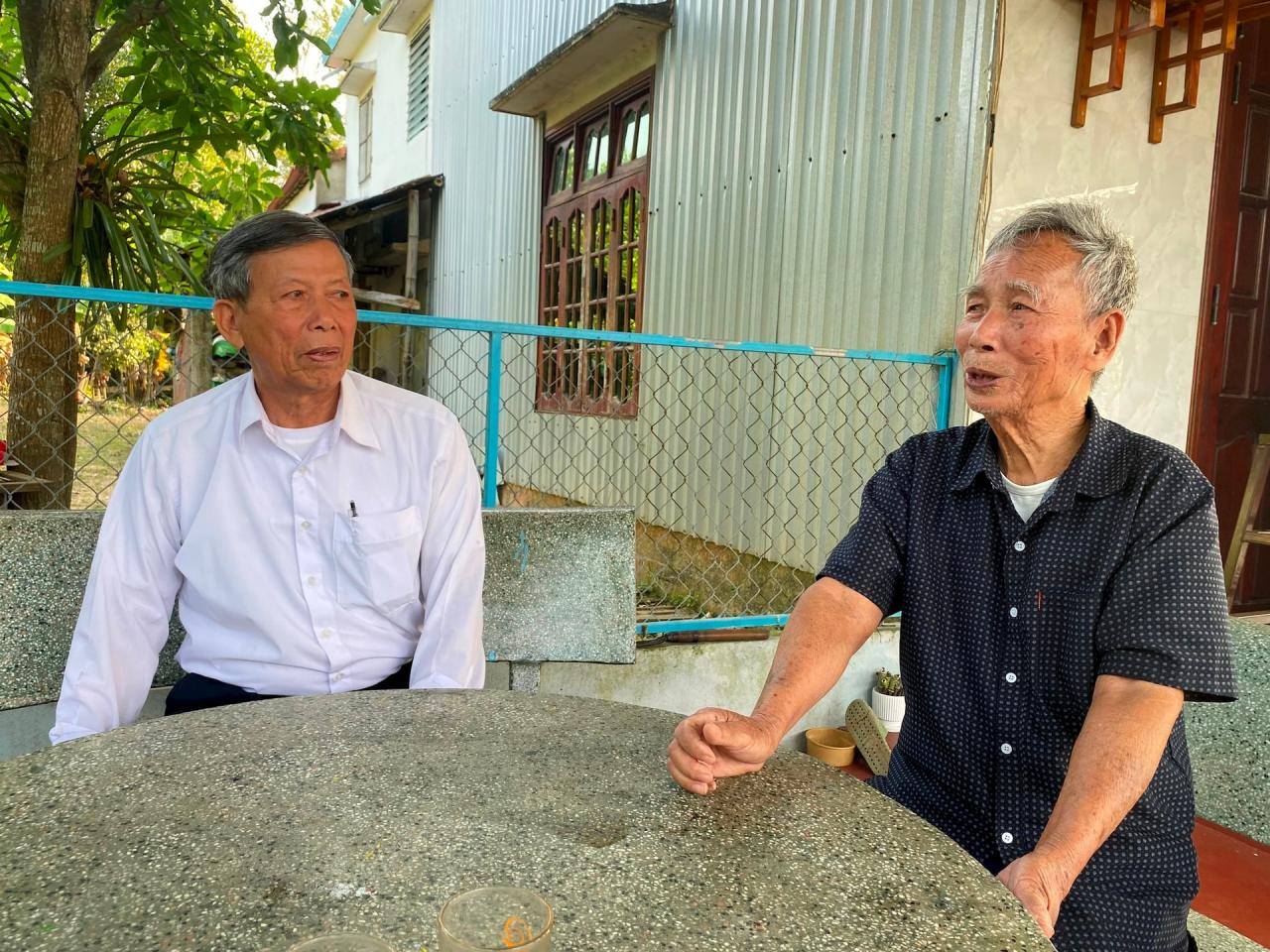
In mid-April 1972, the enemy transported prisoners to Phu Quoc Island by ship. They arrived at the island at the end of May. Mr. Tu was imprisoned in Sector 11. His cell housed 100 people, making it extremely cramped. The enemy only gave the prisoners one bucket of water each day, so there was always a shortage of drinking water and bathing water. In the camp, Mr. Tu continued to recruit members and organize resistance, such as resolutely refusing to walk past or salute the puppet regime's flag... The enemy brutally suppressed them, many were wounded, some even died, but Mr. Tu and his fellow prisoners remained fearless and undaunted.
Survived and returned
Mr. Tư confided that throughout his years of imprisonment, he never thought he would one day return home. Nevertheless, his faith in the Party, President Ho Chi Minh, and the belief in a day of peace and national reunification remained burning brightly. On March 17, 1973, Mr. Tư was released at Thien Ngon Airport ( Tay Ninh ) along with 25 others. During the release, the enemy provided each prisoner with a set of South Vietnamese soldier's uniform, a bag, a pair of sandals, a hammock, a mosquito net, and a blanket. However, upon boarding the plane, everyone threw everything away, wearing only their prison uniforms or going shirtless.
Mr. Tư was taken to the Central Committee of the Southeast Region, where former prisoners rested and ate comfortably. Half a month later, everyone was assigned back to their previous positions. Those seriously wounded were transferred to the North for treatment. Although still frail due to his weak legs, Mr. Tư refused to go to the North and requested to remain on the Southern battlefield. He was assigned to be a platoon leader in the K4 office. During this time, the Quảng Đà Special Zone came to receive him.
In January 1974, Mr. Tư began working at the Quyết Thắng Farm (now Đông Giang District) receiving goods from the North. In mid-1974, he attended the provincial Party school for 20 days, then returned to work as the chief of the farmers' office in the Hòn Tàu base, and later worked in mass mobilization, overseeing farmers' affairs. In 1975, after the reunification of the country, Mr. Tư transferred to the Mass Mobilization Department of the Duy Xuyên District Party Committee until his retirement in 1988.
At 90 years old, with nearly 60 years of Party membership, Mr. Tran Dinh Tu is perhaps one of the few former patriotic prisoners who remains healthy and sharp-minded. His memories of the steadfast struggle in imperialist prisons seem to have never faded. Looking back on the journey and the changes in his homeland after 50 years of liberation, Mr. Tu affirms that his sacrifices and hardships, along with those of other former patriotic prisoners, have been justly rewarded. Now, even as he closes his eyes for the last time, he will smile contentedly.
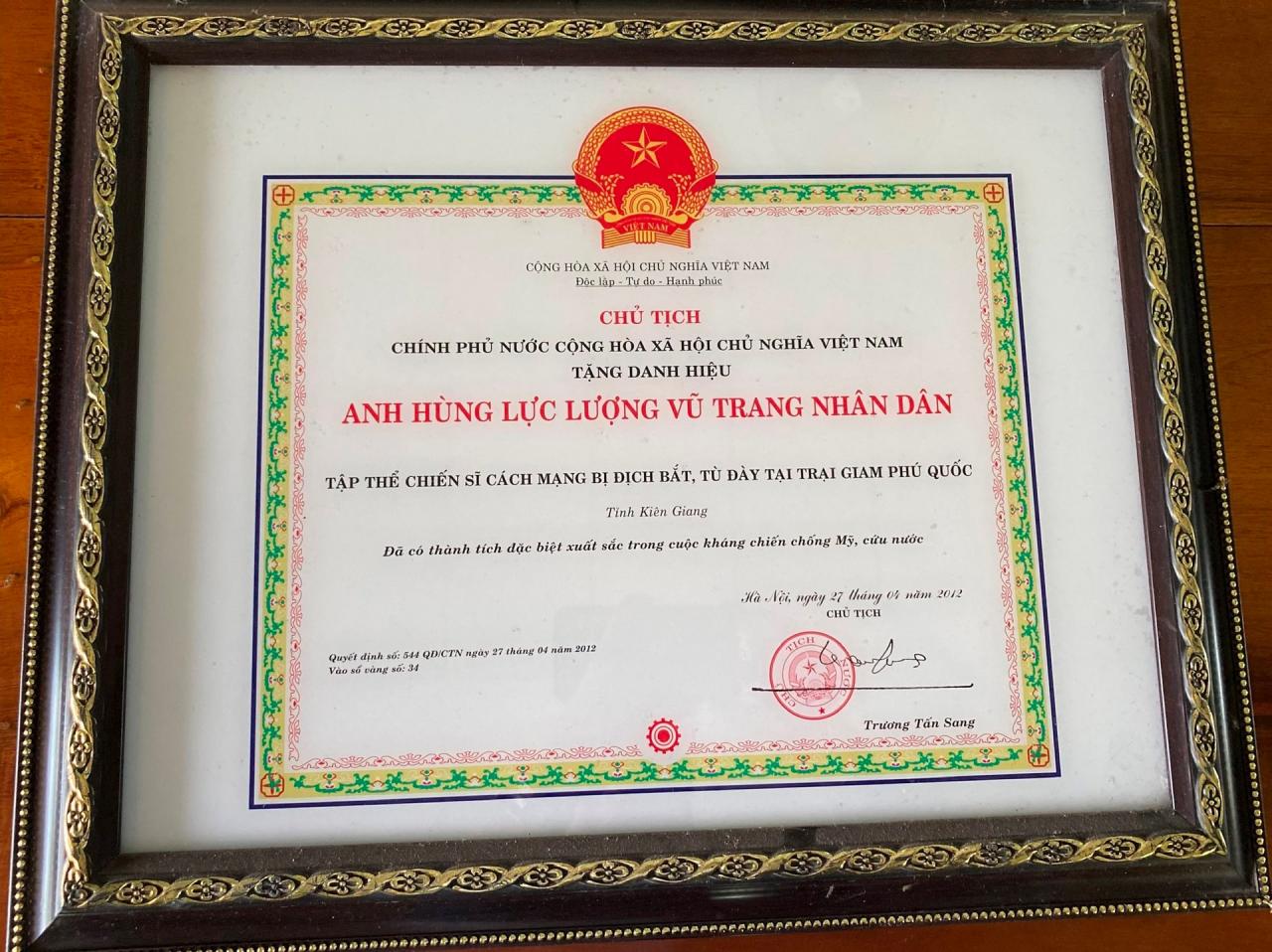
On April 27, 2012, Mr. Tran Dinh Tu and the group of revolutionary fighters who were captured and imprisoned by the enemy at Phu Quoc Prison Camp were awarded the title of Hero of the People's Armed Forces by the President of Vietnam for their exceptionally outstanding achievements in the resistance war against the US to save the country.
Source: https://baoquangnam.vn/hoi-uc-cua-mot-cuu-tu-yeu-nuoc-kien-trung-3152622.html
![[Photo] First session of the 14th Congress of the Vietnam Trade Union](https://vphoto.vietnam.vn/thumb/1200x675/vietnam/resource/IMAGE/2026/06/03/1780465947883_ndo_br_img-3852-jpg.webp)



























































Comment (0)