


Bo Ban communal house (now Hoa Vang commune) was recognized as a "National-level architectural and artistic relic" by Decision No. 1/1999/-QD-BVHTT dated January 4, 1999, of the Ministry of Culture and Information (now the Ministry of Culture, Sports and Tourism).
A gathering place for migrants
Many researchers say that Bo Ban village was formed in the late 15th century (around 1476). The first migrants, belonging to the Tran, Ho, Truong, and Nguyen clans, from Thanh Hoa and Nghe An provinces, brought with them their beliefs, customs, traditions, and culture from their homeland to cultivate this new land.
When life became stable, the people built a communal house in the year Canh Than, Canh Thinh era (1800) as a place to worship the gods in folk beliefs, perform rituals and hold communal meetings of the village. Initially, the communal house was built with thatch, bamboo and leaves at the Tam Vi Shrine hill located to the east of the village.
By the 5th year of Emperor Tu Duc's reign (1852), due to the increasing population of the village and the rather cramped location of the communal house, the village officials and elders moved it to its current location: in front is a vast, open field, behind is the Temple Hill, and on either side are the Pagoda Hill and the Guava Hill, creating a "dragon bowing, tiger crouching" formation. At this time, the communal house was built more solidly with bricks, tiles, precious wood, and elaborate decorative carvings, created by the skillful hands of artisans from Kim Bong carpentry village (Hoi An).
Over time, natural disasters, and wars, the temple suffered damage and underwent numerous restorations and repairs. In the 18th year of the reign of Emperor Thành Thái (1906), the temple underwent its first large-scale restoration. Then, in 1990, 2007, and 2011, the temple was renovated and beautified, with some damaged rafters and columns replaced with jackfruit and ironwood, the roof system rebuilt, and a three-arched gate, surrounding wall, and garden constructed... but the architectural and artistic appearance of the temple remained largely unchanged.
Village stories told through the ancient communal house.
Bo Ban communal house is built in the shape of the Chinese character "一" (yi), with "three bays and two wings," facing south, harmonizing with the rural landscape. Inside, 36 columns made of jackfruit and ironwood are placed on round stone bases carved with lotus petals, creating a feeling of both solidity and softness.

The beams, rafters, and eaves are intricately carved with decorative motifs such as dragon heads, phoenixes, scrolls, swirling clouds, the four seasons, and the four auspicious plants, creating unique works of art with soft, delicate, and vivid lines.
The temple roof is covered with yin-yang tiles, with a ridge decorated with "two dragons facing the moon," and the gable ends are adorned with bats, plum blossoms, birds, pine trees, and deer, along with elaborate ceramic inlay techniques. In front of the courtyard is a large screen, the front side carved with a dragon-horse, the back side with a turtle, symbolizing prosperity and longevity.
The main hall of the communal house is dedicated to the village's tutelary deity, the ancestors, and other deities such as Dai Can Quoc Gia Nam Hai Tu Vi Thanh Nuong, Than Nong Dai De, Quan Thanh De Quan, Thien Y Ana, Duong Phi Phu Nhan... Each altar has a couplet in Chinese characters praising the merits of the ancestors, expressing the principle of "drinking water, remembering the source".
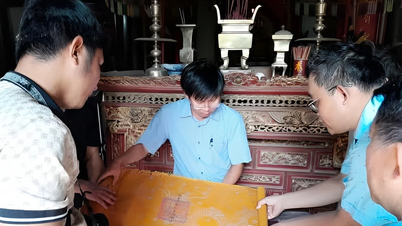
Besides being an ancient architectural structure, the communal house also preserves many precious artifacts such as the dragon pavilion used to receive royal decrees, a stone stele erected in the 5th year of Tu Duc (1852) inscribed with the merits of the villagers in building the Quan Thanh De Quan temple, and a stone altar of the Cham people... These are rare and valuable documents and artifacts, evidence of the rich history and culture of Bo Ban village.
Besides its cultural and artistic value, Bo Ban communal house is also a site associated with significant events in the local revolutionary history. During the August Revolution of 1945, the demonstration group from An Phuoc commune (Hoa Vang district), starting from Cam Toai communal house, gathered at the courtyard of Bo Ban communal house, then proceeded to seize power and establish the commune's administrative committee. This place also hosted meetings between the revolutionary government and the people in the early years of the resistance war.
Bo Ban communal house was the location of the first polling station for the National Assembly elections of the Democratic Republic of Vietnam, and also the site of the first adult literacy class in the commune. During the resistance war against the US, in 1960, the communal house hosted a people's court to try the US-Diem regime's collaborators. After the reunification of the country, the communal house continued to be a center for political , social, and educational activities for the people.
A place that preserves the soul of the nation.
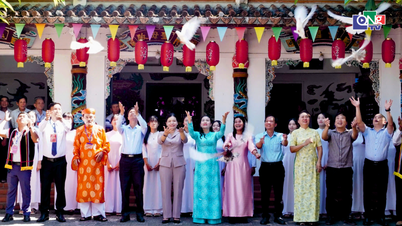
Traditionally, every three years, in March, the people of Bo Ban hold a festival at the communal house to express gratitude to their ancestors who founded the land, and to pray for national peace and prosperity, favorable weather, and a bountiful harvest.

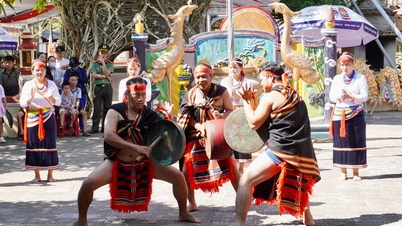
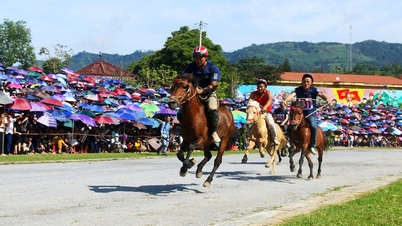
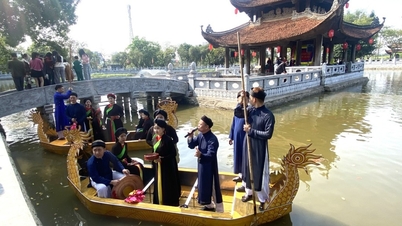
Besides the solemn traditional rituals and offerings, the festival features many lively activities such as bánh chưng wrapping competitions, rice cooking contests, stick pushing, boat racing, folk singing, and Bài Chòi performances, attracting a large number of locals and tourists.
Although modern life has brought about many changes to traditional village life, for the people of Bo Ban, the communal house is not only a historical relic but also an integral part of the village's spiritual life. They preserve the communal house as a part of their memories and homeland identity.
Source: https://baodanang.vn/hon-xua-noi-dinh-co-3332738.html















![[Photo] Reception to welcome General Secretary and President To Lam and his wife on their State visit to the Philippines](https://vphoto.vietnam.vn/thumb/1200x675/vietnam/resource/IMAGE/2026/06/01/1780295488620_vna-potal-chieu-dai-chao-mung-tong-bi-thu-chu-tich-nuoc-to-lam-va-phu-nhan-tham-cap-nha-nuoc-toi-philippines-8798060-7855-jpg.webp)
















































Comment (0)