

According to Iranian state television (IRIB), the Iranian Islamic Revolutionary Guard Corps (IRGC) targeted a US base on May 28 in retaliation for Washington's airstrikes in southern Iran. The IRGC statement read: “Following the aggression on the morning of May 28 by the US military, using airstrikes to attack a location on the outskirts of Bandar Abbas airport, the US air base – believed to be the origin of the attack – was targeted at 4:50 a.m. (Iranian time).”
The IRGC also stated that any act of aggression would lead to a "more forceful" response from Iran. While the IRGC did not specify the location of the attacked base, Kuwait—home to a major US military base—reported that it responded to missile and drone attacks on the morning of May 28.
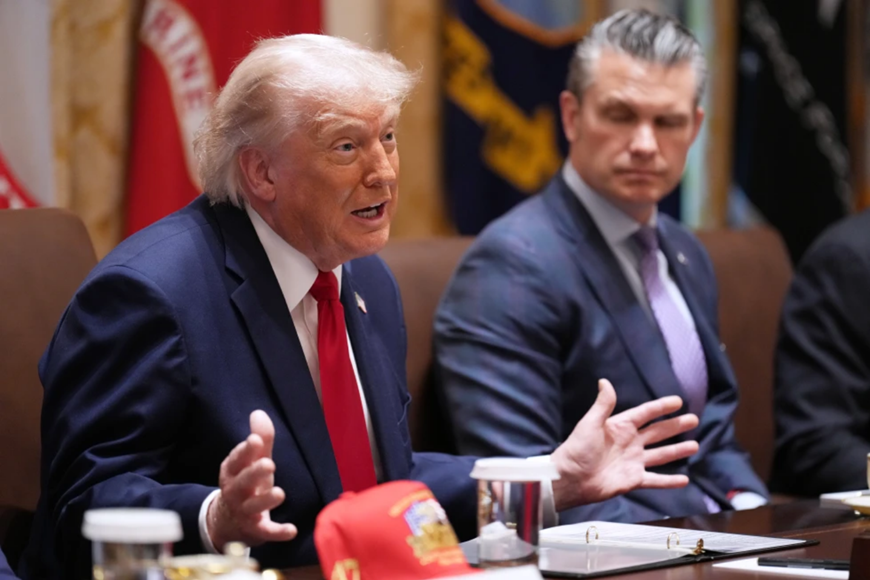
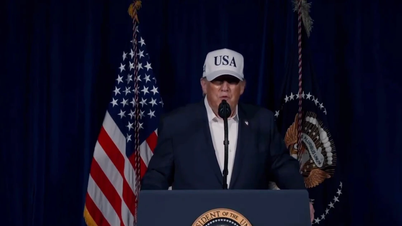
US President Donald Trump (left) speaks at a cabinet meeting on May 27 in Washington (Photo: AP)
Earlier, an unnamed U.S. official told Reuters that U.S. forces shot down four Iranian suicide drones near the Strait of Hormuz after determining they posed a threat to regional security in Washington's assessment. In addition, U.S. forces also attacked an Iranian ground control station in Bandar Abbas, where a fifth drone was allegedly being prepared for launch. "These actions were carefully considered, purely defensive, and aimed at maintaining the ceasefire," the official said.
The tit-for-tat actions between the US and Iran are taking place against the backdrop of US President Donald Trump stating that he will not rush to a deal with Iran due to political concerns related to the midterm elections. He also warned that Washington remains ready to resume military action if current negotiations fail to reach a satisfactory agreement.
In addition to military action, the US has intensified its efforts to pressure Iran on all fronts. On May 27, the US Treasury Department announced sanctions against the Iranian agency responsible for controlling maritime transport in the Strait of Hormuz. According to the Office of Foreign Assets Control of the US Treasury Department, the Persian Gulf Strait Authority has been added to the special sanctions list.
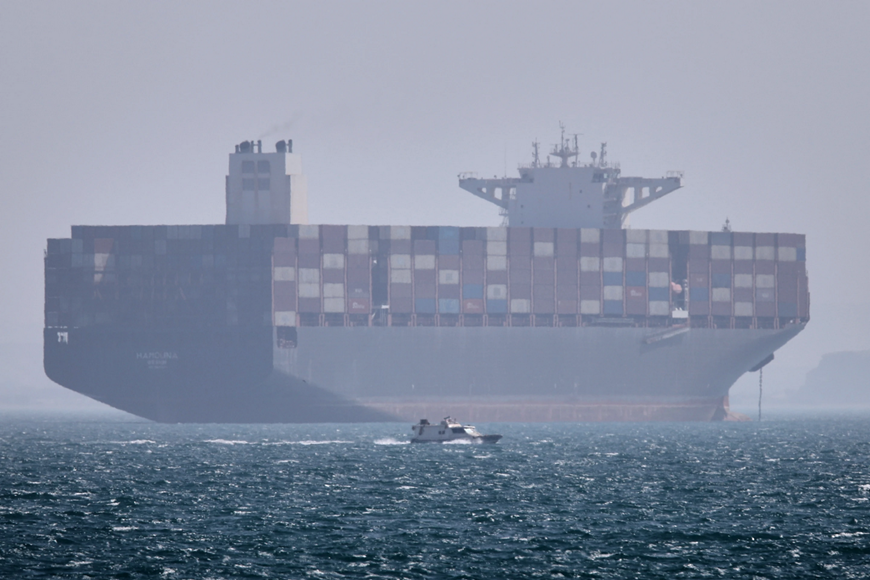
Washington's latest move comes amid continued instability in the Strait of Hormuz, significantly impacting global shipping and energy markets. In the latest development, IRIB reported that Iranian forces fired warning shots on May 27th at four ships attempting to pass through the Strait of Hormuz without coordination with Iranian security forces. According to IRIB, the ships were ordered to stop but failed to comply, forcing Iran to fire warning shots to order them to turn back.
Meanwhile, the Netherlands announced it would deploy the minesweeper HNLMS Willemstad to the Mediterranean as part of the NATO maritime task force, while also leaving open the possibility of deploying the vessel to the Strait of Hormuz if necessary. Dutch Deputy Prime Minister and Defence Minister Dilan Yesilgoz-Zegerius stated that the Dutch government is working with allies to consider options for increasing its presence in the Strait of Hormuz – a strategic shipping lane for global oil and gas trade.
Earlier, representatives from more than 40 countries attended a meeting co-chaired by the UK and France to discuss measures to ensure maritime security in the Strait of Hormuz. A joint statement following the meeting indicated that maintaining freedom of navigation through this route could contribute to diplomatic efforts to de-escalate tensions between the US and Iran.
Source: People's Army Newspaper
Source: https://htv.vn/iran-tan-cong-tra-dua-vao-can-cu-my-222260529092625051.htm





![[Photo] Admire the coral "masterpiece" amidst the million-year-old heritage of Dak Lak province.](https://vphoto.vietnam.vn/thumb/1200x675/vietnam/resource/IMAGE/2026/05/30/1780107638639_y25-jpg.webp)
































































































Comment (0)