

 |
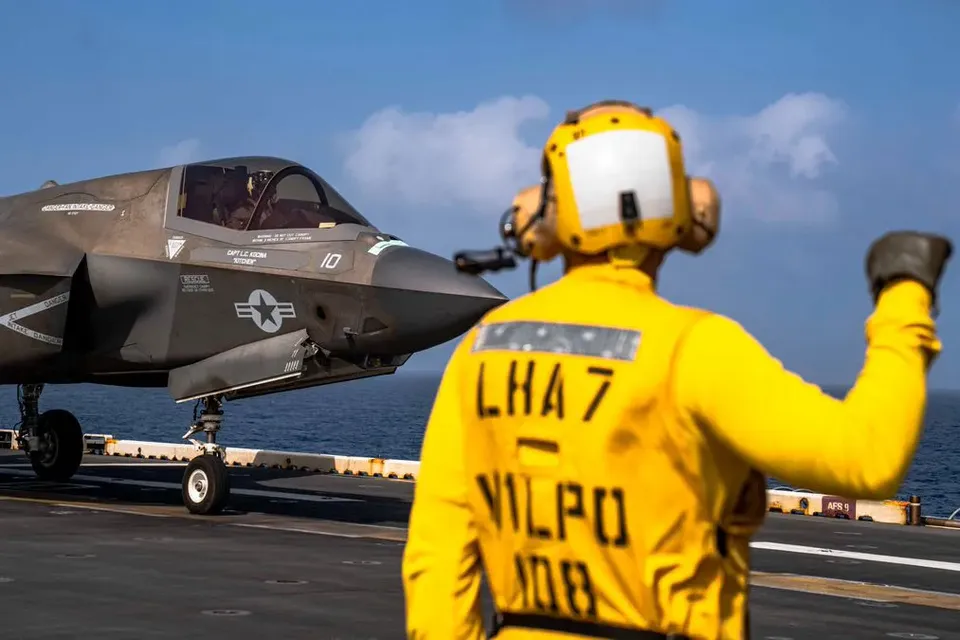
The U.S. will maintain a military presence in Israel at least until the end of the year. Photo: U.S. Army . |
This new escalation comes at a time when both sides are working to finalize the terms of a preliminary Memorandum of Understanding (MoU) aimed at reopening shipping lanes through the Strait of Hormuz – a vital artery that has been frozen since the US-Israel coalition bombed Iran on February 28.
The draft agreement also opens the door for Iran to access assets frozen by the US abroad, and addresses the issue of future weapons and nuclear programs.
Earlier, at the White House, President Trump announced that the US would take over and possibly destroy Iran's enriched uranium stockpile to ensure that the country no longer possesses this material.
Meanwhile, Israeli Prime Minister Benjamin Netanyahu asserted that the war would only end when Iran handed over its uranium stockpile, stopped supporting regional allied forces, and abandoned its ballistic missile program.
In response, Mohammad Akbarzadeh, Deputy Political Officer of the IRGC Navy, stated that the risk of war was low due to the weakening of the enemy, but that the Iranian armed forces remained in a state of combat readiness.
Akbarzadeh also warned: "We will turn the entire southern coastline from Chabahar to Mahshahr into a burial ground for any aggressive forces."
The US bombing campaign fueled skepticism from Tehran.
Iran's Foreign Ministry has accused Washington of a "blatant violation" of the fragile ceasefire signed on April 8th with an airstrike on the southern province of Hormozgan on Monday night. The ministry stressed that this US military action is the clearest evidence that Iran's "deep suspicions" about Washington at the negotiating table are entirely justified.
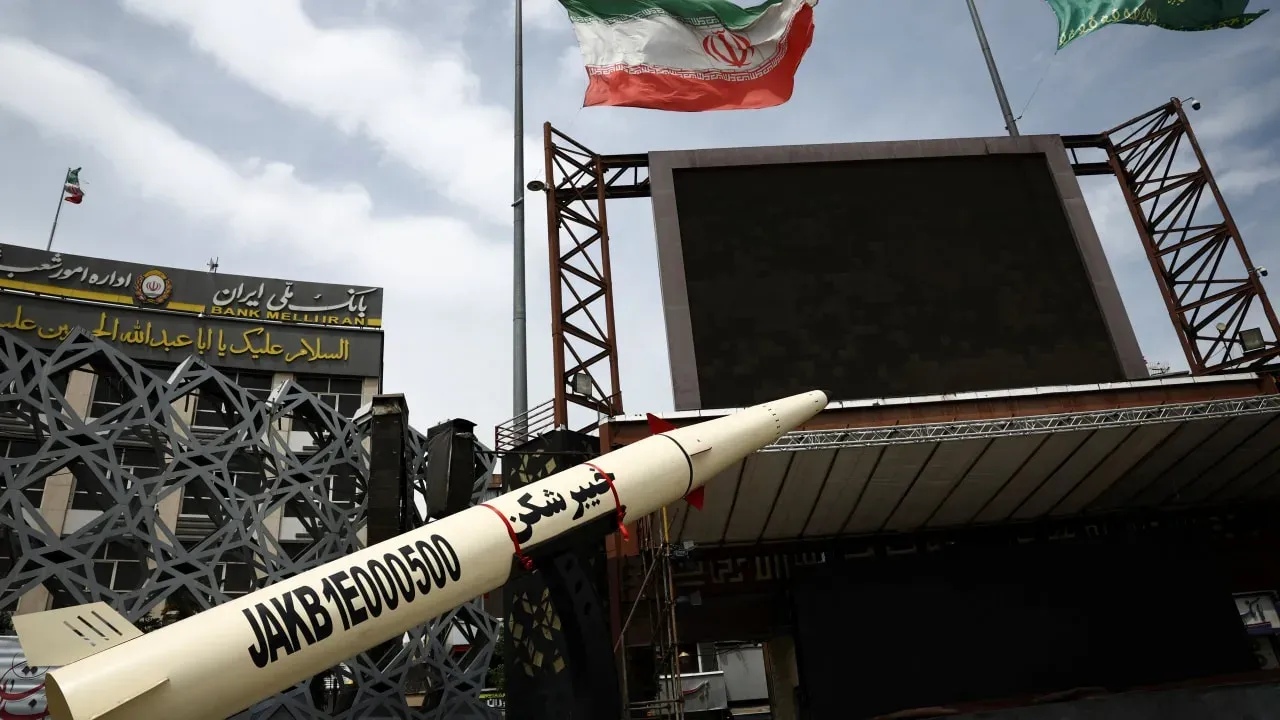 |
The Iranian armed forces remain on high alert. Photo: Reuters. |
Although the US insists that the attack on Iranian missile sites and torpedo boats was merely an act of "self-defense" aimed at preventing a plan to lay naval mines, commanders of Iran's Islamic Revolutionary Guard Corps (IRGC) declared they have the full right to retaliate.
Iranian media claimed Tehran shot down a US MQ-9 Reaper drone, but the US War Department denied the claim.
US military analysts had previously identified three escalatory moves from Iran within a single day: the IRGC Navy using mine-laying speedboats to blockade the Strait of Hormuz; launching drones to approach approximately 20 US warships enforcing the blockade in the Gulf of Oman and the Arabian Sea; and activating surface-to-air missile (SAM) sites around the strait.
According to the Jerusalem Post, despite the coalition's intense 38-day air campaign, US intelligence reports in early May indicated that Iran had quickly regained access to most of its bunkers and launch sites.
What worries US officials most is Iran's successful reactivation of 30 out of 33 missile bases along the Strait of Hormuz. Although most of its regular naval forces have been lost, the IRGC still retains an asymmetric force with hundreds of small mine-laying boats.
Independent experts believe the IRGC may be deliberately "testing the waters" to gauge the limits of the US response.
The US maintains forces at bases in Israel.
Conversely, Israeli television station KAN, citing security sources and satellite imagery, confirmed that US F-22 fighter jets are still stationed at Ovda Air Base (southern Israel). At the same time, dozens of US refueling aircraft are heavily deployed at Ben Gurion and Ramon airfields. These forces have been deployed since the start of hostilities on February 28th and remain in place following the ceasefire in April.
Washington wants to maintain this air force presence in Israel at least until the end of the year. However, Shmuel Zakai, head of the Civil Aviation Authority at Ben Gurion Airport, warned that operating the airport as a military base is causing significant disruption to commercial airlines and driving up airfares just before the summer travel season.
Meanwhile, Prime Minister Benjamin Netanyahu said Israel would intensify its attacks on Hezbollah after bombing sites in southern Lebanon.
Conversely, Iran demands an end to hostilities against Hezbollah in Lebanon as a mandatory condition in any peace agreement with the United States.
Playing hardball at the negotiating table
The situation became even more complicated when, on May 26, Iranian Supreme Leader Mojtaba Khamenei declared that US military bases in the Middle East would no longer be safe after a war.
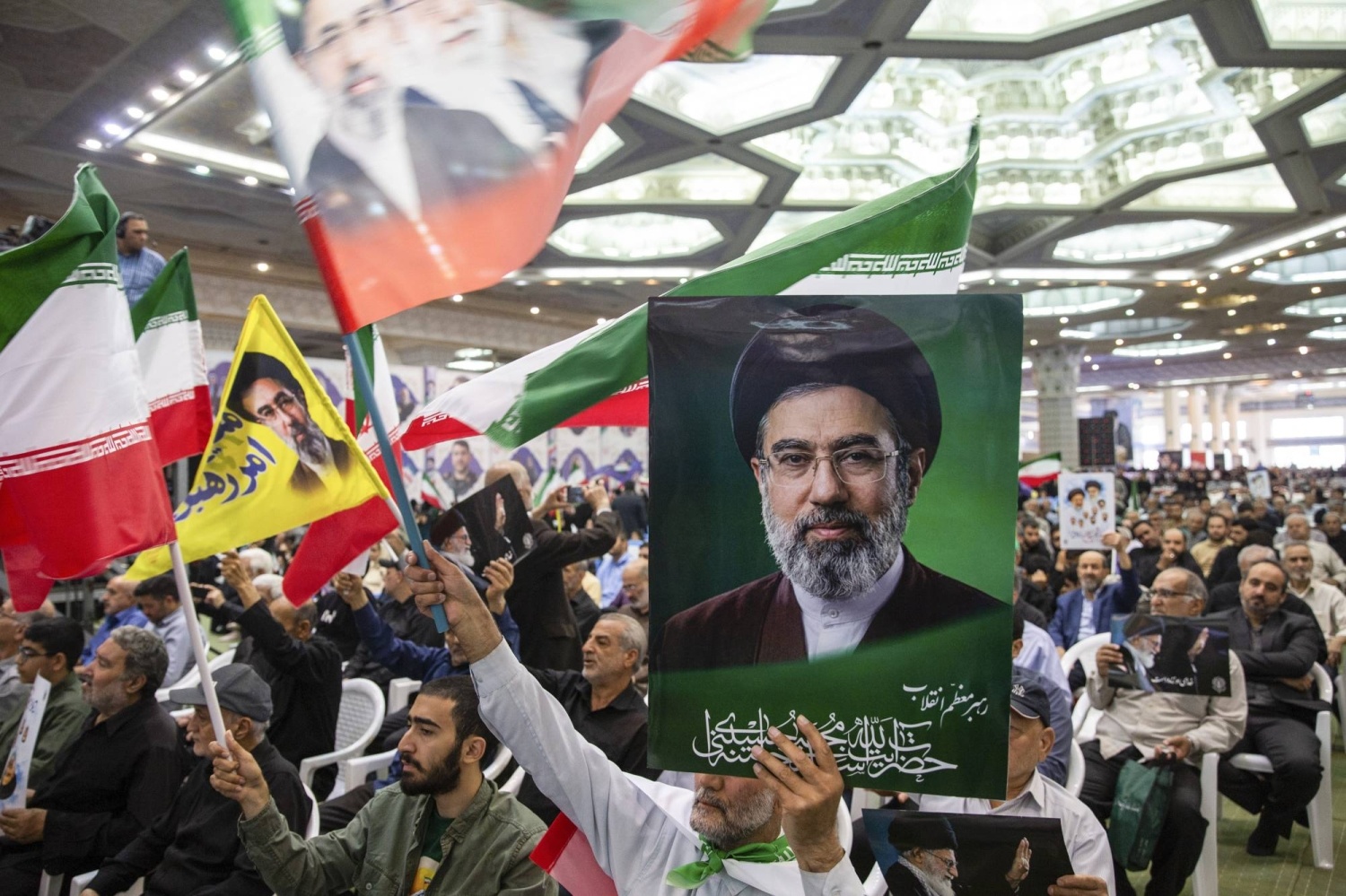 |
Khamenei described Israel as a "dangerous cancer" and warned that the US would no longer have a safe haven in the Middle East. Photo: Reuters. |
In a written statement on the occasion of the Hajj pilgrimage in Saudi Arabia, he asserted: "The clock cannot be turned back. The countries and lands in the region will no longer be shields for American bases."
Nevertheless, negotiations appear to be making some progress. An Iranian delegation led by Parliament Speaker Mohammad Bagher Ghalibaf and Central Bank Governor Abdolnaser Hemmati arrived in Doha to consult with senior Qatari officials on the release of frozen funds.
Al Arabiya also reported that Pakistan's Army Chief of Staff, Asim Munir, was on his way to Doha to mediate.
U.S. State Secretary Marco Rubio said on Tuesday that negotiations would need a few more days to resolve disagreements over wording, while asserting that President Trump would only agree to a good deal or not sign anything at all.
Currently, Trump is under considerable pressure from domestic hawks, including Senator Lindsey Graham, who argues that the deal taking shape makes too many concessions to Tehran.
To appease critics within the Republican party, the US president called on Saudi Arabia, Qatar, and other nations to join the Abraham Accords and recognize Israel.
However, according to Bloomberg, both Saudi Arabia and Qatar have stated that they will not normalize relations with Israel without progress toward the establishment of a Palestinian state.
President Donald Trump is expected to convene a Cabinet meeting on Wednesday amid a highly uncertain situation. He has expressed confidence in his ability to reach an agreement demonstrating that Iran's nuclear capabilities have been curbed.
In the US, this trade war is increasingly losing favor with voters as soaring fuel costs weigh heavily on the economy just before the midterm elections, forcing the White House to seek an early exit while still maintaining its upper hand.
Source: https://znews.vn/iran-xoay-chuyen-the-ep-goc-cua-my-post1654825.html
![[Photo] General Secretary and President To Lam and his wife begin their state visit to the Republic of Singapore.](https://vphoto.vietnam.vn/thumb/1200x675/vietnam/resource/IMAGE/2026/05/29/1780011284377_vna-potal-tong-bi-thu-chu-tich-nuoc-to-lam-va-phu-nhan-bat-dau-chuyen-tham-cap-nha-nuoc-toi-singapore-va-phat-bieu-dan-de-tai-doi-thoai-shangri-la-8791484-2-jpg.webp)


















![[Photo] Standing Committee member of the Party Central Committee Tran Cam Tu working with the Central Inspection Committee](https://vphoto.vietnam.vn/thumb/1200x675/vietnam/resource/IMAGE/2026/05/28/1779969579668_ndo_br_bnd-2495-jpg.webp)







































































Comment (0)