

Even when sick, they try to endure it for fear of losing a day's work.
As dawn broke, Ms. Nguyen Thi Thuong (38 years old) was busy preparing her goods, tying them onto her bicycle to get to the streets to sell them. She and her husband left their hometown in My Duc commune, Hanoi, and have been renting a room in the Xa La area for nearly ten years to make a living.
Street vending is dependent on the weather and the number of passersby, so the income is very unstable. Some days she earns around 250,000 VND, but other days she only has 50,000 VND left after deducting expenses.
That meager amount of money has to be carefully managed to pay rent, living expenses, and send money back home to support her two children who are still in school. Her eldest child is in 12th grade, and her youngest is in middle school; both live in the countryside with their paternal grandparents. "Parents working far away only hope to earn more money so their children can get a better education than they did in the past," Ms. Thuong confided.
Life was a constant struggle to make ends meet, making her almost afraid to even think about regular health checkups. Headaches, backaches, and persistent fatigue were usually treated with a few pills hastily bought from the pharmacy. "I try to endure being sick because I'm afraid of losing a day's work. Missing a day means I don't have any money that day," she said.
Therefore, upon hearing about the policy of free health check-ups for citizens, especially disadvantaged workers, Ms. Thuong couldn't hide her joy. "Poor workers like us rarely get the chance to have a full health check-up. With this policy, we feel more at ease, knowing our health status so we can seek treatment early," she shared.
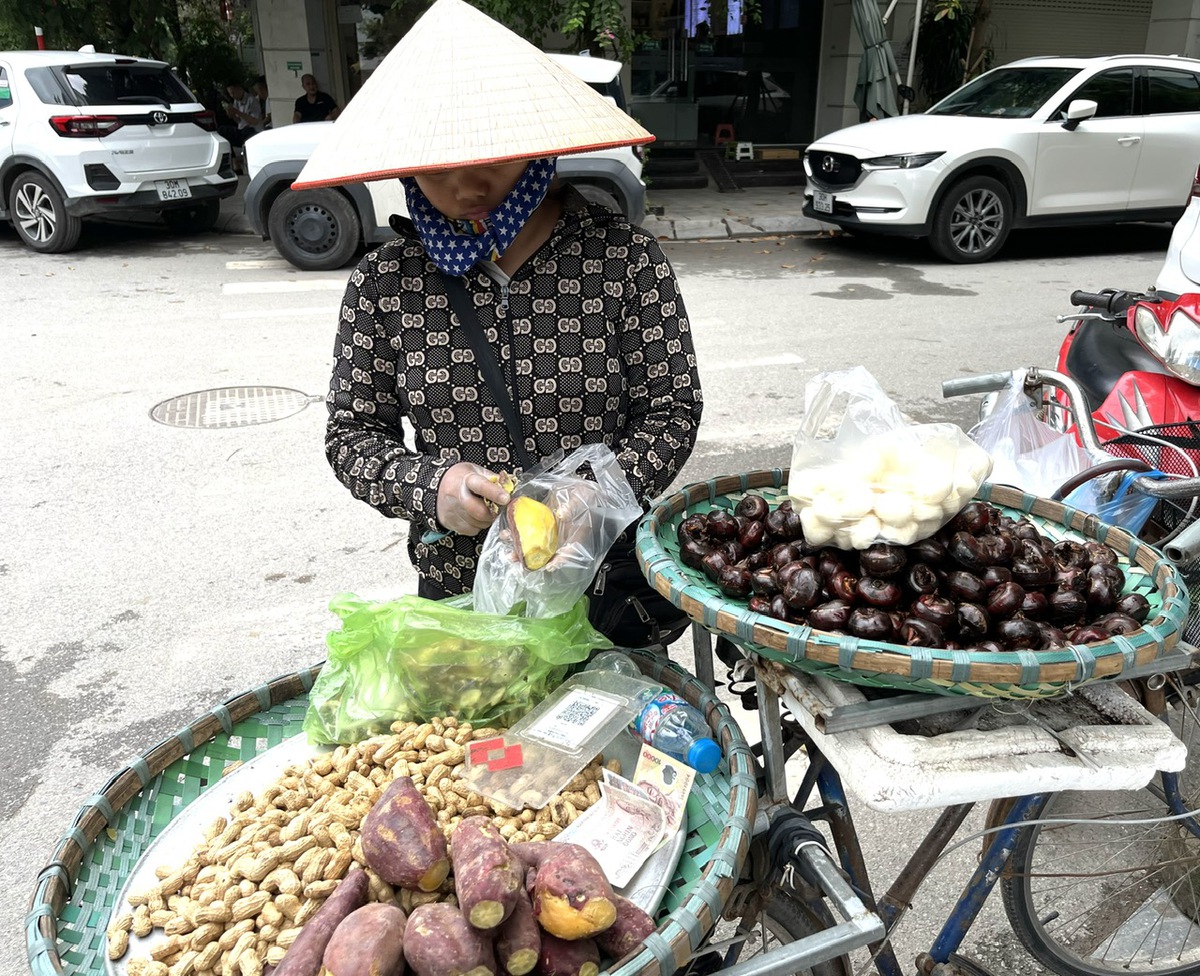
Ms. Nguyen Thi Thuong earns a living selling snacks from her mobile cart.
Ms. Thuong is not alone; many informal workers in urban areas today are still neglecting their health in order to prioritize making ends meet.
Those struggling to make a living are constantly worried about illness.
At a workers' dormitory near Giap Bat bus station, Mr. Tran Van Hung (40 years old) had just returned after more than 10 hours of continuous work at the wholesale market.
The strenuous work of loading and unloading heavy loads caused him constant pain in his shoulders and back. Yet, for many years, he had never had a general health check-up.
"I earn about 300,000 to 400,000 VND a day at work. If I take time off to go for a check-up, I'll lose my wages and end up paying extra hospital fees, so I keep putting it off," Hung said.
Having left his hometown of Ninh Binh to work in Hanoi more than 15 years ago, he is the main breadwinner for his family. His wife works as a garment factory worker in their hometown, earning a low income, so most of the expenses for their two children's education depend on the money he sends home. There were times when his back pain was so severe that he couldn't sleep, but he still tried to go to work because "if I stopped, the whole family would be short of money."
Upon learning about the free health check-up policy, Mr. Hung said that what touched him most was that self-employed workers like himself were also being cared for.
"For a long time, we thought only wealthy people could afford regular health checkups. If checkups were free, more people would be more willing to get checked," he said.
Another woman who makes a living in the city through hard work is Ms. Le Thi Hoa (51 years old), originally from Ninh Binh province. She has been working as a scrap metal collector in Hanoi for over 10 years. Every day, she rides her old bicycle through the streets and alleys, picking up empty cans and cardboard boxes.
With an unstable income and meager savings, she also has to send money back home to support her two children's education. Her husband passed away early, leaving her to raise her children alone, so she has to be very frugal with every expense. "I'm often very tired, but the thought of hospital bills makes me give up. I only dare to go to the doctor when the pain becomes unbearable," she recounted.
In recent years, she has frequently experienced knee pain and shortness of breath when cycling long distances. Despite this, she continues to work because she fears losing her only source of income.
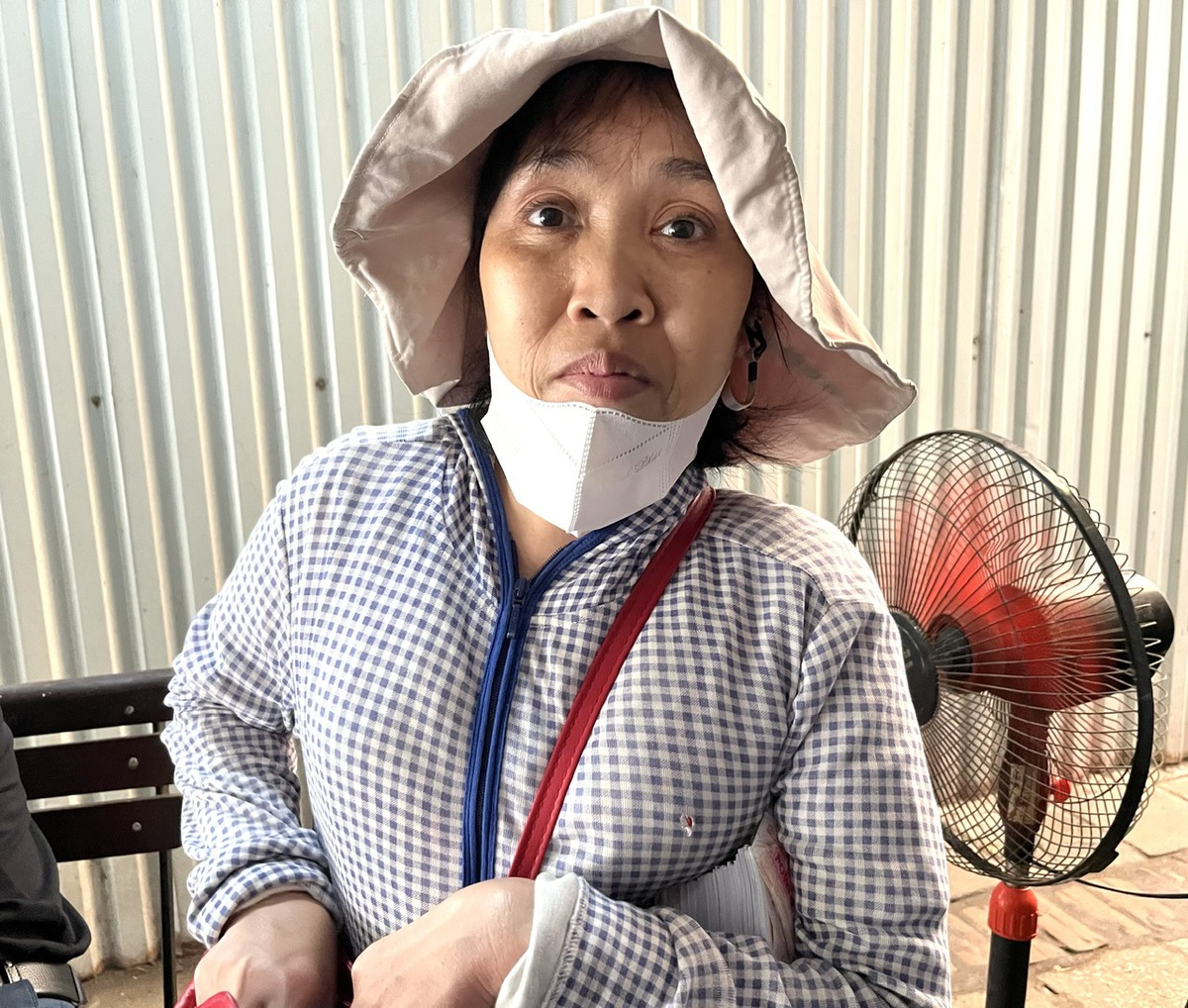
Ms. Nguyen Thi Huong earns a living by selling lottery tickets.
The news about free health checkups made the hardworking woman feel as if some of her life's burdens had been eased. "It would be great to have regular checkups. If a disease is detected early, it can be treated, but what poor people fear most is serious illness," she said.
For Ms. Nguyen Thi Huong (45 years old), a disabled woman who earns a living selling lottery tickets in Hanoi, the information about the free health check-up policy brought joy and relief after many years of struggling with illness.
Her weak legs make walking difficult, but for many years, Ms. Huong has woken up early every day and made her way through local markets, tea stalls, and bus stations to sell lottery tickets. The work depends entirely on luck and the number of customers each day, so her income is very unstable.
"Many days my limbs ache, and I'm exhausted, but I still have to go out to sell. Taking a day off means losing money," Ms. Huong shared. There was a time when she suffered from prolonged stomach pain and frequent dizziness due to unstable blood pressure, but she only dared to buy medicine to alleviate the symptoms.
For Ms. Huong, receiving a free health check-up not only helps alleviate the financial burden but also provides great encouragement. "Poor workers like us only hope to have good health to continue working and providing for our families. Everyone is happy to hear about the free health check-up policy," she said.
It's not just about treating illnesses, but also about preserving the livelihoods of workers.
According to Dr. Mai Xuan Phuong, a population communication expert and former Deputy Director of the Communication and Education Department (General Department of Population, now the Population Department - Ministry of Health), the Ministry of Health's implementation of a plan to provide free periodic health check-ups or screenings at least once a year for informal workers is a very humane policy with profound social welfare and preventive health benefits. The greatest significance of this policy lies not only in detecting diseases but also in protecting the working capacity and quality of life of millions of people.
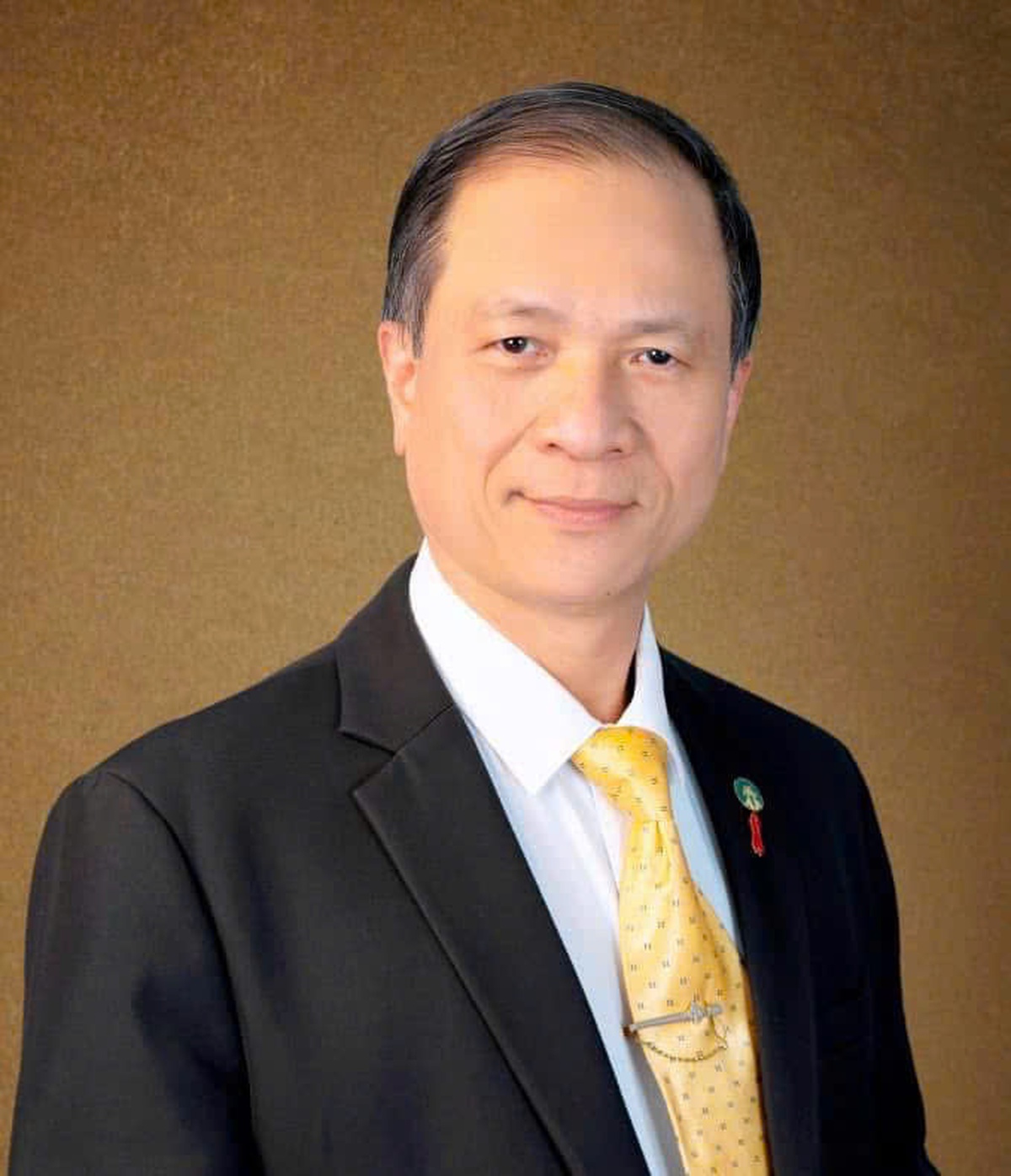
Doctor Mai Xuan Phuong
He argued that the informal workforce is currently a large force but has limited access to preventive healthcare services. From street vendors, scrap collectors, porters, domestic helpers to seasonal workers or ride-hailing drivers, the majority do not receive regular health check-ups like workers in organized businesses.
"It can be said that they are bearing the burden of their health through suffering. Many only seek medical attention when their illness is severe or they are no longer able to work. At that point, treatment costs increase, recovery time is prolonged, and the risk of falling into economic hardship is very high," Dr. Phuong commented.
In reality, many poor workers are unaware of their chronic illnesses. Diseases such as hypertension, diabetes, cardiovascular disease, metabolic disorders, and even early-stage cancer often progress silently with few symptoms. If detected early through regular check-ups, the chances of successful treatment and disease control are much higher.
Through years of involvement in community health counseling and communication activities, Dr. Mai Xuan Phuong has observed that informal workers are facing a "silent burden of disease" due to the nature of their work, long working hours, unsafe working environments, immense pressure to make a living, and a habit of ignoring abnormal bodily signs.
Workers such as porters, construction laborers, scrap collectors, and street vendors frequently suffer from musculoskeletal disorders, spinal degeneration, and herniated discs due to carrying heavy loads for extended periods. Meanwhile, irregular eating habits, lack of sleep, and prolonged stress further increase the risk of cardiovascular disease, hypertension, stroke, and diabetes.
"The most dangerous thing is not just the lack of money for medical checkups, but the lack of opportunities for early disease detection and the lack of knowledge about proactive health care. For many self-employed workers, health is their greatest asset, even their only asset, to support themselves and their families," he emphasized.
Bringing healthcare services closer to the people.
To ensure the free health check-up policy truly takes effect, Dr. Mai Xuan Phuong believes that comprehensive solutions are needed to bring healthcare services closer to the people. Instead of only organizing check-ups at large hospitals, the health sector should promote mobile health check-ups in the community, organizing check-up points in wards, communes, residential areas, markets, or places with a high concentration of self-employed workers.
"For many poor workers, missing a day of medical check-ups means missing a day's income. Therefore, healthcare services must reach out to people more, making it as convenient as possible for them to access them," he said.
In addition, communication efforts need to be strengthened to change public perception of the role of regular health check-ups. According to Dr. Phuong, many people still believe that they only need to see a doctor when they are sick. Meanwhile, the goal of preventive medicine is to detect risks early to prevent diseases before serious consequences occur.
"Regular health checkups are not just for people who are sick, but for everyone who wants to maintain their health," he shared.
Source: https://phunuvietnam.vn/kham-suc-khoe-mien-phi-niem-vui-lon-cua-lao-dong-phi-chinh-thuc-238260521140013698.htm
![[Image] Pleasant weather helps students enter the 10th grade entrance exam with confidence.](https://vphoto.vietnam.vn/thumb/1200x675/vietnam/resource/IMAGE/2026/05/29/1780034401612_ngay-1-thi-lop-10-minh-duy-8-5009-jpg.webp)


![[Photo] Ba Lang An Lighthouse - the "eye of the sea" amidst the "rock museum" of Quang Ngai province.](https://vphoto.vietnam.vn/thumb/1200x675/vietnam/resource/IMAGE/2026/05/29/1780038698840_anh-man-hinh-2026-05-29-luc-14-10-42.png)












































































Comment (0)