

The revolution in streamlining the administrative apparatus is expected to become a crucial foundation for enabling the private sector to become the vanguard in exploiting new growth opportunities.
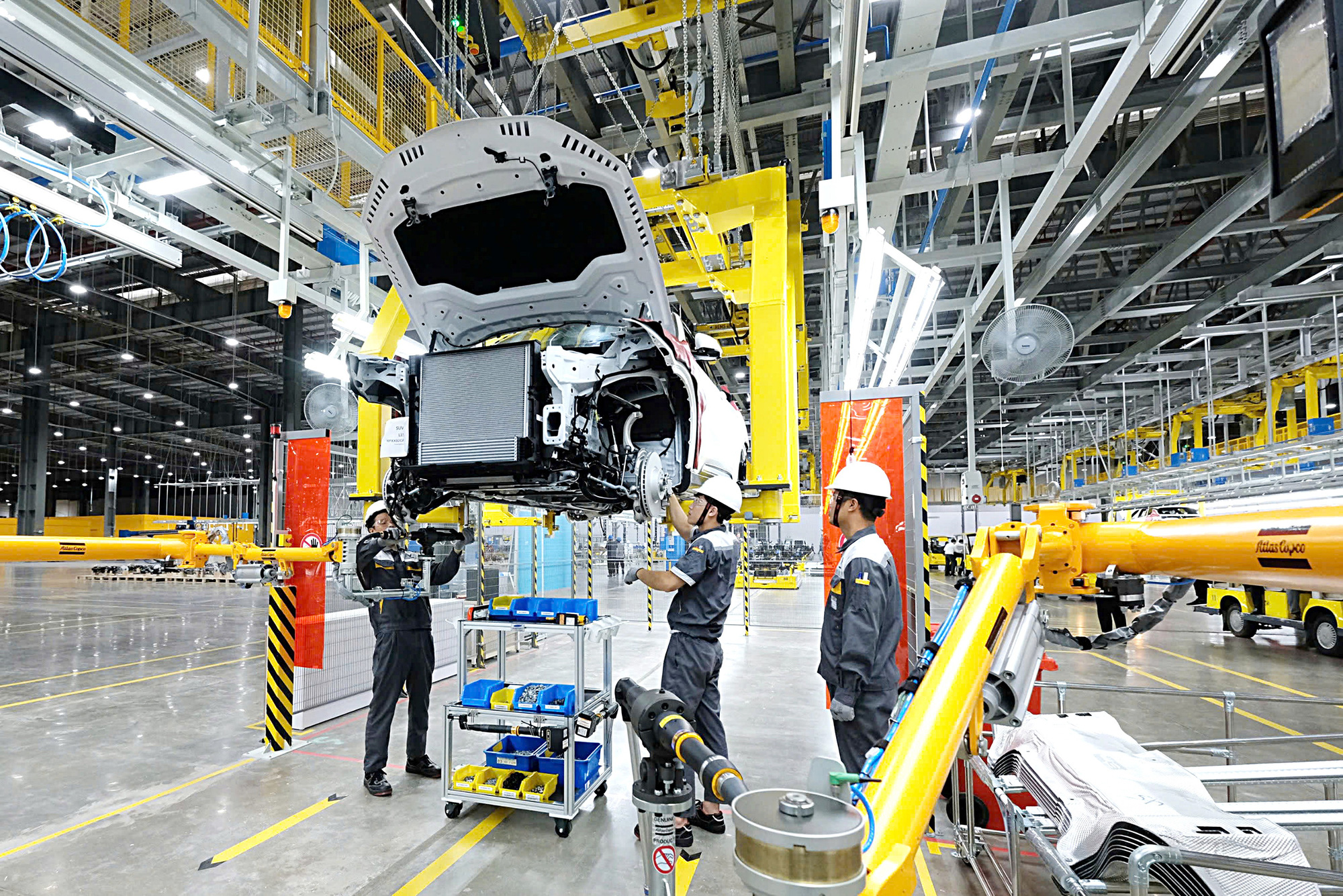
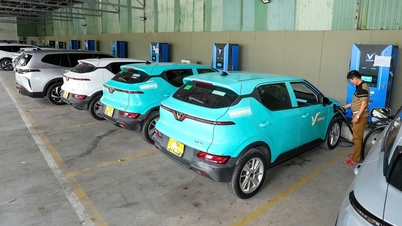
VinFast's automobile manufacturing plant in Hai Phong - Photo: NAM TRAN

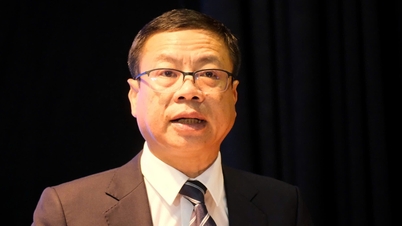
Mr. Vu Tu Thanh
Mr. Vu Tu Thanh, Deputy Executive Director of the US-ASEAN Business Council, who organized the visit of a delegation of US businesses in the aerospace, defense, and security sectors to Vietnam, affirmed this when discussing Vietnam's double-digit growth target with Tuoi Tre newspaper in the coming years.
Mr. Thanh said: "Just like businesses, state governance also needs restructuring. This is not simply about cutting staff and reducing recurrent expenditures, but more importantly, reorganizing the state management apparatus to suit the new economic structure with new business models and technologies. We believe, at least from a theoretical perspective, that double-digit growth from 2025 onwards is feasible."
Double-digit growth is possible.
Many experts expect that streamlining the government apparatus will contribute to boosting GDP growth. What are your views on this issue?
- Although the budget is not excessively large, disbursement has been hampered in recent times due to several reasons. One of them is the outdated organizational structure, which cannot be used as a tool to promote the disbursement of public investment. Therefore, streamlining and reforming the system can boost public investment disbursement, improve the efficiency of public investment capital, and contribute to GDP growth.
Secondly, there is the manufacturing sector for both export and domestic markets. The export channel carries the risk that the Trump administration may impose high tariffs on goods from Vietnam to the United States, but there is an opportunity to mitigate or lessen the impact of this policy. Combined with the continuing trend of expanding production in Vietnam by foreign businesses, the domestic manufacturing sector will continue to expand for the export market.
Domestic production, linked to domestic consumption, will be supported by two factors: public spending and production for export. Importantly, these three factors, when implemented simultaneously, will support each other. When combined with reforms to the state apparatus towards greater efficiency, growth could be exponential rather than linear.
In the short term, meaning the next five years, we believe double-digit growth is achievable. However, maintaining this pace in the long term, up to 2045, remains uncertain, as we cannot predict how the global economy will change. This necessitates a process of continuous adjustment.
* The private sector's contribution accounts for approximately 10% of GDP. What role does this innovative and dynamic sector play in the new growth model?
- For a long time, we expected the state-owned enterprise sector to lead in science and technology and innovation, but in reality, it was ineffective.
In the upcoming high-growth cycle, the role of the private sector must be emphasized. They will be the vanguard in exploiting new growth opportunities, and their most crucial weapons will be science, technology, and innovation.
The central government issued a resolution on developing the private economy several years ago, but it hasn't been very effective, even though the private sector has already taken off. A recent example is Nvidia CEO Jensen Huang, who, upon visiting Vietnam, collaborated with private companies like FPT and VinBrain, not state-owned enterprises.
Private enterprises are more dynamic and flexible than the state sector in receiving technology transfer and conquering demanding overseas markets.
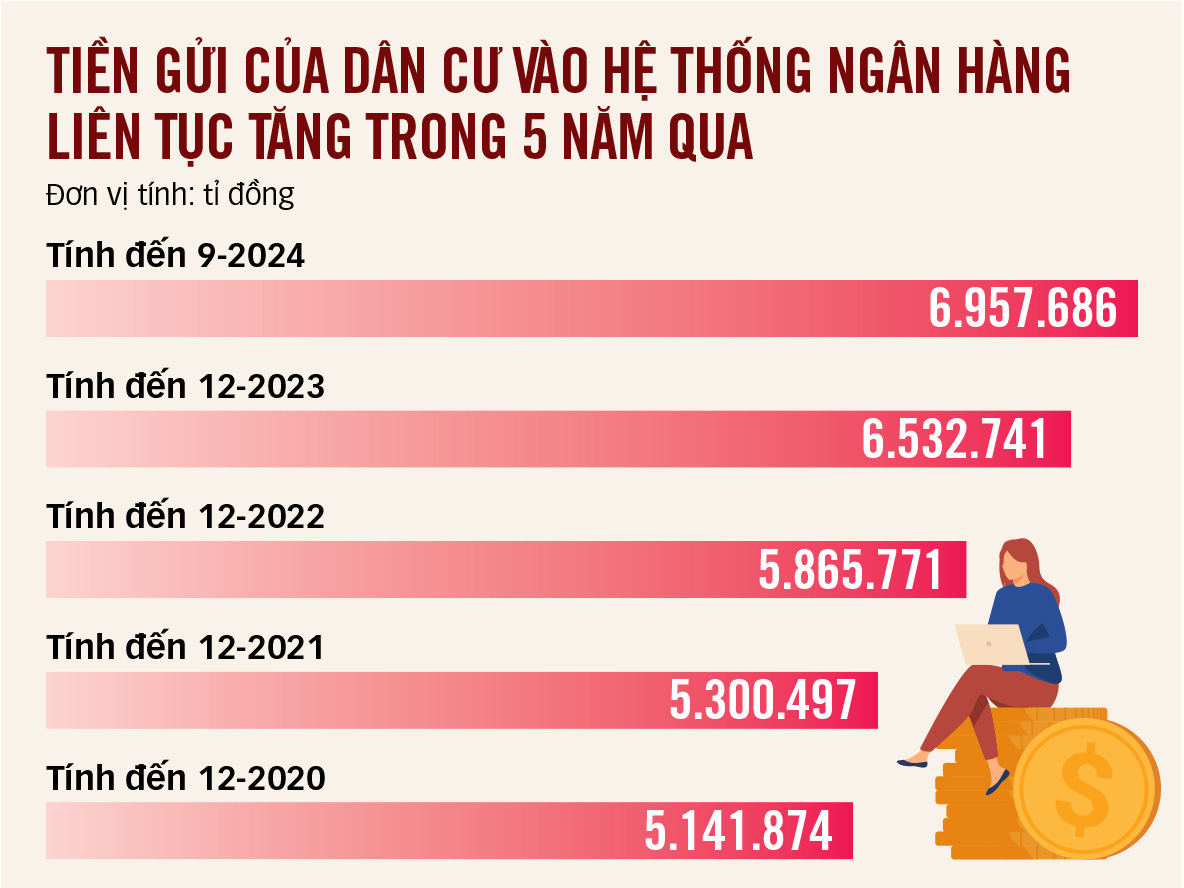
Source: State Bank of Vietnam - Data: LE THANH - Graphics: T. DAT
The private sector is highly competitive globally.
* The idea of viewing the private sector as a crucial driving force of the economy has been discussed for many years, but in reality, there is still a gap, sir?
- The issue here is that the State and the Government create the mechanisms for them to do so. The Government is moving in the right direction. On December 29, 2024, Prime Minister Pham Minh Chinh requested that we abandon the mindset of prohibiting something because we can't manage it, or managing it even when we don't know about it.
The Prime Minister also emphasized the principle that whoever manages best should be given the responsibility, and the State should not interfere in matters that citizens and businesses can handle effectively. Anything prohibited should be included in the law, while anything not prohibited should be given space for innovation.
This is not just theory, and we need to look at the current restructuring of the state apparatus as the basis for ensuring that the aforementioned principles are applied in the most rigorous and substantive way.
In the past, the implementing apparatus either did not apply or applied inadequately. However, nowadays, this principle must be applied both in theory (i.e., through laws) and in practice (i.e., through the organizational structure for implementation).
I think that in the future, there should be a mechanism in place to penalize bureaucratic enforcement agencies that fail to adhere to principles, not just individuals and businesses.
* What are some prime examples of the private sector taking a leading role, sir?
- At the recent 2nd International Defence Exhibition, there was exciting news: a Vietnamese company has begun assembling aircraft. These are the first tentative steps in exploring the aerospace industry, which has remained largely untapped until now.
That's not the only company capable of receiving technology transfer to assemble aircraft in Vietnam. We need time for assembly and then gradually strive to localize production and become self-sufficient in the supply chain.
As for smaller flying vehicles like lightweight drones, a Vietnamese company can independently manage research and development, design, and production, and has no competitors against international products in certain specific segments.
This is just one example in one industry to demonstrate the high global competitiveness of Vietnam's private sector. The fact that Vietnamese businesses have taken the first steps in exploiting space is something that has already happened. Therefore, the Prime Minister's statement that Vietnam will exploit space is not just a slogan, but a statement based on what is already happening.
We know that several businesses are in the process of receiving technology transfer, they just haven't announced it yet.
* In your opinion, what needs to be done to ensure that businesses in both the state and private sectors have equal opportunities in the economy?
- Firstly, it is essential to ensure equality between private and state-owned enterprises. This means that all must adhere to market mechanisms and have equal access to resources. State-owned enterprises should receive preferential treatment in accessing land, water resources, and capital.
For sectors related to social services such as telecommunications, infrastructure, or electricity, bidding should also be implemented.
Secondly, there's the issue of capital expenditure. State-owned enterprises often lack the autonomy and flexibility to make investment or fundraising decisions compared to private enterprises. This can lead to them missing out on market opportunities. To achieve equality between the two sectors, it's necessary to remove obstacles for both so they can compete and improve their own efficiency.
Equality in both directions, not a reduction of preferential treatment for state-owned enterprises, but rather allowing both sectors, especially the state sector, to operate closer to market economic principles.
The third, equally important factor that the Party and Government are promoting is that in areas where the private sector is performing better than state-owned enterprises, state-owned enterprises should divest their capital and step back to allow private enterprises to take over.
This means strengthening the role of private enterprises and improving the efficiency of the economy. Reducing the scale and scope of state-owned enterprises also means reducing the administrative apparatus for this sector, and consequently, streamlining the system will occur naturally.
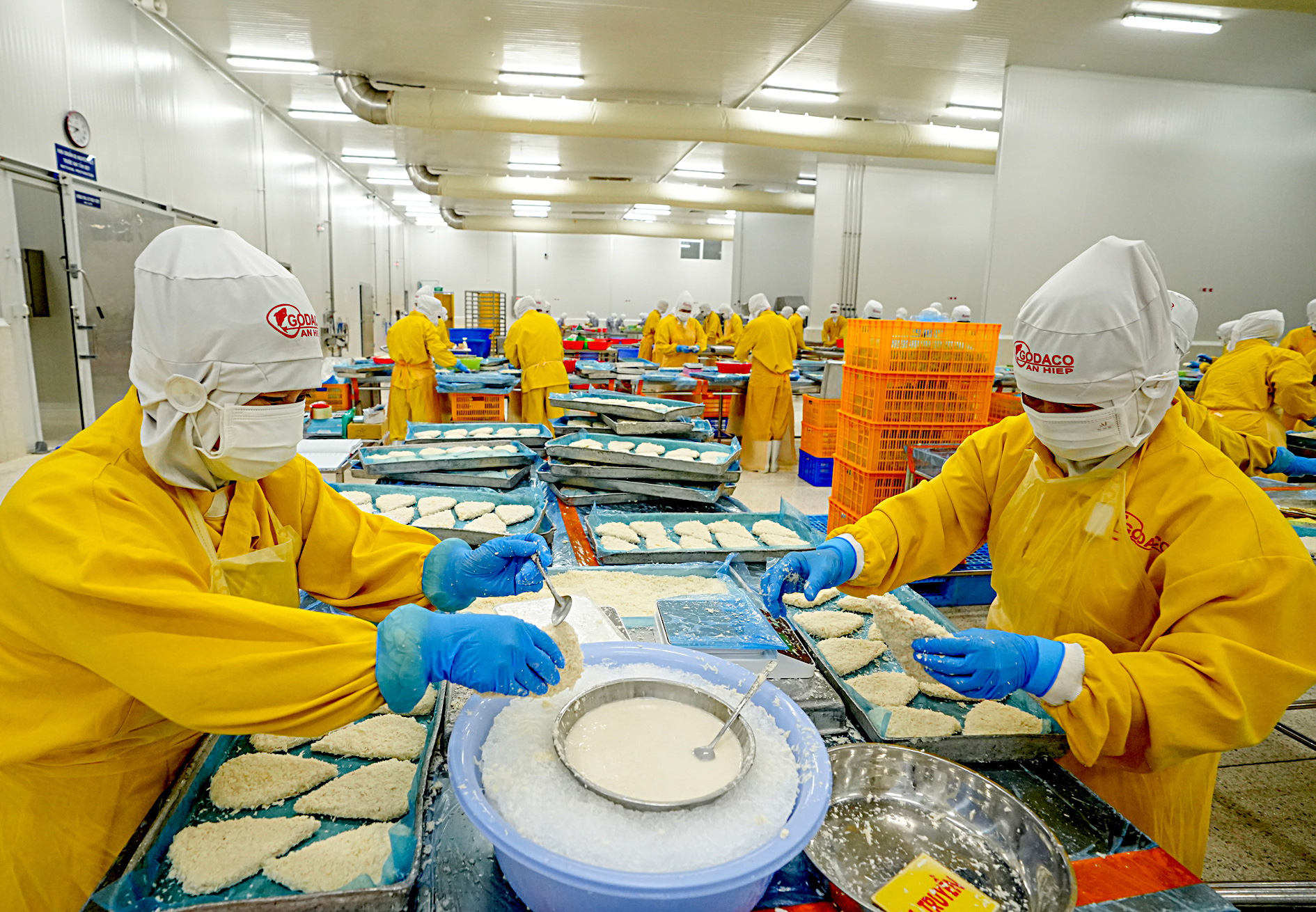
Seafood processing for export at Go Dang Joint Stock Company (Ben Tre) - Photo: Truc Phuong
* Mr. Hong Sun (Chairman of the Korean Business Association in Vietnam):
We need to focus on industrial development.
Vietnam needs to focus more on industrial development, as this is a crucial foundation for long-term growth. However, the goal should not be limited to serving the domestic market of 100 million people, but should aim for exports and building Vietnamese brands in leading global sectors.
Vietnam still lacks a prominent brand that has reached international stature. Perhaps it's time to initiate a movement for the manufacturing sector, using it as a foundation for sustainable economic development.
To realize this, human resources play a crucial role. It's not just about having a workforce of unskilled laborers, but especially about having a well-trained, highly skilled workforce. When the quality of the workforce improves, not only will private businesses participate more deeply in the global supply chain, but the workers themselves will also benefit.
With higher value, they can earn higher incomes, increase spending, and thus stimulate domestic consumption. However, this remains a difficult problem as the majority of today's workforce is diligent and intelligent but lacks the formal training to develop creative thinking.
Many people talk about achieving double-digit economic growth. This is an ideal goal, but achieving it will require overcoming many significant challenges. Nevertheless, Vietnam still has considerable development potential and can certainly aim to become an upper-middle-income country by 2030.
* Mr. Nguyen Chi Dung (Minister of Planning and Investment):
Remove bottlenecks and unlock private sector resources.
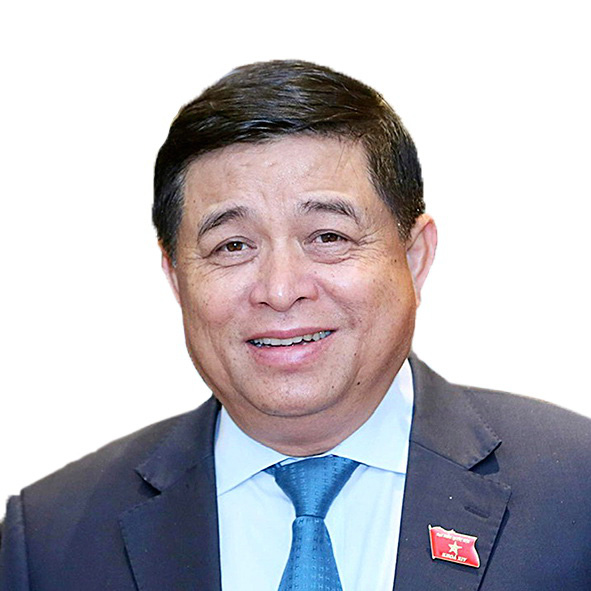
The economy still has many untapped and underutilized resources, especially private resources. Therefore, a stronger breakthrough is needed in mechanisms, policies, and laws to create a truly favorable environment to attract resources, particularly those from the people, for national development.
It is necessary to promote the development of domestic and ethnic minority enterprises; cooperative economic organizations, especially large private economic groups with strong potential and the ability to compete at the regional and international levels, leading the growth of industries, sectors, and localities.
To achieve this, it is necessary to immediately remove bottlenecks and obstacles in many state-owned and private projects to release stagnant, congested, and wasted resources. A favorable investment and business environment must be created to attract investment and develop production and business. Support must be provided for the development of large, leading enterprises and private businesses to expand globally and invest abroad.
Strengthening economic dialogue, attracting large-scale FDI projects with spillover effects, leading new economic sectors and value chains domestically, and participating more deeply in global value chains. Developing robust policies to connect businesses and foster collaborative development between domestic and FDI enterprises.
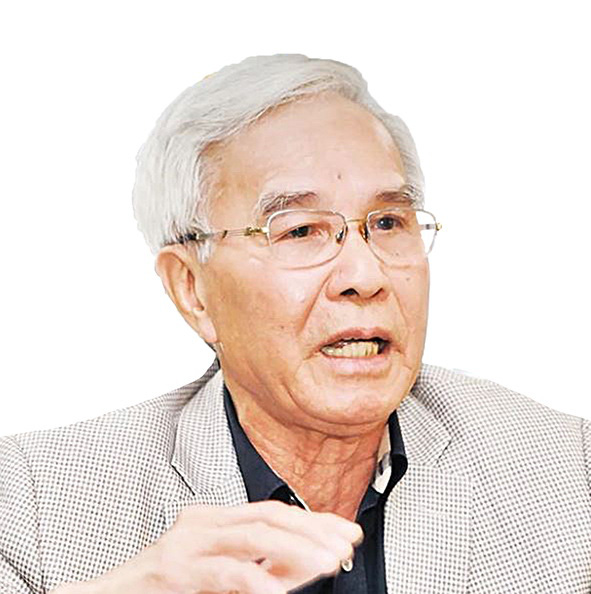
* Assoc. Prof. Dr. Tran Chung (Chairman of the Vietnam Association of Road Transport Infrastructure Investors):
Removing obstacles in PPP investment as soon as possible.
Public-private partnership projects in recent years have yielded tangible results. Therefore, mobilizing private and social resources for infrastructure development and growth promotion is crucial.
Despite the existence of the Law on Public-Private Partnership (PPP) Investment, very few PPP projects have been implemented in recent years. This indicates that the institutional framework for PPP investment is a bottleneck.
Even the PPP Law has not encouraged private investors to participate enthusiastically. When participating in PPP investment projects, private investors are always considered the "underdog," whereas the State and investors should be equal in terms of responsibilities and benefits.
Often, private investors fulfill all commitments and responsibilities in PPP contracts but still suffer losses due to bureaucratic obstacles. PPP contracts are the highest legal basis, so all parties need to fulfill their contractual obligations; only then will private investors feel secure in investing in infrastructure projects.
It can be seen that PPP investments implemented in the past have basically overcome some of the weaknesses of public investment, such as prolonged construction time and cost overruns.
However, PPP projects often require a long payback period, at least 14-15 years, and sometimes even 20-30 years. Therefore, the government must build trust with investors, helping them feel secure in investing in the projects.
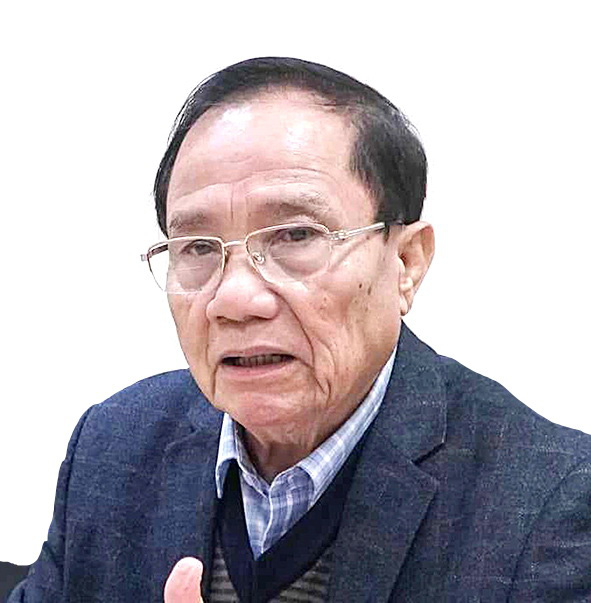
* Mr. Nguyen Van Toan (Vice President of the FDI Business Association):
Promoting cooperation between domestic enterprises and FDI enterprises.
To achieve breakthroughs in developing new industries such as semiconductors, artificial intelligence, 3D technology, and big data, the participation of leading foreign direct investment (FDI) corporations is absolutely essential. When large companies like NVIDIA, Amkor, and Hana Micron enter Vietnam, the most important question is whether domestic businesses can deeply integrate into their supply chains and production processes.
The linkage between the FDI sector and the domestic sector needs to be placed on the shoulders of large Vietnamese corporations such as FPT, Vingroup, Viettel, VNG, Sky Mavis, etc. In addition, the education and training system for high-quality human resources needs to be done well to attract high-tech FDI, thereby increasing Vietnam's benefits. Without high-quality human resources, it will be impossible to retain high-tech FDI investors.
Over the years, approximately 60-70% of FDI has been invested in the processing and manufacturing industries. This is an advantage, but we need to do better in training high-quality human resources in the future to attract and retain high-tech FDI investors for long-term investment in our country.
A positive sign in FDI investment recently is that leading technology corporations such as NVIDIA have signed cooperation agreements with domestic corporations such as FPT and Vingroup. This will open up a new trend in FDI investment.
This trend needs to be promoted by supporting domestic businesses in their collaboration with FDI corporations. This will also help domestic businesses gradually adopt advanced technologies from the FDI sector.
Source: https://tuoitre.vn/khoi-thong-nguon-luc-tu-nhan-20250101094129041.htm

![[Photo] General Secretary and President To Lam meets with National Assembly delegates from ethnic minorities.](https://vphoto.vietnam.vn/thumb/1200x675/vietnam/resource/IMAGE/2026/04/20/1776696701056_a1-bnd-8331-3342-jpg.webp)



![[Image] National Assembly discusses the implementation of the socio-economic development plan.](https://vphoto.vietnam.vn/thumb/1200x675/vietnam/resource/IMAGE/2026/04/20/1776696707422_ndo_br_img-20260420-185419-jpg.webp)



























































































Comment (0)