


The Government creates all conditions for economic sectors to develop fairly, equally and sustainably.
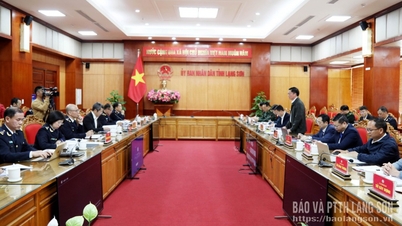
The Government Office issued Notice No. 678/TB-VPCP dated December 9, 2025, concluding the conclusion of Deputy Prime Minister Nguyen Chi Dung at the 2025 Cooperative Economic Forum.
Collective economy, cooperatives and enterprises have made great strides in both quantity and quality.
The announcement stated that institutions, mechanisms and policies have created a legal corridor to promote the development of collective economy, cooperatives, private economy, enterprises and strengthen the linkage between economic sectors, which is increasingly perfect, in accordance with the requirements and demands of practice. The Law on Cooperatives 2023 has added regulations to promote cooperatives to link with other economic sectors. The Government has also issued many legal documents specifying policies and guidelines to support cooperatives in the direction of promoting production linkages, prioritizing loans for cooperatives participating in value chains, applying high technology, and linking with green and clean agriculture .
In recent times, the collective economy, cooperatives and enterprises have made great strides in both quantity and quality: Up to now, the whole country has more than 35,000 cooperatives with nearly 6 million members; 164 cooperative unions with more than 1,000 member cooperatives; nearly 66,000 cooperative groups with more than 1 million members; at the same time, there are about 1 million operating enterprises (an increase of 20% compared to 2020); about 4,700 cooperatives have participated in value chain linkages and 2,600 cooperatives have applied high technology.
Nationwide, nearly 3,000 projects and plans for cooperation between cooperatives and enterprises in many industries and fields have been approved and implemented, with diverse forms of cooperation.
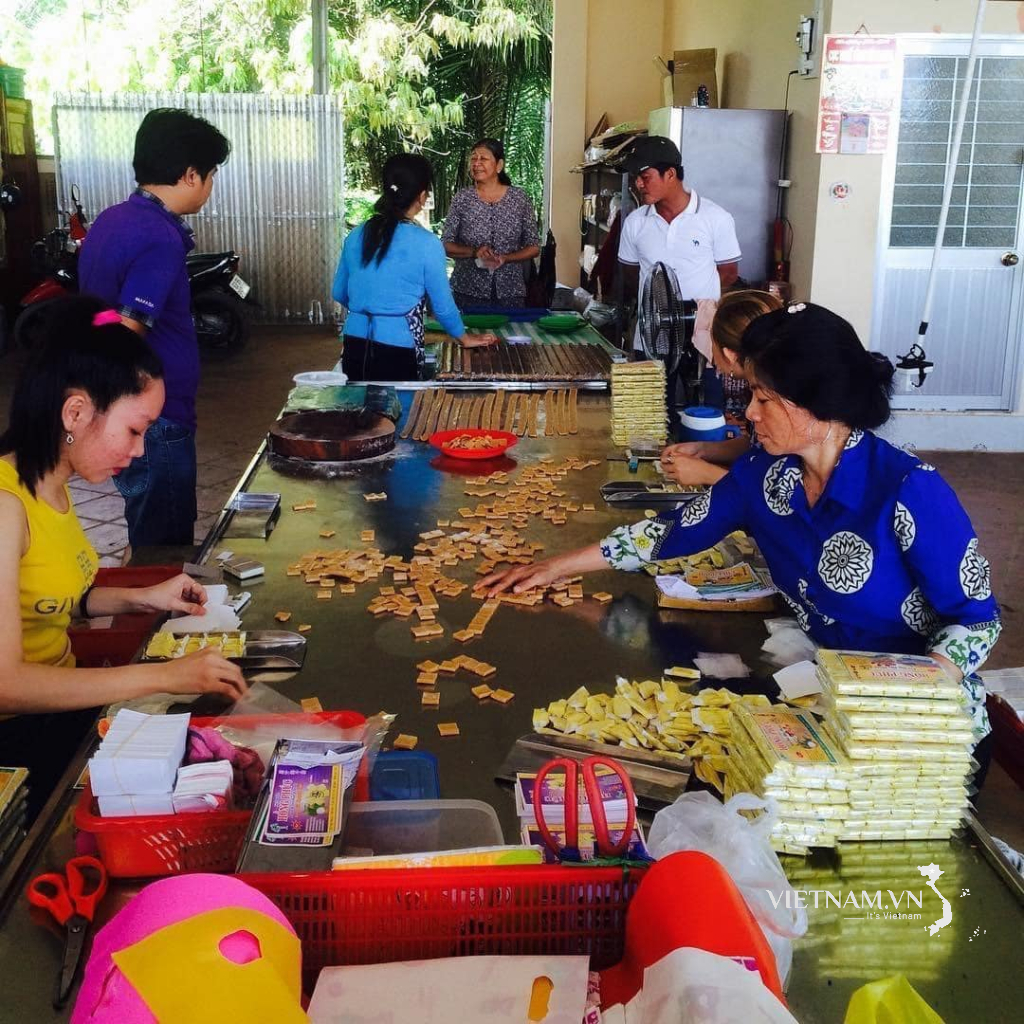
The association between enterprises and cooperatives has contributed to unlocking potentials and developing stable and sustainable markets for key national products, especially in the agricultural sector where many highly effective association models have emerged.
The projects linking cooperatives and enterprises have initially attracted and effectively used social resources. In the period of 2018 - 2025, the whole country has mobilized over 15.2 trillion VND in capital to implement projects and linkage plans, of which the state budget is nearly 3.2 trillion VND (about 21%), and counterpart capital of enterprises, cooperatives and people is about 79%.
In addition, the development of collective economy and cooperation still has some limitations, difficulties and obstacles such as: The mechanism and policies to support the linkage between cooperatives and enterprises, especially at the local level, are not yet associated with promoting green transformation, digital transformation, and application of science and technology. Currently, there are few cooperatives and enterprises participating in value chain linkage (about 2.4 thousand cooperatives and over 1.3 thousand enterprises), mainly linked in the agricultural sector, not many links in the tourism, service and industrial sectors.
Financial resources for implementing linkage support policies are still limited. The central budget has not yet allocated separate resources for developing linkages between cooperatives and enterprises, mainly integrated into other programs.
The capacity of cooperatives is still a major weakness. Most cooperatives are small in scale, with limited management and production capacity, unable to meet the requirements of value chain linkage; there is a lack of qualified staff with expertise and deep understanding of building and operating the linkage chain between cooperatives and enterprises.
Propaganda and policy guidance in implementing linkages have not received due attention. Effective linkage models have not been widely disseminated.
Strongly promote the link between cooperatives and enterprises
The Deputy Prime Minister said that in the coming time, the world and regional situation is forecast to continue to develop in a complex and unpredictable manner. In that context, the whole country is making efforts to successfully complete the two 100-year goals, including striving for growth of over 8% in 2025 and achieving double-digit growth in the following years; striving for rapid and sustainable development, overcoming the middle-income trap, and soon achieving the goal of becoming a high-income developed country by 2045.
To achieve the above strategic goals and tasks, it is necessary to establish a new growth model, restructure the economy, promote industrialization and modernization, take science and technology, innovation and digital transformation as the main driving force; in particular, it is necessary to promote and effectively use all social resources to strongly promote the linkage between cooperatives and enterprises to fill the gaps that the private economic sector or the state economy alone cannot solve and meet. This process requires the participation of the entire political system, the consensus and active participation of all classes of people, the business community, along with the help of international friends, in which the linkage between cooperatives and enterprises plays an important role, is an inevitable trend, and is strategic for the agricultural sector in the coming period.
Developing collective and cooperative economies according to green, digital, and circular models and promoting linkages with economic sectors, including enterprises, is both an objective practical requirement and a strategic solution for socio-economic development with the motto: "Creative State - Pioneering Enterprises - Cooperatives are the core - Farmers and workers are the subjects - Scientists advise and accompany - Credit institutions support - Building sustainable and effective linkages".
Increase the scale of state budget support to develop collective economy and cooperatives.
To achieve the above goal, the Deputy Prime Minister assigned the Ministry of Finance to preside over and coordinate with relevant ministries and agencies to review, amend and supplement current regulations that are no longer suitable to meet practical requirements on collective economic and cooperative development in the new context; review, amend and supplement regulations to promote rapid and strong development of the private economic sector, including specifying regulations on supporting enterprises participating in industry clusters and value chains; and develop a policy framework for developing linkage chains and value chains.
At the same time, urgently review and complete the draft Decree replacing Decree No. 57/2018/ND-CP dated April 17, 2018 on mechanisms and policies to encourage enterprises to invest in agriculture and rural areas with breakthrough policies and strong enough resources to meet practical requirements; submit to the Government in December 2025; review Decree No. 113/2024/ND-CP dated September 12, 2024 detailing a number of articles of the Law on Cooperatives to promptly amend, supplement and complete policies, and promote the effective development of cooperatives.
Continue to research and perfect policies to support businesses in accessing preferential loans from the Small and Medium Enterprise Development Fund, with priority given to businesses participating in industry clusters and value chains.
Urgently complete and submit to the Prime Minister for consideration and promulgation programs, projects and plans related to collective economic development in the period of 2026 - 2030. Research and propose appropriate mechanisms and resources, including increasing the scale of support from the state budget to synchronously and effectively implement tasks and solutions for collective economic and cooperative development in the coming time.
Immediately develop and deploy a digital transformation support program for cooperatives in 2026 to improve capacity and competitiveness, meet the requirements of linking with businesses and continue to effectively organize the Cooperative Economic Forum, becoming a regular policy dialogue channel, connecting cooperatives with businesses, scientists, financial institutions, domestic and international partners.
The Ministry of Agriculture and Environment shall preside over and coordinate with relevant ministries and agencies to urgently submit to the Government a Decree amending and supplementing a number of articles of Decree No. 98/2018/ND-CP dated July 5, 2018 on policies to encourage the development of cooperation and association in the production and consumption of agricultural products, focusing on: innovating, simplifying and clearly defining criteria, procedures, approval authority; strengthening decentralization to localities in the process of confirming and approving projects and association plans; clearly defining a mechanism for harmonious and reasonable benefit distribution and a mechanism to protect the interests of actors in the value chain; supplementing regulations to support the formation and operation of green value chains and digital value chains, associated with traceability and emission reduction, carbon credits, and quality management according to international standards; Update and supplement the list of priority contents to support the needs and practical conditions of each region.
Develop a comprehensive program on training digital farmers, professional farmers, and modern cooperative management teams, contributing to the formation of an agricultural workforce with knowledge and skills to participate in the global value chain; build a vocational training mechanism, develop a team of cooperative members and farmers with high quality and professional capacity in building and operating agricultural product linkage chains.
Create conditions for businesses and cooperatives to access green credit packages and preferential credit.
The State Bank of Vietnam is researching and developing a mechanism to facilitate businesses and cooperatives hosting chain linkage projects to access commercial credit, green credit, and preferential credit packages.
The Ministry of Science and Technology builds a program to support cooperatives in technology transfer.
The Vietnam Cooperative Alliance takes the lead in synthesizing recommendations from cooperatives, effectively promoting the role of a bridge to implement and increase access to policies for cooperatives; building specific support programs for the development of collective economy, cooperatives, forming and developing linkage chains; at the same time, building a team of cooperative management staff who are professionally trained and have knowledge of economics, finance and business. Building a team of staff of the Vietnam Cooperative Alliance with sufficient capacity to meet the requirements of performing consulting tasks and supporting cooperative development.
The Vietnam Federation of Commerce and Industry and the Association of Small and Medium Enterprises play a bridging role in promoting effective business linkages with cooperatives, forming sustainable value chains.
Provinces and cities proactively issue mechanisms and policies to support the development of links between cooperatives and enterprises, ensuring the motto "6 clear: clear people, clear work, clear responsibilities, clear authority, clear time, clear results".
For the business community, it is necessary to promote the pioneering role in implementing linkages with cooperatives, especially in forming production and supply chains, making practical contributions to the country's economic development, promoting new growth drivers (green economy, digital economy, circular economy, knowledge economy, sharing economy, etc.); pioneering in the application and transfer of new scientific and technological advances, especially in the agricultural sector.
Collective economic sectors and cooperatives must promote the spirit of initiative, creativity, self-reliance, improve management and production capacity, expand cooperation with other economic sectors, especially with enterprises; increase learning and exchange of domestic and international experiences, and constantly strive to participate more deeply in the value chain.
The Deputy Prime Minister affirmed: Vietnam is entering a new era, an era of developing a rich, prosperous, civilized and happy country, with the spirit of sharing and cooperation as the foundation for building an autonomous, self-reliant and self-reliant economy, associated with deep, substantial and effective international integration. In that process, it is necessary to consider cooperatives as equal business partners, promoting the link between cooperatives and enterprises is not only an economic solution, but also a driving force to improve people's lives, stabilize society, and develop a sustainable socio-economic development; there needs to be a longer-term, more strategic vision, and more decisive actions so that economic sectors do not operate separately, but join forces, develop quickly and sustainably, converging into a combined strength to take the country far in the new era. The Government always encourages and creates all favorable conditions for economic sectors to develop fairly, equally and sustainably.
Phuong Nhi
Source: https://baochinhphu.vn/phat-trien-kinh-te-tap-the-hop-tac-xa-theo-mo-hinh-xanh-so-tuan-hoan-102251209112307714.htm
![[Photo] Explore the US Navy's USS Robert Smalls warship](/_next/image?url=https%3A%2F%2Fvphoto.vietnam.vn%2Fthumb%2F1200x675%2Fvietnam%2Fresource%2FIMAGE%2F2025%2F12%2F10%2F1765341533272_11212121-8303-jpg.webp&w=3840&q=75)






























![[Video] The craft of making Dong Ho folk paintings has been inscribed by UNESCO on the List of Crafts in Need of Urgent Safeguarding.](https://vphoto.vietnam.vn/thumb/402x226/vietnam/resource/IMAGE/2025/12/10/1765350246533_tranh-dong-ho-734-jpg.webp)





























































Comment (0)