

The impact of "telling" numbers
The period 2021-2025 marks a significant breakthrough for the system of universities and colleges under the Ministry of Industry and Trade , as Vietnam enters a phase of "accelerated" human resource development for strategic technology sectors such as nuclear power, semiconductor chips, automation, and new energy. Under the impact of a series of major policies from the Party, the State, and the Ministry of Industry and Trade, training institutions have undergone relatively comprehensive changes, with many figures showing strong growth in scale, quality, and innovation.
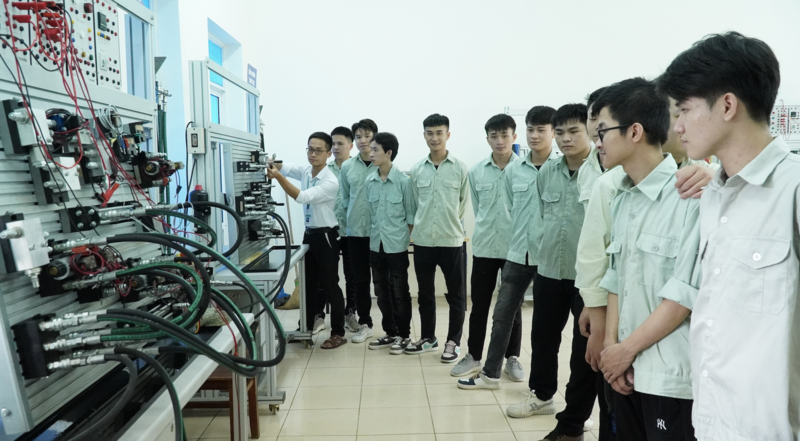
Training institutions under the Ministry of Industry and Trade are developing many high-tech fields of study.
First, the scale of training has steadily increased, reflecting the growing appeal of technical and technological schools. The percentage of university students has increased by an average of about 6% each year, creating a foundation for expanding the supply of high-quality human resources for key industries. In the past five years, universities have launched 134 new training programs, including those in modern technology and engineering fields, contributing to enrollment and expanding the scale of university education. This plays a decisive role in enabling Vietnam to participate more deeply in the global supply chain in the future.
Regarding staffing, universities have recorded significant progress in both quantity and quality. By 2025, the entire system will have 10,156 staff and lecturers, a 9% increase compared to 2021. The percentage of lecturers with postgraduate qualifications has steadily increased; many universities have met or exceeded the standards for the percentage of master's and doctoral degree holders as stipulated. The number of associate professors has increased, contributing to the formation of a leading expert force in key fields.
One of the most outstanding highlights of this period was the strong breakthrough in scientific research. This was a crucial foundation for the training institutions under the Ministry of Industry and Trade to gradually become a force providing knowledge, technology, and expertise for the country's strategic industries.
Financially, the period from 2021 to 2025 witnessed significant resource growth. As many universities transitioned to financial autonomy, their ability to mobilize and utilize resources became more flexible, allowing for investment in laboratories, high-tech workshops, simulation centers, etc., to serve new engineering fields.
However, to fully meet the new requirements, the training system still faces many challenges. The student-to-faculty ratio in some schools remains high, young lecturers lack practical experience in high-tech fields, and the gap between large universities and local universities in terms of resources and the ability to attract talented personnel is still quite significant. This requires a more rational human resource allocation policy, increased international cooperation, and continued promotion of financial autonomy so that universities have the resources to invest in technology, laboratories, and improve the capacity of their staff.
Challenges of the new phase
Entering a new phase, the demand for developing high-quality human resources for strategic sectors, from new energy and the green economy to semiconductors and AI, is placing the system of universities and colleges under the Ministry of Industry and Trade before a more important task than ever before.
This reality necessitates profound reforms in training programs, organizational models, and training methods by educational institutions, in order to produce a workforce that meets the skill standards of the future industry.
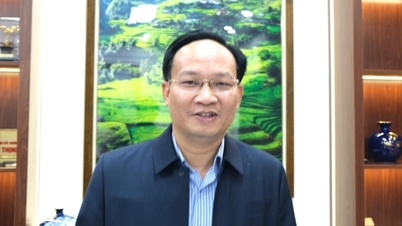
According to Nguyen Van Hoi, Director of the Institute for Strategic and Policy Research in Industry and Trade, human resource development is identified as one of the three key breakthroughs from now until 2030. This means that training institutions in the industry and trade sector must not only expand their scale but also restructure their programs towards interdisciplinary approaches, integrating digital technology, AI, green transformation, and sustainable development – areas that are shaping the workforce in the next decade.
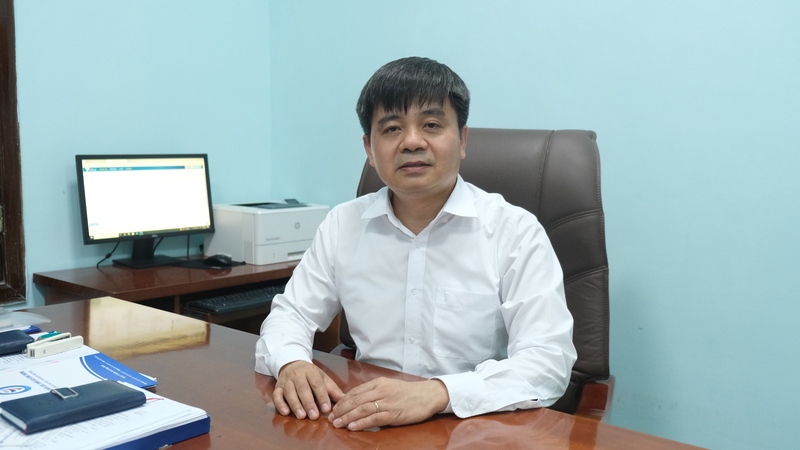
Director of the Institute for Strategic Research and Policy in Industry and Trade, Nguyen Van Hoi
Based on this foundation, universities will continue to develop new fields such as semiconductor engineering, integrated circuit design, clean energy engineering, storage technology, smart grids, emissions testing, digital logistics, and e-commerce… These are all areas experiencing a shortage of skilled personnel and are expected to become key growth sectors of the Vietnamese economy.
To meet this demand, the training model of universities is shifting strongly towards an interdisciplinary approach and closer ties with businesses. Practical programs in laboratories, high-tech simulation workshops, real-world projects, and long-term internships at businesses are designed to create a seamless connection between the university and the labor market. The deep involvement of businesses in curriculum development and learning outcome evaluation not only improves the quality of training but also ensures that graduates meet the specific needs of the industry.
Alongside this, digital transformation in education is being accelerated across the entire system, from digitizing curricula and lectures, virtual simulations to online learning combined with practical application. This makes learning more flexible, especially for high-tech fields that are rapidly changing. The application of artificial intelligence in training management and personalizing learning experiences is also being piloted in many schools.
Looking back at the 2021-2025 period, it is clear that the entire system has built a solid foundation to enter the next phase of accelerated growth. All are working towards a common goal: preparing a strong workforce for strategic sectors such as nuclear power, semiconductors, green energy, digital transformation, and manufacturing. The next phase is expected to be a time when training institutions under the Ministry of Industry and Trade will make significant breakthroughs, directly contributing to the development of Vietnam's industry and energy in the new era, an era of national progress.
Source: https://congthuong.vn/khoi-truong-bo-cong-thuong-tao-nguon-nhan-luc-cho-cac-nganh-mui-nhon-435489.html


![[Image] Central Party Office summarizes work in 2025](/_next/image?url=https%3A%2F%2Fvphoto.vietnam.vn%2Fthumb%2F1200x675%2Fvietnam%2Fresource%2FIMAGE%2F2025%2F12%2F18%2F1766065572073_vptw-hoi-nghi-tong-ket-89-1204-jpg.webp&w=3840&q=75)







































































Comment (0)