

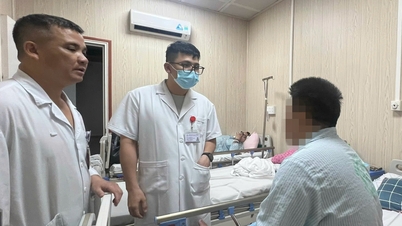
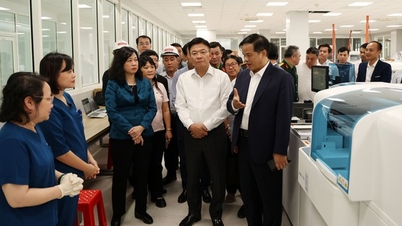
On the morning of August 15th, a food safety inspection team led by the Department of Health conducted inspections at several businesses operating collective kitchens in Yen Khanh district.
The delegation inspected two businesses: ADM 21 Vietnam Co., Ltd. (Khanh Phu Industrial Park), which has a canteen providing meals for 120 workers, and Excel Vietnam Garment Co., Ltd. (Yen Ninh Town Industrial Cluster), which regularly serves meals to over 1,400 workers.
The inspection team checked compliance with State regulations on food safety, including: administrative and legal documents of the establishment such as: Business registration certificate/Decision on establishing a collective canteen or similar documents, Food safety certificate (for establishments required to have one), health certificate, Food safety training certificate for the owner and for those directly involved in food processing and serving... Simultaneously, they inspected the physical facilities, equipment and utensils; personal hygiene practices of staff directly involved in food processing and serving; food processing, preservation and transportation procedures; the three-step food inspection process, food sample retention at the establishment and record keeping as required; and the origin, source, and quality of food, food additives, raw materials used in food processing, and water sources used in food processing.
Through on-site inspections and discussions with business leaders, the inspection team assessed that the businesses possessed all relevant documents as required by the Food Safety Law; met all food safety requirements regarding facilities, equipment, tools, and personnel. Food products had contracts with suppliers (with complete legal records, invoices, and daily food delivery receipts). Packaged food had complete labels and was within its expiration date. The businesses implemented a three-step food inspection process and retained food samples as required...
However, the delegation also pointed out some issues that need attention and need to be addressed by businesses, such as: maintaining hygiene in food processing areas; ensuring hygiene of facilities, equipment and tools, and personal hygiene practices of direct food processors; controlling processing times and implementing appropriate preservation methods for different types of food...
Through inspections and assessments of compliance with food safety regulations at businesses operating collective kitchens and providing ready-made meals (collectively referred to as establishments), violations of food safety regulations will be promptly detected, prevented, and handled; and processing and business activities at these establishments will be rectified to ensure compliance with the law.
Through inspections, shortcomings in management are identified and addressed, contributing to improved effectiveness and efficiency in state management of food safety. Simultaneously, the inspection process combines effective dissemination and education of knowledge and laws on food safety, helping to ensure the legitimate rights and interests of workers.
Text and photos: Hanh Chi
Source





































































Comment (0)