


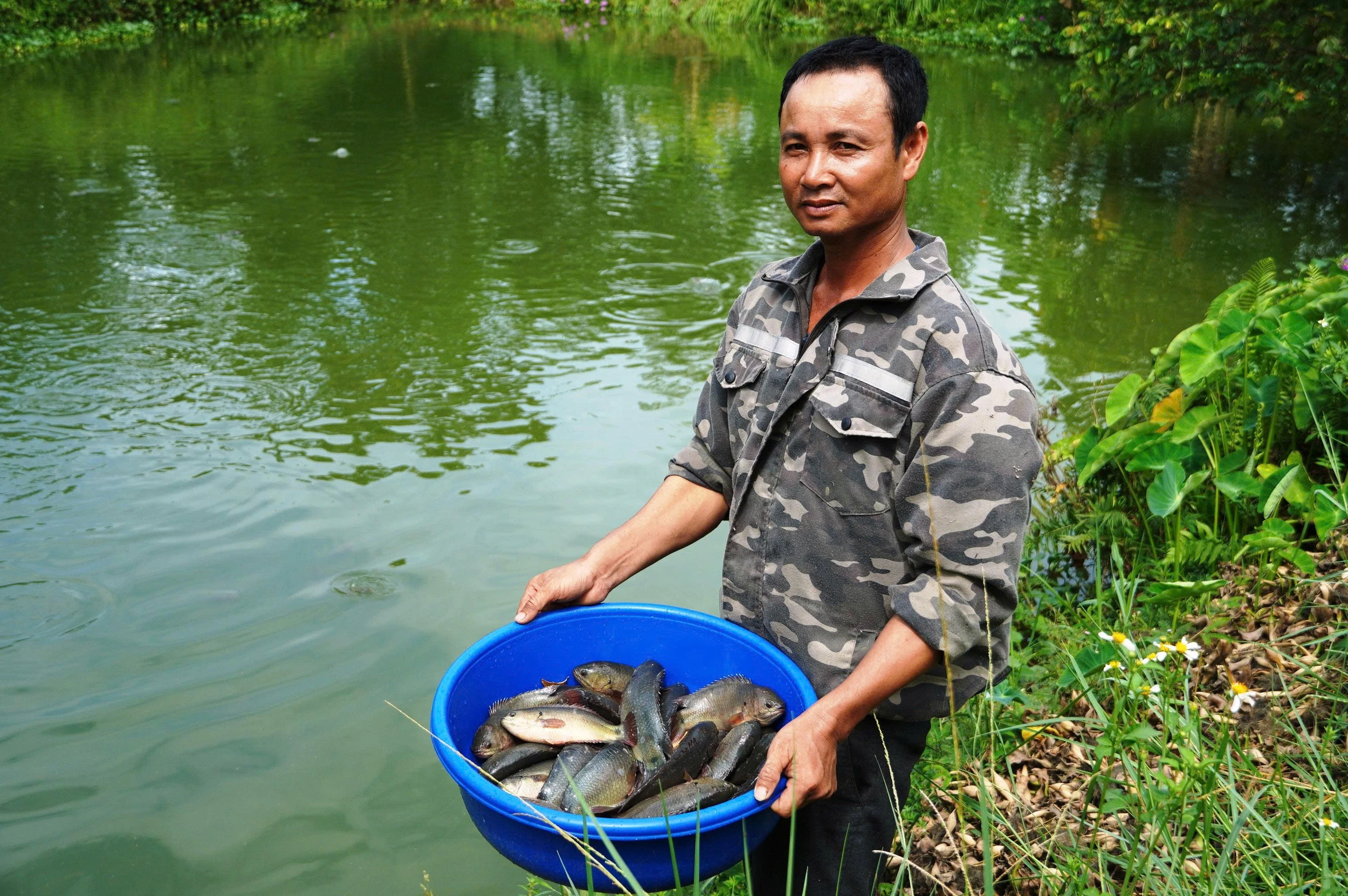
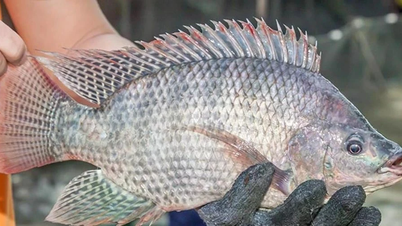
Raising snakehead fish, a new model with high economic efficiency. - Photo: TH
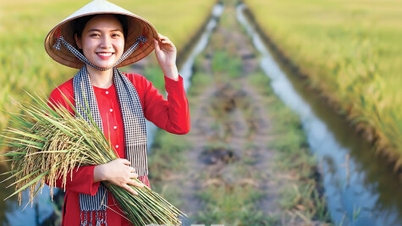
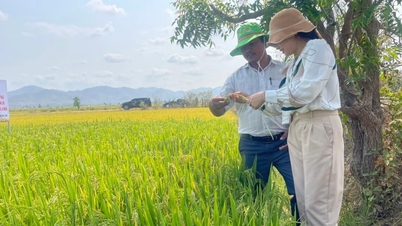
Transform barren fields into lush green rice paddies.
In previous years, the sight of large areas of rice paddies left fallow was not uncommon in Hoan Lao commune. Due to rising production costs, labor shortages, and the impact of climate change, many farmers have abandoned their fields.
Like many other young men in the village, after finishing school, Phan Van Hien went to the South to work as a laborer, and then to Malaysia to work. Although he tried many different jobs, his life was still not prosperous. Returning to his hometown, on the purely agricultural land inherited from his ancestors, he decided to start his own business.
Mr. Hien shared: "Agriculture is a very hard and risky profession due to unfavorable weather conditions. We were born and raised in the countryside, surrounded by rice paddies, so when we saw abandoned fields, I felt heartbroken and thought we needed to do something for our homeland. To prevent the fields from being left fallow, my wife and I contacted families to rent their land and cultivate rice, rebuilding agricultural practices in a new way."
To date, his family has been renting rice fields for nearly four years, cultivating about 4 hectares per season, sometimes up to 5-6 hectares during the summer-autumn season. Since renting the land from local households, his family has also purchased machinery and introduced mechanization into agricultural production to both reduce labor and production costs, and improve product quality.
According to Mr. Hien, farming is very hard and laborious, requiring a lot of effort in preparing the land, sowing seedlings, and transplanting, which takes up to a month, keeping them constantly busy in the fields. But now, with the same area, he and his wife only need 3-4 days to sow the seeds.
After half a month, they hired more people to focus on thinning, caring for, and controlling pests and diseases. When the rice ripened, they hired machines to harvest it; within two days, the rice was neatly packed into bags, saving a lot of production costs and increasing income.
In 2024, the rice crop was bountiful and prices were good, so I earned nearly 30 million VND in profit per hectare. This year, the winter-spring crop was favorable, but due to unseasonal rains in the summer-autumn crop, we had to replant the entire area. Despite the risks posed by the weather, our family still doesn't let the fields fallow; we are determined to get rich on our homeland's soil.
Besides the rice and fish farming model, his family also raises 500 pigeons, 30 pigs, and 300 chickens, ducks, geese, and turkeys. Notably, every year around the seventh lunar month, he also releases nearly 1,000 free-range ducks into the fields. Each year, after deducting expenses, his family earns over 200 million VND. |
Investing in raising snakehead fish.
Besides the lush green rice fields, on his family's 2,500 m² of ponds, Mr. Hien boldly invested in raising snakehead fish. This is an easy-to-raise fish species with good resistance to disease, a fast growth rate, and importantly, a stable market with consistently high selling prices.
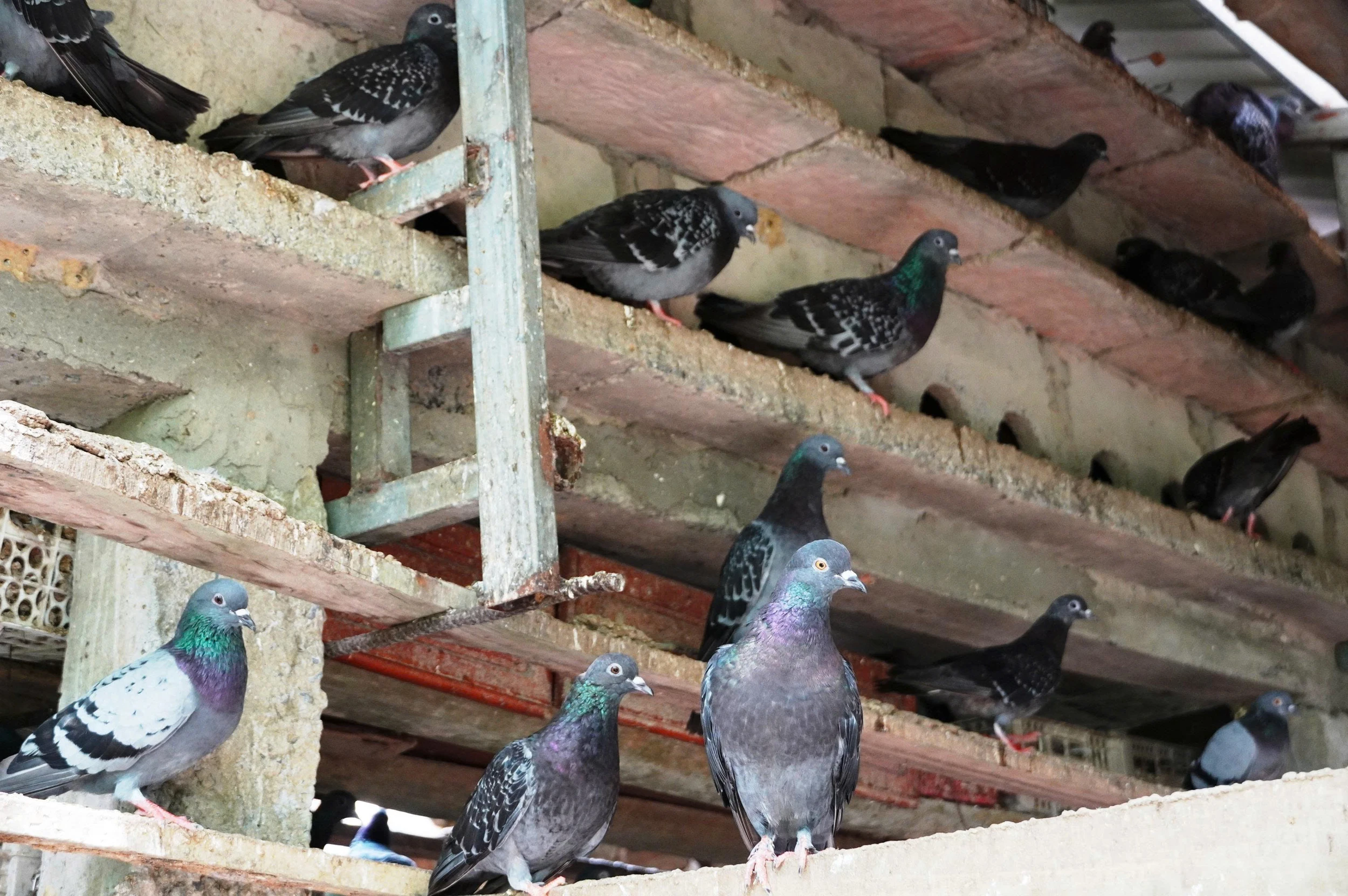
The pigeon farming model of Mr. Phan Van Hien's family. - Photo: TH
Mr. Hien said: "During the farming process, the most important steps are pond preparation and selecting the right fry. The pond must be dredged, lime powder sprinkled to neutralize acidity and eliminate unwanted organisms, and the bottom dried for 7-10 days before filling with water. The fry must be selected from reputable sources, healthy, and of uniform size to ensure a high survival rate. In the first year, due to lack of experience, I bought fry of unknown origin, and many fish died. But now, I have found a source of fry with a clear origin and guaranteed safety, so I have been successful in every farming season."
To reduce costs, in addition to commercial feed, Mr. Hien also utilizes readily available agricultural by-products such as rice bran and cornmeal to supplement the fish's diet. Notably, he also researched and learned how to raise calcium worms (black soldier fly larvae) to feed his fish and chickens. According to Mr. Hien, raising calcium worms is quite simple; all you need are leftover food and scraps from family meals, beer residue, soybean residue, distiller's grains, etc., to raise these worms.
The life cycle of the calcium worm lasts only about 45 days and is divided into stages: egg, larva, pupa, and adult fly. By the 30th day, the worms are harvested to be used as feed for chickens and fish, and the harvesting period lasts about 15 days.
By day 45, the larvae hatch into black soldier flies, which mate and lay eggs to begin a new cycle. Throughout the entire growth process, the larval stage is the most efficient because it has a high nutritional content, helping livestock develop healthily, reducing disease rates, lowering feed costs, and increasing profits for farmers.
During the process of raising snakehead fish, he always focused on managing the water environment, regularly changing the water and applying biological disease prevention measures. In particular, he researched and learned how to ferment garlic with biological preparations to prevent diseases in both fish and livestock, replacing antibiotics.
Thanks to the application of proper technical procedures, with 2,500 m² of ponds, each harvest yields over 3 tons of commercial fish. With selling prices ranging from 45,000-55,000 VND/kg, after deducting all expenses, his family earns nearly 100 million VND in profit from the fish farming.
According to Nguyen Van Hai, Vice Chairman of the Hoan Lao Commune People's Committee: "Mr. Phan Van Hien is a shining example of diligence, hard work, and a willingness to think outside the box and be creative in production. His efforts have contributed to opening up a new perspective on economic development for local people and serve as a role model for many farmers to learn from."
In the coming period, we will continue to promote, encourage, and create conditions to prevent people from leaving farmland fallow, and expand the model of raising calcium-rich worms as feed for livestock, thereby helping farmers reduce production costs, increase income, and stabilize their lives.
Thanh Hoa
Source: https://baoquangtri.vn/lam-giau-tu-dong-dat-que-huong-195654.htm
























































Comment (0)