

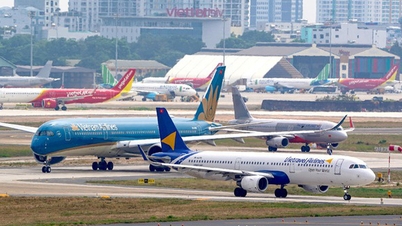
This information caused a public outcry, not only because of the extremely low rankings – Tan Son Nhat ranked 248th out of 250, Noi Bai 242nd – but also because it completely contradicted the spirit of reform being promoted: an administrative apparatus closer to the people, serving the people better, and leading the country into a new stage of development.
According to AirHelp, the ranking is calculated based on three main criteria: on-time performance (60%), customer service quality (20%), and dining and shopping experience (20%). While it's impossible to claim that these results completely reflect every aspect objectively, it must be acknowledged that there are still clear "bottlenecks" in the passenger experience, from flight delays and cumbersome procedures to services that don't meet expectations.
We experienced this ourselves. Not long ago, on June 15th, we flew from Bangkok to Ho Chi Minh City on flight VN606. The plane was delayed and landed at Tan Son Nhat airport at almost 9 PM. The immigration area was packed, with both manual and automated counters full of people. I switched to queuing at the automated immigration area, but it took me almost 10 minutes to realize that passports without chips had to queue in a separate lane, register at the automated machine, and then proceed with immigration procedures. I thought it would be faster, but to my surprise, I had to queue for a long time at this area for a single machine; in many cases, I had to go through the process multiple times, and if I failed after several attempts, then security personnel would assist me.
After completing the check-in process, I had to rejoin the queue, behind countless other people. Everyone was inching forward little by little. It wasn't until I was near the customs gate that I understood the reason. Some passengers had scanned their passports or boarding passes, but the system didn't recognize them, and the gates wouldn't open automatically. This went on repeatedly until, in desperation, an employee finally came to assist. As a result, my flight, which was only about 1 hour and 30 minutes, took almost 2 hours to complete, and I didn't leave the airport until nearly 11 PM – an unnecessarily exhausting experience.
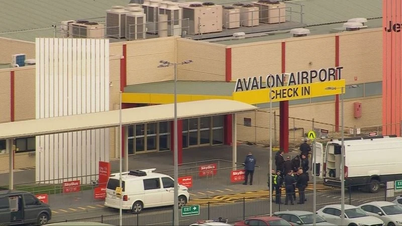
Less than a week later, my family returned to Ho Chi Minh City from Melbourne (Australia) on flight JQ63, landing at 3:40 PM, but didn't leave the airport until 5:35 PM, meaning they wasted nearly two hours at the airport just to complete immigration procedures. This situation cannot be considered an isolated incident and is even more unacceptable in a country striving to modernize its infrastructure, comprehensively reform its administration, accelerate development, and promote international integration.
The question here is, why do we allow immigration procedures to drag on for so long? Last year, when I traveled to South Korea, I was very impressed at Incheon Airport with the flexible and dedicated staff who helped passengers complete the procedures as quickly as possible.
Therefore, it's not surprising that Tan Son Nhat's shortcomings – from cumbersome immigration procedures and flight delays to expensive food and beverage services and a lack of amenities – have seriously damaged its reputation in the eyes of both international and domestic passengers. While the ranking results are disappointing, they serve as a wake-up call and an opportunity for the aviation industry to reflect and undertake comprehensive reforms.
It must be affirmed that Vietnam spares no expense in investing in the aviation industry, especially Noi Bai and Tan Son Nhat airports, as these are the nation's gateways. Therefore, the issue is not a lack of investment capital, but rather in the implementation and operation, where the principle of "passenger service is paramount" must be prioritized. We cannot allow situations like "crowded but few counters," "malfunctioning equipment with no support," or "high-end service but unprofessional conduct" to occur in the digital age.
For example, Tan Son Nhat Airport should open more check-in counters and increase staffing to proactively assist customers and alleviate congestion. After Terminal 3 became operational, passenger traffic was dispersed, so a rearrangement between domestic and international terminals is necessary. In particular, a software system for surveying customer satisfaction across all services should be quickly implemented to serve as a benchmark for the aviation industry, allowing for timely adjustments to address shortcomings – similar to what advanced airports worldwide have been doing.
If things don't change soon, disappointing rankings like the recent ones will keep repeating themselves, not because someone "misjudged" us, but because we've missed the opportunity to "look in the mirror" and correct ourselves.
Source: https://www.sggp.org.vn/lang-nghe-de-hoan-thien-post806155.html


![[Photo] General Secretary and President To Lam presides over the meeting to approve the draft report on the results of the second inspection by the Politburo of the Standing Committee of the Hanoi City Party Committee.](https://vphoto.vietnam.vn/thumb/1200x675/vietnam/resource/IMAGE/2026/05/26/1779789811432_a2-bnd-4430-9620-jpg.webp)






















































































Comment (0)