

Tet (Lunar New Year) is a "golden season" because it's when craftspeople earn higher incomes than at other times of the year. Therefore, the working atmosphere in craft villages throughout the city becomes more vibrant and bustling than ever before.
Speed up production
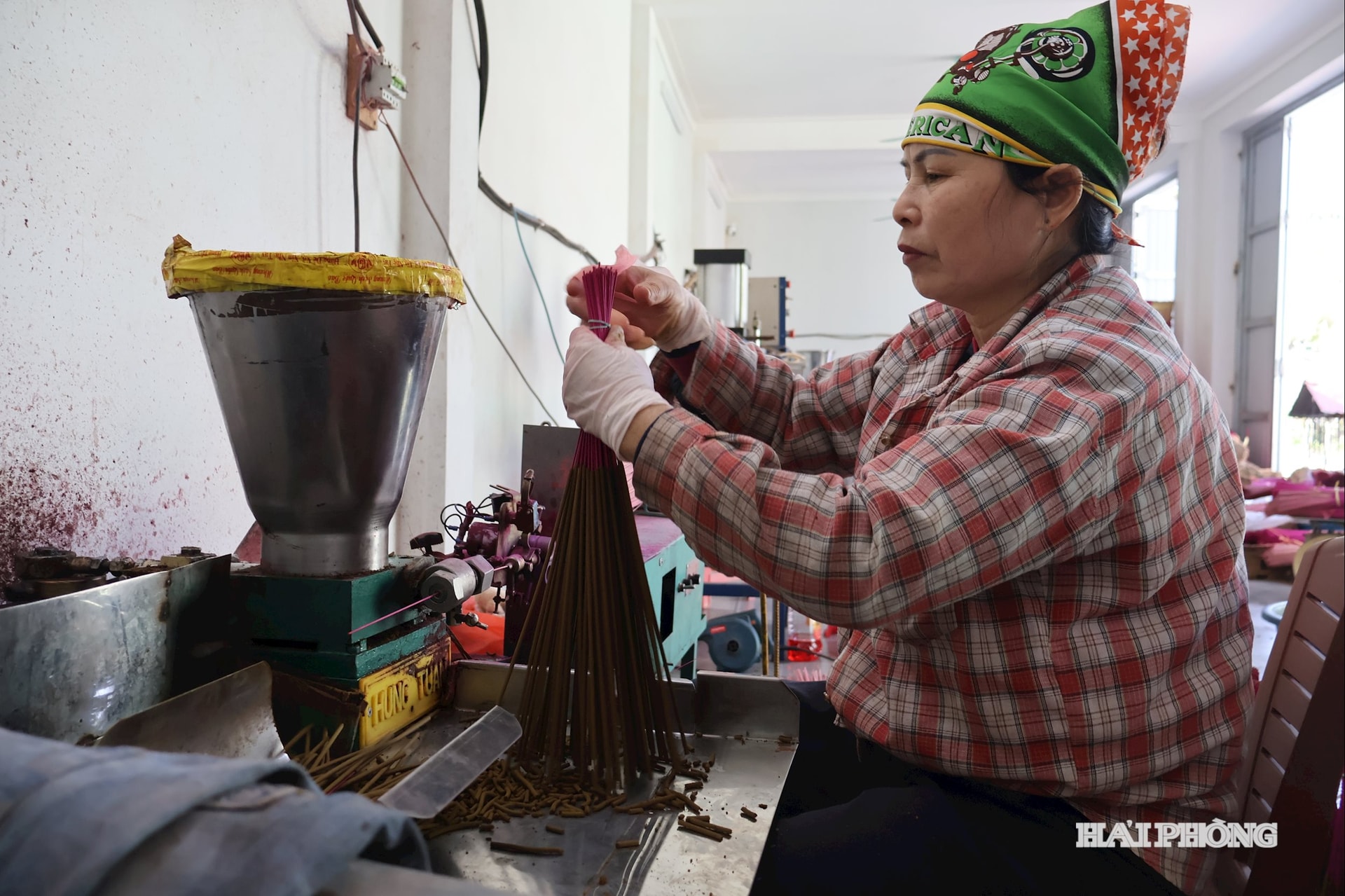
In An Xa village (Tran Phu commune), the traditional incense-making craft is entering its peak season. All incense production facilities are operating at full capacity. The scent of agarwood, sandalwood, and various herbs blends in the air, permeating the entire village.
These days, the family members of Mr. Tran Dinh Quoc, the owner of an incense production facility, along with his workers, are working at full capacity. To ensure a steady supply of raw materials, Mr. Quoc had planned and purchased all the necessary incense powders, agarwood, and herbs months in advance. “We work year-round, but Tet (Lunar New Year) is the busiest time. Orders increase significantly, so we often have to work overtime to meet customer deadlines. Orders for the Year of the Horse (2016) increased by about 60% compared to last year. Along with 4 regular workers, I had to hire 5-6 seasonal workers to ensure the work progressed smoothly,” Mr. Quoc said.
It's not just Quoc's family; all incense-making households in Tran Phu commune are pouring all their resources into production. From small-scale households to large-scale production facilities, everyone is making the most of every day and every hour to fulfill orders.
A bustling atmosphere is also unfolding in Hoang Dieu leather shoe-making village (Gia Phuc commune). This is one of the large-scale craft villages, operating year-round with nearly 300 leather shoe-making establishments employing 15 to over 30 regular workers, and about 200 smaller establishments. The village provides employment for approximately 4,500 local workers. In the final days of the year, orders from wholesale markets and retailers nationwide surge, forcing households to mobilize maximum manpower, work overtime, and extend working hours. In some places, workers work from early morning until late at night to meet delivery deadlines.
Each year, the Hoang Dieu Leather Shoe Cooperative supplies approximately 300,000 pairs of shoes to the market. During the peak period for Tet (Lunar New Year), from October to December, production increases by about 20% compared to the rest of the year. The cooperative provides stable employment for over 30 workers with an average income of approximately 10 million VND per person per month.
Traditional craft villages producing wooden furniture, religious artifacts, and decorative items for worship and home decoration during Tet (Lunar New Year) are also bustling with activity. During this time, products such as decorative vases, flower pots, and traditional religious items from the Dong Giao woodworking village (Cam Giang commune) are in high demand. According to the craftspeople, the number of orders at the end of the year increases by about 50-60% compared to the middle months of the year. Most woodworking workshops have to mobilize maximum manpower and organize work in shifts to ensure timely delivery.
Innovation and quality improvement
In recent years, craft villages in the city have focused on improving product quality, innovating designs, and meeting consumer tastes. Many establishments have boldly invested in machinery, improved production processes, and built brands associated with the "One Commune One Product (OCOP)" program.
In 2024, Mr. Tran Dinh Quoc, the owner of an incense production facility, invested over 200 million VND in various machinery and equipment for production. Besides traditional products such as incense sticks, dipped incense, and twisted incense, his facility has also developed many new product lines, including special products like Tet incense sticks with a length of 70-80 cm, which can burn for 8-12 hours instead of 30-40 minutes like traditional incense. Furthermore, the facility has invested in product design and packaging with elegant boxes and bags suitable for gifts. In addition to direct sales, Mr. Quoc's facility actively promotes its products on social media and is now present on several e-commerce platforms such as Shopee and TikTok Shop.
According to Mr. Nguyen Van Ben, Vice Chairman of the People's Committee of Tran Phu commune, there are currently about 60 households making incense in the commune. The craft village not only contributes to preserving traditional cultural beauty but also creates jobs for many laborers during the off-season, with an average income of 6-15 million VND per person per month. To date, 9 incense products from households in the commune have been recognized as OCOP products. Mr. Ben said: “The local government always encourages and supports production facilities to participate in the OCOP program, and at the same time creates conditions for households to access industrial promotion funds to invest in equipment and machinery, improving productivity and product quality.”
According to the Department of Agriculture and Environment, the city currently has 78 recognized craft villages, mainly concentrated in the processing and preservation of agricultural, forestry, and aquatic products; handicraft production; woodworking, rattan and bamboo weaving, ceramics, textiles, small-scale machinery; ornamental plants, etc. These craft villages not only make a significant contribution to economic growth but also help create jobs and increase income for rural workers.
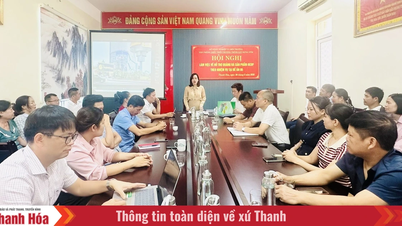
Last November, the Vietnam Handicraft Village Association, in collaboration with the Department of Innovation, Green Transformation and Industrial Promotion ( Ministry of Industry and Trade ) and the Hai Phong Department of Industry and Trade, organized a workshop on "Consulting on the application of digital technology to online business in rural industrial establishments." Speaking at the workshop, Mr. Nguyen Quoc Huy, Head of the Industrial Management Department of the Hai Phong Department of Industry and Trade, stated: "For handicraft villages to develop sustainably in the current market context..." In an increasingly competitive market, the application of digital technology is an inevitable trend. Digital transformation helps craft villages expand their distribution channels, directly reach consumers, and simultaneously improve management efficiency and reduce intermediary costs. This is a crucial direction to enhance the competitiveness of craft village products in the new era.”
HOANG QUANSource: https://baohaiphong.vn/lang-nghe-tat-bat-vao-vu-tet-532509.html
![[Photo] The courage of new recruits of Brigade 144 on the training ground.](https://vphoto.vietnam.vn/thumb/1200x675/vietnam/resource/IMAGE/2026/05/27/1779881651341_anh-man-hinh-2026-05-27-luc-18-32-52.png)


![[Photo] The heat at the fireworks display site on the opening night of the Da Nang International Fireworks Festival 2026](https://vphoto.vietnam.vn/thumb/1200x675/vietnam/resource/IMAGE/2026/05/27/1779889741485_ndo_br_z7872039145157-fecaba5112f39e8352544099d7ef4738-5140-jpg.webp)















































![[Photo] The courage of new recruits of Brigade 144 on the training ground.](https://vphoto.vietnam.vn/thumb/402x226/vietnam/resource/IMAGE/2026/05/27/1779881651341_anh-man-hinh-2026-05-27-luc-18-32-52.png)























Comment (0)