

To have a clean blood supply...
We arrived at the Blood Transfusion Department (Provincial Hematology and Blood Transfusion Center) early one Saturday afternoon, just as the department had received over 500 units of blood from a voluntary blood donation drive at a university in the province. In a room less than 25 square meters , machines were operating continuously to test and screen each unit of blood for pathogens, selecting only safe blood products.
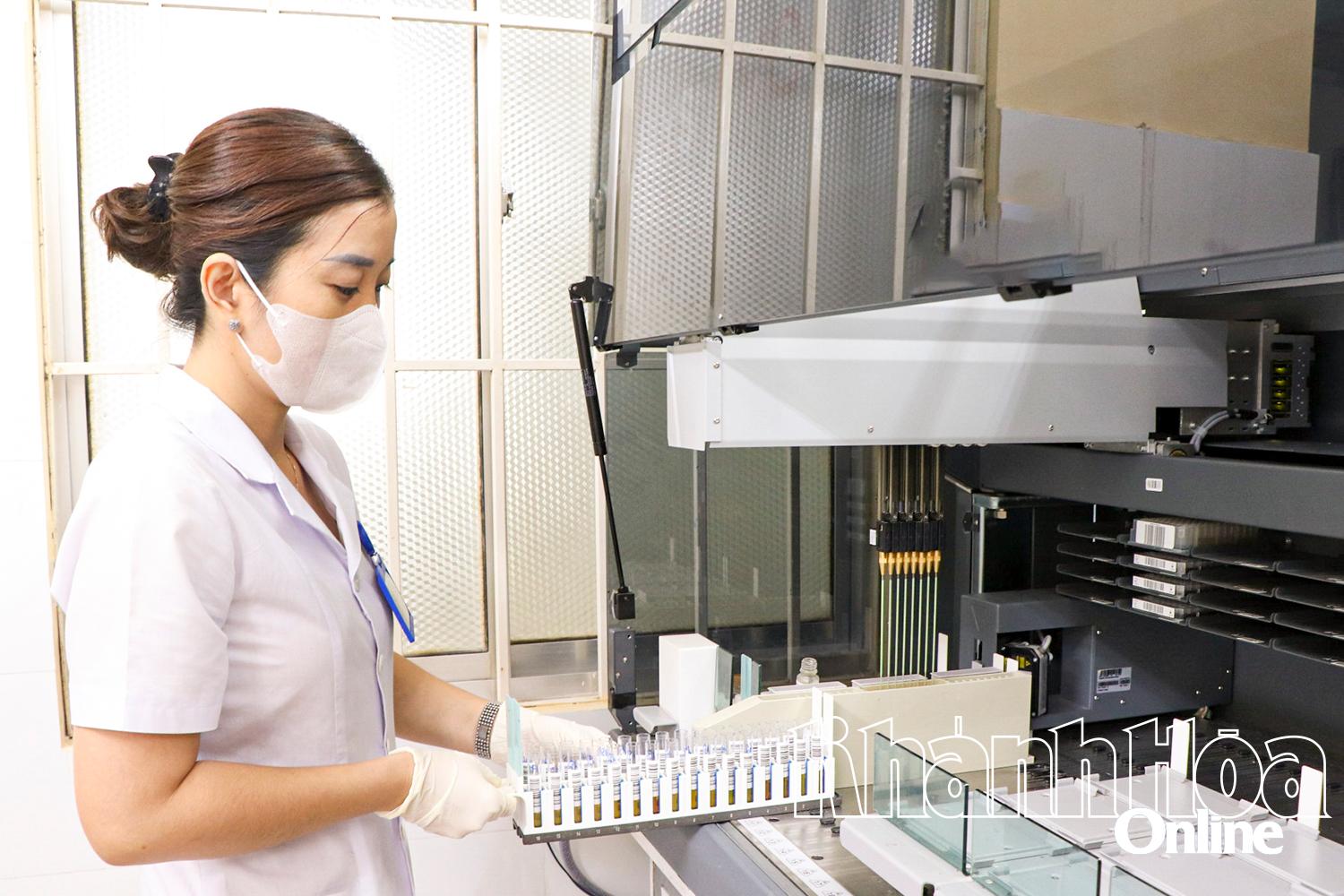 |
| Staff at the Provincial Hematology and Blood Transfusion Center prepare for the testing and screening of donated blood units. |
Carefully placing each blood sample into a tray for testing, Ms. Luong Thi Kim Chi, a graduate in the field, explained that to ensure a safe blood supply at the center's blood bank, all stages from receiving and screening to preserving blood must be strictly followed. The initial blood samples undergo rapid testing, but this is only a necessary condition for people to donate blood. After receiving the blood, it must undergo further screening through serological and molecular biological tests to check for genetic diseases such as Hepatitis B, HIV, Hepatitis C, syphilis, and malaria. Any blood units testing positive for these diseases must be isolated and destroyed according to the regulations of the Ministry of Health . Typically, the percentage of contaminated blood is about 3%. Therefore, this is a crucial step in determining the safety of the blood before supplying it to medical facilities for transfusions.
In the adjacent room, approximately 30 square meters in size, several specialized cabinets are neatly arranged, including: a cabinet for unscreened blood stored at 4.4°C; a cabinet for storing O blood group plasma at -27.9°C; and a cabinet for AB blood group plasma at -25°C… Here, five staff members of the department are busy performing the extraction, processing, and preservation of blood. Blood samples that have passed quality tests are placed into a refrigerated centrifuge by two staff members. At the next table, one staff member separates the packed red blood cells and plasma; another department handles the sorting of the products after extraction and places them into specialized cabinets for each type.
According to Mr. Vo Song Khanh, Deputy Head of the Blood Transfusion Department, after testing and screening, blood preservation plays a crucial role in ensuring the quality of the blood supply. The maximum storage time for blood is 42 days. Therefore, blood stored in specialized refrigerators displays parameters for staff to monitor daily. “The prerequisite for blood preservation is strict adherence to temperature control. If the temperature fluctuates, the quality of the blood will decrease, affecting the health of the recipient… Therefore, monitoring the temperature in blood storage refrigerators is extremely important to both ensure blood quality and avoid wasting precious donated blood units,” Mr. Khanh said.
At 7 PM, work finally finished, everyone was exhausted, shaking off the stress to head home. Quickly changing her clothes to go to her parents' house to pick up her child, graduate Dong Thi Toan said: “After receiving blood donations in the community this morning, the center's members divided their lunch time among themselves to get straight to screening and classifying the blood. My child was with my mother all day, so now I'm going home to pick her up.”
Ready to donate blood to save lives.
Around 10 a.m. one day in mid-June, while we were sitting in the blood distribution room with Bachelor of Science Ngo Thanh Luc, a request for a unit of platelet concentrate came from the emergency room of the Provincial General Hospital. Upon receiving the request, Bachelor of Science Ngo Thanh Luc quickly reported to his superiors and then called the person in charge of platelet donation volunteers to encourage them to donate platelets for the emergency case. Only when the volunteer replied that they would arrive in 30 minutes did Mr. Luc's expression relax. “If the volunteer can't arrive in time or in an emergency, we are always ready to donate blood. I am one of the people who regularly participate in donating platelets for emergency cases. To date, I have donated more than 50 times,” Mr. Luc shared. Compared to blood donation, platelet donation requires higher standards, and the time it takes to collect blood to produce platelets is almost five times longer.
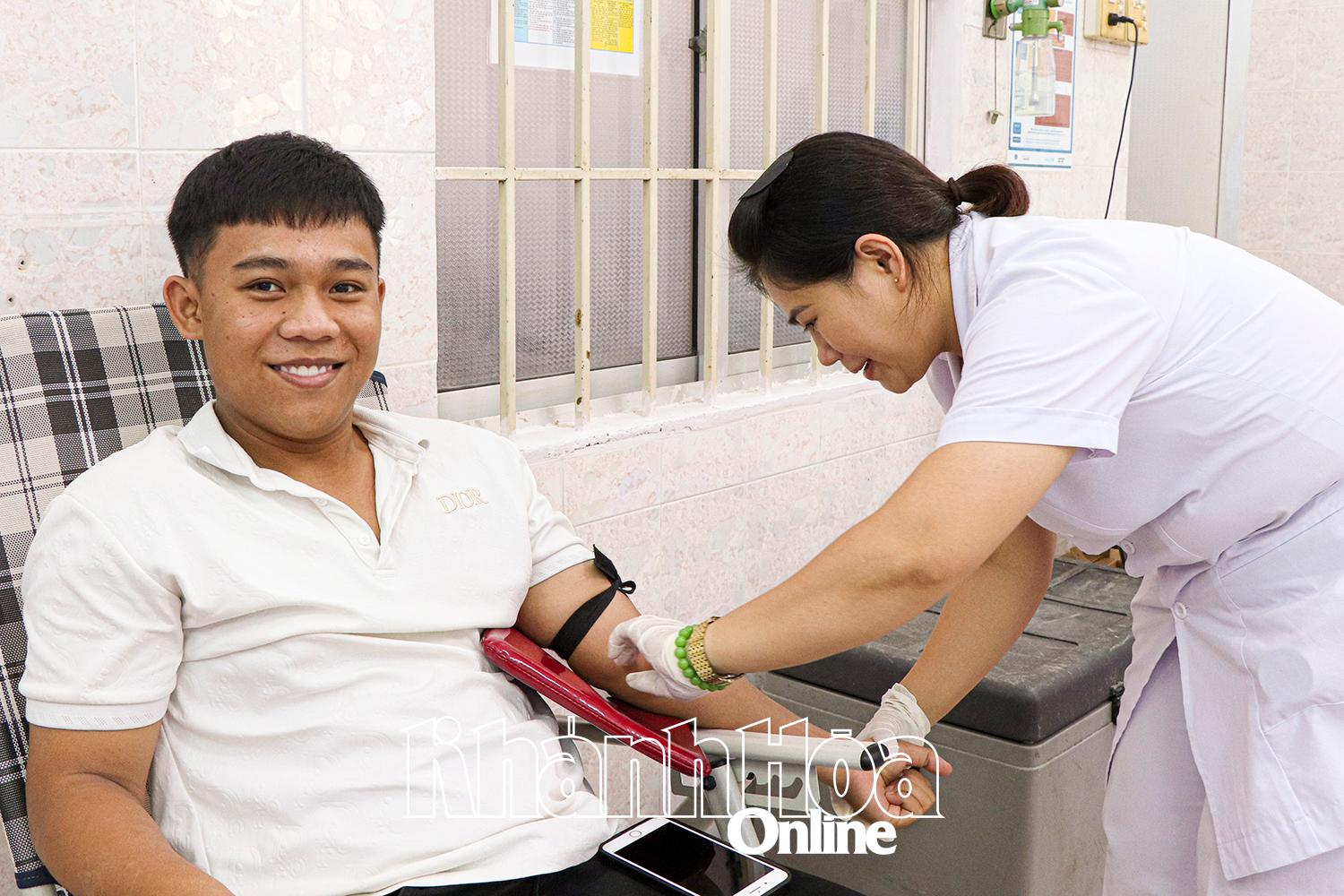 |
| Staff from the Provincial Hematology and Blood Transfusion Center collect blood donations from volunteers. |
Recalling his first emergency blood donation in 2006 to save a pregnant woman with blood type O, graduate Vo Song Khanh still vividly remembers the feeling of saving a life from the brink of death. “The pregnant woman was bleeding profusely and needed 6 units of blood. At that time, the hospital's blood reserves were insufficient due to other emergency cases. Family members with the same blood type had donated, but there was still a shortage. Therefore, I and an obstetrician urgently donated blood to save the patient from critical condition,” Khanh shared. It was from that emergency blood donation that Khanh realized the crucial role of blood storage, especially in emergency situations. Therefore, in 2009, when the Provincial Hematology and Blood Transfusion Center was established, Khanh transferred to work there.
As those directly responsible for storing and saving lives, the staff at the Provincial Hematology and Blood Transfusion Center understand the preciousness of donated blood better than anyone else. They silently and readily donate blood to save lives. Currently, the center has 30 staff members, most of whom have participated in blood and platelet donation, with the most frequent donor having donated over 50 times.
A stable foundation is needed for operation.
The Provincial Hematology and Blood Transfusion Center is a public service unit under the Department of Health , temporarily allocated a facility on the first floor of Block E at the Provincial General Hospital, with an area of nearly 200m², to carry out its activities. In its first year of operation, the center's target for receiving blood was 7,000 units/year; this has now increased to an average of 25,000 units/year. However, the facilities are old and gradually deteriorating, failing to meet the necessary conditions and space for operation.
In July 2024, the center was temporarily allocated a facility at 16 Hong Bang Street (Nha Trang City) by the Provincial People's Committee and the Department of Health to serve as a centralized blood donation center. This provided the center with an additional facility for regular blood donation. In early 2025, the center received approval from the Department of Health for 91 specialized hematology and blood transfusion techniques and was granted a license to operate medical examination and treatment services. Following this license, the center began providing free screening for hematological diseases to the public. Currently, the center is collaborating with the Social Insurance Agency of Region XXIV to finalize procedures and implement outpatient examination, treatment, and management of hematological diseases (thalassemia, iron deficiency anemia, and other hematological disorders).
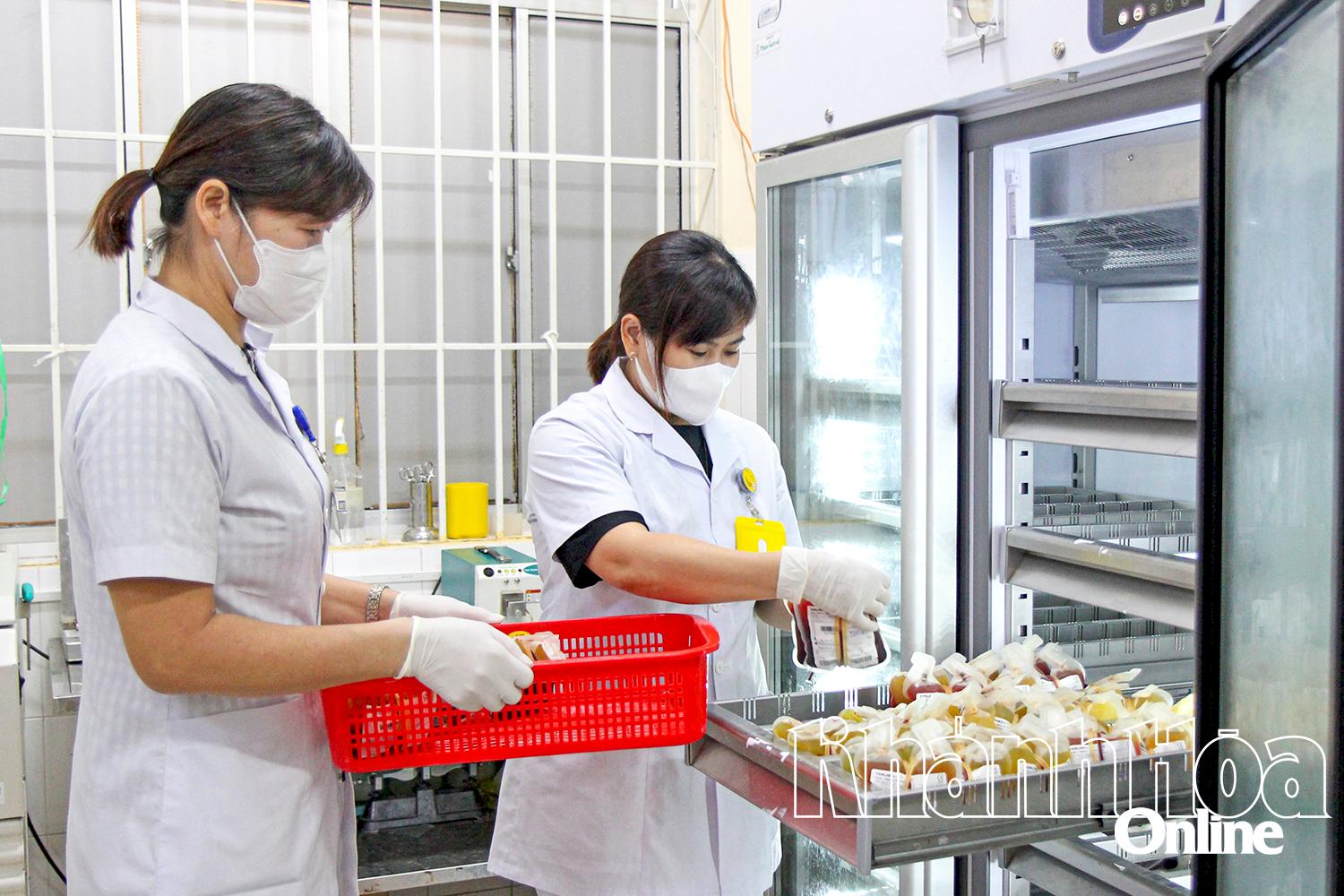 |
| Store blood and blood products in specialized refrigerators. |
According to the development plan for the Provincial General Hospital to become a regional hospital, and with the merger of Ninh Thuan and Khanh Hoa provinces into the new Khanh Hoa province, the demand for blood and blood products will increase significantly in the coming years (approximately 32,700 units of blood/year). Furthermore, based on the results of monitoring and evaluating the capacity of hematology and blood transfusion centers nationwide, the Provincial Hematology and Blood Transfusion Center is being developed by the National Institute of Hematology and Blood Transfusion into a regional hematology and blood transfusion center for the Central Coastal region.
According to the Ministry of Health's guidelines, blood and blood products are considered a "special medicine" because they are unique biological products that cannot be artificially produced and must be obtained directly from blood donors. Therefore, blood needs to be collected, screened, produced, extracted, stored, and preserved strictly according to a continuous process; the quality of blood and blood products needs to be tightly controlled according to the GMP quality system. Although the center receives significant attention and support from the Provincial General Hospital, its area of less than 200m² is insufficient for professional development; it lacks the space to invest in cold storage for large quantities of blood and blood products. As a result, the blood at the center is mainly stored in specialized refrigerators with a maximum capacity of no more than 1,500 units. This leads to the risk of blood shortages during peak periods. Meanwhile, the facility at 16 Hong Bang Street, temporarily assigned to the center by the Provincial People's Committee, lacks legal basis, making investment, repair, and maintenance difficult. Mr. Nguyen Duy Long, Deputy Director in charge of the Provincial Hematology and Blood Transfusion Center, stated: “In the context of streamlining the political system, merging communes and provinces to implement a two-tiered local government, the Provincial Hematology and Blood Transfusion Center has reported to the Department of Health to submit a request to the competent authority for consideration and assignment of the center's official facility for stability and development. The center hopes to receive investment in infrastructure soon; to build a screening and testing system, a production system, and a cold storage system for storing and preserving large quantities of blood and blood products, in order to ensure sufficient supply for medical facilities to carry out emergency care and treatment of patients.”
LY DUNG
Source: https://baokhanhhoa.vn/phong-su/202506/lang-tham-luu-giu-su-song-6371b27/


Comment (0)