

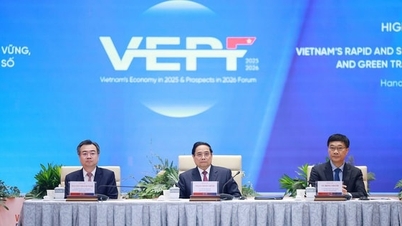
This was also the overarching message at the thematic session "Promoting green transformation and developing a circular economy to realize high growth and sustainable development goals," held on December 16th within the framework of the Vietnam Economic Forum 2025, outlook 2026.
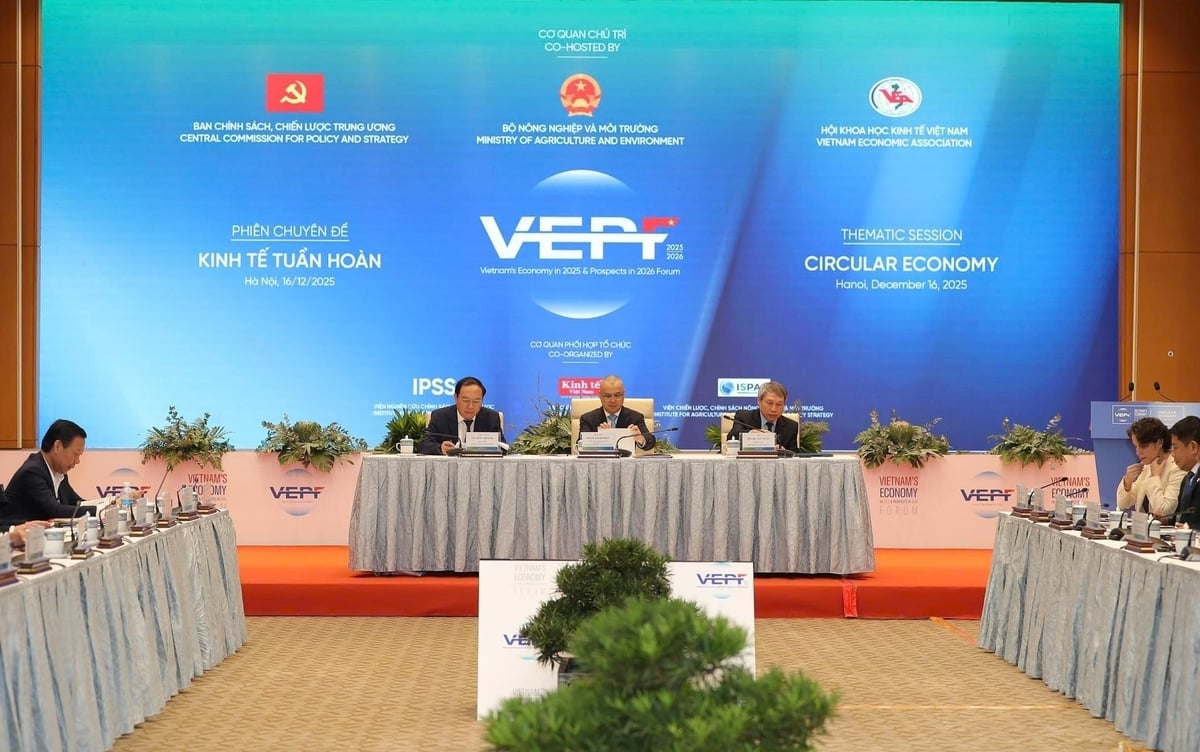
The thematic session "Promoting green transformation and developing a circular economy to realize high growth and sustainable development goals" took place within the framework of the Vietnam Economic Forum 2025, outlook 2026. Photo: Viet Dung.
The path to breakthrough growth.
According to Mr. Pham Dai Duong, Deputy Head of the Central Policy and Strategy Committee, the Vietnamese economy faces the requirement to create a breakthrough in reforming its growth model to realize the 100-year strategic goals set by the Party. Accordingly, by 2030 Vietnam strives to become a developing country with modern industry and high middle income, and by 2045 to become a developed country with high income. To achieve these goals, economic growth in the period 2026-2030 and subsequent years needs to reach double digits.
The new growth model not only focuses on speed but also ensures sustainability, comprehensiveness, and inclusiveness; emphasizing the quality, efficiency, and long-term competitiveness of the economy. This model is shaped by the synchronized implementation of four revolutionary transformations: digital transformation; green transformation; energy transformation; and structural and quality transformation of human resources.
In this context, digital transformation creates speed and intelligence, overcoming physical limitations, enhancing labor productivity, and forming high-value-added digital economic sectors. Green transformation creates sustainability and humanistic values, ensuring environmental protection, social welfare, and avoiding the trade-off between long-term future gains and short-term growth. These two processes do not exist separately but are closely intertwined and blended together in a "dual transformation."
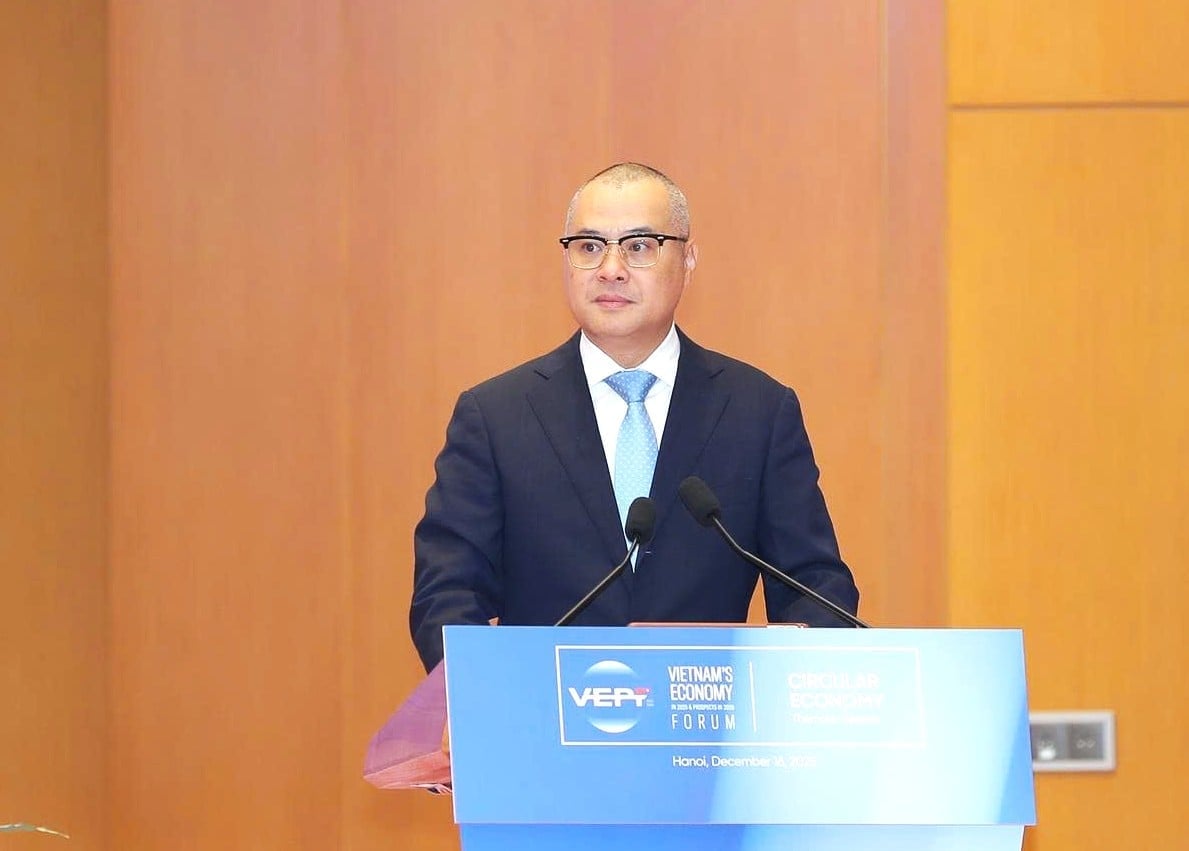
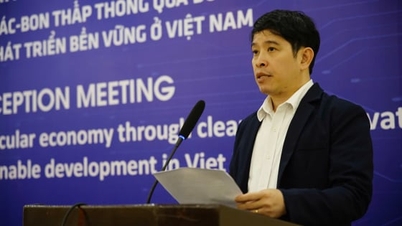
Mr. Pham Dai Duong, Deputy Head of the Central Policy and Strategy Committee, emphasized that the economic growth target for the period 2026-2030 and subsequent years needs to reach double digits. Photo: Viet Dung.
Mr. Pham Dai Duong emphasized: Circular economy, as a driving force of green transformation in the digital age, is closely linked to the development of science and technology , innovation, and digital transformation. It is identified as a strategic pillar of the new growth model, a strategic "key" for Vietnam to seize opportunities to break through and rise.
The circular economy allows for the utilization of materials before they are destroyed, extending their lifespan, recycling, or reusing them for other purposes. As a result, the value of materials is maintained for longer in the economy, opening up high value-added recycling, eco-industry, and renewable energy sectors. This approach not only helps reduce input costs but also attracts high-quality green capital, creating new development opportunities and contributing to sustained rapid yet sustainable growth.
Removing institutional bottlenecks and unlocking resources for green transformation.
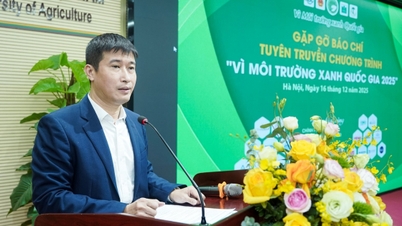
From a state management perspective, Deputy Minister of Agriculture and Environment Le Cong Thanh stated that correct policy directions have initially yielded positive results. The trend of greening production and consumption is spreading, becoming an important driving force for the green transformation of the economy. In agriculture, traditional production models are gradually shifting towards ecological agriculture, reducing emissions; many businesses and cooperatives have applied high technology to control pollution, improve productivity and the quality of agricultural products.
However, the green transition process in Vietnam still faces many challenges. Old production and farming practices remain prevalent; the adoption rate of international sustainability standards is still low. The current green investment structure is unbalanced, mainly concentrated in energy and agriculture, while other important areas such as waste management, biodiversity conservation, and transitional industries still lack resources.
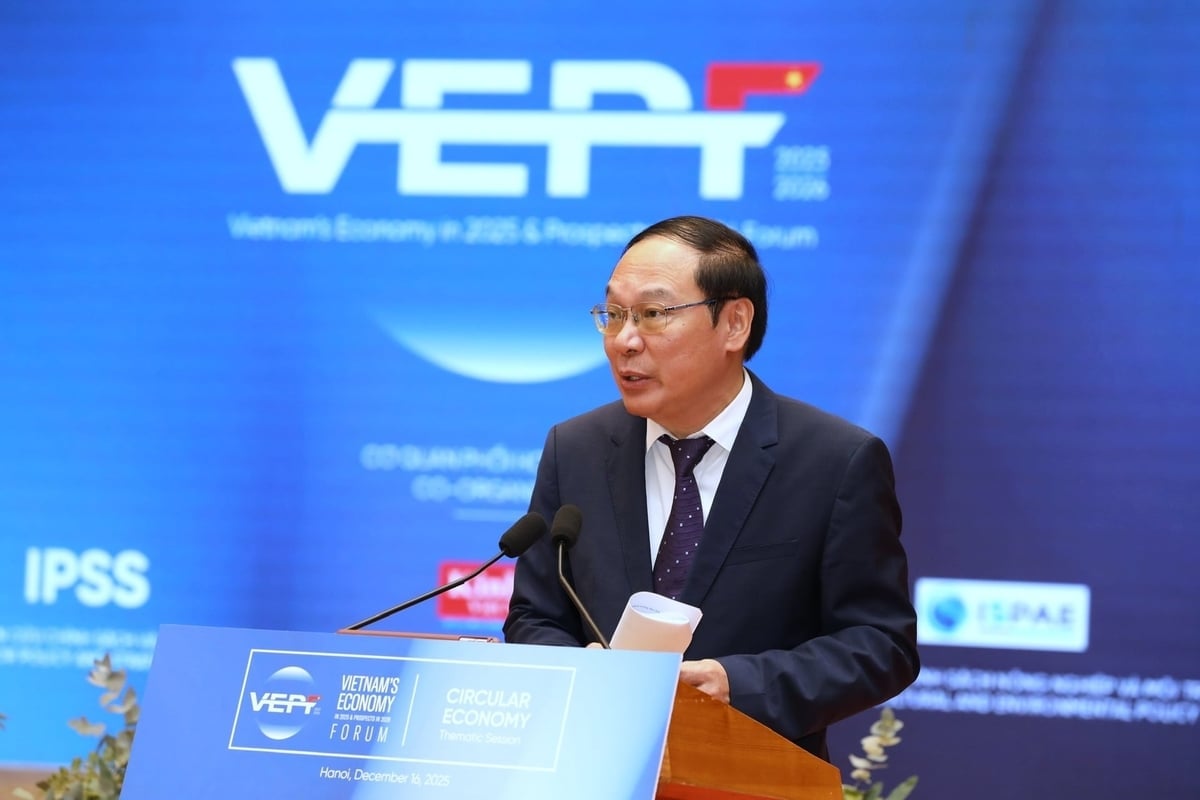
According to Deputy Minister of Agriculture and Environment Le Cong Thanh, the sector will continue to strongly promote the circular economy model, treating waste as a resource and managing it in a digital environment. Photo: Tri Phong.
To further promote the green transition and circular economy development, the Ministry of Agriculture and Environment has identified several strategic breakthroughs for the coming period. The focus is on continuing to uphold the view that socio-economic development is closely linked to environmental protection; considering spending on the environment and green transition as investment in development; and promoting the "economy" of the environment through resource valuation, payment for ecosystem services, and the effective use of environmental taxes and fees.
Alongside this, there will be breakthroughs in institutions and policies, the improvement of sub-legal documents, the removal of administrative barriers, and the creation of a legal framework for new markets such as carbon markets and biodiversity credits. The circular economy will continue to be strongly promoted, treating waste as a resource and managing it in a digital environment, linked with encouraging research and development of environmentally friendly technologies, environmental industries and services, green procurement, and renewable energy. The sector also aims to promote the application of artificial intelligence and big data in resource management, environmental monitoring, disaster forecasting, and waste treatment; while investing in infrastructure to support ecological agriculture and the green economy.
From an international perspective, Francesca Nardini, Deputy Resident Representative of the United Nations Development Programme (UNDP) in Vietnam, noted that over the past three decades, Vietnam's consumption of raw materials has increased sharply, leading to significant pressure on energy, infrastructure, solid waste, environmental pollution, and long-term climate change. This requires Vietnam not only to minimize negative impacts but also to further promote the circular economy.
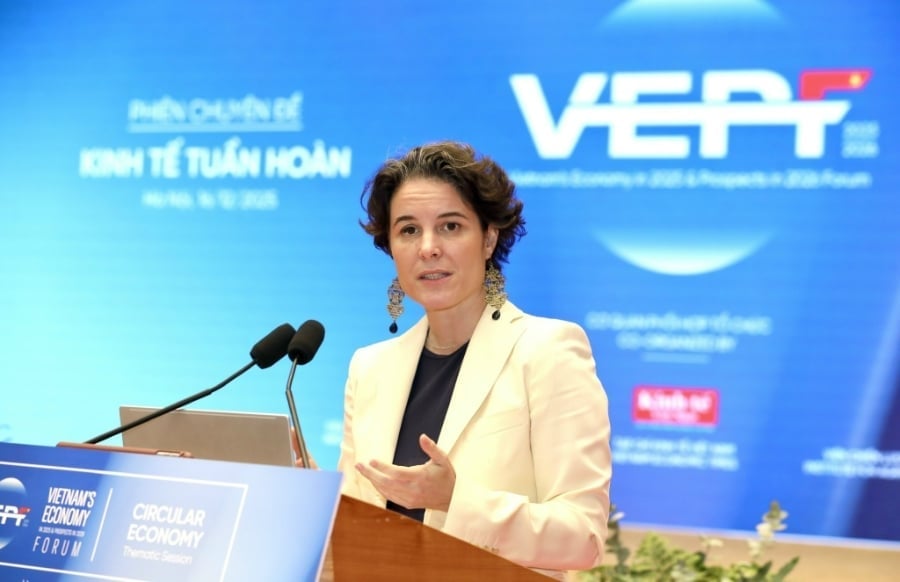
Ms. Francesca Nardini, Deputy Resident Representative of the United Nations Development Programme (UNDP) in Vietnam, shares international perspectives on the circular economy in Vietnam. Photo: Tri Phong.
Based on global and Vietnamese experience, the approach needs to be focused and practical, using pilot models to assess risks, opportunities, and benefits. Regarding sectors with high potential for implementing a circular economy, according to the UNDP, agriculture and food are top priorities, contributing approximately 11.6% of GDP and 26% of employment, with an annual output of 100-105 million tons of agricultural products. This is followed by the energy sector, contributing about 4% of GDP and creating jobs for nearly 4 million workers. In addition, the plastics, textile, electronics, and beverage industries, which account for up to 60% of landfill waste, also have significant potential if transitioned from a linear to a circular model.
In practice, the circular economy currently accounts for a small proportion of Vietnam's economy. The potential is vast, and under pressure for growth, stronger action is needed to transform the circular economy into a development strategy, attracting investment capital for a green, sustainable, and inclusive future.
Source: https://nongnghiepmoitruong.vn/lay-kinh-te-tuan-hoan-lam-dong-luc-chuyen-doi-xanh-d789691.html


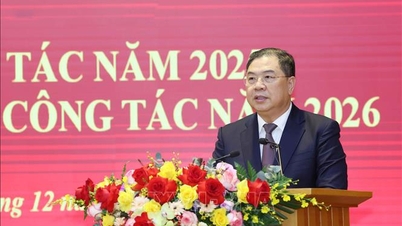
![[Image] Central Party Office summarizes work in 2025](/_next/image?url=https%3A%2F%2Fvphoto.vietnam.vn%2Fthumb%2F1200x675%2Fvietnam%2Fresource%2FIMAGE%2F2025%2F12%2F18%2F1766065572073_vptw-hoi-nghi-tong-ket-89-1204-jpg.webp&w=3840&q=75)















































Comment (0)