 |
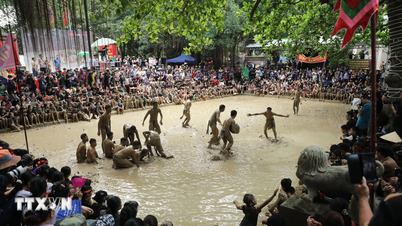
| Dong Nai solemnly organizes the commemoration ceremony for Lord Nguyen Huu Canh (Tran Bien ward) - a national intangible cultural heritage. Photo: CT.V. |
The convergence of a glorious history, diverse cultural identity, and a spirit of unity is creating a new face for the modern and compassionate city of Dong Nai . This also serves as a foundation for unleashing endogenous resources and building a comprehensively developed Dong Nai people.
From the time we wielded swords to conquer new lands
Going back in time to before the 16th century, Dong Nai was still a wild, uncultivated land. In the early 17th century, it became vibrant with the arrival of Vietnamese people from Thuan Quang who came to clear land and establish villages. At that time, this land was under the rule of King Chey Chettha II of Cambodia. In 1620, he became the son-in-law of Lord Nguyen Phuc Nguyen when he married the second daughter of Lord Nguyen, Princess Ngoc Van, and bestowed upon her the title of Queen of Cambodia.
In 1679, a group of Chinese people led by Tran Thuong Xuyen sailed across the river to Vietnam seeking refuge. Lord Nguyen Phuc Tan granted them permission to settle and live in the South. He and his entourage set foot on the Ban Lan area (an ancient place name of the former Bien Hoa - Dong Nai region, now the Tran Bien ward, where Tan Lan communal house is located), contributing to the development of Cu Lao Pho (Nong Nai Dai Pho) into the most bustling trading port in Southern Vietnam at that time.
In 1972, Bien Hoa province had six districts: Duc Tu, Cong Thanh, Tan Uyen, Di An, Long Thanh, and Nhon Trach. In February 1976, Bien Hoa province merged with Ba Ria and Long Khanh to form the new Dong Nai province. From 1976 until before April 30, 2026, the name Dong Nai province remained unchanged, but there were several changes to its boundaries and administrative units at the commune and district levels.
Dr. Nguyen Van Quyet, Chairman of the Vietnam-Japan Friendship Association of Dong Nai City, stated: Nineteen years after Tran Thuong Xuyen pioneered Nong Nai Dai Pho, in the spring of 1698 (the year of Mau Dan), General Nguyen Huu Canh, under the orders of Lord Nguyen Phuc Chu, went south to survey the land and establish an administrative system. He established Gia Dinh prefecture in Dong Nai, comprising two districts: Phuoc Long, where he built the Tran Bien garrison, and Tan Binh, where he built the Phien Tran garrison. The land of Ban Lan and Nong Nai Dai Pho was located within Phuoc Long district. The Dong Nai River was therefore called Phuoc Long Giang.
“In a short period of time, Nguyen Huu Canh recruited more people to cultivate the land, established administrative units, standardized taxes, and compiled land registers… creating the foundation for the development of Dong Nai. From here, this region was officially recognized on the national map of Dai Viet,” shared Dr. Nguyen Van Quyet.
In 1700, after the death of Nguyen Huu Canh, General Truong Phuc Phan was appointed by Lord Nguyen Phuc Chu to govern the Tran Bien garrison. The Tran Bien garrison and Phuoc Long district, located east of the Saigon River, encompassed a vast area including Dong Nai, Binh Phuoc, Binh Duong, and Ba Ria - Vung Tau (present-day Dong Nai and Ho Chi Minh City). By 1715, the Tran Bien Temple of Literature was built, affirming that this was not only a region known for its economic success but also a place that valued scholarship, traditional culture, and intellectual pursuits.
Bien Hoa Province (1808-1832), also known as Bien Hoa District (1832-1861), had a vast administrative area encompassing the present-day Dong Nai City; Ba Ria - Vung Tau, Binh Duong, and a part of Ho Chi Minh City (present-day Ho Chi Minh City). In 1876, Bien Hoa Province was dissolved by the French and divided into three sub-districts: Bien Hoa, Thu Dau Mot, and Ba Ria. In 1939, Bien Hoa Province comprised five districts: Chau Thanh, Long Thanh, Xuan Loc, Tan Uyen, and Ba Ra Mountain.
Throughout its nearly 330-year history, Dong Nai has faced numerous difficulties, challenges, and historical upheavals. These challenges have forged the resilient and united spirit of generations of Dong Nai people, compelling them to constantly strive, struggle, and rise above adversity. Successive generations have persistently contributed their intellect and efforts to building and nurturing traditional cultural values, creating the unique identity of Tran Bien - Dong Nai today.
The imprint of the "open land" of the South
On July 1, 2025, Dong Nai, along with the rest of the country, implemented a two-tiered local government model, merging Binh Phuoc province into Dong Nai province. The formation and development of the Dong Nai - Binh Phuoc region is a continuous historical process, clearly reflecting the expansion of national territory, administrative management, and socio-economic development over various periods, and also serves as an important practical basis for rearranging and reorganizing development space in the current period.
 |
| Politburo member, Central Committee Secretary, and Head of the Central Internal Affairs Commission Le Minh Tri and Central Committee member, Provincial Party Secretary, and Head of the Provincial National Assembly Delegation Vu Hong Van (now City Party Secretary and Head of the City National Assembly Delegation) cordially inquired about the health of Heroic Vietnamese Mother Ho Thi Vang on April 28, 2026. Photo: Cong Nghia |
According to Master Tran Quang Toai, Chairman of the Dong Nai City Historical Science Association, Dong Nai and Binh Phuoc share a common historical origin, having undergone many changes in administrative boundaries and names. In 1832, when Bien Hoa province was officially established, its territory included the areas of Binh Long and Phuoc Long (formerly part of Binh Phuoc province). From the time of General Nguyen Huu Canh's expedition to the Tran Bien garrison, this land has been part of a unified administrative and cultural space.
“During the resistance war against the US, the Saigon government separated Bien Hoa province to establish Binh Long and Phuoc Long provinces. However, in the practical revolutionary struggle, these localities still maintained close ties and were under the general direction of the Central Committee of the Southern Region (in the area of Phu Ly commune today) and the Eastern South Vietnam Regional Party Committee (in the area of Tri An ward today). This is one of the factors that created the deep bond between Dong Nai and Binh Phuoc,” Mr. Toai shared.
Besides historical similarities, Dong Nai and Binh Phuoc (formerly) also share many close cultural and community ties. Ethnic groups such as the Choro, S'tieng, M'nong, Ma, K'ho, and many others have lived together, creating a rich cultural exchange in the southeastern region of Vietnam. This diversity has shaped the distinctive character of the people of Dong Nai: friendly, compassionate, dynamic, creative, civilized, and modern.
After being separated from Bien Hoa province, the predecessor of Binh Phuoc province consisted of two provinces: Binh Long and Phuoc Long. On January 30, 1971, the Central Committee of the Southern Region decided to establish the Binh Phuoc sub-region. At the end of 1972, the Binh Phuoc sub-region was dissolved, and Binh Phuoc province was officially established. On July 2, 1976, the National Assembly of the Socialist Republic of Vietnam issued a decision to establish Song Be province, comprising Thu Dau Mot, Binh Phuoc, and three communes of Thu Duc district (belonging to Ho Chi Minh City). On January 1, 1997, Binh Phuoc province was re-established, comprising five northern districts of Song Be province: Dong Phu, Binh Long, Loc Ninh, Phuoc Long, and Bu Dang. The provincial capital was located in Dong Xoai town (Dong Phu district). On May 1, 2003, Chon Thanh and Bu Dop districts officially came into operation. Binh Phuoc province has 11 districts, towns, and cities. There are 111 communes, wards, and towns. Since 1999, the provincial boundaries have been stable, but there have been several changes to the administrative boundaries at the commune and district levels.
According to Master Tran Quang Toai, Dong Nai has long been considered an "open land," where people possess a tolerant, harmonious spirit and easily integrate different cultures. From the time of the Cu Lao Pho trading port to the present day, this tradition has been preserved and promoted. In particular, from April 30, 2026, Dong Nai will officially become the 7th city in the country. This is considered a significant milestone, opening a new chapter for the local development in the context of deep development and integration.
“The rich cultural heritage values of the North and South Dong Nai regions, if effectively connected and exploited, will become unique cultural and tourism products. Besides the aspiration to rise and the existing potential, Dong Nai city needs mechanisms suitable for the new development model to create more opportunities for linkage and strong development in the future,” Mr. Toai emphasized.
Southern Key Economic Growth Hub
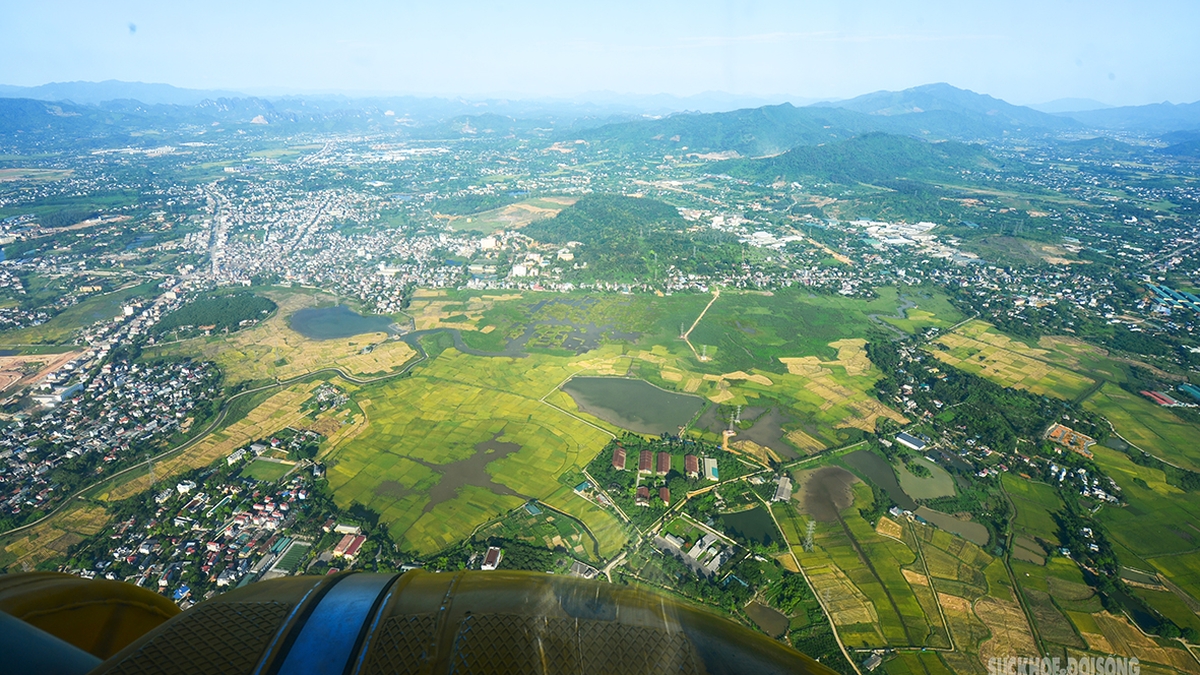
Not only rich in historical traditions, Dong Nai today also holds a particularly important strategic position in the Southeast region, serving as a crucial link between the Southern key economic region and the Central Highlands and the South Central provinces. Currently, the city covers an area of over 12,700 km², with a population of approximately 5 million people and 95 commune-level administrative units, of which Tran Bien ward is the political, administrative, economic, and socio-cultural center.
Dong Nai is currently one of Vietnam's major industrial centers with 89 planned industrial parks. With a focus on industrial development policies, Dong Nai has attracted investment from 45 countries and territories, including over 2,500 active domestic projects with registered capital of approximately VND 602 trillion and over 2,200 active FDI projects with registered capital exceeding USD 45 billion. Dong Nai is a significant contributor to the national budget and GDP, affirming its position as an important growth pole in the Southern key economic region.
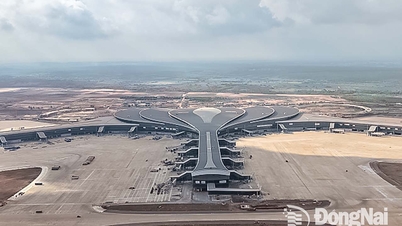
Architect Khuong Van Muoi, former Vice President of the Vietnam Architects Association, stated: Dong Nai possesses unique advantages in transportation infrastructure, encompassing all five modes of transport on a large scale: road, rail, waterway, maritime, and air. Long Thanh International Airport is a strategic infrastructure project of national and international significance. Furthermore, a series of expressways such as Ho Chi Minh City - Long Thanh - Dau Giay; Phan Thiet - Dau Giay; Bien Hoa - Vung Tau; Gia Nghia - Chon Thanh; and Ring Road 3… have created a modern inter-regional connectivity network, opening up new development opportunities for Dong Nai.
“Operating under the city model will create a strong impetus for Dong Nai in attracting investment, developing the economy, creating more jobs, and improving the quality of life for its people. This is the time for Dong Nai to concentrate all its efforts, transforming political determination into concrete actions to realize development goals and affirm its role as an important growth pole in the Southern region,” Mr. Khuong Van Muoi shared.
Unleashing cultural resources for the city of the future.
Entering a new phase of development, Dong Nai city aims not only to become an important industrial, commercial, and logistics center but also to build a city rich in cultural identity, with harmonious and sustainable development.
 |
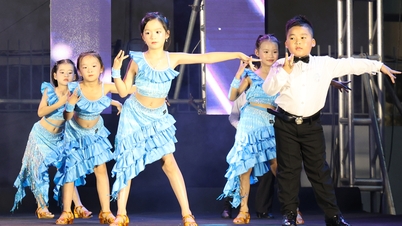
| Artists and actors from the Dong Nai Arts Theatre perform for the people in Dong Nai city. Photo: My Ny |
According to Le Thi Ngoc Loan, Member of the Dong Nai Provincial Party Committee and Director of the Department of Culture, Sports and Tourism: “Dong Nai currently has 121 classified relics, including 6 special national relics, 42 national relics, and 73 provincial relics, along with nearly 1,500 relics that have been inventoried. Many relics such as Tran Bien Temple of Literature, Nguyen Huu Canh Temple and Tomb (Tran Bien Ward), Zone D War Zone (Tri An Ward), the Headquarters of the Southern Vietnam Liberation Army (Loc Thanh Commune), Soc Bom Bo (Bom Bo Commune)... have become important cultural and historical symbols of Dong Nai province in particular and the Southeast region in general.”
In recent years, many historical sites in Dong Nai City have received attention for restoration and preservation, linked to tourism and traditional education activities. In the period 2020-2025 alone, Dong Nai allocated over 161 billion VND for the restoration and preservation of historical sites. The cultural institution system is constantly being improved, with facilities and equipment upgraded to better serve the cultural needs of the people. Currently, the city has cultural centers in 1,703 out of 1,775 villages, hamlets, and neighborhoods (reaching 95.9%), and 16 ethnic cultural centers.
Along with economic development, Dong Nai city aims to build and develop a civilized, modern, and happy urban area, with people as the center, subject, resource, and goal of development; and taking cultural values, improving the health, and the material and spiritual lives of the people as the pillars of sustainable development.
As Dong Nai, along with the rest of the country, enters a new phase of development, the city has identified the building and development of a rich, distinctive, and integrated Dong Nai culture as a solid spiritual foundation, an important endogenous resource, and a driving force for rapid and sustainable development. Simultaneously, it aims to cultivate well-rounded individuals in Dong Nai, fostering characteristic qualities such as friendliness, compassion, civility, and modernity. The development of the cultural industry is linked to digital transformation, innovation, and international integration, contributing to enhancing Dong Nai's position, soft power, and cultural identity in the new era.
Nearly 330 years of formation and development, from the ancient land of Tran Bien to present-day Dong Nai, has risen to become a dynamic urban center and an important growth pole in the Southern region. Its rich history, diverse cultural identity, and spirit of solidarity and camaraderie are the foundation for Dong Nai to leverage its endogenous resources, build a modern, civilized, and sustainably developed city in the new era – the era of national progress.
My Ny
Source: https://baodongnai.com.vn/tin-moi/202605/lich-su-gan-330-nam-cua-thanh-pho-ong-nai-e7425f0/



![[Image] Pleasant weather helps students enter the 10th grade entrance exam with confidence.](https://vphoto.vietnam.vn/thumb/1200x675/vietnam/resource/IMAGE/2026/05/29/1780034401612_ngay-1-thi-lop-10-minh-duy-8-5009-jpg.webp)
![[Photo] Ba Lang An Lighthouse - the "eye of the sea" amidst the "rock museum" of Quang Ngai province.](https://vphoto.vietnam.vn/thumb/1200x675/vietnam/resource/IMAGE/2026/05/29/1780038698840_anh-man-hinh-2026-05-29-luc-14-10-42.png)




























































Comment (0)