

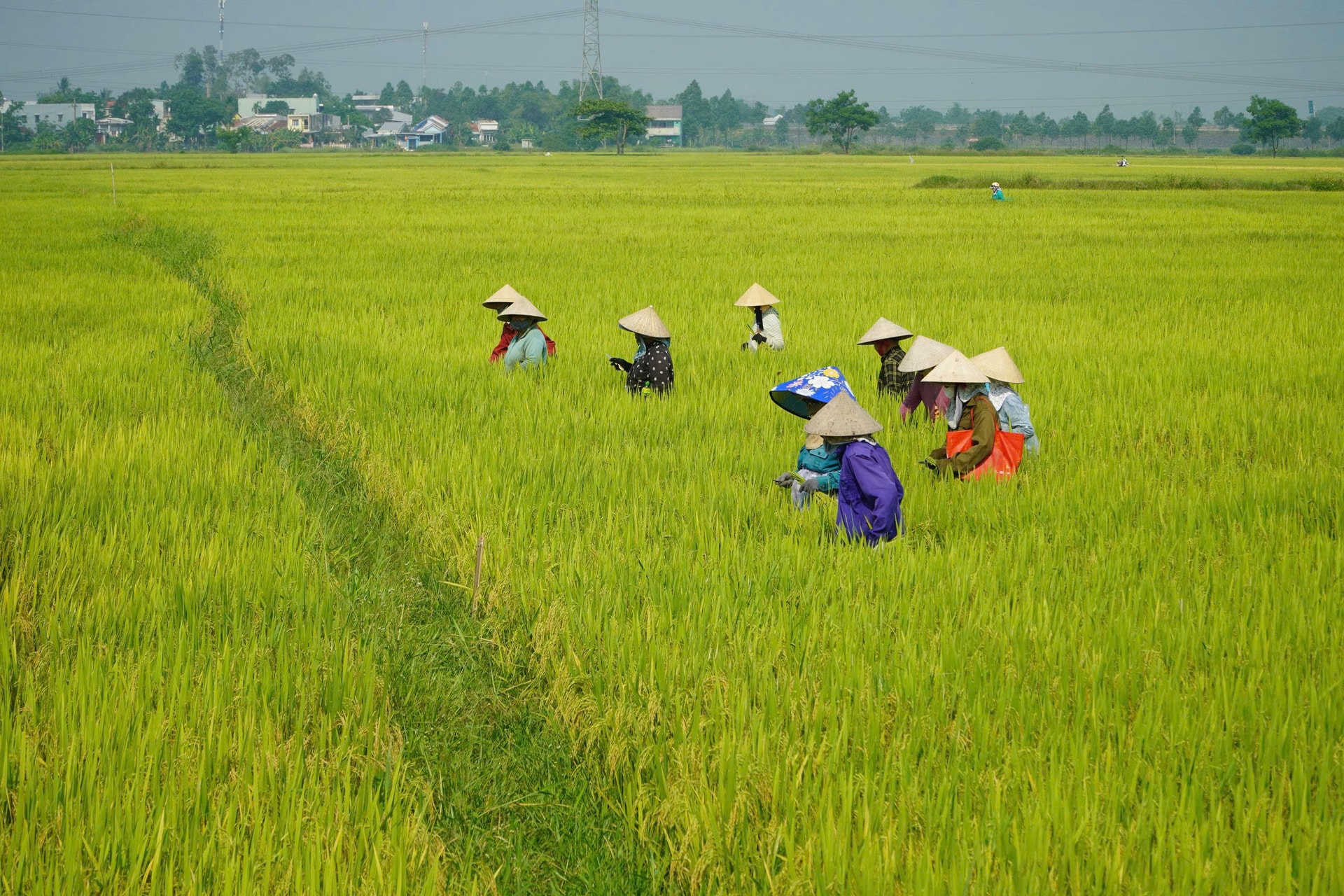
Cooperative models are opening up a modern direction for agricultural production.
Start production
Years ago, most farmers in Quang Nam province still produced based on experience. What to grow, who to sell to, and what the prices were were almost entirely dependent on traders. A good harvest meant low prices, a bad harvest meant losing everything. This fragmentation made it difficult for agriculture to enter larger markets, and even harder to compete in a context where quality and traceability requirements were becoming increasingly stringent.
And the story of linkages was put forward to adapt to the new market. Mr. Hoang Trung Hung, Director of Dai Thang Agricultural Cooperative (Phu Thuan commune), said that in recent years, the unit has maintained a stable model of linking rice seed production with businesses and farmers in the locality.
Based on the soil conditions of each region, the cooperative arranges appropriate land preparation machinery, ensuring adherence to the seasonal schedule. Simultaneously, the combine harvester system is strategically distributed to ensure rapid harvesting and minimize yield losses; straw collection and field cleaning are also carried out synchronously and promptly.
Amid rising costs of agricultural supplies, fertilizers, and fuel, production efficiency faces significant pressure from post-harvest technologies. However, according to Mr. Hung, thanks to a tightly integrated production chain, from seed and supply to product distribution, farmers can still ensure profitability. This model not only helps reduce input costs and stabilize output but also enhances the value of rice seed production, contributing to sustainable agricultural development.
The role of cooperatives now goes beyond simply gathering farmers; they have become the "conductor" coordinating the entire production chain, from plant varieties and cultivation processes to product consumption. At Hoa Tien 1 General Production and Business Service Cooperative, which has over 1,300 member households and a production area of up to 335 hectares, the pressure of large-scale management has forced the cooperative to undergo digital transformation.
Mr. Ngo Van Sinh, Chairman of the Board of Directors and Director of the Cooperative, said that with a large number of members, it would be very difficult to control all activities without a suitable monitoring system. When applying the software, data is continuously updated, from the list of members to income and expenses, making management more transparent and easier to audit. This change shows that the cooperative is gradually operating according to the "community enterprise" model, and farmers are no longer producing based on intuition but are beginning to adopt a market-oriented mindset, standardization, and data management.
Meanwhile, in the communes of Tra Leng and Tra My, as cinnamon is processed further, a series of new jobs have emerged, from producing essential oils and cinnamon tea to crafting handicrafts. Women and the elderly participate in preliminary processing, packaging, quality control, and serving tourism experiences. Local people are beginning to participate in higher-value links in the production chain.
Technology is returning to the fields.
Mr. Vo Van Chin, Director of Que Phu Agricultural Cooperative, said that the locality is applying drones in spraying pesticides and fertilizing. With a synchronized system of machinery, the cooperative proactively implements sowing and planting according to the seasonal schedule.
Sharing this view, Mr. Nguyen Cong Phi, Deputy Director of the Central Seed Company of Quang Nam, affirmed that agricultural production is currently shifting strongly from traditional methods to modern, smart, and sustainable approaches along the value chain. Instead of just focusing on "planting - caring - harvesting," the agricultural sector is promoting the application of technology while shifting the focus from quantity to quality to meet the increasingly high demands of the market for clean and safe agricultural products according to VietGAP and GlobalGAP standards.
The model of production linkage along the value chain between farmers, cooperatives, and businesses is becoming the dominant trend. Production areas are planned in a contiguous manner, replacing the fragmented approach of the past, creating favorable conditions for mechanization and synchronized management. Farmers in this model are provided with seeds, inputs, technical support, and guaranteed product sales, thereby significantly reducing risks and production costs.
Along with linkages, the application of product traceability, as well as participation in online business chains, helps cooperatives easily access modern distribution systems.
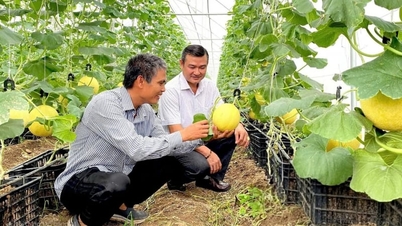
At the Dai Binh Agricultural, Tourism and Service Cooperative in Nong Son commune, organic production is combined with experiential tourism development. Pomelo orchards and vegetables are cultivated using biological methods, minimizing the use of chemicals, while online sales help products reach a wider market.
Mr. Nguyen Thanh Tuyen, Director of the Cooperative, believes that agriculture today cannot simply be about selling agricultural products. When linking agriculture with tourism, the products must have a story to tell. Visitors come not only to buy agricultural products but also to experience the lives of the local people, so the approach must change to suit that need.
The successful cooperative models demonstrate a new direction emerging in Quang Nam's agricultural sector. Representatives from the City Cooperative Union believe that digital transformation and green transformation are crucial breakthroughs for the collective economic sector in the coming period. This represents a dual transformation model involving a comprehensive restructuring of how cooperatives operate. With standardized data, transparent transactions, and sustainable production, cooperatives gain a stronger foundation for stable development and deeper participation in the local economy's value chain.
Source: https://baodanang.vn/lien-ket-lam-nong-3338771.html




![[Image] A brilliant symphony and explosive power in the skies of Da Nang.](https://vphoto.vietnam.vn/thumb/1200x675/vietnam/resource/IMAGE/2026/05/31/1780196945787_anh-man-hinh-2026-05-31-luc-10-08-51.png)










![[Video] Sunset at Lap An Lagoon – Where the sun sets over the fishing nets](https://vphoto.vietnam.vn/thumb/340x192/vietnam/resource/IMAGE/2026/05/31/1780192137701_beach-landscape-sea-water-nature-grass-745871-pxhere-com.jpeg)




































































Comment (0)