


On December 27, 1881, the Saigon - Cholon railway line was inaugurated, marking the appearance of the first urban railway in Indochina. On December 22, 2024, Metro Line 1 Ben Thanh - Suoi Tien officially began commercial operation. Ben Thanh has become a landmark in the urban history of Saigon.
A meeting point for many time classes.
Historical records document the route of the Saigon - Cholon railway line, making Southern Vietnam at that time the "cradle of Indochina's railways". Accordingly, the line passed through spatial axes connected to rivers, canals, and the core population; many documents describe the route as being linked to the Ben Nghe canal and the streets leading to Cholon (the major commercial and residential area of Saigon at that time).
And if, more than a century ago, the ship departed from the Saigon River dock, sailed along the Ben Nghe canal, circled around Nguyen Trai street to Cho Lon, then more than a hundred years later, the starting point is located underground - right at the most densely populated intersection of Saigon's urban memory.
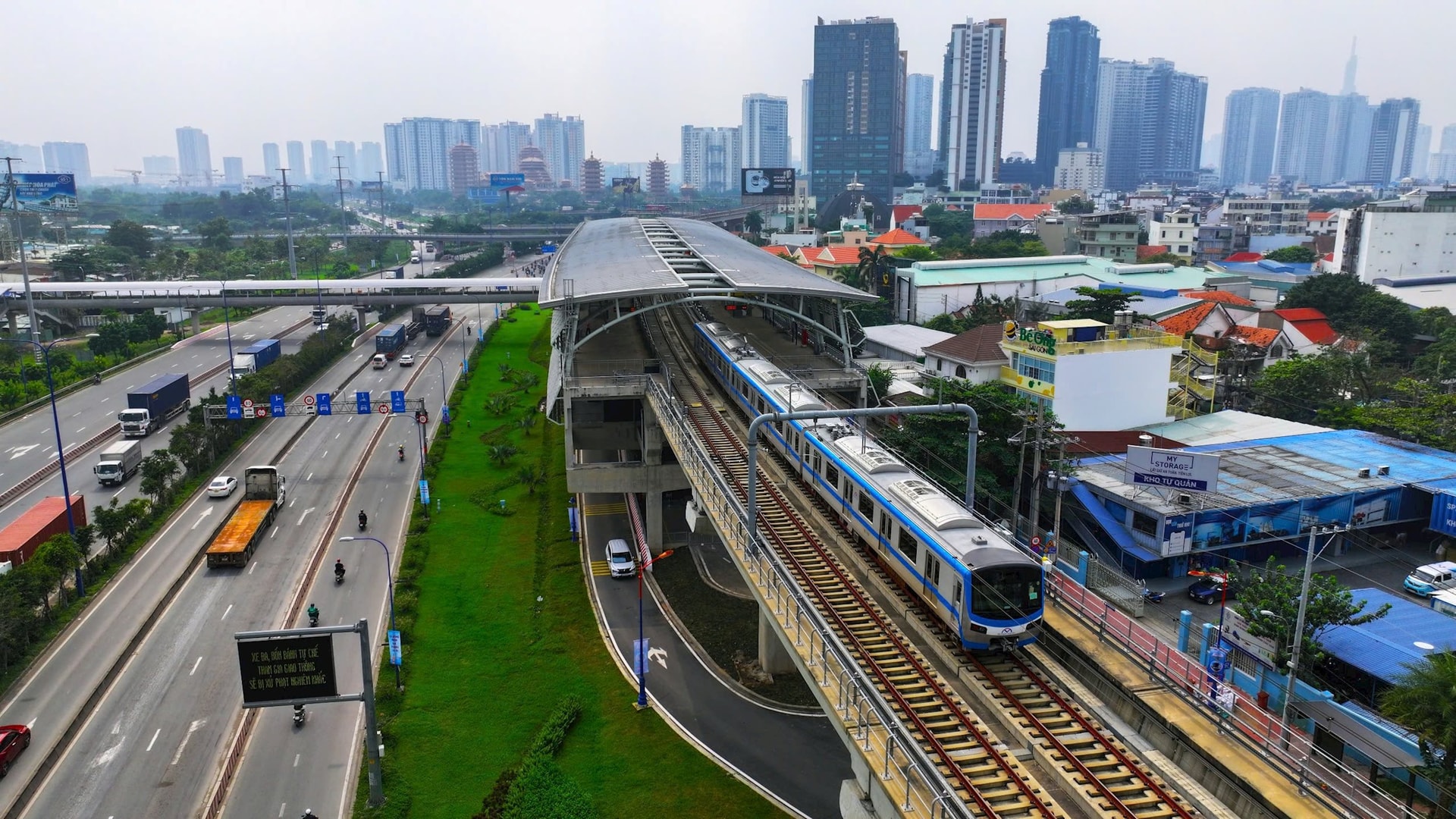
Over a hundred years ago, the French took only one year to complete the Saigon-Chợ Lớn railway line. But it took four decades to fill in the Boresse lagoon and open Gallieni Street (now Trần Hưng Đạo Street), connecting the two cities of Saigon and Chợ Lớn into a single, developing entity.
With the Ben Thanh - Suoi Tien metro line, spanning 20 years and incorporating technology transfer from Japan, the current Ben Thanh station has transcended its historical image as a mere "transfer point." It has become a new living space for urban dwellers, fostering a greater awareness of time management and traffic order.
From Ben Thanh, the train passes through two underground stations, City Theatre and Ba Son, then rises to the surface, passing through 11 elevated stations along the eastern axis.
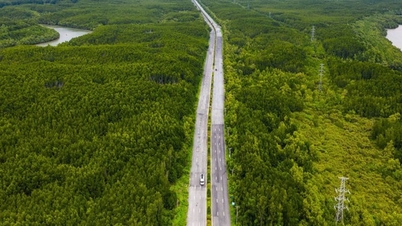
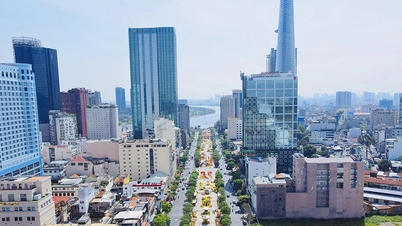
Saigon residents liken this to a journey of redrawing the city's emotional map. As the train leaves the underground station, light floods into the carriage, revealing the tranquil Saigon River, the sprawling Vo Nguyen Giap highway, and rows of trees one after another. From above, the city seems to suddenly lose its hurried pace and hustle.
Abundant room for creativity.
Right in the basement of Ben Thanh metro station, there is a glass atrium with four concentric circles, converging into regular triangles. On the ground, at the three-sided prow of the 23/9 Park, there is a sparkling circular glass dome. This is the light-gathering atrium of Ben Thanh metro station. All these elements combine to create a work of art right in the Ben Thanh station area.
Take a look at how train stations around the world are opening up to become creative spaces.

In Japan, considered the birthplace of urban rail in Asia, train stations serve as living cultural spaces. Metro lines in Tokyo, Kyoto, and Osaka are inseparable from local cultural life. Each station is designed as a "cultural gateway," reflecting the region's history through its architecture, materials, murals, and bilingual signage, all incorporating traditional artistic elements.
In Kyoto, the thousand-year-old capital, the urban railway system is carefully planned to avoid disrupting the heritage landscape, limiting building height around underground lines while providing direct connections to temples, shrines, and the old town.
Meanwhile, Seoul (South Korea) is a prime example of transforming metro stations into community cultural spaces. Many stations are not just transit hubs but also integrate small libraries, exhibition rooms, stages for folk art performances, and displays of local history.
Notably, the Seoul government has allocated a certain percentage of space within the metro system for local artists, community art projects, and intangible cultural heritage displays. As a result, the urban rail system doesn't "uniformize" the city; instead, it becomes a channel for spreading traditional culture within modern life.
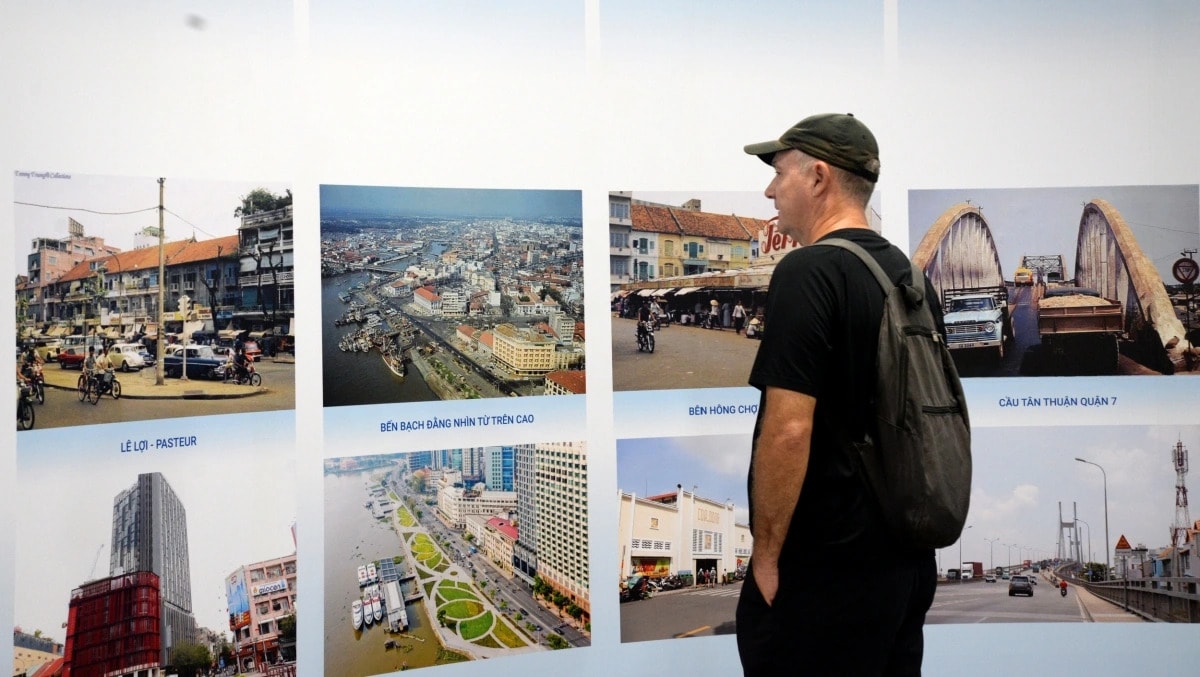
According to the Ho Chi Minh City government's plan, Metro Line 1 Ben Thanh - Suoi Tien will have multiple corridors connecting stations to buildings.
Ben Thanh Station is planned to have up to 6 connecting lines, including 2 corridors expected to connect directly to the Ben Thanh quadrilateral area. Ba Son Station will also connect to Marina Central Tower via two separate lines. In July 2025, the first connection point between City Theatre Station and Union Square shopping center will become operational, offering a new experience for residents.
The soul of the city, sometimes, is expressed in the resting spaces of each train station...
The current global trend is to preserve train stations in ancient cities, as well as old stations on railway lines extending across the country. Many countries implement preservation methods such as: (1) Preserving the original state and continuing use as long as it meets needs (like train stations in Hanoi , Kyoto, and York); (2) Adapting and renovating into museums, creative centers, and cultural spaces (like Gare d'Orsay becoming Musée d'Orsay in Paris); and (3) Combining new stations with preserved old stations to create a historical urban “timeline,” a method chosen by many places. Cities transform outdated industrial buildings – train stations, factories, workshops, ports, etc. – into new cultural institutions, both preserving historical values and adapting to contemporary societal needs. Train stations, once the center of a region and a hub for many routes, have become cultural centers and destinations for tourists from all over the world.
Dr. Nguyen Thi Hau
Source: https://baodanang.vn/linh-hon-khong-gian-biet-nho-3318755.html
![[Photo] Admire the coral "masterpiece" amidst the million-year-old heritage of Dak Lak province.](https://vphoto.vietnam.vn/thumb/1200x675/vietnam/resource/IMAGE/2026/05/31/1780221235105_anh-man-hinh-2026-05-31-luc-16-53-27.png)
![[Photo] The General Secretary, President and his wife begin their state visit to the Philippines.](https://vphoto.vietnam.vn/thumb/1200x675/vietnam/resource/IMAGE/2026/05/31/1780230559452_anh-man-hinh-2026-05-31-luc-19-28-11.png)
![[Image] Hanoi Police officially crowned champions of V-League 2025/2026](https://vphoto.vietnam.vn/thumb/1200x675/vietnam/resource/IMAGE/2026/05/31/1780244769054_ndo_br_039d561b692be875b13a-jpg.webp)

![[Photo] Solemn bathing ceremony and Buddha procession in Hue](https://vphoto.vietnam.vn/thumb/1200x675/vietnam/resource/IMAGE/2026/05/31/1780228263543_1-jpg.webp)












![[Video] Sunset at Lap An Lagoon – Where the sun sets over the fishing nets](https://vphoto.vietnam.vn/thumb/340x192/vietnam/resource/IMAGE/2026/05/31/1780192137701_beach-landscape-sea-water-nature-grass-745871-pxhere-com.jpeg)
































































Comment (0)