
Mr. Nguyen Duc An's model of raising calcium worms in Phuong Lai area, Lam Thao town, Lam Thao district, has initially proven effective, creating a source of feed for livestock.

 Việt Nam•21/05/2024
Mr. Nguyen Duc An's model of raising calcium worms in Phuong Lai area, Lam Thao town, Lam Thao district, has initially proven effective, creating a source of feed for livestock.
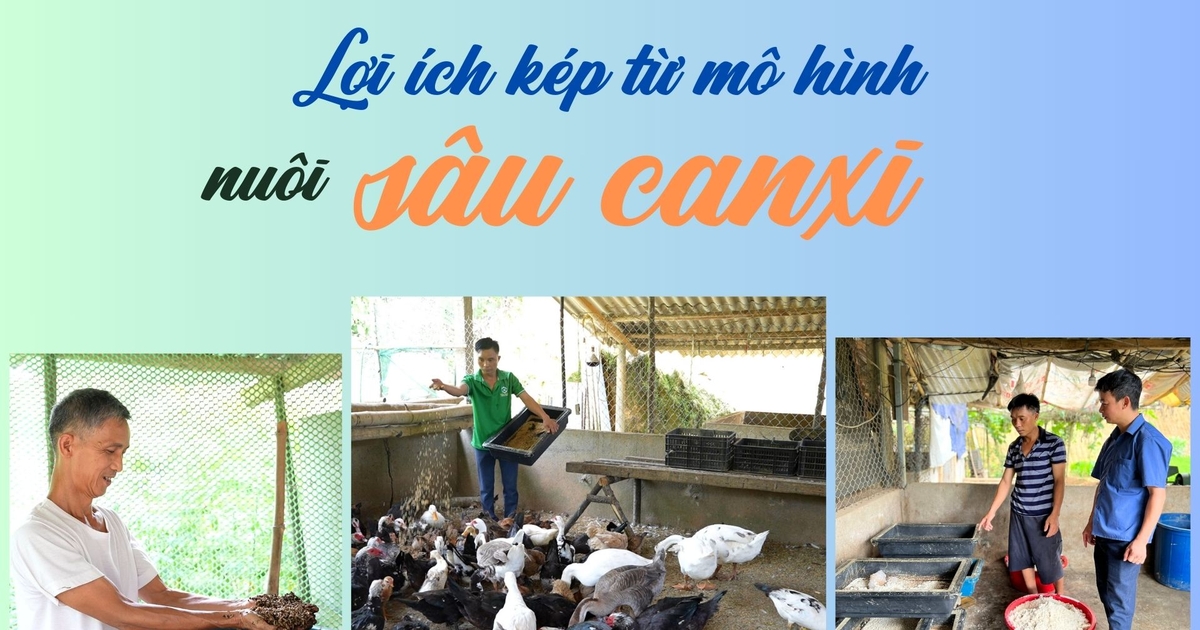
Mr. Nguyen Duc An, residing in Phuong Lai area, Lam Thao town, Lam Thao district, is one of the pioneering households participating in the calcium worm farming model. Mr. An shared: “My family regularly raises free-range hybrid chickens, but because the amount of natural food is insufficient, I have to search for and buy supplements for the chickens' feed. With the permission of the Town Farmers' Association to conduct a trial, after only a few weeks, I had a large quantity of worms to supply my flock of chickens. If this model can be expanded, it will also help reduce feed costs and process organic waste.”
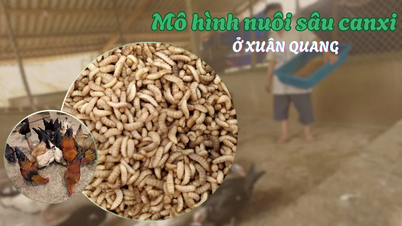
Recognizing that raising black soldier fly larvae (also known as calcium worms) is a simple, cost-effective technique that can digest organic matter in household waste, especially spoiled vegetables and fruits, creating a nutritious food source for livestock and a nutrient-rich humus for plants, the Thanh Ba District Farmers' Association is implementing a pilot project in two communes, Ninh Dan and Hanh Cu. Over 80 members have participated in general training and technical instruction on raising black soldier fly larvae. According to some farmers participating in the pilot project, raising black soldier fly larvae not only provides feed for livestock and poultry, reduces farming costs, and increases profits for farmers, but also addresses environmental pollution from untreated organic waste, creating environmentally friendly products. Furthermore, calcium-rich larvae contain 43-51% protein, 15-18% fat, 2.8-6.2% calcium, and 1-1.2% phosphorus, making them a highly nutritious feed suitable for poultry and aquaculture. Starting with just 10 grams of larvae eggs, after a period of rearing, 25-30 kg of mature larvae can be harvested.
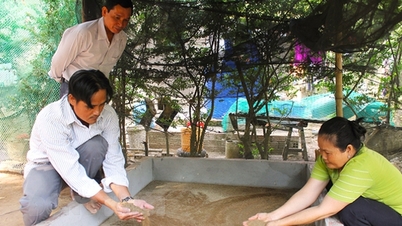
Mr. Vu Cong Binh, Director of the Center for Farmer Support and Vocational Education, and Deputy Head of the Waste Management Project of the Provincial Farmers' Association, said: Raising calcium worms is an activity within the project "Promoting and mobilizing farmers to handle waste in Vietnam, contributing to the international community's efforts to reduce greenhouse gas emissions" (DART), developed and implemented by the Central Committee of the Vietnam Farmers' Association in coordination with the Regional Solutions for Community and Ecosystems Foundation (BRACE Foundation). The provincial Waste Management Project has directed all levels of the Farmers' Association to participate in the project, organize training, and build model farms for officials and members to visit and learn from. Households raising calcium worms receive technical training and breeding stock support from the project, initially yielding positive results and opening up opportunities for many farming households to access this livestock...
Through this project, we aim to mitigate the impacts of climate change and greenhouse gas emissions, while also promoting and encouraging farmers to adopt waste conversion methods to improve productivity and income. Converting agricultural waste such as straw, crop residues, and organic waste from households, businesses, and restaurants into animal feed helps reduce environmental pollution.
Linh Nguyen
Source: https://baophutho.vn/loi-ich-tu-nuoi-sau-canxi-212323.htm
![[Photo] General Secretary and President To Lam presides over the meeting to approve the draft report on the results of the second inspection by the Politburo of the Standing Committee of the Hanoi City Party Committee.](https://vphoto.vietnam.vn/thumb/1200x675/vietnam/resource/IMAGE/2026/05/26/1779789811432_a2-bnd-4430-9620-jpg.webp)

















































































Comment (0)