


Creating a new site
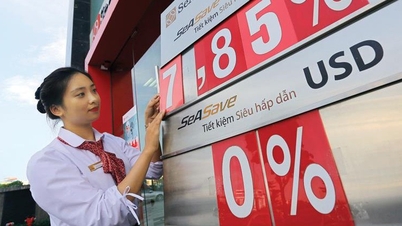
Prior to the Lunar New Year 2026, several banks adjusted deposit interest rates to reach 8% per year, establishing a new benchmark after a long period of low rates. Specifically, for a 1-month term, interest rates ranged from 1.6% to 4.75% per year, depending on the bank and the deposit amount; for a 3-month term, rates were 1.9% to 4.75% per year; and for a 6-month term, rates were commonly 2.9% to 7% per year, with some banks even offering rates up to 7.5% per year without requiring a minimum deposit amount. For a 12-month term, including bonuses, interest rates reached 8% per year, but this was not common and was only offered by a select few banks.
However, the upward trend in interest rates is not long-term, but mainly a cyclical adjustment, driven by a strong surge in credit demand at the end of the year. Experts also believe that interest rates are entering a selective adjustment phase after a long period of remaining low, reflecting a new economic cycle with higher demands for liquidity safety and capital balance.
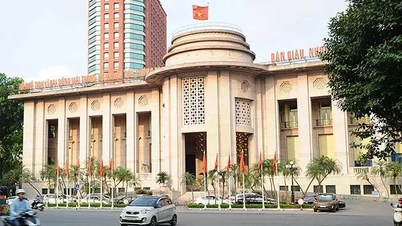
Meanwhile, interest rate movements in the interbank market attracted more attention when, at the beginning of February 2026, interest rates increased sharply across most maturities of one month or less. Specifically, overnight interest rates "climbed" to 17%/year; one-week rates to 15%/year; two-week rates to 6.4%/year; and one-month rates to 9.5%/year. Before "cooling down" to around 9.5%/year, the State Bank of Vietnam proactively supplemented liquidity through repurchase agreements of securities, with a net total value of approximately VND 161,000 billion, and also implemented forward foreign exchange swap transactions to support the system.
Experts attribute the increase in interest rates to a shortage of short-term capital, due to the disparity between credit growth and deposit growth. In fact, while the banking system maintained low interest rates in 2025 to support the economy, this led to difficulties in deposit growth. By the end of 2025, deposit growth reached 15.1% year-on-year, significantly lower than credit growth at 19.6% year-on-year. This disparity caused the loan-to-deposit ratio of the entire banking sector – based on the top 15 largest banks monitored by the analysis firm – to rise to approximately 115%, compared to 110% at the beginning of the year, forcing banks to adjust deposit interest rates upwards to ensure liquidity.
It will gradually cool down and stabilize.
The question is, what will interest rates be like in 2026? According to experts, overnight interest rates in the interbank market will gradually stabilize, and the capital imbalance in the banking system may last until the end of the first quarter of 2026. Although interest rates are unlikely to return to their previous low levels, they are expected to gradually cool down and stabilize from the second quarter of 2026. Representatives fromACB Securities Company (ACBS) predict that deposit interest rates may increase by 1-1.5%, bringing the average from around 5% currently to 6-6.5% per year. Simultaneously, lending interest rates are predicted to be adjusted more significantly, increasing by about 1.5-2%, to around 8.5-9% per year. This scenario is based on a systemic adjustment, applied across a wide range of institutions, rather than just occurring locally at a few credit institutions. The fact that lending interest rates are rising faster than deposit interest rates not only helps improve banks' interest margins but also contributes to balancing the goals of supporting growth and ensuring financial safety. More importantly, when the interest rate differential between domestic and international rates is adjusted in a reasonable direction, pressure on the exchange rate also has a basis to be reduced, thereby supporting macroeconomic stability in the medium term.
If average lending interest rates remain around 8.5-10% in the coming period, the Vietnamese economy still has the potential for effective growth. This is contingent on ensuring the smooth functioning of the economy, the proper allocation of financial resources, and the maintenance of stable business and investor confidence. In this context, effective exchange rate risk management will play a crucial role in strengthening expectations and stabilizing market sentiment.
Many others argue that the current interest rate level is not unusual. The key issue is not how much interest rates will rise, but rather the market's ability to adapt to the new conditions. In the short term, economic entities may need more time to adjust their financial plans, cash flow, and production and business activities as interest rates are no longer maintained at the low levels of the previous period. The market will gradually adapt to the new interest rate level, thereby contributing to strengthening macroeconomic stability and creating a foundation for sustainable growth in the future.
According to Nguyen Quoc Hung, Vice Chairman and General Secretary of the Vietnam Banking Association, interest rates are likely to adjust in the near future, impacting business operations and investment costs for enterprises. Simultaneously, as banks gradually move towards higher safety standards, the challenge of balancing resources to support growth while meeting international safety requirements is becoming increasingly difficult.
Source: https://hanoimoi.vn/mat-bang-lai-suat-truc-chu-ky-kinh-te-moi-734838.html




![[Photo] General Secretary and President To Lam presides over a meeting on preparations for the review of one year of operation of the three-tiered government system.](https://vphoto.vietnam.vn/thumb/1200x675/vietnam/resource/IMAGE/2026/06/02/1780391821195_a1-bnd-4595-9717-jpg.webp)



























































































Comment (0)